


- • Trust Wallet is non custodial, giving users full control of private keys.
- • No wallet level fees for holding, receiving, or managing crypto assets.
- • Supports 111+ networks with native access and no manual configuration.
- • Mobile app offers the most complete and smooth user experience.
- • Gas sponsorship allows swaps without holding native network tokens.
- • Wallet can be funded through Binance P2P in supported regions.
- • Core features include swaps, staking, perps, and prediction markets.
- • TWT token is optional and mainly used for discounts and governance.
There are plenty of solid crypto wallets available today. Some are built for specific blockchains, while others aim to cover multiple networks in one place. In this guide, we take a closer look at Trust Wallet. It is not a new name in the space, but it has seen several meaningful upgrades in recent years, including deeper ties with Binance, the addition of perpetual trading features, and broader functionality overall.
This Trust Wallet review is designed to do more than help you decide whether the wallet suits your needs. It also walks you through features that often go unnoticed, especially by users who only use Trust Wallet as a place to store digital assets.
Trust Wallet Overview
Trust Wallet first appeared in 2017 as a mobile only Ethereum wallet, created by Viktor Radchenko during a period when Ethereum adoption was accelerating and most users still relied on centralized exchanges to hold their assets. Self custody was widely discussed at the time, but the available tools often felt complicated, unreliable, or too technical for everyday use. Trust Wallet entered the market with a clear focus on simplicity, giving users direct control over their private keys through a mobile first design that avoided complex setup flows. In 2018, Binance acquired Trust Wallet, which helped speed up its development and broaden its reach without changing its non custodial structure.
Since those early days, Trust Wallet has evolved far beyond its original scope. It was built to close a gap in the market by making sending, receiving, and holding tokens feel natural for non technical users, while keeping private keys fully on the user’s device. Over time, the wallet expanded support to cover all major EVM networks, along with several popular non EVM blockchains such as Solana, Sui, and Zcash, among others. This wider network coverage turned Trust Wallet into a more flexible option for users managing assets across different ecosystems.
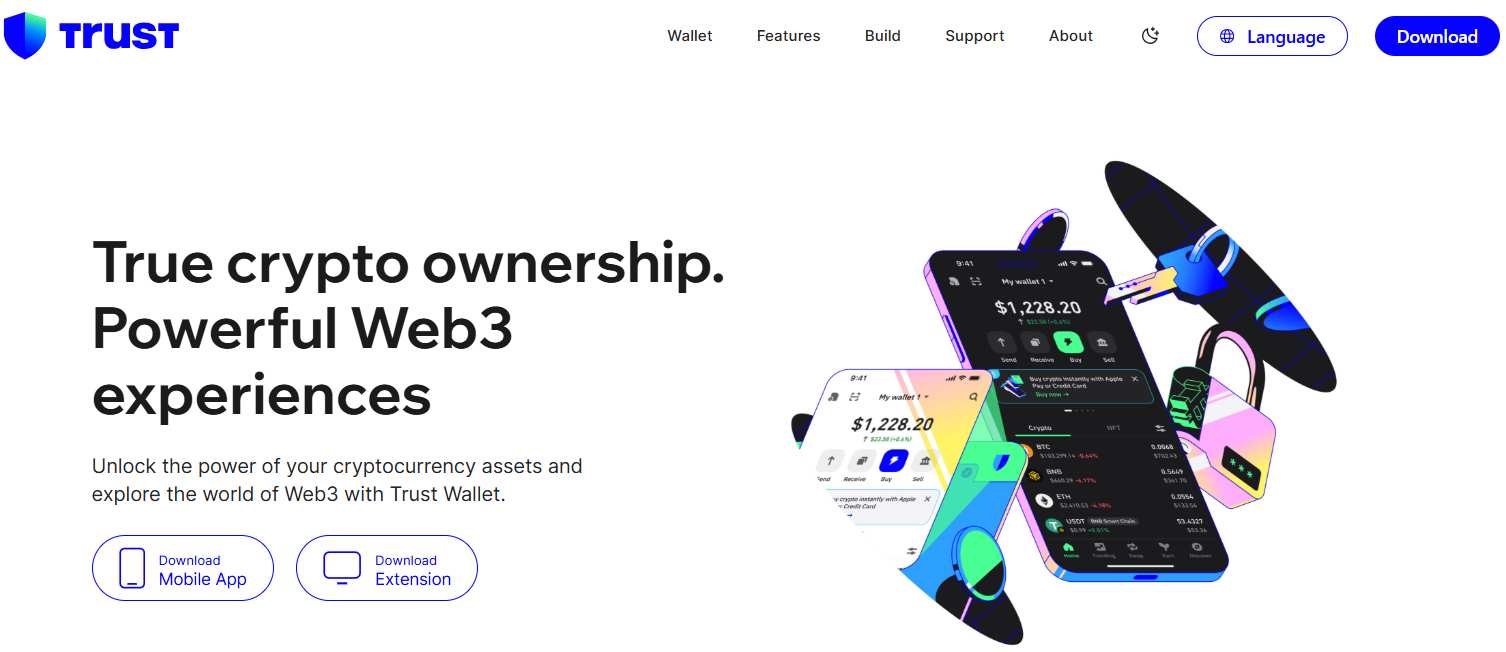
Trust Wallet is available as a mobile application for both iOS and Android users, along with a browser extension that works across Chrome, and, Brave browser. The wallet is known for its clean interface, where supported networks are built in by default rather than requiring users to manually configure network settings, which removes a common friction point for newer users.
Its functionality now goes well beyond basic storage. Users can access token swaps, earn features, and on chain interactions directly within the wallet, without relying on external tools. More recently, Trust Wallet has expanded into active trading through a collaboration with Aster DEX, bringing perpetual trading support directly into the wallet interface. This progression highlights how Trust Wallet has developed from a simple Ethereum wallet into a broader self custody platform built for more than just holding digital assets.
Trust Wallet Pros and Cons
| 👍 Trust Wallet Pros | 👎 Trust Wallet Cons |
|---|---|
| ✅ Fully non custodial with user controlled private keys | ❌ More optimized for mobile than browser workflows |
| ✅ No wallet fees for swaps, perps, or prediction markets | ❌ Support ticket responses can be slow |
| ✅ No Trust Wallet fees on fiat on and off ramps | ❌ Hardware wallet support limited to browser extension |
| ✅ Supports 111+ networks with native built in access | |
| ✅ Built in perpetual trading via Aster DEX | |
| ✅ In wallet crypto swaps across multiple networks | |
| ✅ Prediction markets available directly inside the wallet | |
| ✅ Easy wallet funding through Binance P2P | |
| ✅ Built in DEX and NFT spam protection |
Getting Started With Trust Wallet
Trust Wallet is a decentralized, self custodial wallet, which means it can be used by anyone without KYC checks or regional restrictions. You do not need to create an account or share personal details to get started. Access is open, and the wallet functions the same regardless of where you are located.
The setup process is simple. You download the app, create a wallet, and secure your recovery phrase. We also have a step by step guide available for users who want a clear walkthrough of the setup and basic security steps.
After creating the wallet, you can start using it right away. Supported networks are already built in, so there is no need to manually add network details. You select the network, use the wallet address, and send or receive digital assets without additional configuration. This keeps the experience practical and focused on basic usage rather than setup complexity.
Trust Wallet Network Supported
Trust Wallet supports a wide range of blockchain networks. What started as an Ethereum only mobile wallet has expanded over time to support more than 111+ networks, covering both EVM and non EVM ecosystems.
One important detail is that this support is native. You do not need to install plugins, download separate add ons, or manually configure network settings. When Trust Wallet adds support for a network, it appears directly in the wallet’s network list. You simply select it and start using it.
In addition to all major EVM networks, Trust Wallet supports several popular non EVM blockchains such as Bitcoin, Solana, Cardano, and Sui, along with many others. If you are unsure whether a specific network is supported, you can check it using our Trust Wallet network finder by entering the network name and confirming availability before setting up your Trust Wallet.
Trust Wallet Fees
Trust Wallet itself does not charge any fees for creating or using a wallet. There are no costs for holding assets, receiving funds, or accessing core features such as swaps, perpetual trading, or fiat on and off ramps. The wallet does not add its own service fees on top of these actions. Any fees you may see during swaps, fiat transactions, perpetual trading, or staking come from the external providers that power those features. In addition, users who hold the Trust Wallet Token (TWT) can receive discounts on certain supported features.
Trust Wallet Products and Services
Trust Wallet has expanded its services a lot. From being a simple Ethereum only mobile wallet, its services have grown in line with the changing needs of Web3 users.
Browser Extension
Trust Wallet’s browser extension is available on Chrome and Brave. It can be opened in full screen or set as a side panel on the right, which makes access quicker while browsing or using dApps. Most core wallet features are available through the extension, including asset management and swaps. Some functions remain mobile only, such as perpetual trading, so the extension is better suited for daily wallet use rather than advanced trading.
Mobile App
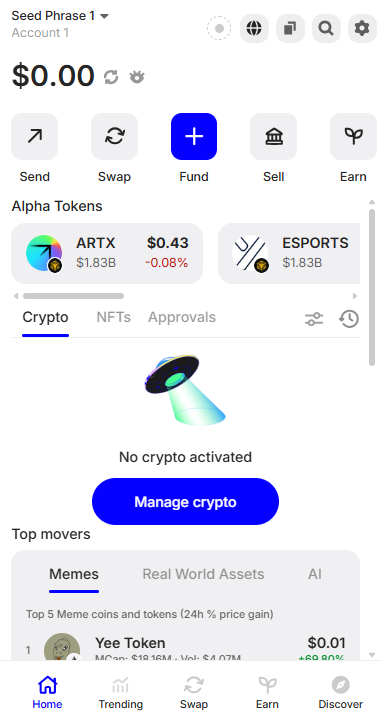
The Trust Wallet mobile app is available on the Google Play Store, Apple App Store, and also as a direct Android APK. The mobile app offers the most complete feature set, including swaps, staking, dApp access, and perpetual trading. It is designed for users who prefer managing assets on the go, with built in network support and a clean interface that avoids manual configuration across supported blockchains.
Fiat Ramp
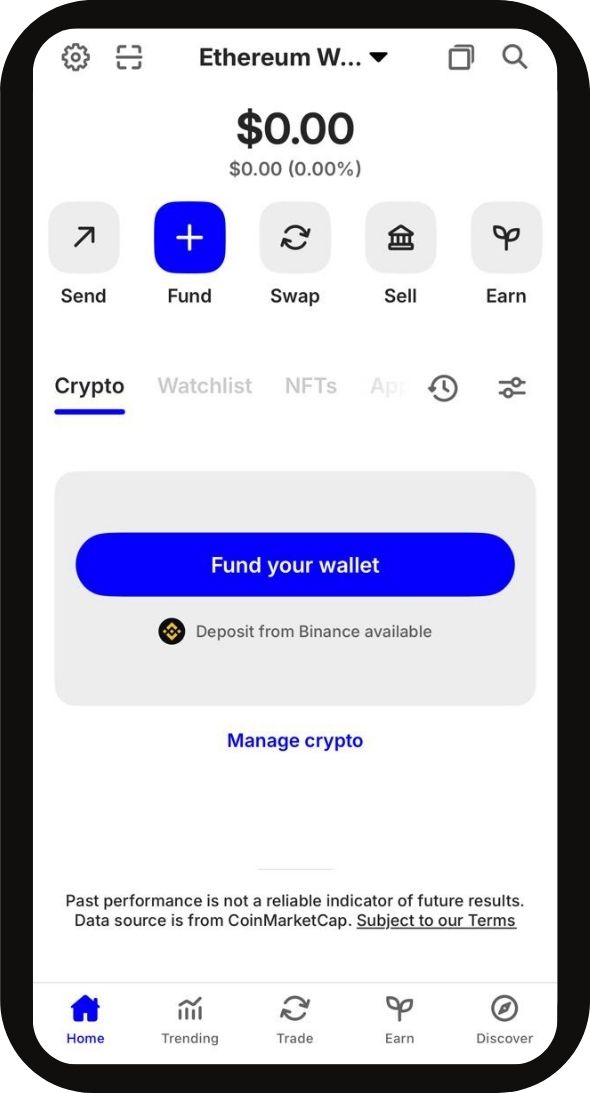
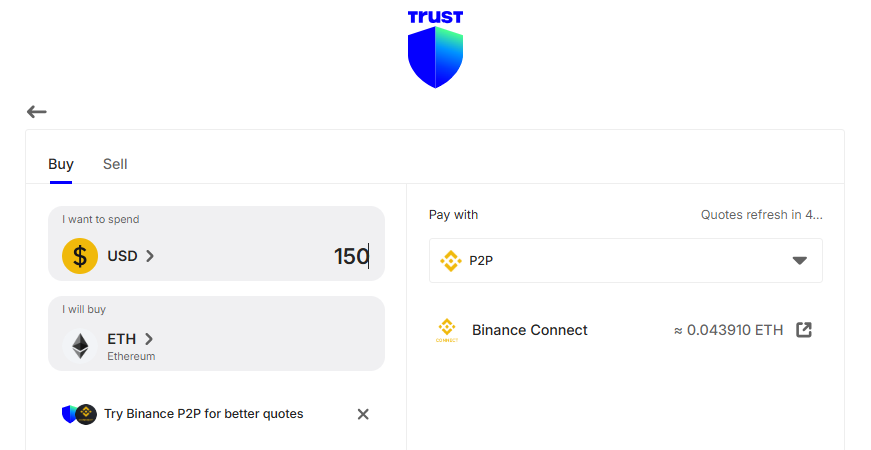
Trust Wallet includes a built in fiat ramp through integrations with third party payment providers. This allows users across many regions to buy crypto directly inside the wallet using more than 111+ supported fiat currencies. Payment options typically include debit and credit cards, along with mobile payment methods such as Google Pay and Apple Pay, depending on location. Wider regional access is also supported through integration with the Binance P2P marketplace, which lets users fund their Trust Wallet through peer to peer trades, often without completing wallet level KYC.
Swap
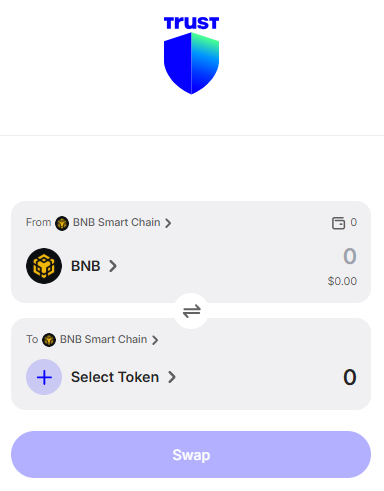
Trust Wallet allows users to swap crypto directly from the mobile app and browser extension without charging its own fees. The swap feature sources liquidity from multiple providers to find competitive rates, manage gas costs, and reduce slippage. Trust Wallet also supports Gas Sponsorship, which covers network fees when a wallet has no native token balance. This feature is available for swaps on supported chains such as BNB Chain, Solana, and Ethereum, with daily limits depending on the network.
Earn
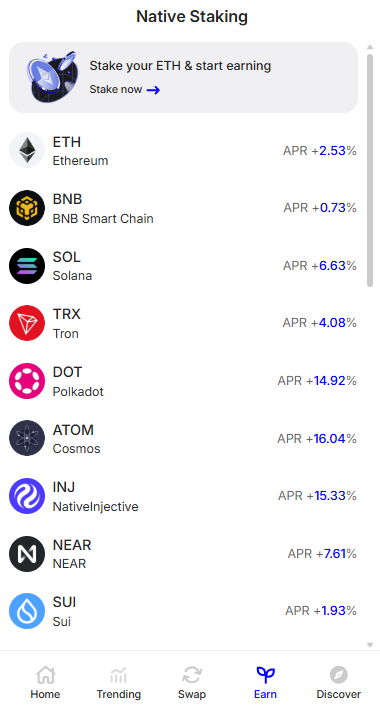
Trust Wallet offers more than 25 in wallet staking options. Users can stake supported assets directly from the wallet without moving funds elsewhere. The wallet does not charge staking fees, with rewards and commissions determined by the underlying network and validator.
TWT Token
The Trust Wallet Token (TWT) is the native utility token of the Trust Wallet ecosystem. It is mainly used to unlock fee discounts on supported features and participate in governance related decisions. TWT does not affect wallet ownership and is optional for regular wallet usage.
Loading...
Rank #Token Symbol
-
All-Time High
-
Current Price
-
Market Cap
-
Total Supply
-
dApp Browser
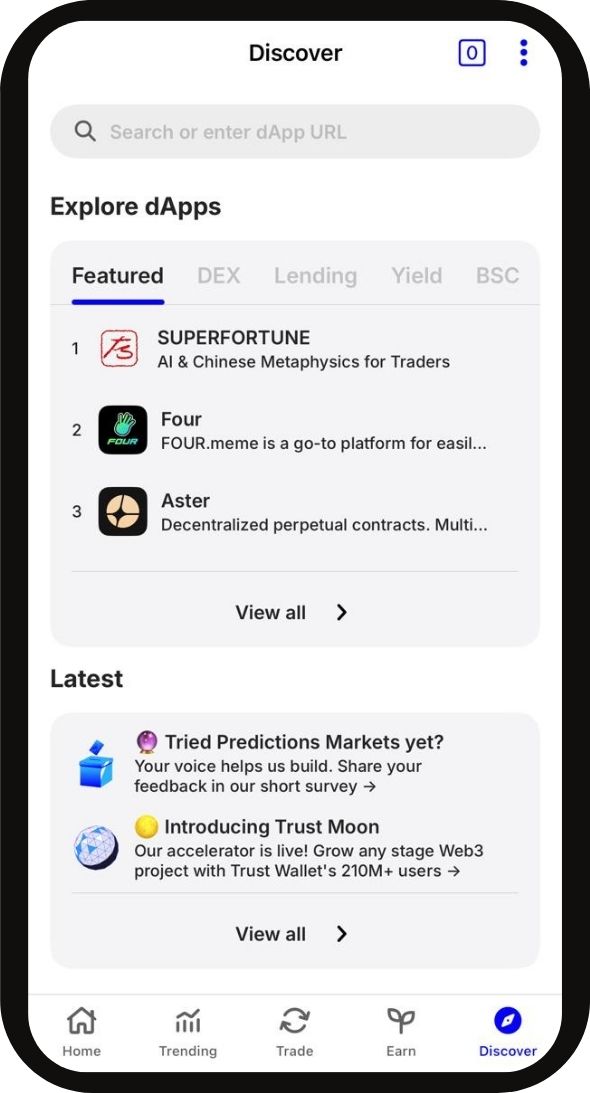
Trust Wallet Discover is a built in dApp browser available on the mobile app. With support for more than 111 networks, it brings real value by allowing users to access dApps across different blockchains from one place.
Users can interact with DeFi platforms, NFT marketplaces, games, and other on chain applications directly within the wallet, keeping everything connected and managed through a single self custodial Web3 wallet.
Prediction Markets
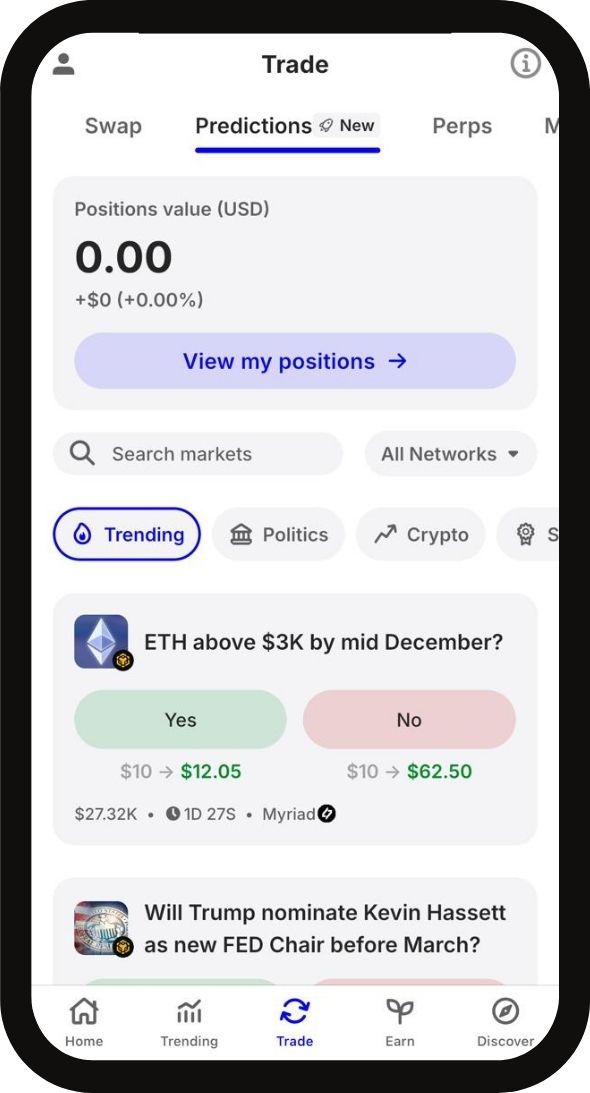
Trust Wallet includes a Prediction Markets feature that is available only on the mobile app. It allows eligible users to take positions on real world events directly from within the wallet while keeping assets in self custody.
The feature is currently powered by Myriad, with Kalshi and Polymarket expected to be integrated in future updates. Prediction markets appear under the Swaps section, and availability depends on region, with pricing, outcomes, and resolution handled by the external providers rather than Trust Wallet itself.
Perps Trading
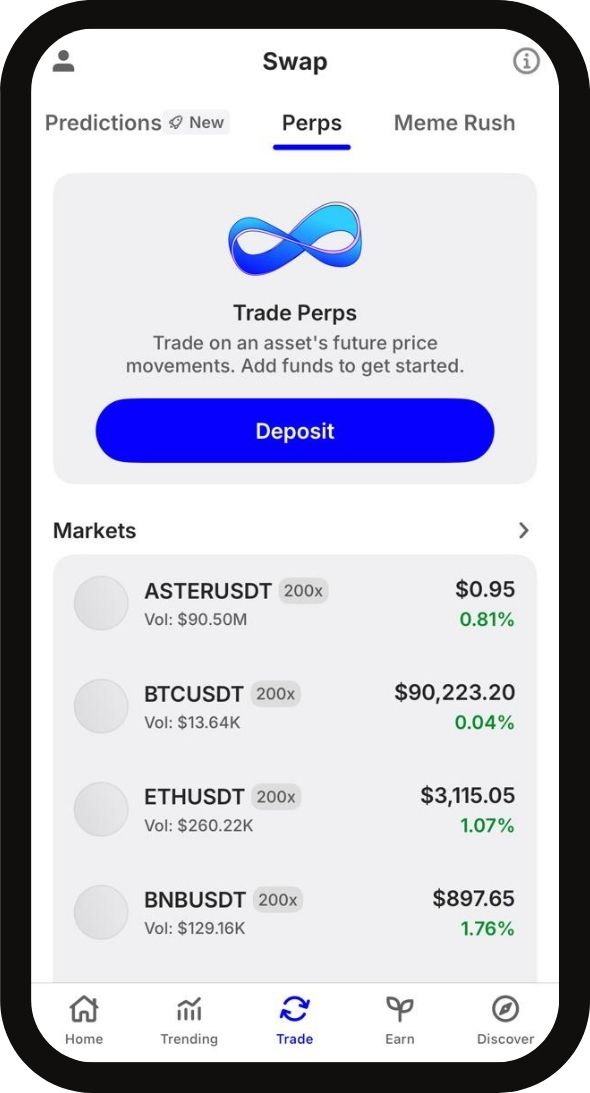
Trust Wallet supports perpetual futures trading through an integration with Aster DEX, allowing users to trade derivatives while retaining self custody of their funds. The feature is currently limited to the Trust Wallet mobile app and is not available on the browser extension.
Users can open long or short positions on supported markets with leverage of up to 100x, adjust margin, and close positions directly from the wallet. The perps interface is accessed through the Swaps section. Trade execution, funding rates, and settlement are handled by audited smart contracts. Availability varies by jurisdiction, and leverage trading involves liquidation risk.
NFTs
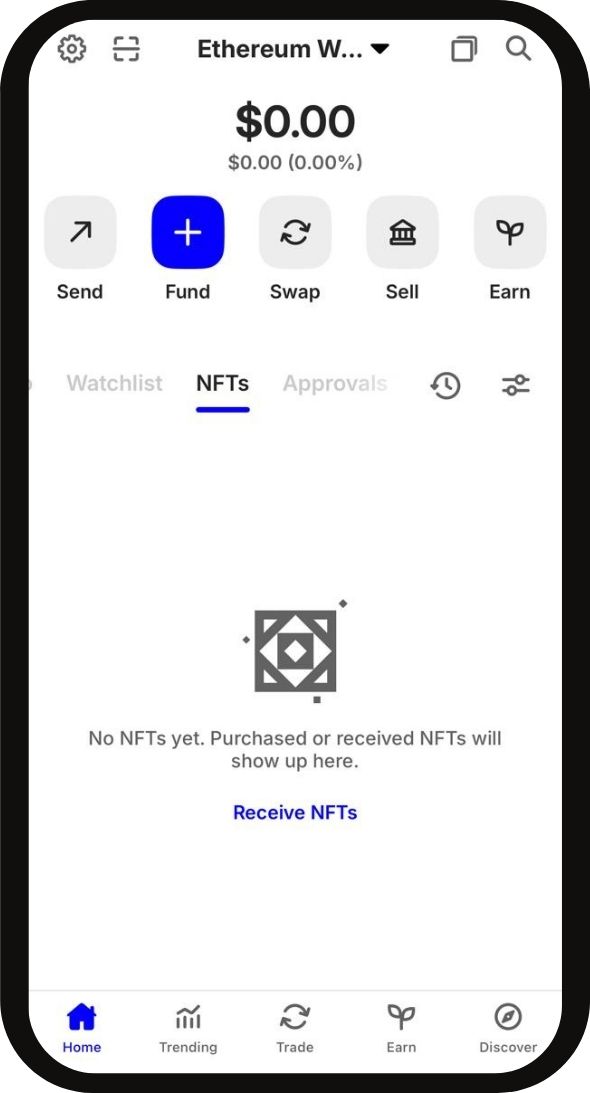
Trust Wallet supports NFTs across multiple blockchains, letting users store, view, and manage their NFT collections in one place. The wallet supports a large number of NFTs and removes the need to rely on separate apps for different networks. Users can also connect to common NFT marketplaces such as OpenSea, Rarible, Solanart, and Axie Marketplace to manage and interact with NFTs directly through the wallet interface.
Trust Wallet Security
Trust Wallet treats security as an ongoing process rather than a one time setup. It operates as a self custody wallet, meaning private keys are generated and stored locally on the user’s device and never leave it. The wallet uses strong encryption standards to protect local data, with optional encrypted cloud backups for recovery. Trust Wallet has undergone multiple independent audits by firms such as CertiK, Halborn, and Cure53, and holds ISO 27001 and ISO 27701 certifications.
While Trust Wallet has faced past incidents, including vulnerabilities in 2018 and 2022 affecting limited wallet versions, these events led to tighter controls and added protections. Features like the built in Security Scanner now flag malicious contracts, unsafe NFTs, and risky transactions before approval. The wallet also supports Ledger integration on the browser extension, adding an offline storage option for advanced users. Overall, Trust Wallet is considered safe to use, though like any software wallet, it is not entirely risk free.
Trust Wallet Customer Support
Trust Wallet does not offer 24/7 live chat support. Users can reach the team through public channels such as X, Reddit, and official community spaces on Telegram and Discord. The support section inside the wallet covers common questions, and users can submit a ticket for account or technical issues. Trust Wallet also offers a chatbot in beta for basic guidance. That said, user feedback often points to slow response times for support tickets, especially for more complex cases.
MetaMask vs Trust Wallet
MetaMask and Trust Wallet are both widely used wallets, and for most users the choice comes down to personal preference and how they interact with Web3. Both now offer prediction markets, but they take different approaches. MetaMask introduced its prediction markets through Polymarket, which is a well known platform in this space. Trust Wallet currently integrates Myriad, with other providers expected later.
Perpetual trading is also available on both wallets. MetaMask’s perp trading is powered by Hyperliquid, while Trust Wallet integrates Aster DEX. Where Trust Wallet often has an edge is cost and ease of use. The wallet does not charge its own fees on features, which can be appealing for users who want to avoid extra costs. Network support is also simpler. Trust Wallet includes a wider range of EVM and non EVM networks by default, while MetaMask often requires users to install Snaps or manually configure networks to access additional chains.
Is Trust Wallet Safe?
Yes, Trust Wallet is generally safe to use when used correctly. It is a non custodial wallet, which means users are fully responsible for securing their recovery phrase and access credentials. Private keys are stored locally on the device and protected through strong encryption, with optional biometric access such as Face ID or Touch ID for added protection. Trust Wallet has been independently audited by security firms and holds strong ratings on platforms like Cer.live and CertiK Skynet.
The wallet has experienced past security incidents in 2018 and 2022, both tied to limited wallet versions, which led to internal security upgrades. Since then, Trust Wallet has added tools like the built in Security Scanner to flag risky transactions. Like all software wallets, careful user practices remain essential.
Bottom Line
Trust Wallet works well for users who want a self custodial wallet that stays simple while still supporting a wide range of Web3 activity. Its biggest strengths are native support for a large number of EVM and non EVM networks, a clean interface that avoids manual configuration, and access to features like swaps, staking, prediction markets, NFTs, and perpetual trading without adding wallet level fees. For users managing assets across multiple chains or looking for an all in self custodial wallet, this approach can be very practical.
That said, Trust Wallet does have a few trade offs worth noting. The overall experience is more mobile focused, which makes it very smooth on smartphones but can feel less accommodating for users who prefer a browser first workflow. Support response times are another common concern raised by users. If browser based usage is a priority, it may be worth comparing this with alternatives such as MetaMask.
FAQs
1. Is Trust Wallet completely non custodial?
Yes. Trust Wallet is a self custodial wallet, which means users fully control their private keys and recovery phrase. Trust Wallet does not store keys, passwords, or recovery data on its servers.
2. Does Trust Wallet require KYC?
Trust Wallet itself does not require KYC. However, certain third party services inside the wallet, such as fiat on ramps or specific prediction markets, may apply their own KYC rules based on region.
3. What happens if I lose my Trust Wallet recovery phrase?
If the recovery phrase is lost and you lose access to your device, the wallet cannot be recovered. Trust Wallet cannot reset or retrieve recovery phrases, as it does not have access to user keys.
4. Can I use Trust Wallet on multiple devices?
Yes. You can restore the same wallet on multiple devices using your recovery phrase. However, Trust Wallet does not sync wallets automatically across devices without manual restoration.