


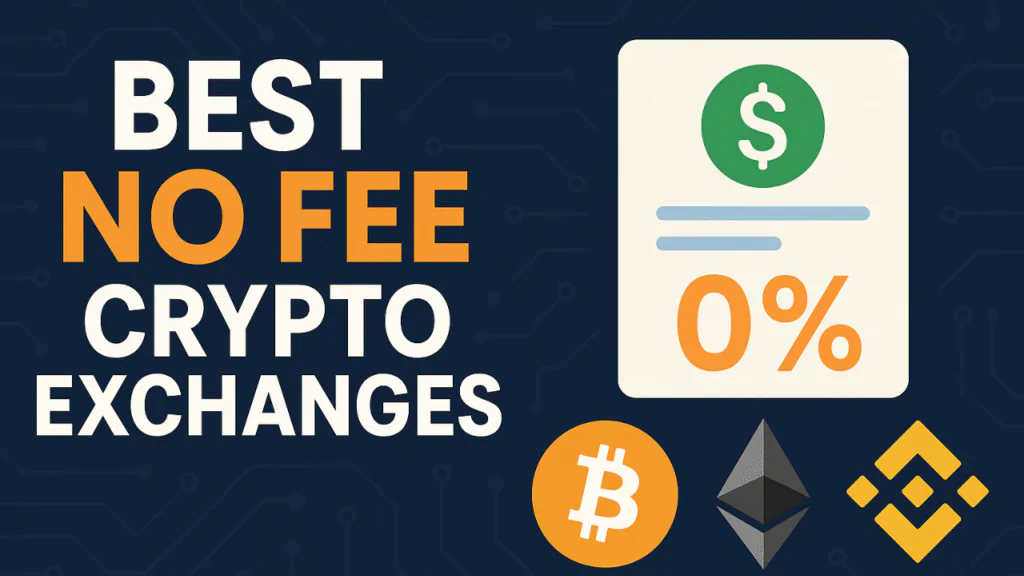
- • No fee crypto exchanges can help traders reduce trading costs, but spreads, slippage, funding rates, and liquidity still affect the real cost of each trade.
- • Some platforms offer 0% fees on both maker and taker orders, while others only remove fees for limit orders, selected pairs, or spot trading.
- • The best zero-fee exchange should not only have low fees, but also strong execution, clear withdrawal rules, proof of reserves, and a reliable security history.
Crypto trading courses usually focus on chart analysis, indicators, and trading strategies to help people turn trading into a profitable side hustle. But one factor many traders overlook is exchange fees, even though they directly affect profitability over time. A lot of crypto exchanges now claim to offer zero-fee trading, but trust still matters when choosing where to trade. That is why we analyzed 100s of crypto exchanges to find the best no fee crypto exchanges, ranking them based on several key factors that we will discuss throughout this guide.
Top 6 No Fee Crypto Exchanges Compared
The idea of a zero-fee crypto exchange sounds great. You place trades and keep more of the profit instead of paying trading fees on every order. But once you actually start trading, things like wide spreads, poor liquidity, delayed execution, and inflated quoted prices can quietly increase your trading costs and make trading far more frustrating, especially when orders fail to execute at your target price.
That is why we ranked the best zero fee crypto exchanges based on several key factors:
- Spread: We checked how much difference existed between buy and sell prices during active trading hours.
- Liquidity: Higher liquidity makes it easier to enter and exit trades without heavy slippage.
- Exchange Trust Score: Platforms with stronger security history, transparency, and overall reputation ranked higher.
- Trading Pairs: We considered how many spot and futures pairs were available for traders.
- Fee Structure Transparency: Some exchanges only offer zero fees on selected pairs, so we looked at how clear their pricing actually was.
- Trading Experience: We also considered platform stability, execution speed, charting tools, and overall usability.
So, based on these factors, these are the best crypto exchanges with zero trading fees:
1. KCEX
KCEX is a relatively recent exchange, founded in 2021, and is our top choice for traders looking for a zero-fee trading platform. On KCEX, spot trading comes with 0% maker fees and 0% taker fees, whereas futures trading also follows a very similar structure with 0% maker fees and only 0.01% taker fees. So technically, if you mainly trade using limit orders, you can trade futures here without paying direct exchange fees, while taker orders still come with one of the lowest fees comparatively.
| KCEX Fees | Maker Fee | Taker Fee |
|---|---|---|
| Spot | 0.00% | 0.00% |
| Futures | 0.00% | 0.01% |
Another factor that makes the platform stand out is the number of trading pairs available. Traders can choose from up to 839 spot assets to trade with zero fees, while futures traders get access to around 687 USDT perpetual contracts. Their fee structure is also transparent and clearly stated on the platform. KCEX does not use a dynamic fee model, so higher trading volume does not reduce or increase your trading fees over time. However, users signing up with a valid KCEX referral code can still access up to $16,000 in sign-up bonuses along with an additional 10% trading fee discount.

At the same time, while comparing futures exchanges, it is important to pay attention to funding rates as well, because even if you are not paying direct trading fees on limit orders, funding rates still matter. In KCEX’s case, funding rates can sometimes run higher compared to larger exchanges, so it is worth comparing them on platforms like CoinGlass before opening positions.
The main trade-off with KCEX is liquidity. The exchange currently has a trust score of 6, and liquidity is still lower compared to bigger platforms. On major pairs, order execution is usually fast with low latency, so trading does not feel delayed. But on smaller or obscure tokens, spreads and slippage can become more noticeable. The average spread on KCEX sits around 1.247%, which is moderate overall, but larger trades or high-frequency trading strategies are still better kept to the top pairs.
KCEX also does not require KYC and allows users to withdraw up to 30 BTC daily without verification. However, the exchange does not support direct fiat deposits or withdrawals, so users will still need a separate fiat-to-crypto exchange before transferring funds over to KCEX.
For a more detailed breakdown, check out our complete KCEX review.
Key Features
- 0% spot trading fees with 0% futures maker fees
- Trade 839 spot assets and 687 USDT perpetual contracts
- No KYC required with up to 30 BTC daily withdrawals
- Fast order execution on major trading pairs
- Transparent fixed fee structure with no dynamic VIP pricing
2. Bitfinex
Next on the list is a legacy exchange that has been around since 2012, Bitfinex, which recently made changes to its fee structure and now ranks among the top no fee crypto trading platforms. The exchange currently holds a trust score of 6.3, while also maintaining relatively tight spreads at around 0.366% with moderate liquidity overall according to CoinGecko data. Because of that, slippage usually stays lower compared to many smaller zero-fee exchanges, even on less active trading pairs.
| Bitfinex Fees | Maker Fee | Taker Fee |
|---|---|---|
| Spot | 0.00% | 0.00% |
| Futures | 0.00% | 0.00% |
On Bitfinex, users can trade both spot and futures markets without paying direct trading fees, regardless of whether they place maker or taker orders. The overall market selection is smaller compared to some larger derivatives exchanges though. Bitfinex currently supports around 79 spot coins and roughly 84 perpetual contracts for futures trading. Alongside zero-fee trading, users also get access to crypto options markets, although options trading itself still comes with separate fees.
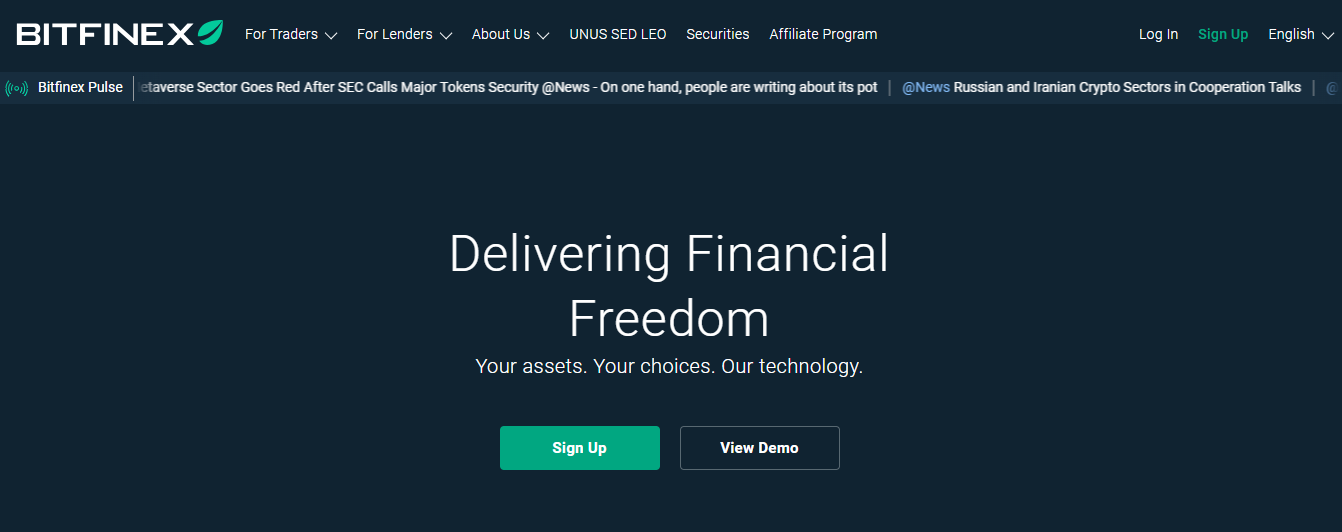
Another reason Bitfinex stands out is regulation and transparency. The platform operates with mandatory KYC requirements, publishes proof of reserves, and remains available across most European regions, which makes it one of the stronger choices for traders specifically looking for a zero fees crypto exchange in Europe.
From a trading experience perspective, Bitfinex feels very different from beginner-focused exchanges. The platform offers a dense and highly customizable workspace packed with professional trading tools, advanced order types, and detailed market data. For experienced traders, this setup feels closer to using a professional trading terminal rather than a simplified retail exchange.
For a deeper look at its trading tools, liquidity, and supported regions, check out our full Bitfinex review.
Key Features
- Zero-fee trading on both spot and futures markets
- Tight 0.366% spreads with moderate liquidity
- Professional trading terminal with advanced order tools
- Mandatory KYC with published proof of reserves
- Access to spot, perpetuals, and crypto options trading
3. Lighter
Perpetual DEXes have seen a massive rise in demand recently, and while decentralization is the main reason behind their popularity, Lighter has mainly built its name around zero-fee trading, which is why we included it in our list as a zero-fee perp DEX option for traders.
| Lighter Fees | Maker Fee | Taker Fee |
|---|---|---|
| Spot | 0.00% | 0.00% |
| Futures | 0.00% | 0.00% |
Lighter is a decentralized spot and perpetual exchange built as a custom ZK-rollup on Ethereum. The platform offers two account types, with its Standard account keeping fees at 0% for both maker and taker orders across spot and futures trading. So unlike many “low-fee” perp DEXes, Lighter actually keeps the direct trading fee at zero.

The platform itself feels much closer to a centralized exchange compared to most DeFi trading platforms. Trading is smooth for DeFi standards, latency is competitive, and the interface does not feel overly complicated. Under the hood, Lighter uses ZK proofs for matching, liquidations, and risk checks, while still anchoring settlement to Ethereum, giving it a stronger security setup compared to many smaller perp DEXes.
Lighter is also heavily focused on derivatives trading rather than spot markets. Traders get access to more than 173 perpetual contracts with up to 50x leverage, while spot trading support is currently limited to just 8+ assets. Alongside cryptocurrencies, the platform also offers tokenized markets like stocks, forex, and other assets that can be traded with zero fees. The exchange also uses shared margin across perp positions, which helps with capital efficiency, especially for traders managing hedged positions.
But even with zero-fee trading, execution quality still matters. Compared to centralized exchanges, latency on Lighter can sometimes feel higher, especially during active market conditions. That means slippage or delayed fills can quietly increase trading costs for very active traders, even if the direct trading fee itself stays at zero.
If you want a closer look at its trading engine, leverage setup, and DeFi infrastructure, check out our full Lighter review.
Key Features
- 0% maker and taker fees on spot and perpetual trading
- 173+ perpetual contracts with up to 50x leverage
- Built as a custom ZK-rollup on Ethereum
- Shared margin across perp positions for better capital efficiency
- CEX-like trading experience with Ethereum-backed settlement
4. Ourbit
As we see the crypto exchange market continuing to expand, new exchanges like Ourbit also deserve attention. Ourbit is a recent entrant, launched in 2023, and markets itself as “SuperCEX, built by degens for degens”. The platform offers zero-fee spot trading to all users, and its no-KYC model makes it accessible to users across the globe, with a high withdrawal limit of 30 BTC per day.
| Ourbit Fees | Maker Fee | Taker Fee |
|---|---|---|
| Spot | 0.00% | 0.00% |
| Futures | 0.02% | 0.04% |
Ourbit’s zero-fee model only applies to spot trading. Users can trade over 607 spot assets, mostly paired with USDT, without paying spot trading fees. Futures markets are also attractive for traders who prefer high leverage, but they do carry fees of 0.02% maker and 0.04% taker. On futures, users can open long or short positions on over 616 perpetual contracts, with leverage of up to 400x.

Though the platform is relatively new, Ourbit has earned a trust score of 8 through security practices like publishing proof of reserves and maintaining a hack-free record so far. Still, its operational history is limited, so that is something traders should keep in mind.
The downside, however, is fiat access. You cannot make direct fiat deposits because Ourbit does not offer a native fiat ramp. A third-party on-ramp is available, so users can still buy crypto through supported providers, but that usually comes with higher fees.
If we look at liquidity and spreads, liquidity on the platform is moderate, with an average bid-ask spread of 0.559%. This points toward tight spreads on major pairs, but liquidity can be lower on newly listed coins, which is normal across the board, even on larger exchanges like Binance.
For a closer look at its markets, fees, and no-KYC limits, you can read our full Ourbit review.
Key Features
- Zero-fee spot trading on 607+ crypto assets
- 616+ perpetual contracts with up to 400x leverage
- No-KYC trading with 30 BTC daily withdrawals
- Published proof of reserves with a trust score of 8
- Moderate liqudity with tight average spreads
5. Deribit
Next on the list we have Deribit, an exchange better known for specializing in Bitcoin and Ethereum options, futures, and perpetuals, and was also recently acquired by Coinbase. But alongside options trading, it also qualifies as a strong exchange with no-fee trading on spot and futures trading.
| Deribit Fees | Maker Fee | Taker Fee |
|---|---|---|
| Spot | 0.00% | 0.00% |
| Futures | -0.01% | 0.05% |
The platform was launched in 2016 by John Jansen, and is a regulated exchange, so users are required to complete the KYC process before accessing its professional trading interface. Deribit is clearly built for high-volume and experienced traders, offering a dense, feature-rich workspace with strong execution quality. The platform also maintains one of the tightest spreads in this list, averaging around 0.055%, although liquidity overall is still lower compared to some larger exchanges in this ranking.
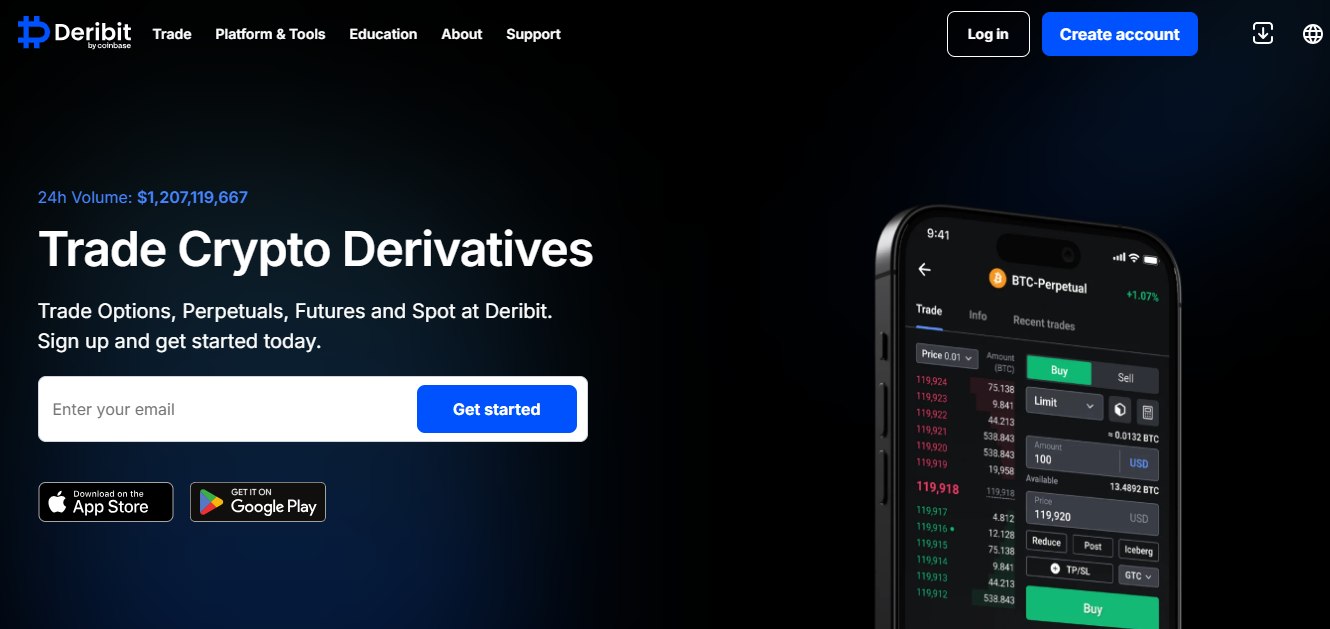
On Deribit, users get access to both spot and futures trading, but the platform itself is a little limited in terms of market selection. Currently, it offers 9 spot assets along with more than 78 perpetual contracts. Spot trading fees are kept at 0% for both maker and taker orders. On futures, maker fees are also kept at 0%, and on some pairs even go as low as -0.01%, meaning traders placing maker orders can actually receive a rebate. Futures taker fees, however, are not free, with the platform charging 0.05% on perpetual contracts.
The security side of Deribit is relatively strong overall. The platform publishes proof of reserves and currently holds a trust score of 7. Deribit was previously affected by a hacking incident where approximately $28 million in BTC was lost, but the platform recovered from the situation and continued operations normally. Its recent Coinbase acquisition also adds additional credibility to the exchange.
For a more detailed breakdown of its options markets, fee structure, and trading tools, check out our full Deribit review.
Key Features
- 0% spot trading fees with futures maker rebates on select pairs
- Tight 0.055% spreads built for active traders
- Professional-grade options, futures, and perpetual trading
- Published proof of reserves with a trust score of 7
- Regulated exchange recently acquired by Coinbase
6. Gemini
Gemini is a popular choice for many traders, being a highly regulated and security-focused platform, and also amongst the best crypto exchanges in the US. It is also the last exchange in our list offering zero-fee trading. Gemini was launched by the Winklevoss brothers, and the platform can only be accessed after completing the KYC process. However, it does allow users to trade spot assets with no fees on maker orders.
| Gemini Fees | Maker Fee | Taker Fee |
|---|---|---|
| Spot | 0.00% | 0.02% |
| Futures | -0.01% | 0.03% |
On Gemini, you do not get completely waived trading fees. Spot trading fees are set at 0% for maker orders and 0.02% for taker orders. So while trading any of its 98+ spot assets, users placing maker orders can avoid direct trading fees, but taker orders still come with a relatively low 0.02% fee. Futures trading follows a very similar structure, with rebates available on maker orders. Futures fees on Gemini are set at -0.01% for maker orders and 0.03% for taker orders.
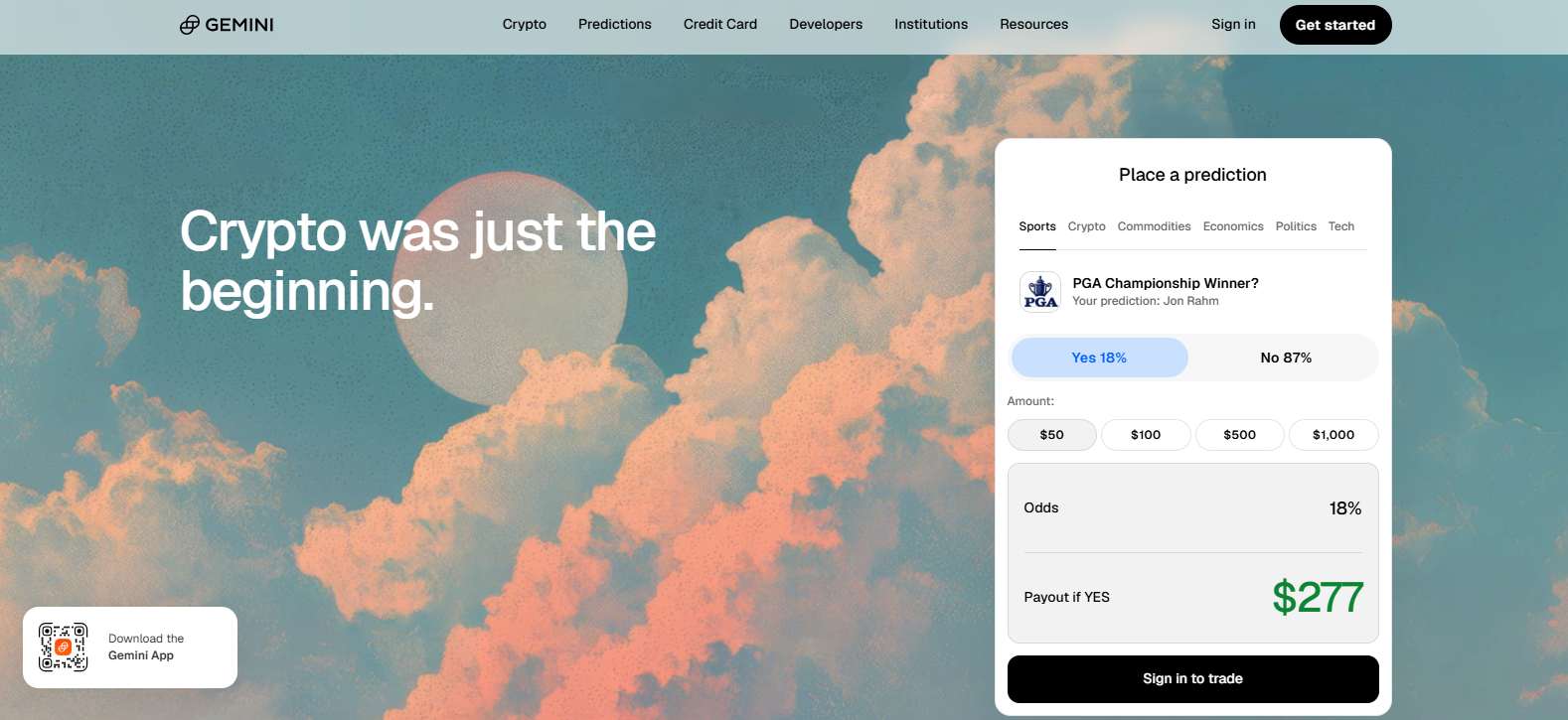
On the security side, Gemini is amongst the safer crypto exchanges, following high-standard security protocols and complying with US regulatory standards. The platform also publishes proof of reserves and undergoes regular security audits for transparency. At the same time, Gemini has still seen security-related incidents in the past, with losses across different breach-related events exceeding $40 million overall.
For a more detailed look at its fee structure, regulation, and trading experience, check out our complete Gemini review.
Key Features
- 0% maker fees on both spot and futures trading
- Regulated US-based exchange founded by the Winklevoss brothers
- 98+ spot assets with maker rebates on futures markets
- Proof of reserves and regular security audits for transparency
- Tight fee structure with low taker fees on spot and perpetuals
How Do Crypto Exchange Fees Work?
Crypto exchange trading fees are charged when your order gets executed. Most exchanges use a maker and taker fee model, where the fee depends on how your order interacts with the order book.
A maker order usually means you place a limit order that does not fill instantly. It sits on the order book and waits for another trader to match it. Since this adds liquidity to the market, exchanges usually charge lower maker fees, and some even offer 0% fees or rebates.
A taker order fills instantly against an existing order. This is usually what happens when you place a market order, or when your limit order executes immediately. Since it removes liquidity from the order book, taker fees are usually higher.
In simple terms:
- Maker orders are cheaper, but may take time to fill.
- Taker orders are faster, but usually cost more.
- 0% maker fees are useful for limit order traders.
- 0% taker fees are better for instant execution.
- Maker rebates mean some exchanges pay you for adding liquidity.
That is why, in our exchange reviews, we look at the full fee structure, including trading fees, spreads, funding rates, withdrawal costs, and fiat deposit charges.
What Additional Fees do Crypto Exchanges Charge?
Trading fees are only one part of what you pay on a crypto exchange. Even if an exchange offers 0% maker or taker fees, the final cost can still change because of how the trade is executed, how much liquidity is available, and how you move funds in or out of the platform.
The main additional costs include:
- Spread is the gap between the buy and sell price.
- Slippage happens when your order fills at a different price than expected.
- Low liquidity means there may not be enough buyers or sellers at your target price.
- Funding rates are payments charged on perpetual futures positions.
- Withdrawal fees are charged when you move crypto out of the exchange.
- Fiat deposit fees can apply when using cards, bank transfers, or third-party on-ramps.
- Network fees are blockchain fees paid when crypto is moved on-chain.
Some of these are direct fees, while others work more like opportunity costs. For example, if liquidity is low, your order may not fill at the price you wanted, or you may need to accept a worse price just to enter or exit the trade. That is why 0 fees trading should not only mean checking the exchange fee table, but also looking at spreads, liquidity, execution quality, and funding rates.
How to Pay Lower Exchange Fees
The easiest way to pay lower exchange fees is to understand how each platform gives fee discounts. Some exchanges reduce trading fees when you hold or use their native exchange token. Binance, for example, gives fee discounts when users pay trading fees with BNB, while some other exchanges use similar token-based discount models.
Another way is through promotions. Exchanges often run limited-time campaigns where selected spot or futures pairs come with 0 trading fees. These offers can be useful, but traders should always check whether the discount applies to maker orders, taker orders, specific pairs, or only a short campaign period.
Trading volume also matters. Many exchanges use VIP tiers, where higher 30-day trading volume can reduce maker and taker fees. Some platforms also allow traders to apply for lower fees by sharing their trading history from another exchange. Coinbase and OKX both have VIP matching programs where users can submit proof of trading volume or assets from another exchange to access lower fee tiers for a limited time.
So if you already trade with high volume somewhere else, it may be worth checking whether the exchange you are moving to offers VIP matching. Just keep in mind that these approvals usually come with conditions, time limits, and minimum volume requirements because the goal is to make the switch easier, not to give permanent discounts without activity.
Final Verdict
Zero-fee trading platforms can look very attractive, no matter how much capital you are trading with. If you save fees while opening and closing a trade, your profit margin naturally improves. In simple terms, lower fees can mean higher net profits.
But fees are only one part of the trade. You still need to look at spreads, liquidity, and execution quality. A wide spread can increase slippage, while weak liquidity can leave your maker order unfilled or force you into a worse price. So when selecting no fee crypto exchanges, make sure you pay attention to the other columns as well, not just the “fees” column, to make a better decision. An exchange with low fees may help you save money on paper, but it can still create other ways to lose more than regular trading fees.
If your goal is to reduce costs, you can also check our list of low fee crypto exchanges, where we discuss platforms with lower fees, better liquidity, stronger security, and clearer transparency.
FAQs
1. Are no fee crypto exchanges actually free?
Not always. Some exchanges offer 0% maker or taker fees, but traders may still pay through spreads, slippage, funding rates, withdrawal fees, or fiat deposit charges. That is why it is important to check the full fee structure instead of only looking at the trading fee column.
2. Which no fee crypto exchange is best for futures trading?
KCEX is a strong choice for futures traders because it offers 0% maker fees and 0.01% taker fees on futures, along with 687 USDT perpetual contracts. Lighter is also useful for traders who prefer a decentralized perp DEX with 0% maker and taker fees.
3. Do zero-fee crypto exchanges charge hidden fees?
They may not charge hidden trading fees, but traders can still face extra costs. These can include wider spreads, slippage, high funding rates, withdrawal fees, network fees, and third-party fiat on-ramp charges
4. Why do spreads matter on zero-fee exchanges?
Spreads matter because they affect the real price you pay when entering or exiting a trade. Even if trading fees are 0%, a wide spread can make your trade more expensive, especially on low-volume coins or during volatile market conditions.