


- •AAVE staking lets users earn rewards through the Safety Module while supporting protocol security.
- •Savings GHO offers stablecoin-focused yield without the cooldown period used in AAVE staking.
- •Staking AAVE requires a Web3 wallet, AAVE tokens, and gas fees on a supported EVM network.
Aave is one of the most prominent DeFi applications, home to billions in liquidity and often compared alongside major traditional financial platforms because of its scale in crypto lending and borrowing. Many new users exploring DeFi for the first time quickly come across AAVE, since lending and borrowing remain one of the biggest real-world use cases of blockchain technology. However, learning how to stake AAVE tokens, and understanding the full staking process, can still feel confusing for beginners. In this guide, we will walk through the exact steps needed to stake AAVE, along with everything you need to get started.
How AAVE Staking Works
In crypto, staking is generally similar to locking or depositing your assets into a protocol, and in return, you earn yield on those assets. Aave staking works in a somewhat similar way. Users deposit their AAVE tokens into the platform’s Safety Module and receive staking rewards in return. However, before you can start staking AAVE, there are a few things you will need first.
Web3 Wallets
In order to interact with Web3 DeFi applications, users need a Web3 wallet, and not every wallet works with every platform. Since AAVE is built on Ethereum and supports EVM-compatible networks, you will need a wallet that supports these networks in order to interact with the platform and stake your AAVE tokens. So the first step is to download and set up your Web3 wallet.
Gas Fees
With your Web3 wallet set up, the next step is making sure your wallet is funded, not only with AAVE tokens, but also with the relevant gas fee token.
For example, if you have AAVE on the Ethereum network, you will also need ETH tokens in the same wallet in order to pay for the gas fees for every transaction. You can buy ETH from centralized exchanges like Coinbase and then transfer it to your Web3 wallet before staking.
How to Stake AAVE Tokens: Step-by-Step Guide
So whenever you plan on staking Aave tokens, make sure your Web3 wallet is properly set up and funded with both AAVE tokens and the required gas fee tokens, and then follow the steps below to stake your AAVE tokens.
Step 1: First, open your browser, or the built-in dApp browser if you are using a Web3 mobile wallet, and head over to the Aave dApp.
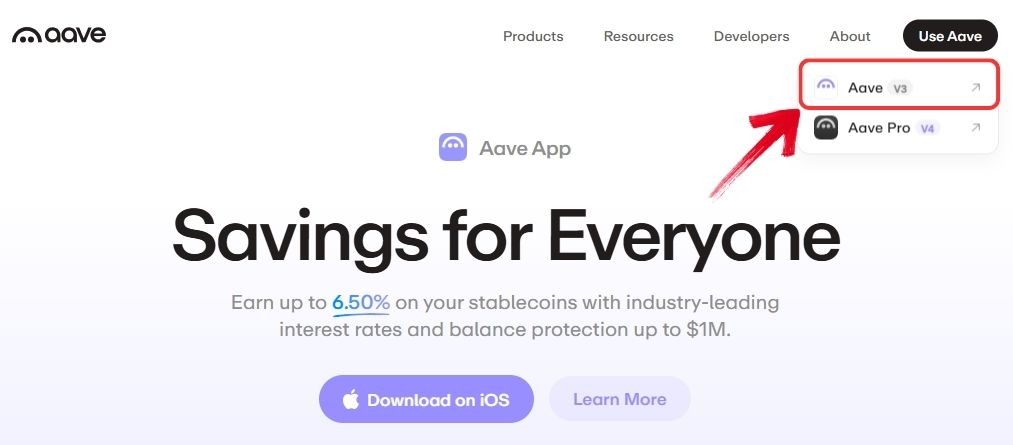
Step 2: Once you are on the homepage, click on the “Use Aave” button and then select the “Aave V3” module to launch the app.
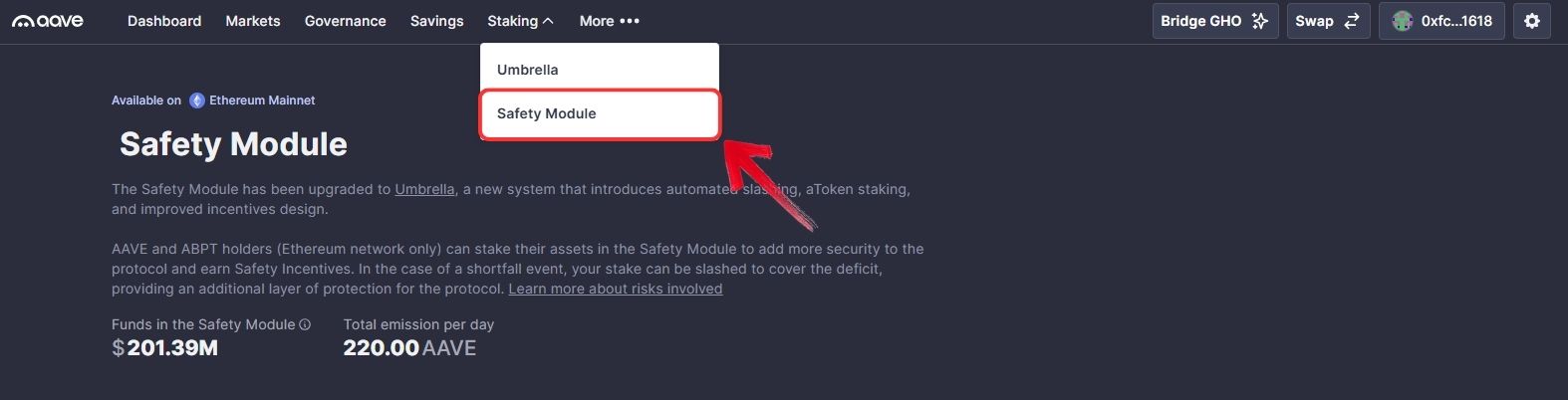
Step 3: AAVE staking is available through the Safety Module. From the top menu bar, click on the “Staking” tab and then select the “Safety Module” option.
Step 4: Inside the Safety Module page, head to the Stake AAVE section and click on the “Stake” button.
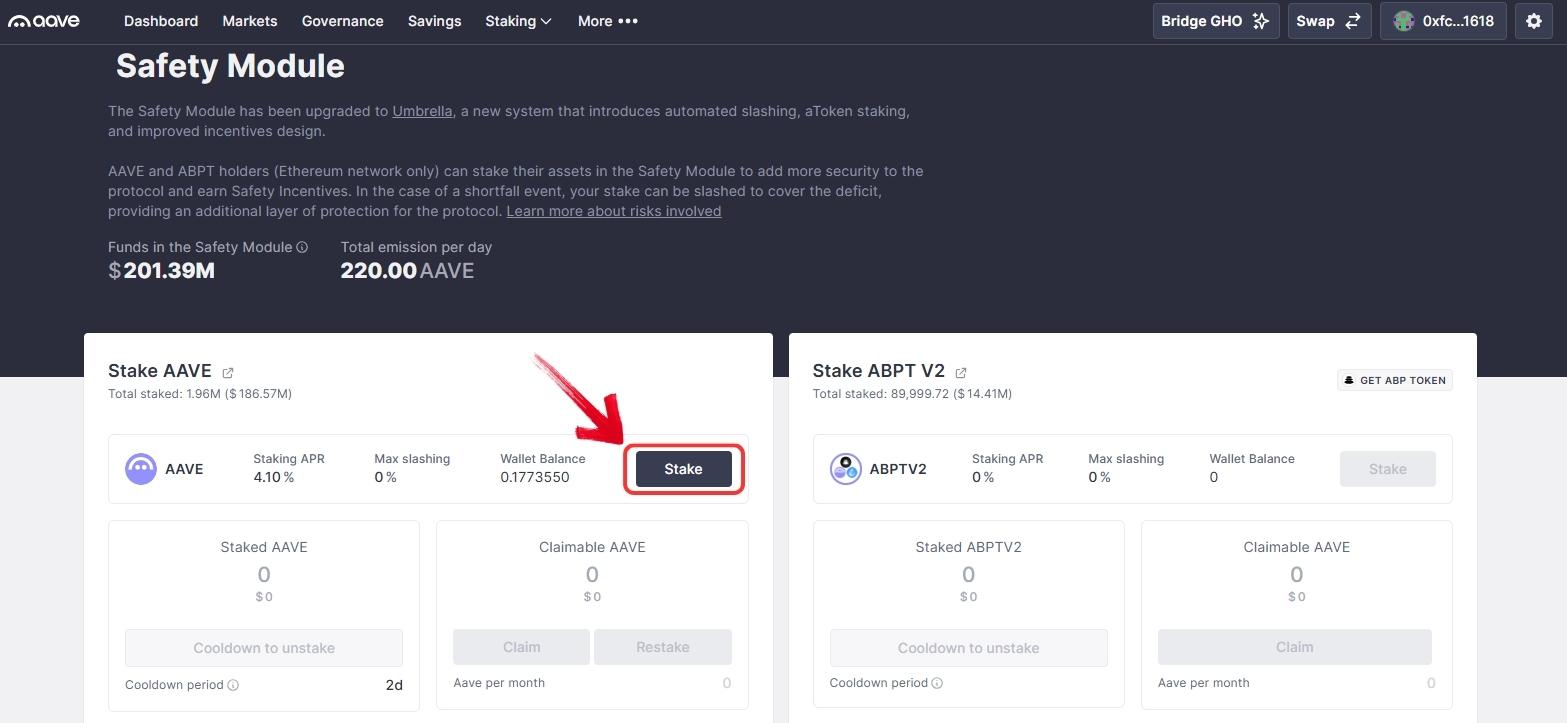
Step 5: You will now see the AAVE staking window, where you can stake the AAVE tokens currently available in your connected Web3 wallet.
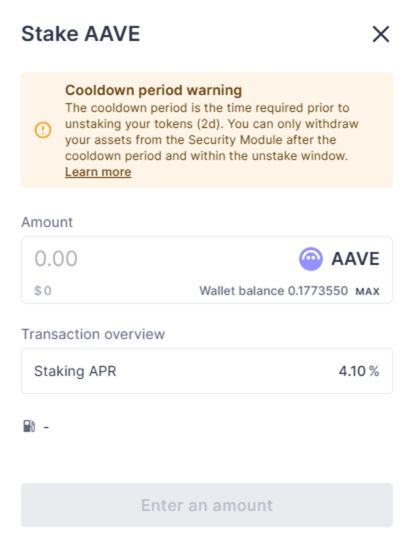
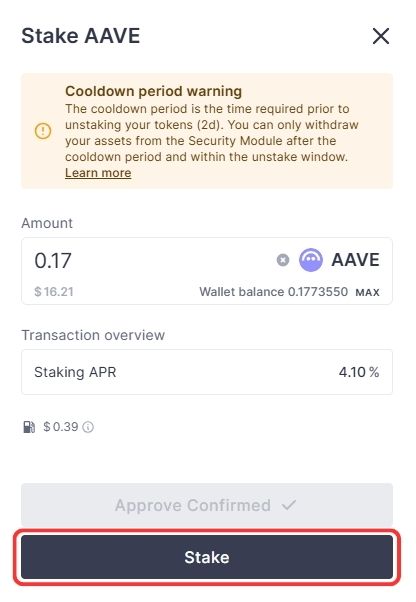
Step 6: To stake AAVE, enter the amount of AAVE you want to stake in the Amount field.
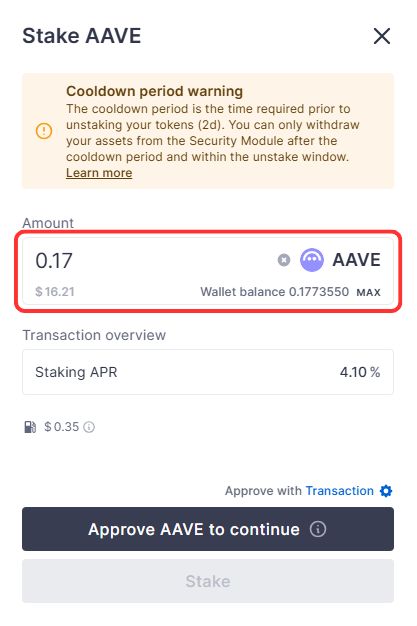
Step 7: Next, review the staking details, including the staking APR and estimated gas fees for the transaction. Once everything looks correct, click on the “Approve AAVE to Continue” button.
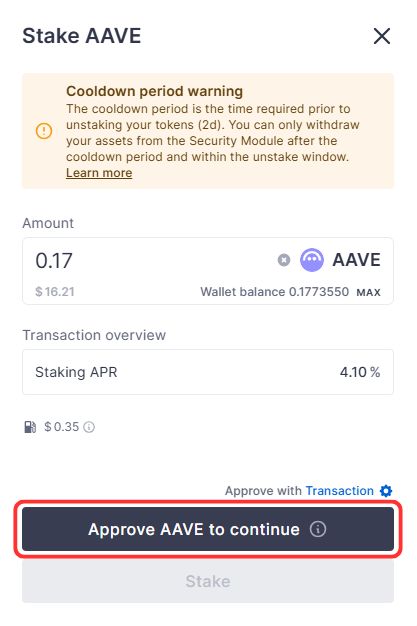
Step 8: After AAVE is approved in your wallet, click on the “Stake” button and then approve and sign the transaction in your Web3 wallet to complete the staking process.
What Is AAVE Staking?
Aave staking allows AAVE holders to lock their tokens inside the protocol’s Safety Module in exchange for rewards. These staked tokens help act as a financial backstop for the platform during extreme market events or protocol deficits. When users stake AAVE, they receive stkAAVE, which represents their staking position while still maintaining governance participation. In return for taking on this additional protocol risk, users earn staking rewards, usually paid in AAVE incentives. Aave’s newer Umbrella architecture also expands staking support to selected interest-bearing aTokens.
Aave (AAVE)
New TokenToken Symbol
AAVE
Current Price
Loading...
Daily Change
Loading...
All-Time High
Loading...
Daily Low
Loading...
Daily High
Loading...
24h Volume
Loading...
Market Cap
Loading...
FDV
Loading...
Total Supply
Loading...
Max Supply
Loading...
AAVE Staking vs GHO Yield
Staking Aave and earning yield through GHO serve two very different purposes within the ecosystem. AAVE staking is mainly designed to help secure the protocol, where users lock AAVE tokens in exchange for staking rewards and governance participation. Since stakers help act as a financial backstop for the protocol, the rewards are usually higher, but the risks are also greater.
GHO yield strategies, on the other hand, are more focused on stablecoin-based returns. Instead of staking a volatile crypto asset like AAVE, users deposit GHO to earn more passive and lower-volatility yield through savings-style products like sGHO.
| Feature | AAVE Staking | GHO Yield (sGHO) |
|---|---|---|
| Estimated APY | Higher | Lower |
| Main Risk | Slashing risk | Smart contract risk |
| Withdrawals | 2-day cooldown | No cooldown period |
| Rewards | AAVE incentives | GHO yield |
How to Earn Yield With GHO
Staking GHO on the Aave platform can help users earn up to 6% yield on their stablecoin holdings, and here is how you can stake GHO on the AAVE platform:
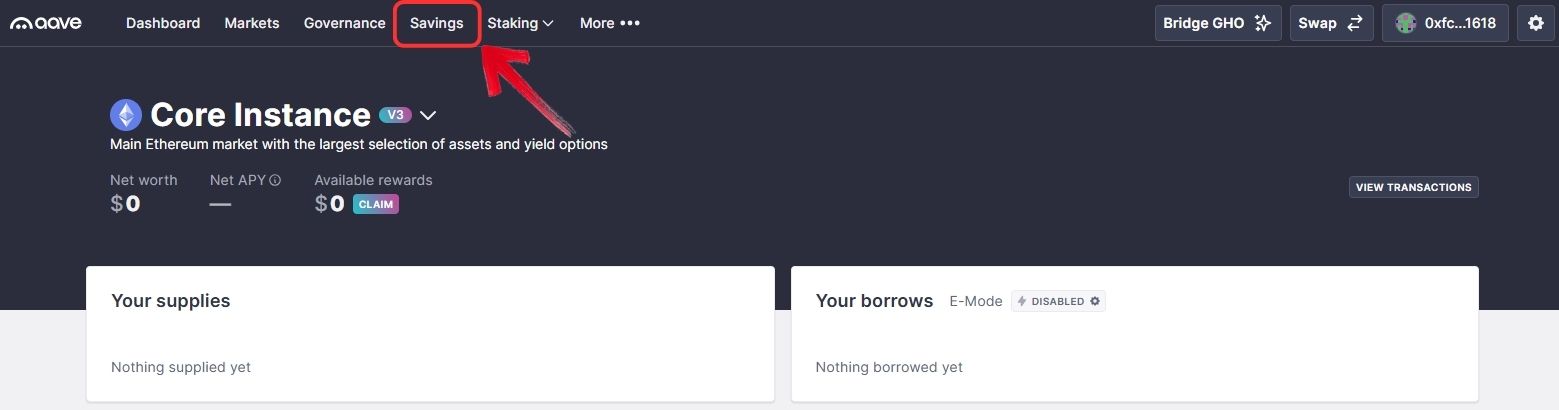
Step 1: On the Aave V3 platform, click on the “Savings” tab from the menu bar inside the AAVE app.
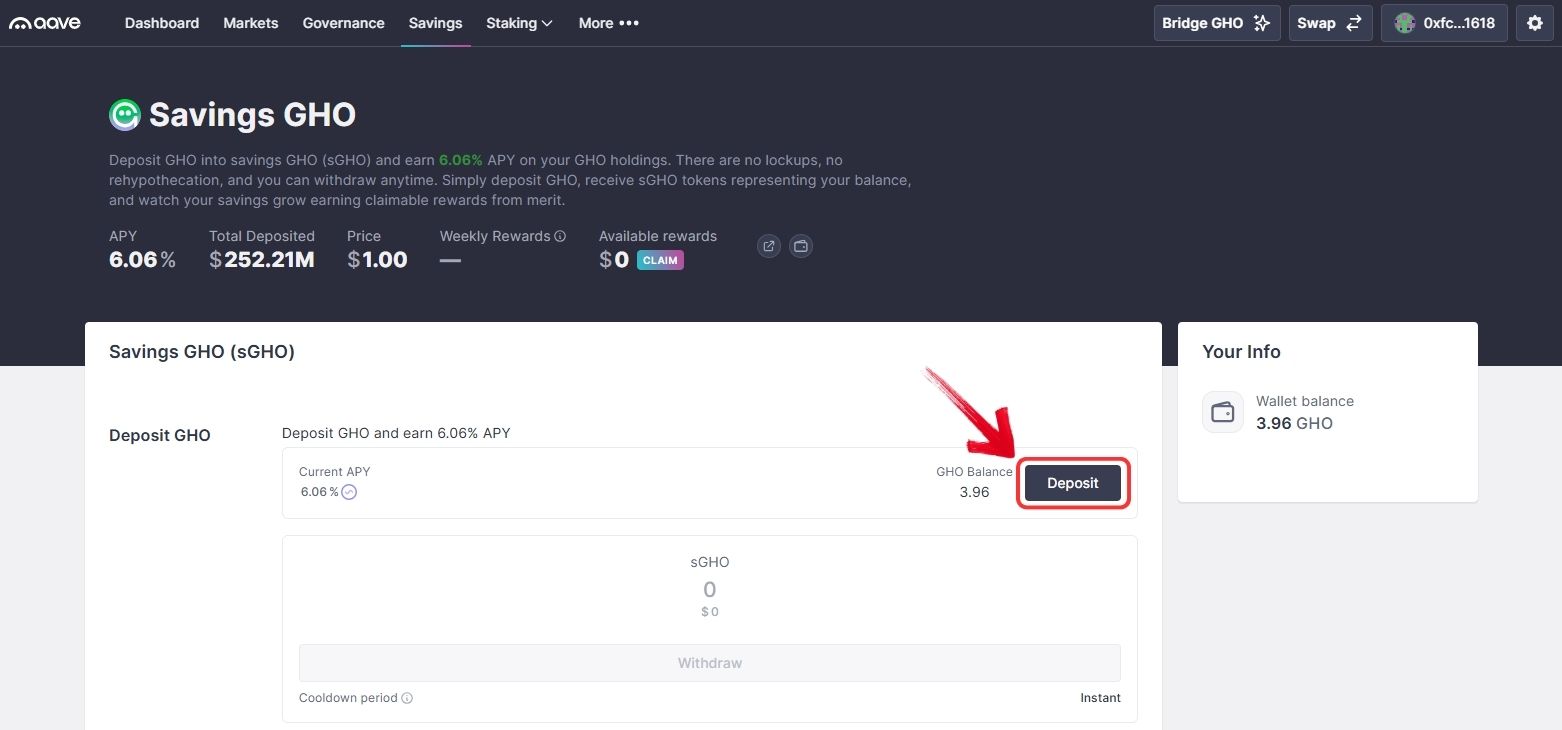
Step 2: Here, you will find the Savings GHO section. Click on the “Deposit” button to continue.
Step 3: Once you click on the Deposit button, the Savings GHO deposit window will open, where you can deposit the GHO tokens available in your connected Web3 wallet.
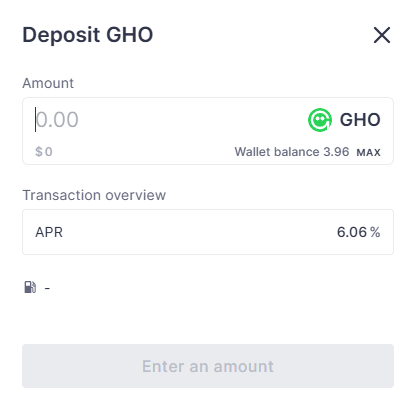
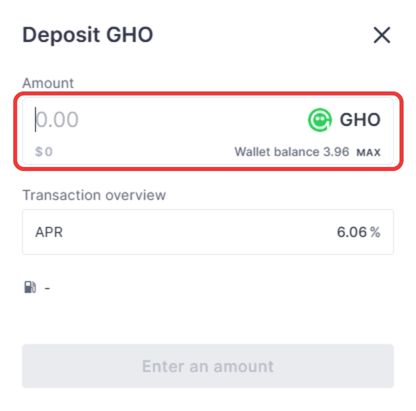
Step 4: Next, enter the amount of GHO you want to deposit into the savings vault in the Amount field.
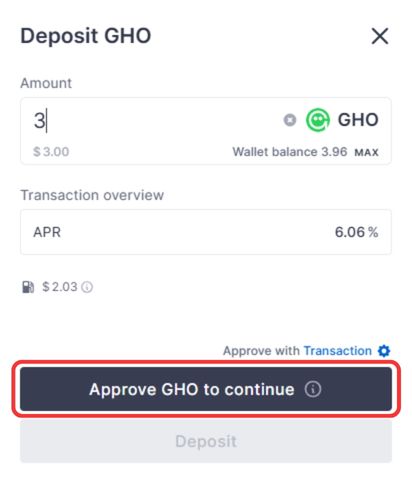
Step 5: Now review the deposit details, including the current savings APY and estimated gas fees for the transaction. Once everything looks correct, click on the “Approve GHO to Continue” button.
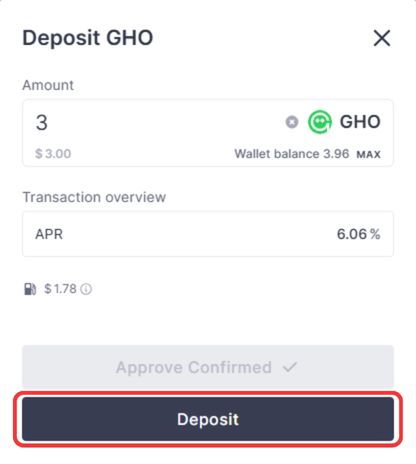
Step 6: After GHO is approved in your wallet, click on the “Deposit” button and then approve and sign the transaction in your Web3 wallet to complete the GHO deposit process.
Final Verdict
If you already hold Aave tokens and want to put them to use instead of leaving them idle in your wallet, AAVE staking gives you a direct way to earn additional rewards while participating in the protocol’s security model. At the same time, the platform also offers a more stablecoin-focused earning option through Savings GHO, giving users access to lower-volatility yield opportunities within the same ecosystem and security infrastructure. Alongside AAVE staking and Savings GHO, Ethena staking is another option users can compare, especially because it also combines token staking through ENA with stablecoin-based yield through USDe and sUSDe.
FAQs
1. What is the AAVE Safety Module?
The Aave Safety Module is the protocol’s staking system where users lock AAVE tokens to help support the platform’s security and stability in exchange for staking rewards.
2. How much can you earn staking AAVE?
Aave staking currently offers up to 4.10% APR through the Safety Module. Users looking for stablecoin-focused returns can also earn through Savings GHO, which offers around 6% APY, while some Umbrella-based strategies can reach up to 9% APY depending on the asset and market conditions.
3. What is the cooldown period for AAVE staking?
Once Aave tokens are staked in the Safety Module, they remain locked for a total 2-day cooldown period before they can be unstaked and withdrawn.