


- •ENA staking requires a Web3 wallet, supported network selection, and ETH for gas fees.
- •Staking USDe converts your tokens into sUSDe, which automatically accumulates rewards over time.
- •ENA staking offers ecosystem exposure, while sUSDe focuses more on stablecoin-based yield generation.
Crypto offers several ways to earn, including trading, holding, participating in airdrops, and staking, which is often considered one of the simpler ways to earn while continuing to hold assets. Ethena, one of the larger DeFi protocols in the market, caters to both investors looking for ecosystem exposure and users who prefer more stable, yield-focused strategies through its ENA staking and USDe staking options. In this guide, we will walk through the steps required to stake ENA tokens, along with the important things to understand if you are fairly new to Web3 wallets, DeFi platforms, and onchain transactions.
How Ethena Staking Works
Unlike traditional finance, where you simply create an account, deposit funds, and receive returns automatically after some time, things work a little differently in Web3, DeFi, and onchain transactions. Before you can stake on a DeFi platform like Ethena, you need to set up a few things properly, including a compatible Web3 wallet, the correct network, and enough crypto to pay gas fees. Without these, your transactions will not go through.
Web3 Wallets
For new users, it is important to understand that DeFi applications are built on specific blockchains and only support selected networks. Ethena is built on Ethereum, meaning you need your ENA tokens on the Ethereum network inside a compatible Web3 wallet before you can stake them. However, Ethena also supports 21 additional networks, most of which are EVM-compatible. So, depending on the network you plan to use, make sure your tokens are transferred through the correct supported network.
There are several wallets that support Ethereum and other EVM-compatible networks. Once your wallet is set up, you can connect it directly to the Ethena dApp and interact with the platform.
Gas Fees
Every transaction on a blockchain requires a fee known as a gas fee. This includes staking ENA, unstaking tokens, claiming rewards, or approving transactions through your wallet.
On Ethereum, gas fees are paid in ETH, so you must keep some ETH in the same wallet that holds your ENA tokens. If your wallet does not have enough ETH, the transaction will fail even if you already hold ENA tokens. Similarly, if you are using another supported EVM-compatible network, you will need that network’s native token to pay gas fees.
You can buy ETH from centralized exchanges like Binance and transfer it to your wallet. Users looking for no-KYC alternatives often use BloFin to buy and transfer Ethereum to their Web3 wallet.
How to Stake ENA Tokens: Step-by-Step Guide
So before you begin the staking process, make sure your ENA tokens are already transferred to a Web3 wallet on the Ethereum network. You should also keep some ETH in the same wallet to cover gas fees during staking transactions. Once everything is ready, here are the steps you need to follow to stake ENA tokens.
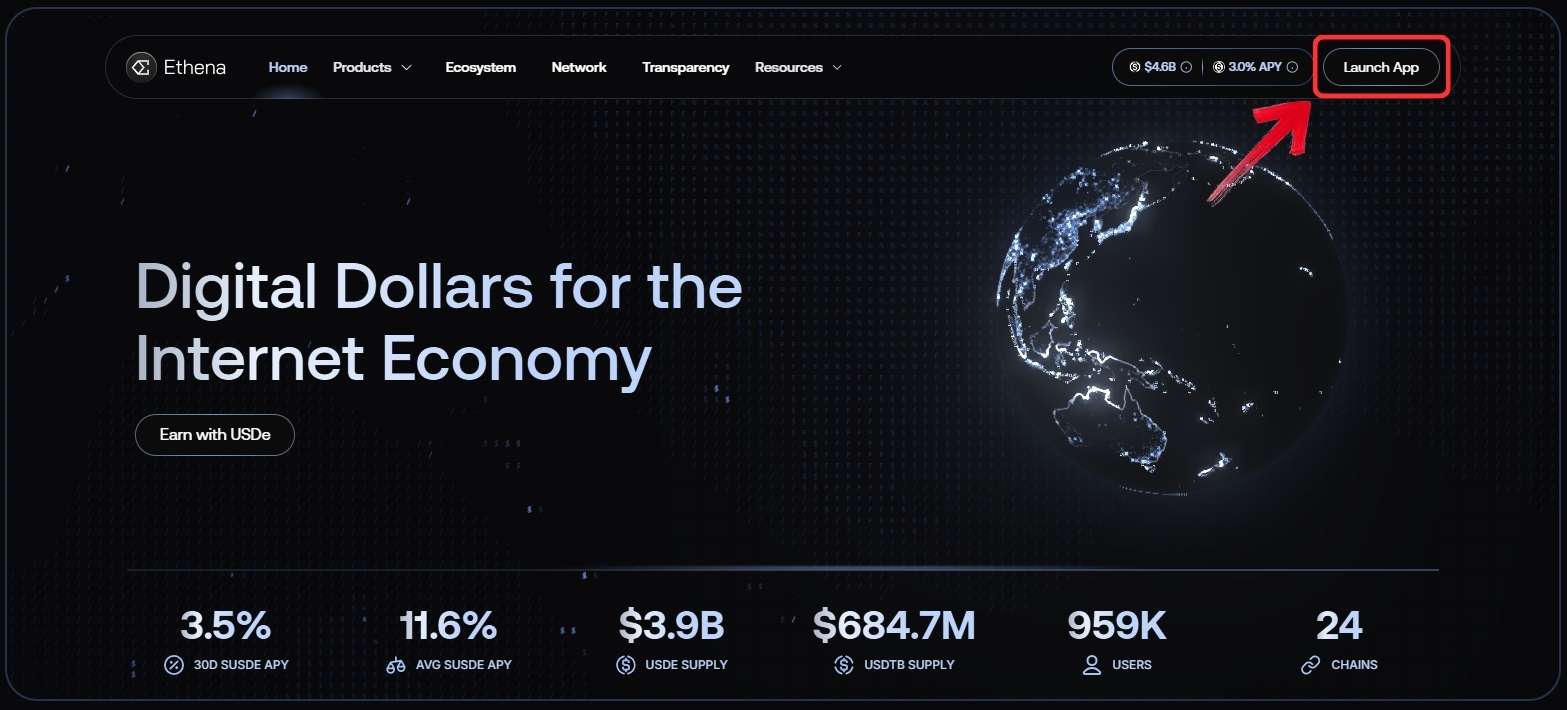
Step 1: First, visit the Ethena app through your browser, or use your Web3 wallet’s built-in dApp browser. Once you are there, click on the “Launch App” button.
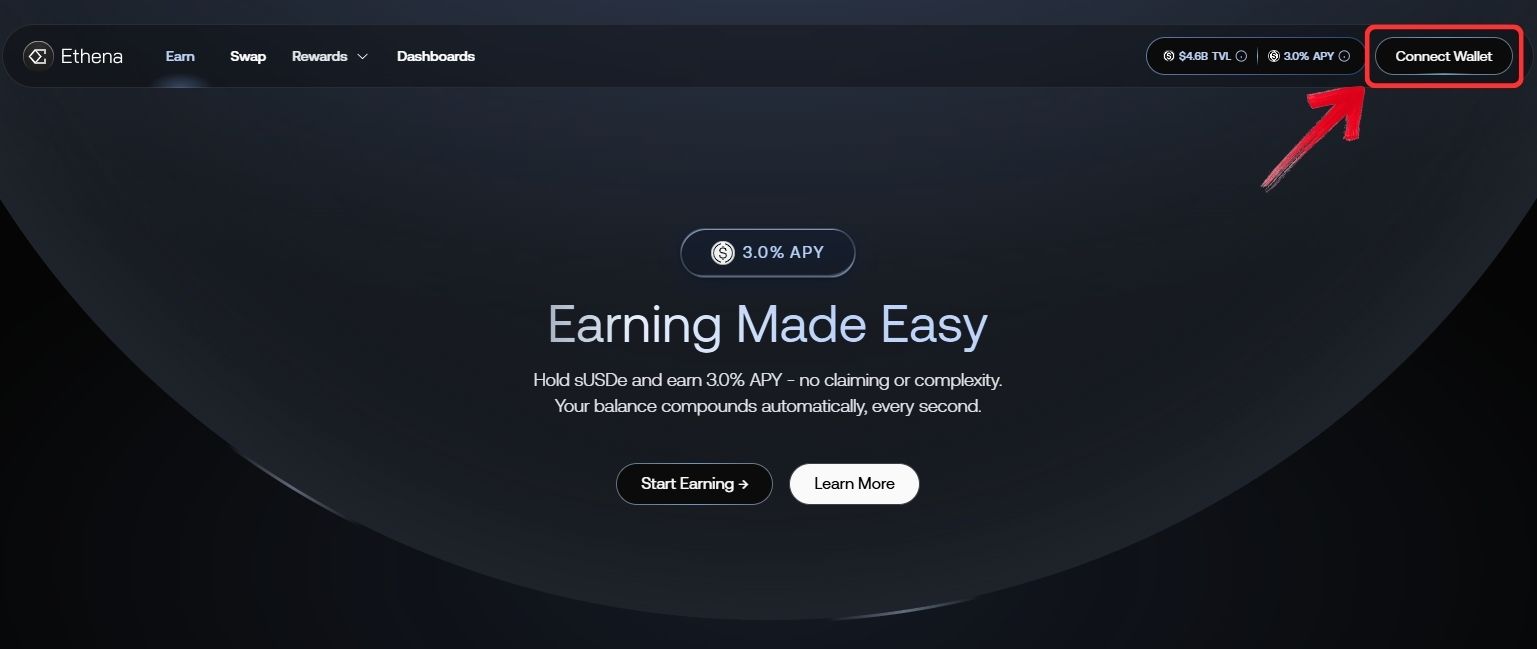
Step 2: You will now be redirected to the Ethena dApp. Here, click on the “Connect Wallet” button to connect your Web3 wallet.
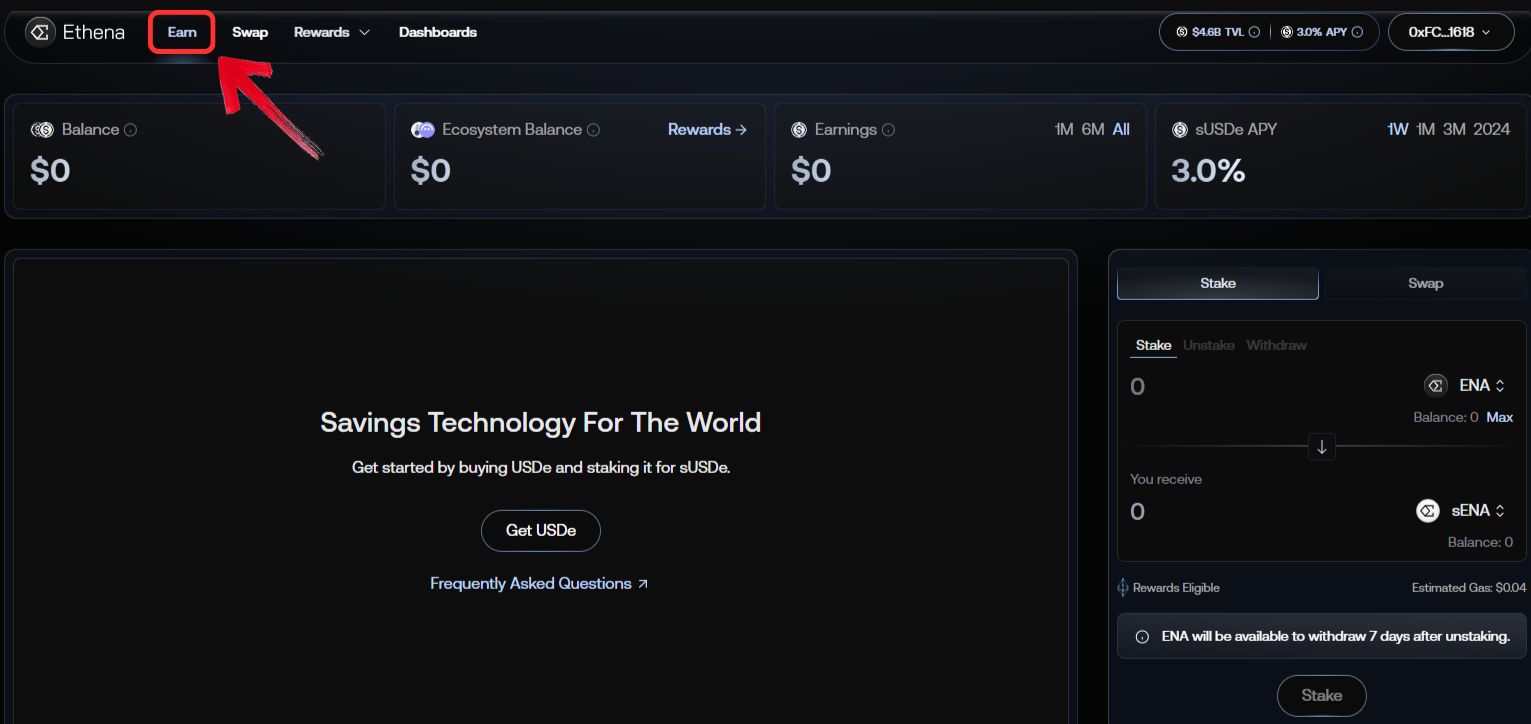
Step 3: With your wallet connected, head over to the “Earn” feature available inside the Ethena app.
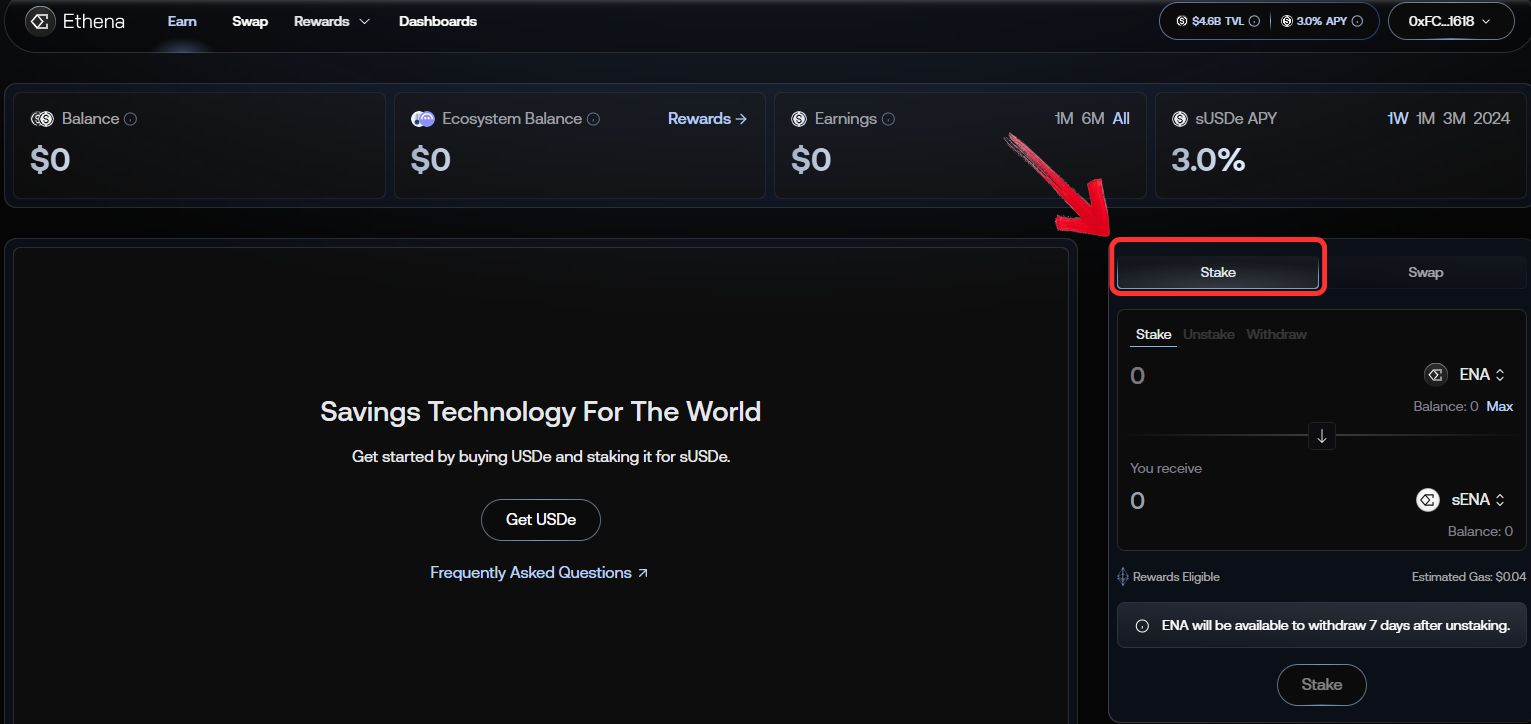
Step 4: Here, you will find the staking feature located inside a small container on the right side of the screen. Click on the “Stake” tab.
Step 5: Since we will be staking ENA tokens, click on the token selector and choose “ENA” from the dropdown menu.
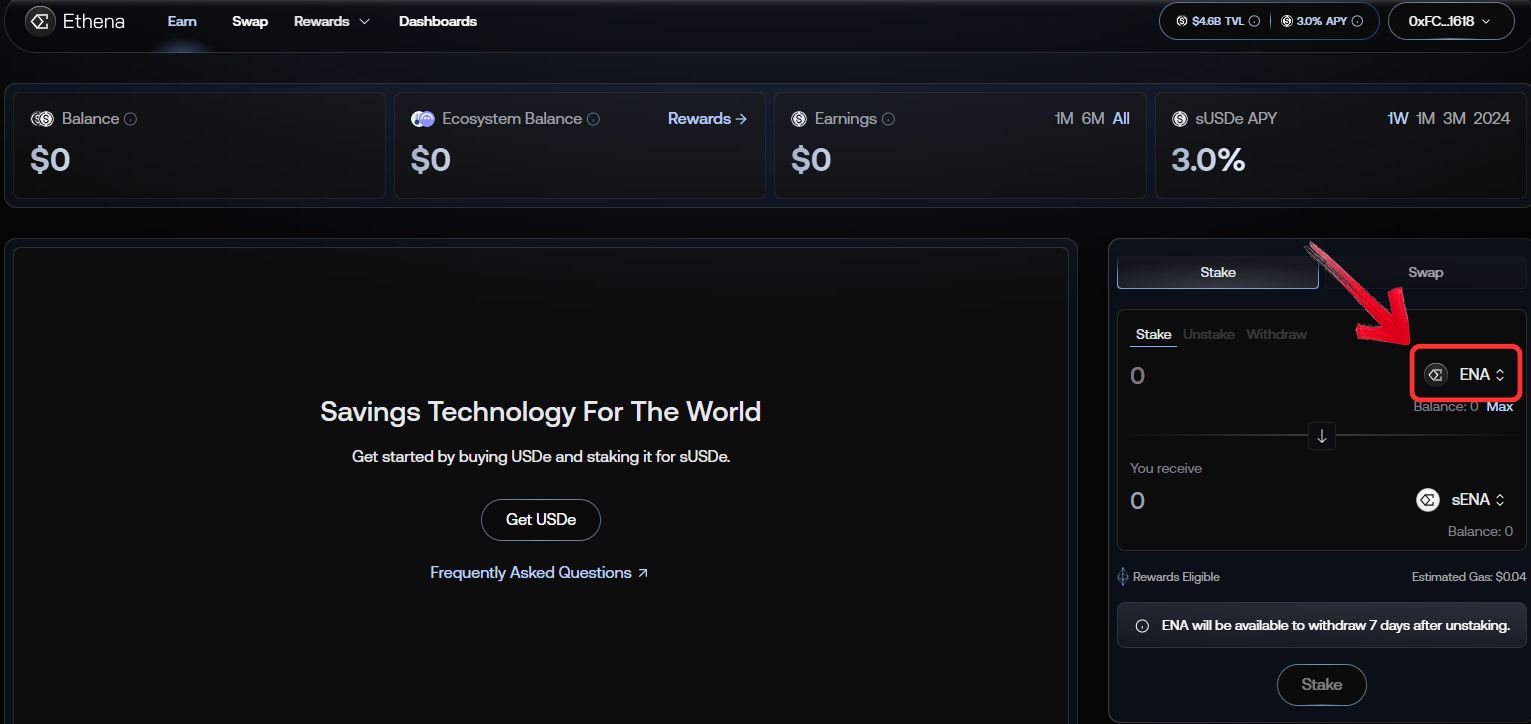
Step 6: Now enter the amount of ENA you want to stake. You will see the amount of sENA you will receive update in real time, along with the estimated gas fees displayed below.
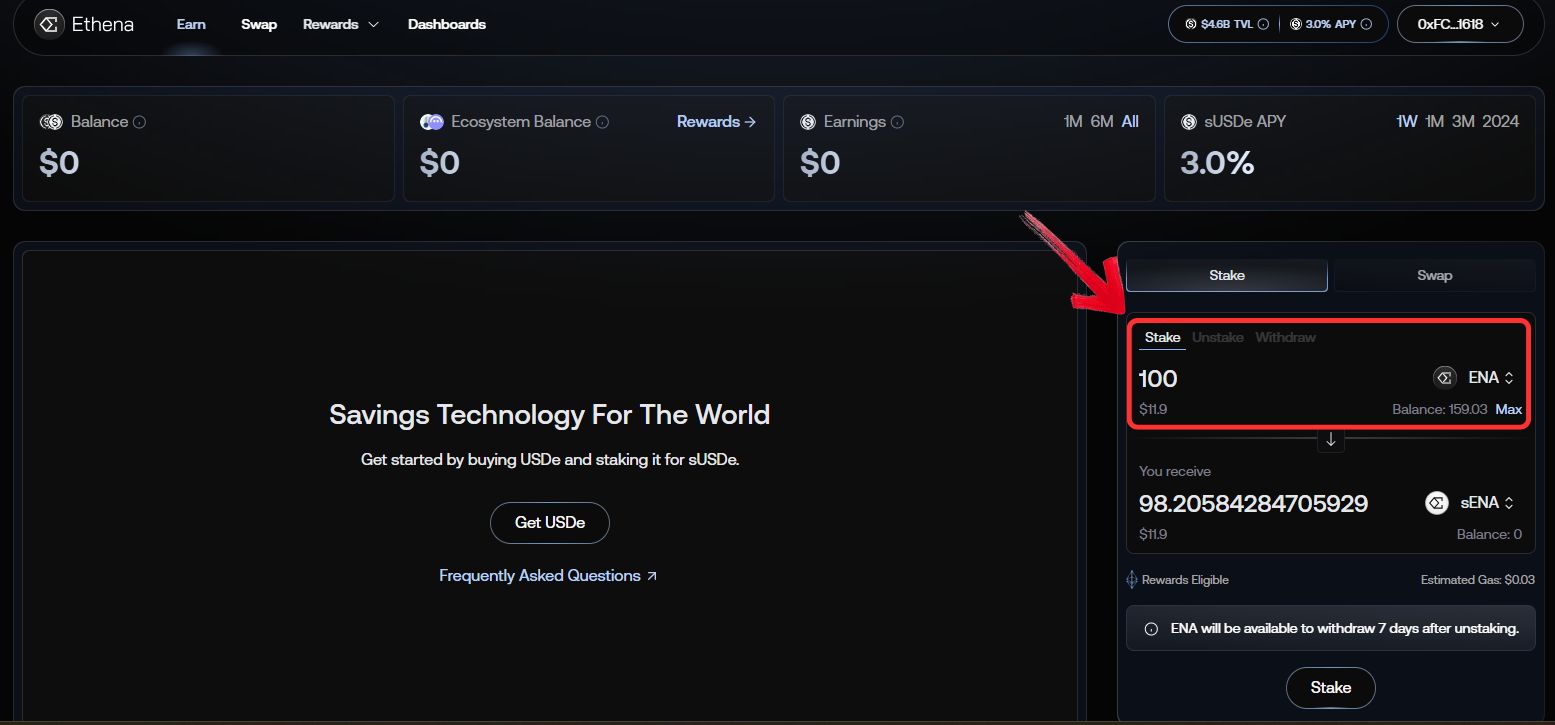
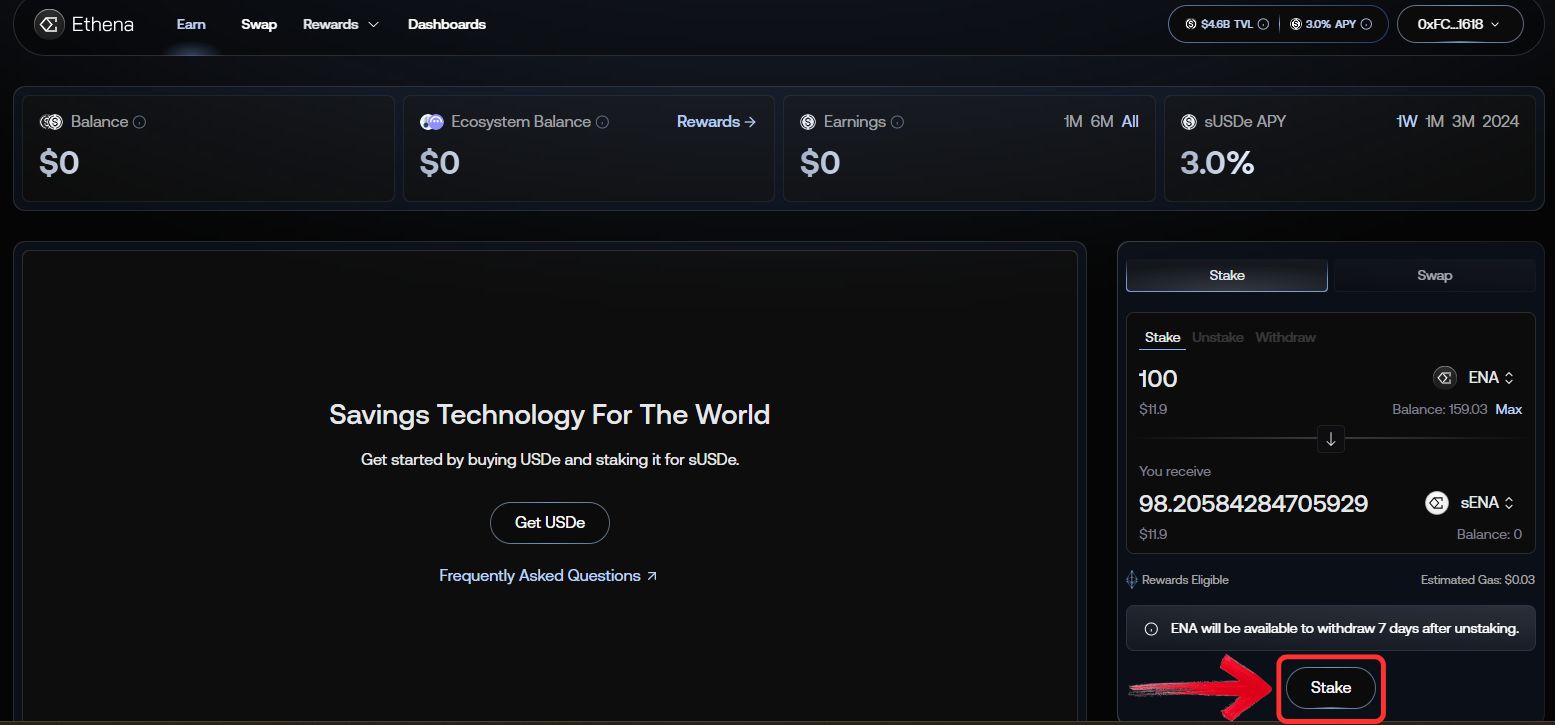
Step 7: Review the transaction details carefully, then click on the “Stake” button to continue.
Step 8: Ethena will now ask for permission through your Web3 wallet to approve the request. Sign and approve the transaction, then wait for the staking process to complete.
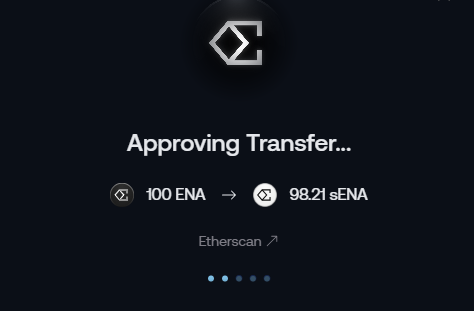
Once your ENA staking request is submitted, you can monitor the transaction status through Etherscan. After the transaction is confirmed on Ethereum, you will be able to view your staked ENA balance, rewards, and staking position directly from the Ethena dashboard.
What Is ENA Staking?
Ethena is a protocol built around USDe, a synthetic dollar backed through delta-neutral positions across Bitcoin, Ethereum, and other crypto assets. The protocol generates revenue mainly through funding rates from perpetual futures positions, along with reward payments from stablecoin holdings. Ethena has also expanded its ecosystem reach through partnerships with exchanges like Binance, where USDe perpetual contracts are available.
ENA staking allows users to stake ENA tokens within the Ethena ecosystem to earn staking rewards while remaining exposed to the protocol’s growth and activity. When users stake ENA, they receive sENA, which represents their staking position on the platform. Since ENA is the ecosystem token, staking rewards and overall value can still fluctuate depending on market conditions and protocol activity.
Token Symbol
ENA
Current Price
Loading...
Daily Change
Loading...
All-Time High
Loading...
Daily Low
Loading...
Daily High
Loading...
24h Volume
Loading...
Market Cap
Loading...
FDV
Loading...
Total Supply
Loading...
Max Supply
Loading...
ENA Staking vs USDe Staking
ENA staking is more focused on ecosystem exposure and token participation, meaning returns can fluctuate alongside ENA market volatility. USDe staking, on the other hand, is more stablecoin-focused. When users stake USDe, they receive sUSDe, which automatically compounds rewards over time. The unstaking process also includes a dynamic cooldown period of up to 7 days, making it more suited for users looking for relatively steadier yield rather than direct token price exposure.
How to Stake USDe for sUSDe Yield
USDe staking on the Ethena dApp works similarly to ENA staking. If you do not already hold USDe, you can purchase it from a centralized exchange and transfer it to your Web3 wallet. You can also swap or bridge supported assets directly into USDe through the Ethena dApp, depending on your selected network.
Once your Web3 wallet is funded with USDe, simply follow these steps to stake USDe and receive sUSDe yield.
Step 1: On the Ethena dApp dashboard, navigate to the “Earn” section from the main menu.
Step 2: Inside the Earn section, locate the staking section displayed on the right side of the screen, then click on the “Stake” tab.
Step 3: Click on the token selector menu and choose “USDe” as the token you want to stake for sUSDe rewards.
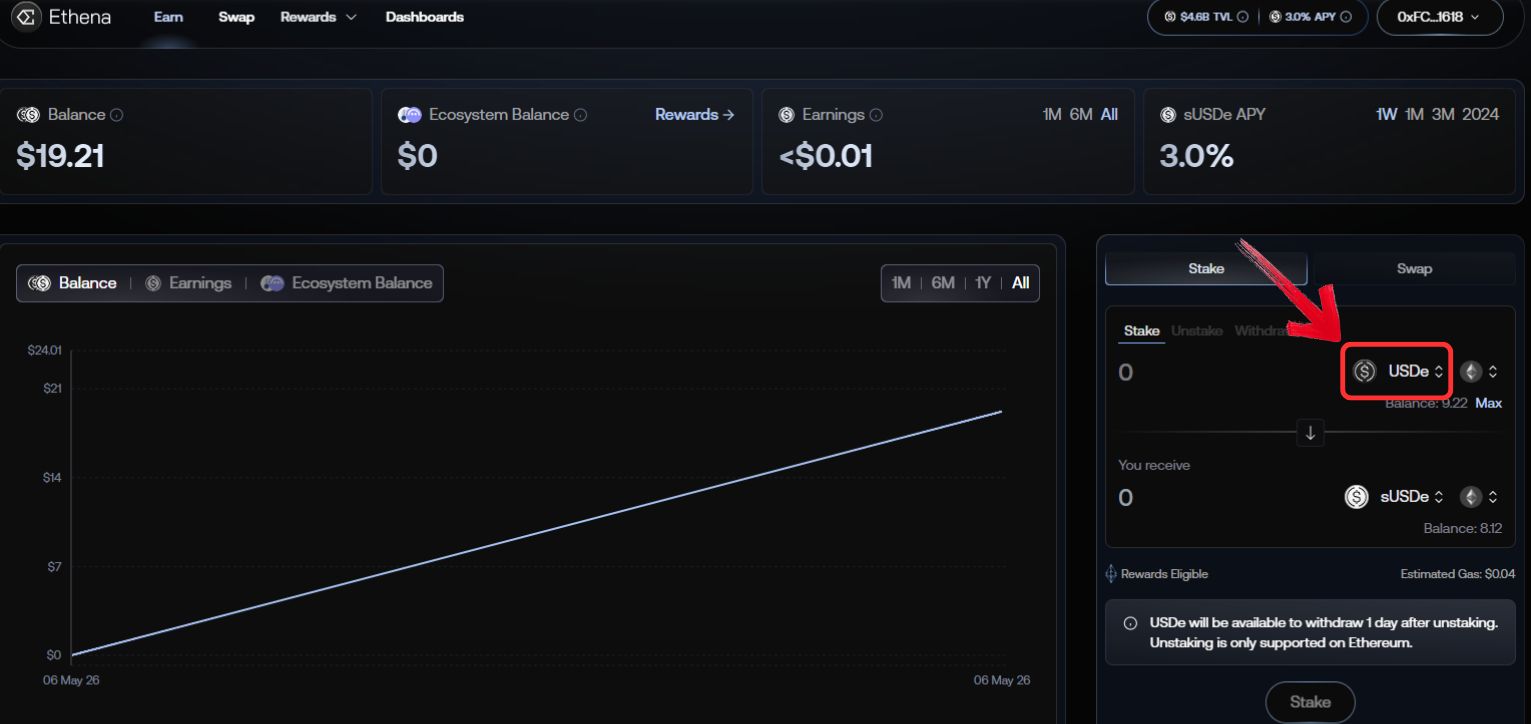
Step 4: Enter the amount of USDe you wish to stake. The platform will automatically display the estimated amount of sUSDe you will receive, along with the expected gas fees for the transaction.
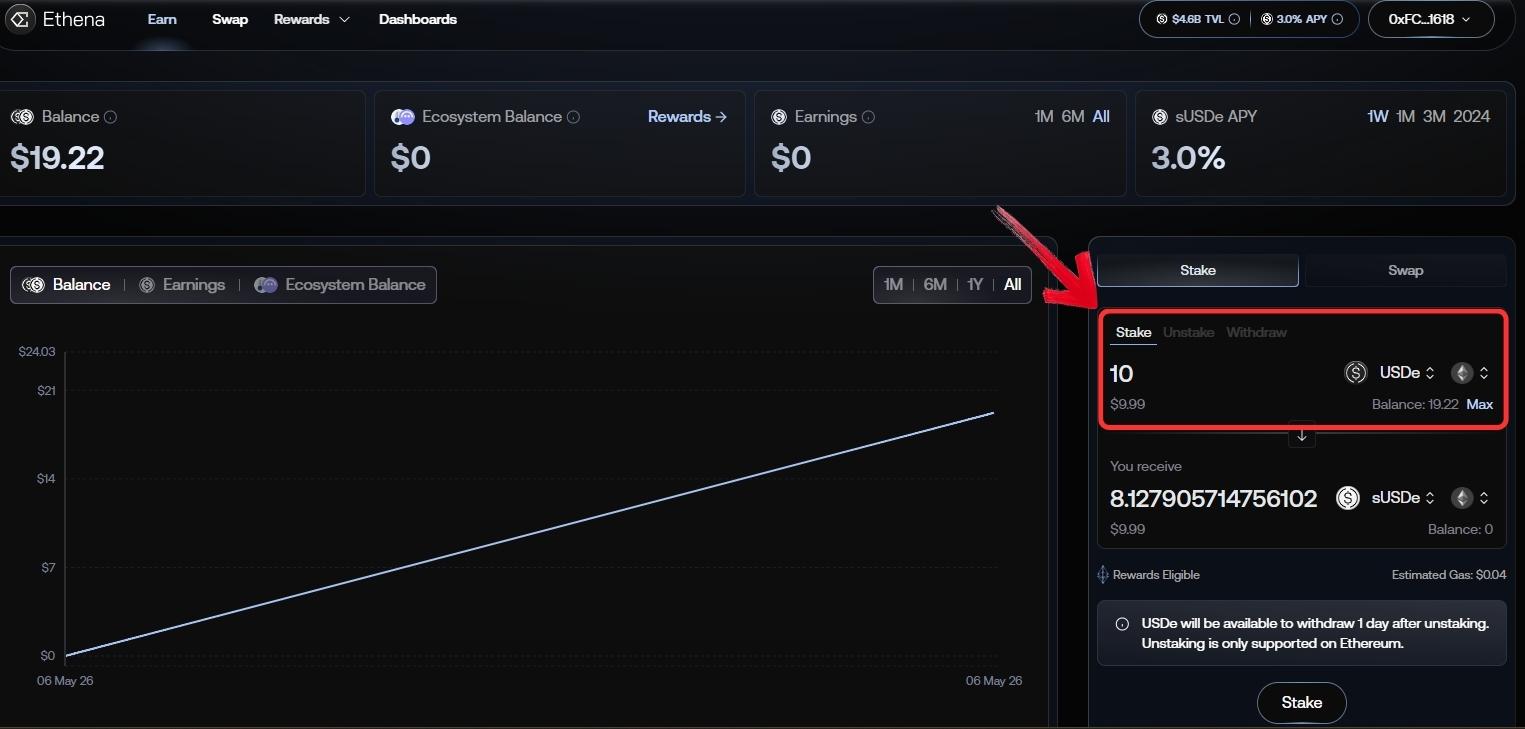
Step 5: Review the staking details carefully, including the staking amount and estimated fees, then click on the “Stake” button to proceed.
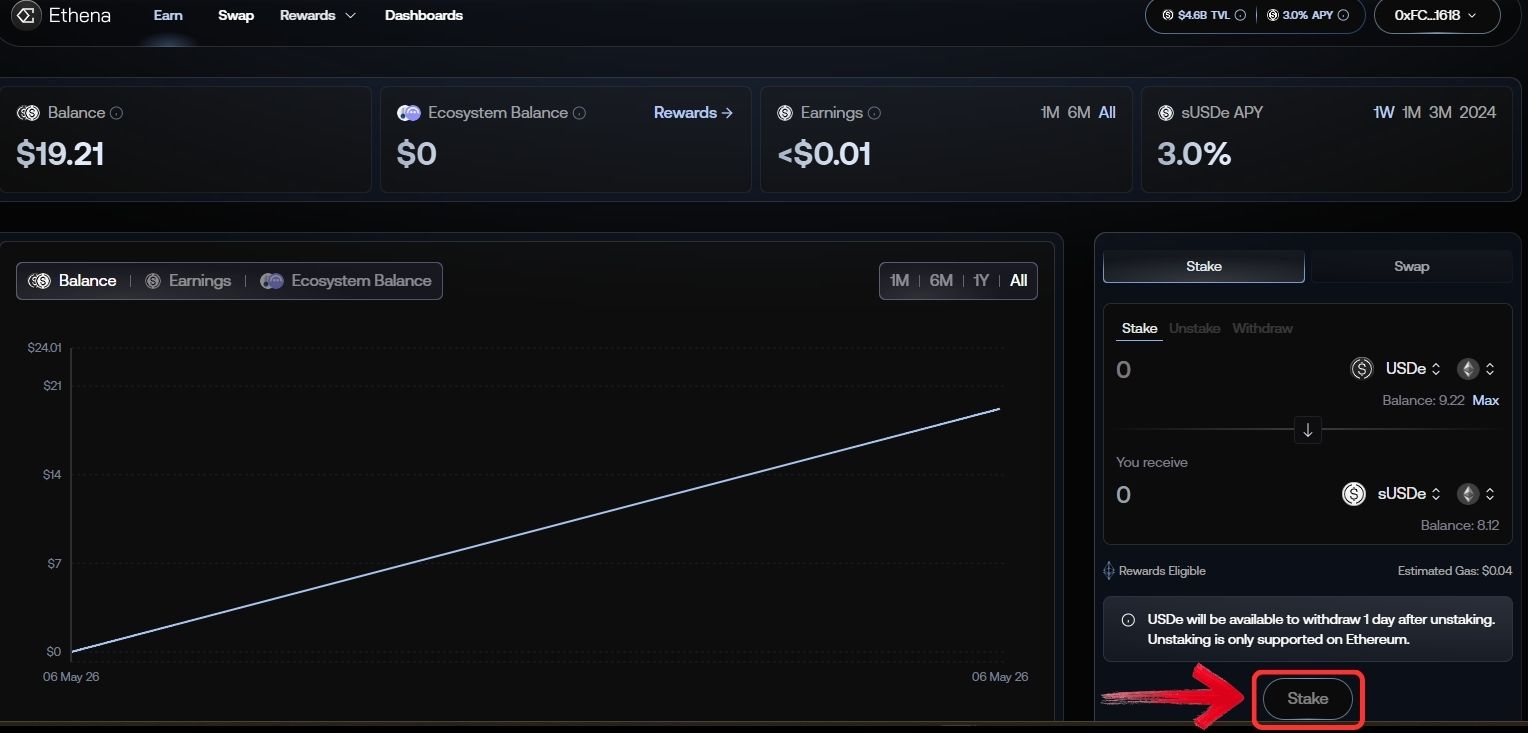
Step 6: Approve the transaction request through your Web3 wallet and wait for the staking transaction to finalize onchain.
Once the transaction is confirmed, your wallet will receive sUSDe, which automatically accumulates rewards over time while you hold it.
Final Verdict
ENA staking can help users earn additional yield while staying exposed to the Ethena ecosystem, but it is still tied to a volatile crypto asset. Users looking to stake Ethena tokens should understand that if ENA price drops sharply, staking rewards may not fully offset those losses, which is why understanding the project’s long-term outlook matters. Our Ethena price prediction explains the broader expectations around the token and ecosystem. Users looking for a more stable earning approach may prefer USDe and sUSDe instead, since they focus more on stablecoin-based yield generation. And if you are exploring more DeFi staking opportunities, SKY staking and SSR-based USDS earning are also worth looking into.
FAQs
1. Can you stake ENA tokens?
Yes, ENA tokens can be staked directly through the Ethena dApp using a compatible Web3 wallet connected to a supported network.
2. Is sUSDe better than staking ENA?
It depends on your risk preference. sUSDe is more stablecoin-focused and may suit users looking for steadier yield, while ENA staking gives more direct exposure to the Ethena ecosystem and token price movements, which can also be more volatile.
3. Is ENA staking risky?
Like most crypto staking opportunities, ENA staking still carries risks, including market volatility, smart contract risk, and potential losses if ENA price declines.
4. What is the difference between USDe and sUSDe?
USDe is Ethena’s synthetic dollar, while sUSDe is the staked version that automatically accumulates rewards over time.