



- •Rabby Wallet is a non custodial wallet designed exclusively for Ethereum and EVM compatible networks.
- •Supports more than 95 EVM chains with automatic network detection and seamless dApp connections.
- •Security features include third party audits, transaction simulation, approval checks, and MEV protection.
- •Charges a 0.25% fee on swaps, with no wallet level fees for basic usage.
- •Offers built in swaps, bridges, perpetual trading via Hyperliquid, prediction markets, and lending through Aave and Compound.
- •The Gas Account removes the need to hold native gas tokens across different EVM networks.
- •Displays balances from supported dApps such as Aave and Polymarket directly inside the wallet.
- •Provides tokenized stock and commodity exposure through its Market and Perps sections.
Ethereum has built a strong foothold in the blockchain space and holds a major share of the market, not only in terms of value but also across developers, users, and long term investors. Because of this dominance, people who are closely involved with the Ethereum ecosystem and other EVM compatible chains often look for reliable wallet options that fit their daily usage.
Rabby Wallet is one of the names that frequently appears in those searches, especially among users who interact frequently with DeFi, NFTs, and onchain applications. In this Rabby Wallet review, we look at how Rabby serves its users in a practical way, focusing on features, usability, and how clearly it stands within the wider Ethereum wallet landscape.
Rabby Wallet Overview
Rabby Wallet was launched in 2021 as a multi-chain wallet with a clear focus on improving how users interact with Ethereum and EVM based ecosystems. It is a non custodial Web3 wallet built for people who regularly use DeFi platforms, NFT marketplaces, and onchain applications across multiple networks.
One of Rabby Wallet’s strongest points is its interface and workflow. The wallet automatically detects new networks and tokens, removing the need for manual network setup in most cases. It also switches networks automatically to match the dApp you are using, which makes transactions smoother and reduces common user errors. Rabby supports Ethereum and over 95 EVM compatible networks out of the box. Additional networks can still be added manually using custom RPC details if needed.
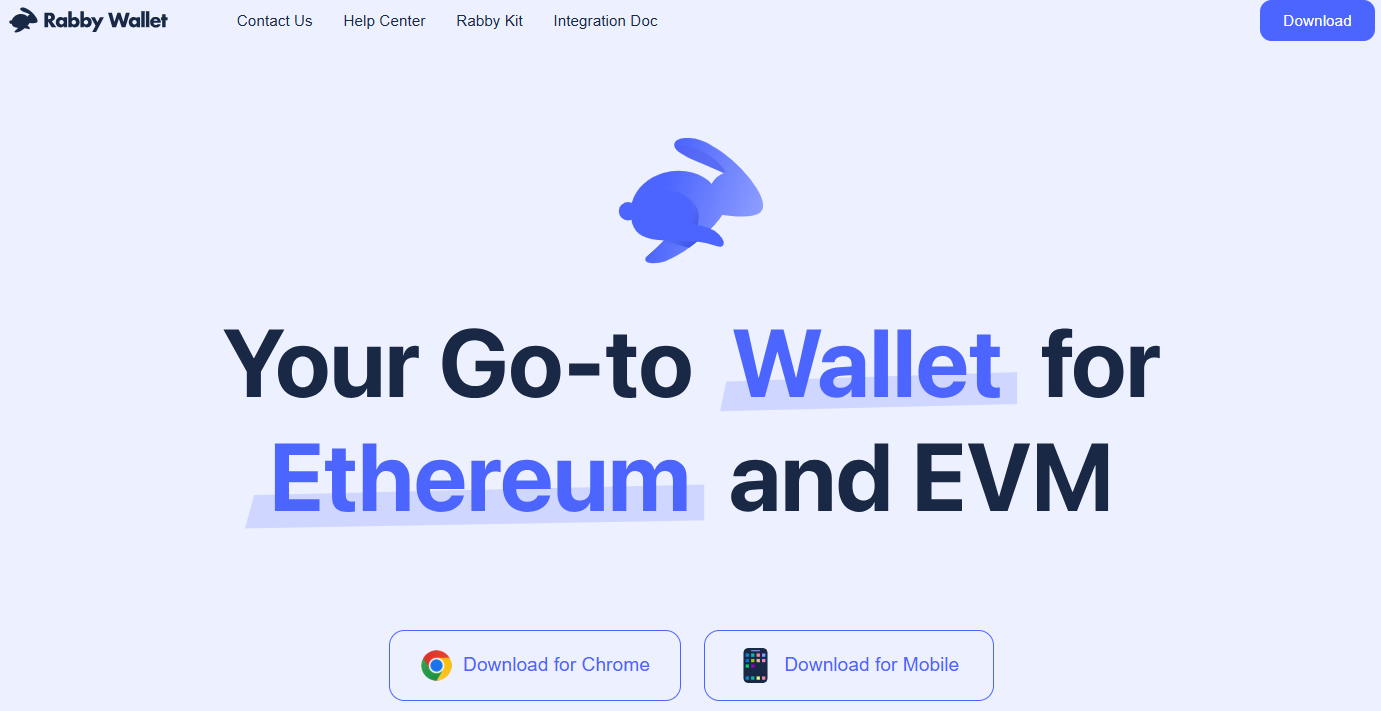
Rabby Wallet does not support non EVM networks. Its focus remains strictly on Ethereum and EVM chains, which helps keep the experience consistent for users operating within that ecosystem.
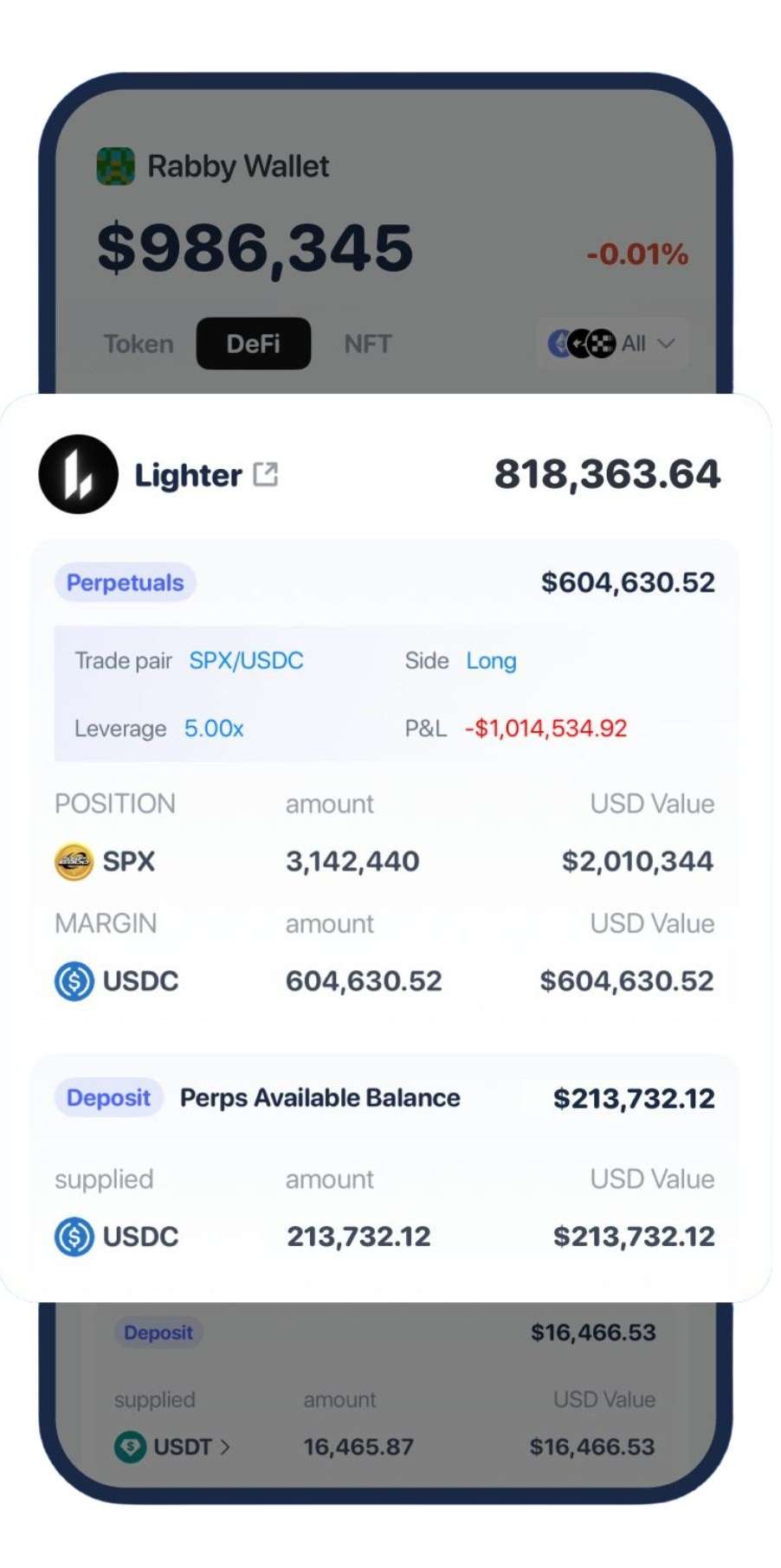
Connecting to dApps is straightforward, and recent updates have improved visibility across platforms. Users can now view balances and positions directly from supported dApps such as Polymarket, Lighter, and others, without switching interfaces repeatedly.
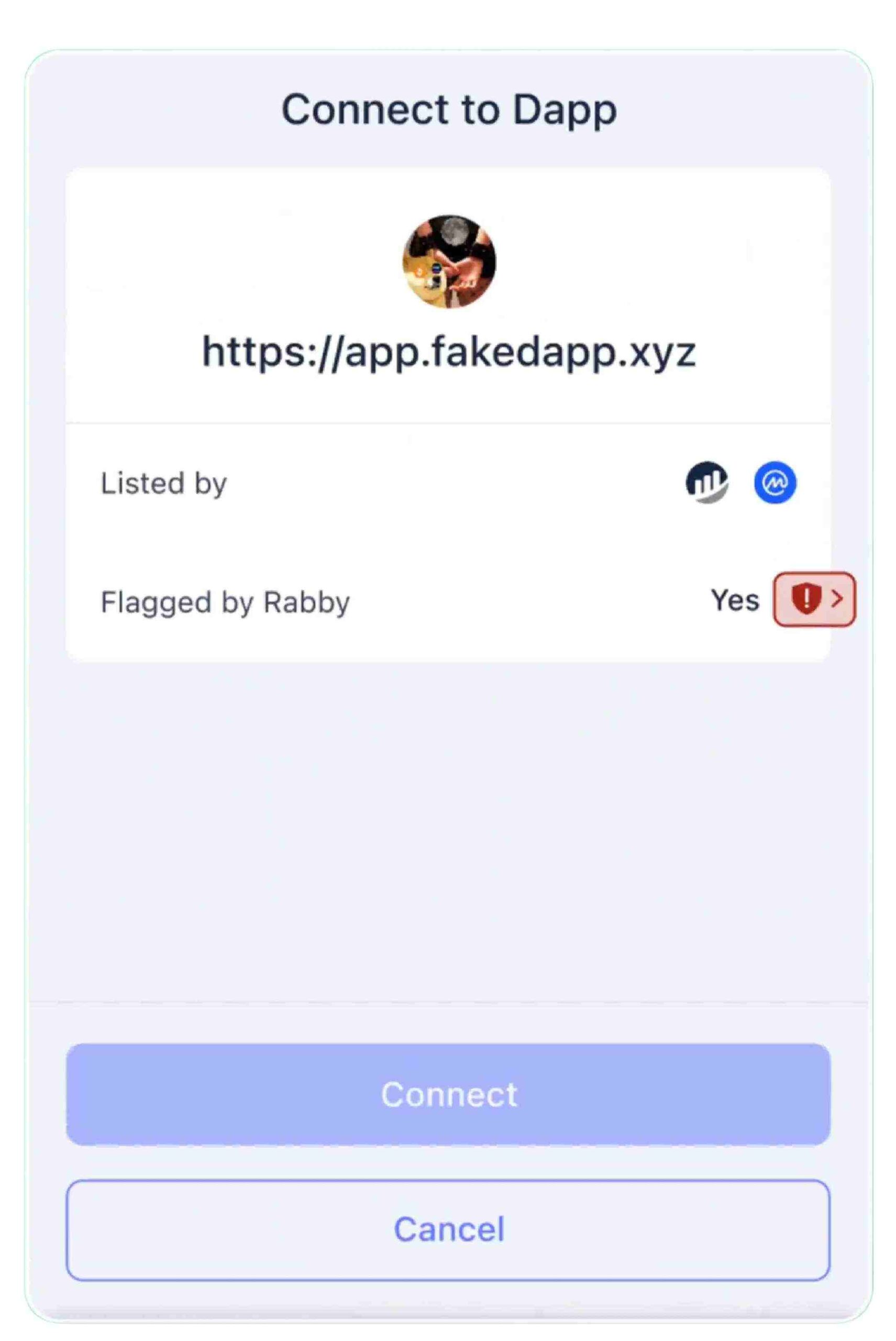
From a security standpoint, Rabby Wallet has undergone audits by firms such as SlowMist and Least Authority. The wallet is open source, independently audited, and places strong emphasis on transparency. It also includes advanced security features like pre transaction risk scanning, which helps users identify potentially harmful transactions before approval.
Rabby allows easy wallet imports, including MetaMask accounts and hardware wallets. It supports hardware wallet integrations such as Ledger and Trezor, making it suitable for users who prefer an added layer of protection.
Another notable feature is the GasAccount. This allows users to pay transaction fees across different networks without needing to hold the native gas token for each chain. It simplifies cross network activity and removes a common friction point for active EVM users.
Rabby Wallet Pros and Cons
| 👍 Rabby Wallet Pros | 👎 Rabby Wallet Cons |
|---|---|
| ✅ Automatic network switching | ❌ No non EVM network support |
| ✅ Strong transaction simulation tools | ❌ Swap fee higher than some wallets |
| ✅ Supports 95+ EVM networks | |
| ✅ Integrated swaps, bridges, perps | |
| ✅ dApp balance tracking built in | |
| ✅ GasAccount reduces friction |
Getting Started With Rabby Wallet
Getting started with Rabby Wallet does not require account creation, KYC, or personal information. It is a non custodial Web3 wallet, so users remain in control of their private keys from the beginning.
The setup process is simple. You install the Rabby browser extension, create a wallet, and secure your recovery phrase. Existing users can also import a MetaMask wallet or connect a hardware wallet such as Ledger or Trezor. We also have a step by step guide available for users who want a clear walkthrough of the setup and basic security steps.
Once set up, Rabby is ready to use immediately. Ethereum and more than 95 EVM compatible networks come pre configured, and the wallet automatically switches networks when you connect to a dApp, removing the need for manual configuration.
Rabby Wallet Network Supported
Rabby Wallet is built specifically for Ethereum and EVM compatible blockchains. From the start, it is designed for users who operate entirely within the Ethereum ecosystem and related Layer 2 networks, rather than across mixed blockchain environments. As a result, Rabby does not support any non EVM networks.
The wallet comes with support for more than 95 EVM compatible networks that are already pre configured. There is no need to install plugins or manually add common networks before use. Supported networks appear directly in the wallet, and Rabby automatically switches to the correct network when you connect to a dApp.
For users who need access to additional or newer EVM chains, Rabby also allows custom network configuration. Networks can be added manually using RPC details. If you are unsure whether a specific EVM network is supported, you can check it using our Rabby Wallet network checker by entering the network name and confirming availability before setting up the wallet.
Rabby Wallet Fees
Rabby Wallet charges a 0.25% fee when users swap tokens through the built-in Rabby Swap feature. Apart from this, the wallet does not apply platform fees for basic usage such as holding assets, connecting dApps, or managing accounts. Rabby also does not charge any additional fee for using its GasAccount feature, aside from the standard blockchain gas costs required to process transactions.
For advanced actions like bridging, perpetual trading, or lending, Rabby itself does not impose fixed wallet-level fees. However, users should account for network fees and third-party protocol costs, including liquidity provider fees, funding rates, interest rates, or execution fees, depending on the service and protocol being used. These costs are determined by the underlying networks and platforms rather than Rabby Wallet itself.
Rabby Wallet Products and Services
Beyond core wallet functions, Rabby Wallet includes several integrated tools that support trading and dApp usage within the EVM ecosystem. Let’s take a closer look at how these tools work in practice.
Browser Extension
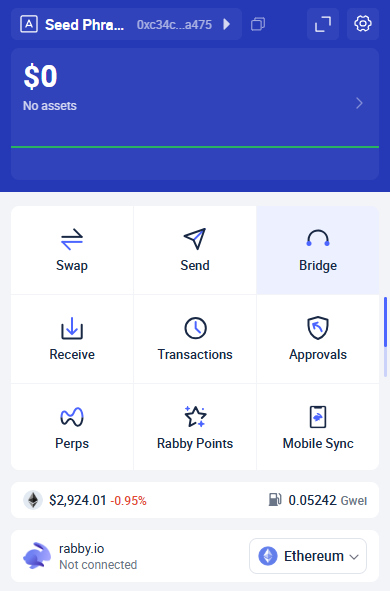
Rabby Wallet’s browser extension is built for active Web3 users who interact with multiple EVM chains daily. It automatically detects the correct network when connecting to a dApp, removing the need for manual switching. Before signing transactions, Rabby simulates outcomes, highlights approval risks, and shows asset changes. This makes it especially useful for DeFi, NFT minting, and protocol interactions where transaction clarity matters.
Mobile App
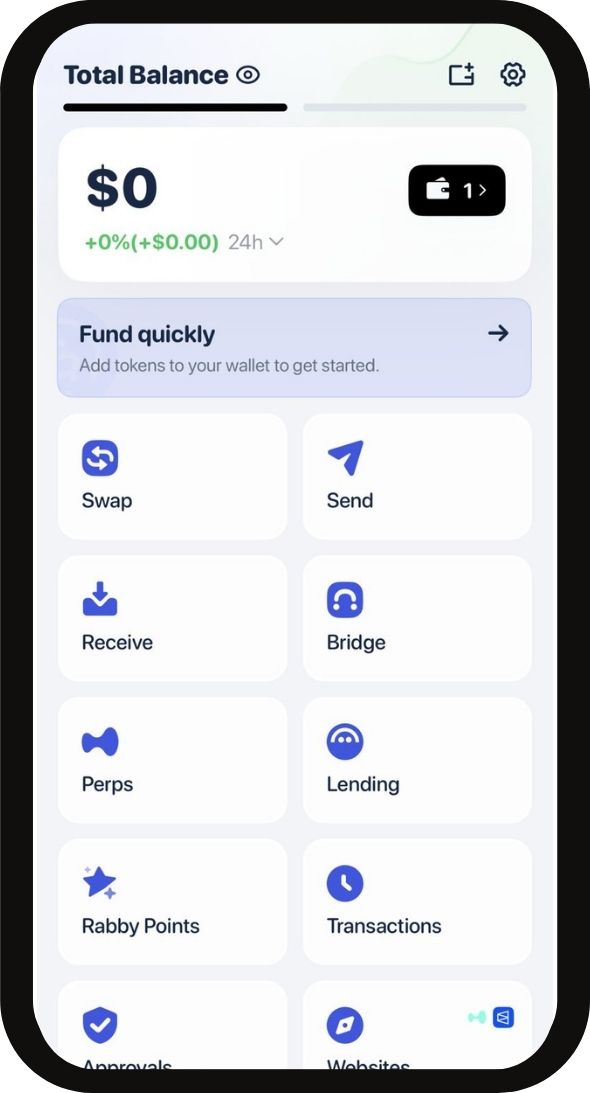
The Rabby Wallet mobile app provides full asset management and transaction control while maintaining self custody. Users can monitor balances across supported EVM chains, review detailed transaction history, and interact with dApps directly from the app. Network detection, transaction previews, and approval checks function similarly to the browser extension, making the mobile app a reliable option for both active DeFi usage and everyday portfolio management without relying on a desktop setup.
Swap
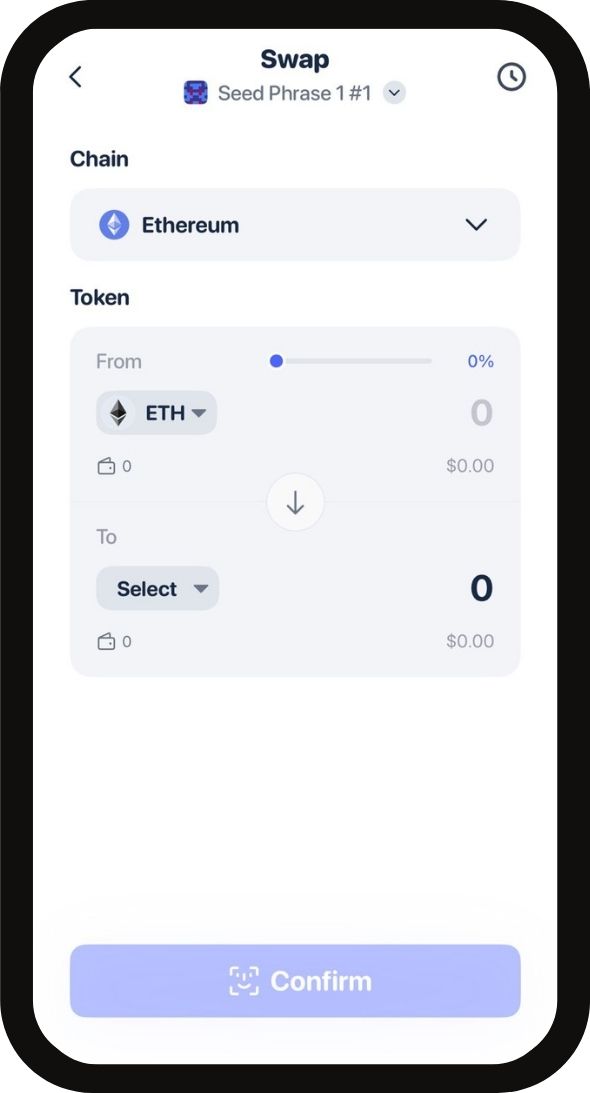
Rabby Swap allows users to exchange tokens directly within the wallet using aggregated liquidity from supported sources. The feature charges a 0.25% swap fee, shown in the quote before execution, alongside standard network gas costs. Rabby compares routes across decentralized exchanges to present competitive pricing, while displaying expected output, slippage, and fees upfront, reducing the need to rely on external DEX interfaces for routine EVM-based swaps.
Bridge
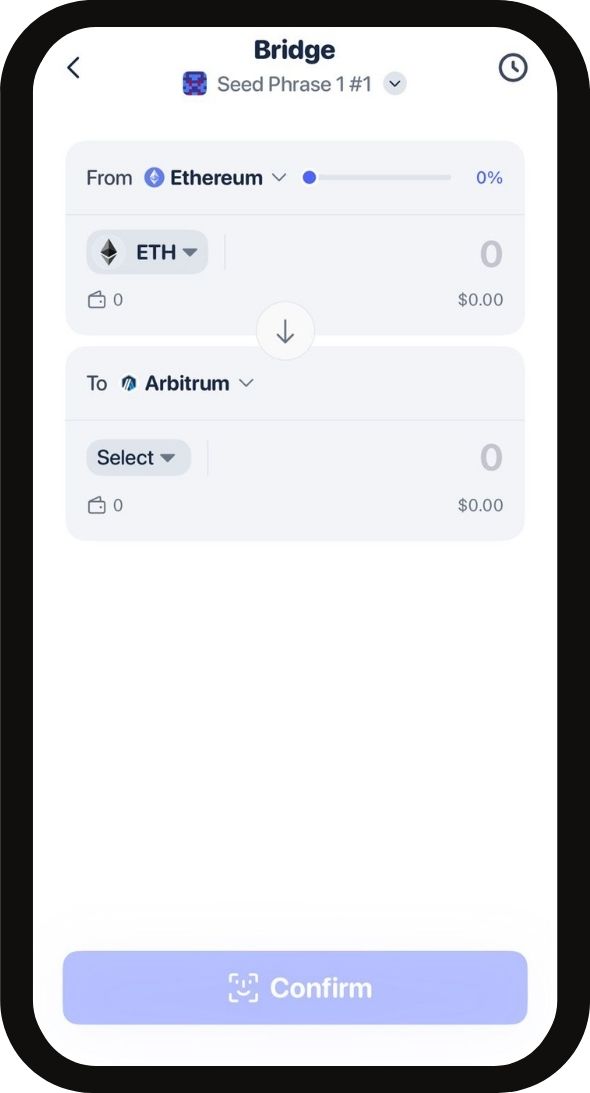
The Bridge feature enables cross-chain transfers between EVM networks through integrated third-party bridge providers. Rabby displays estimated arrival amounts and execution details upfront, allowing users to assess costs before proceeding. Final costs depend on network gas fees and bridge liquidity conditions rather than wallet-level charges. This feature is designed for users who regularly move assets between chains like Ethereum, Arbitrum, and Polygon.
Perp Trading
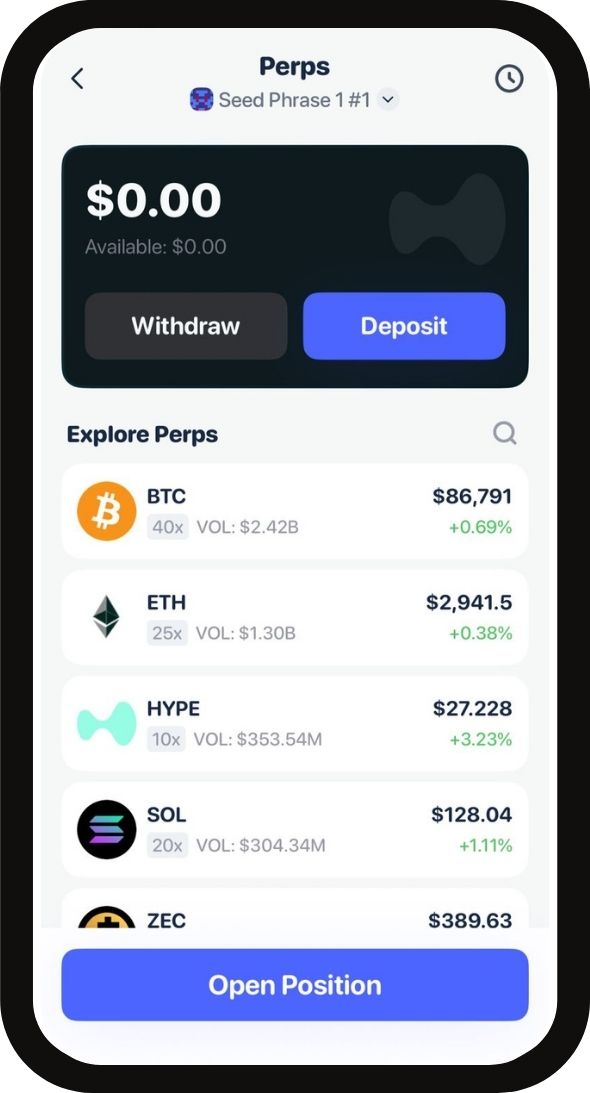
Rabby Wallet supports perpetual futures trading through Hyperliquid, a decentralized perps platform known for deep liquidity and fast execution. Users can open long or short positions with leverage of up to 40x while keeping funds under self custody. Trading fees, funding rates, and liquidation rules are defined by Hyperliquid, not Rabby. The wallet serves as the access layer for perps trading.
Lending
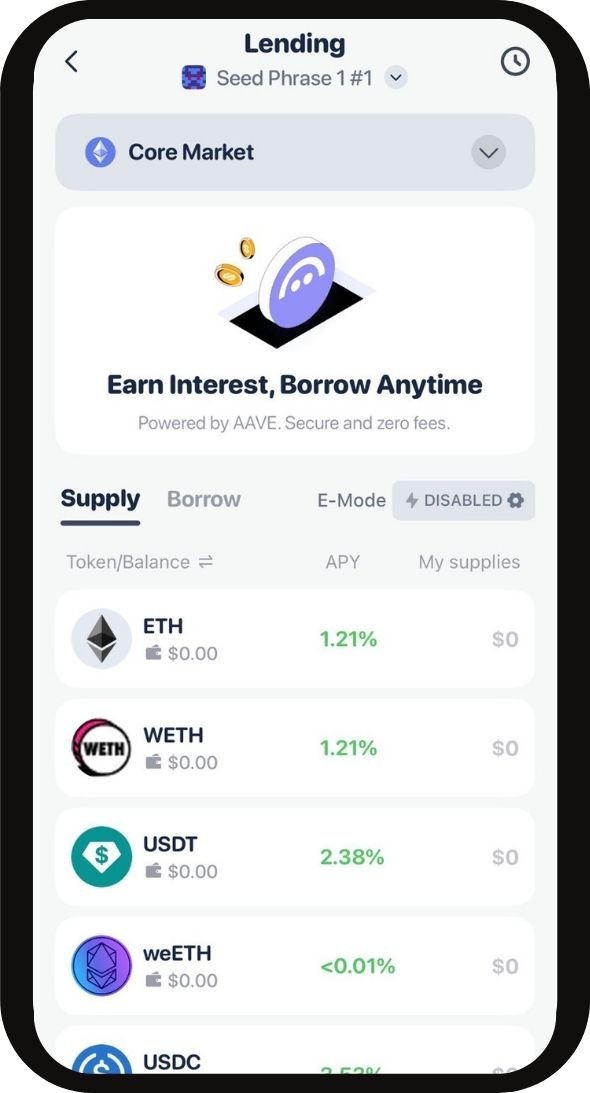
Through Rabby Wallet, users can connect directly to established DeFi lending protocols such as Aave and Compound. This allows them to supply assets to earn interest or borrow against collateral without leaving the wallet environment. Interest rates, collateral requirements, and liquidation thresholds are determined by the underlying protocol. Rabby does not apply additional lending fees beyond standard network costs.
GasAccount
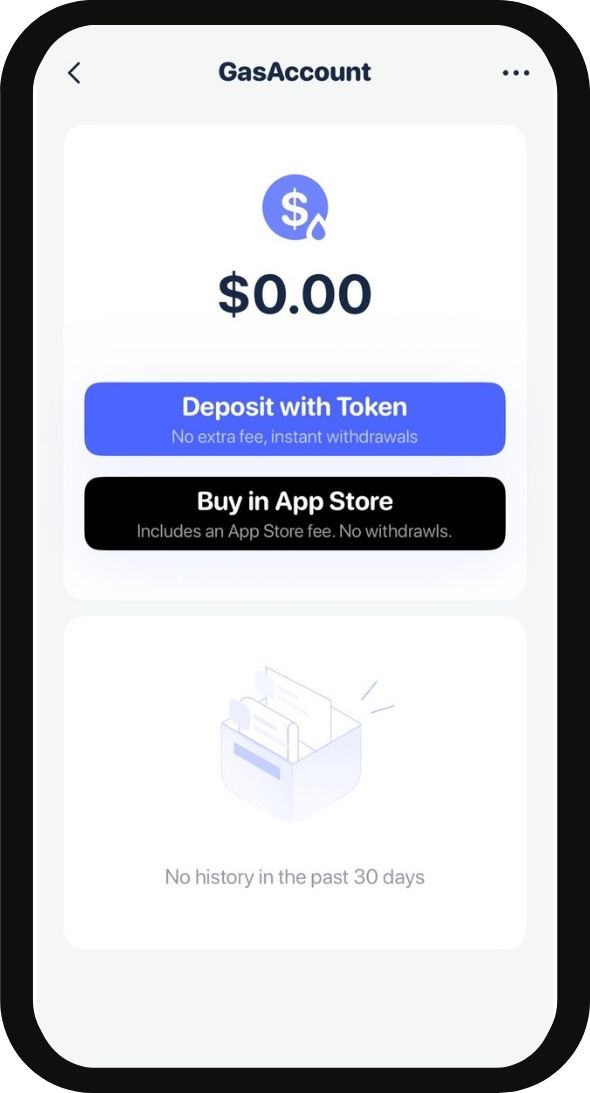
Rabby’s GasAccount feature is designed to reduce friction for users operating across multiple chains. It allows transactions to be processed even when users do not hold native gas tokens on a specific network. Rabby does not charge a separate service fee for GasAccount usage, though standard blockchain gas fees still apply. This feature improves usability for frequent DeFi and cross-chain activity.
Rabby Wallet Predictions Market
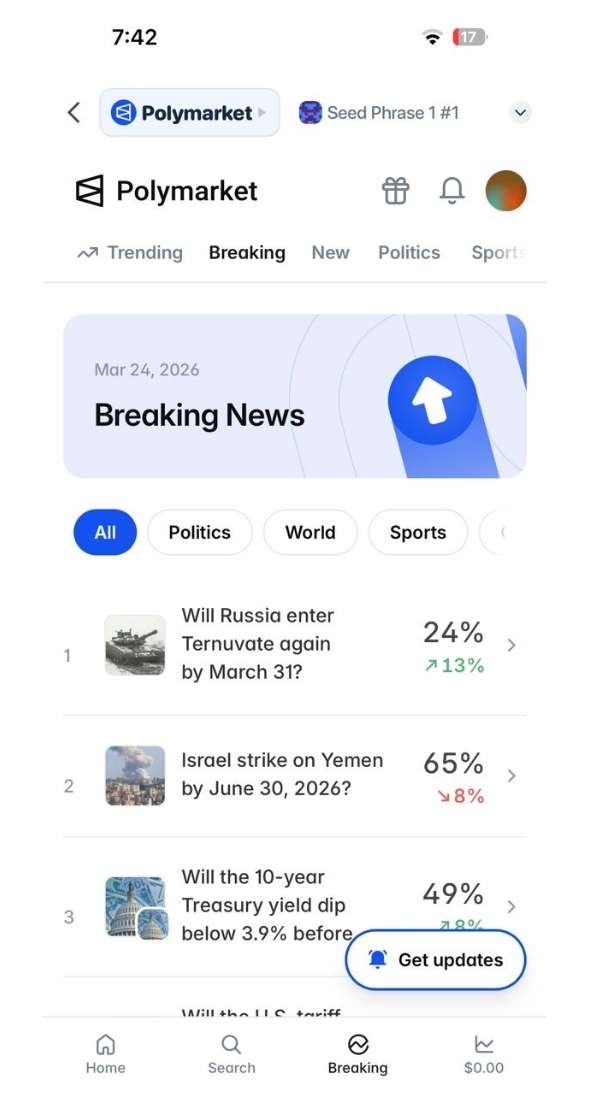
Rabby connects crypto prediction markets directly into the browser extension, where event-based trading fits into your existing wallet activity rather than feeling like a separate platform. Markets follow Polymarket-style structures, where pricing reflects collective sentiment, and positions can be adjusted as conditions change. One useful detail here is the built-in transaction preview, which shows expected balance changes before you confirm, helping you stay aware of outcomes while trading.
Rabby Wallet Tokenized Stocks Market
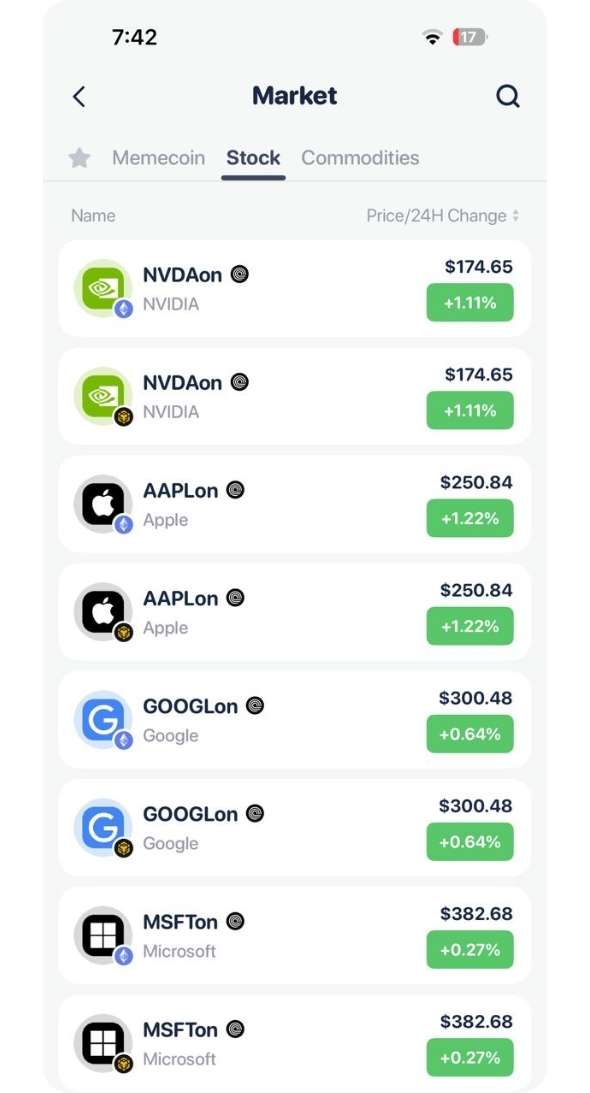
Tokenized stock access in Rabby is tied into its broader Market and Perps sections, where exposure comes through price-based trading rather than direct ownership. You can explore markets linked to stocks, indices, or commodities, then open long or short positions from the same interface used for crypto perps. This setup keeps everything in one place, which makes it easier to move between different market narratives without leaving the wallet.
dApp Balance Tracking
Rabby Wallet includes a dApp balance tracking layer that automatically detects and displays user balances held inside supported protocols. This applies to platforms like Aave, Polymarket, and other integrated dApps, where funds are deposited but not shown as standard wallet balances. Instead of manually checking each protocol, Rabby surfaces these positions directly in the portfolio view. This approach improves visibility and is expected to expand as more dApps are integrated.
Rabby Wallet Security
Rabby Wallet places strong emphasis on security, combining independent audits with built in tools that help users verify and assess transactions before approval. The wallet is open source and has been audited by recognized security firms such as SlowMist and Least Authority, allowing the wider community to review its code and audit findings. This approach supports transparency and ongoing security assessment.
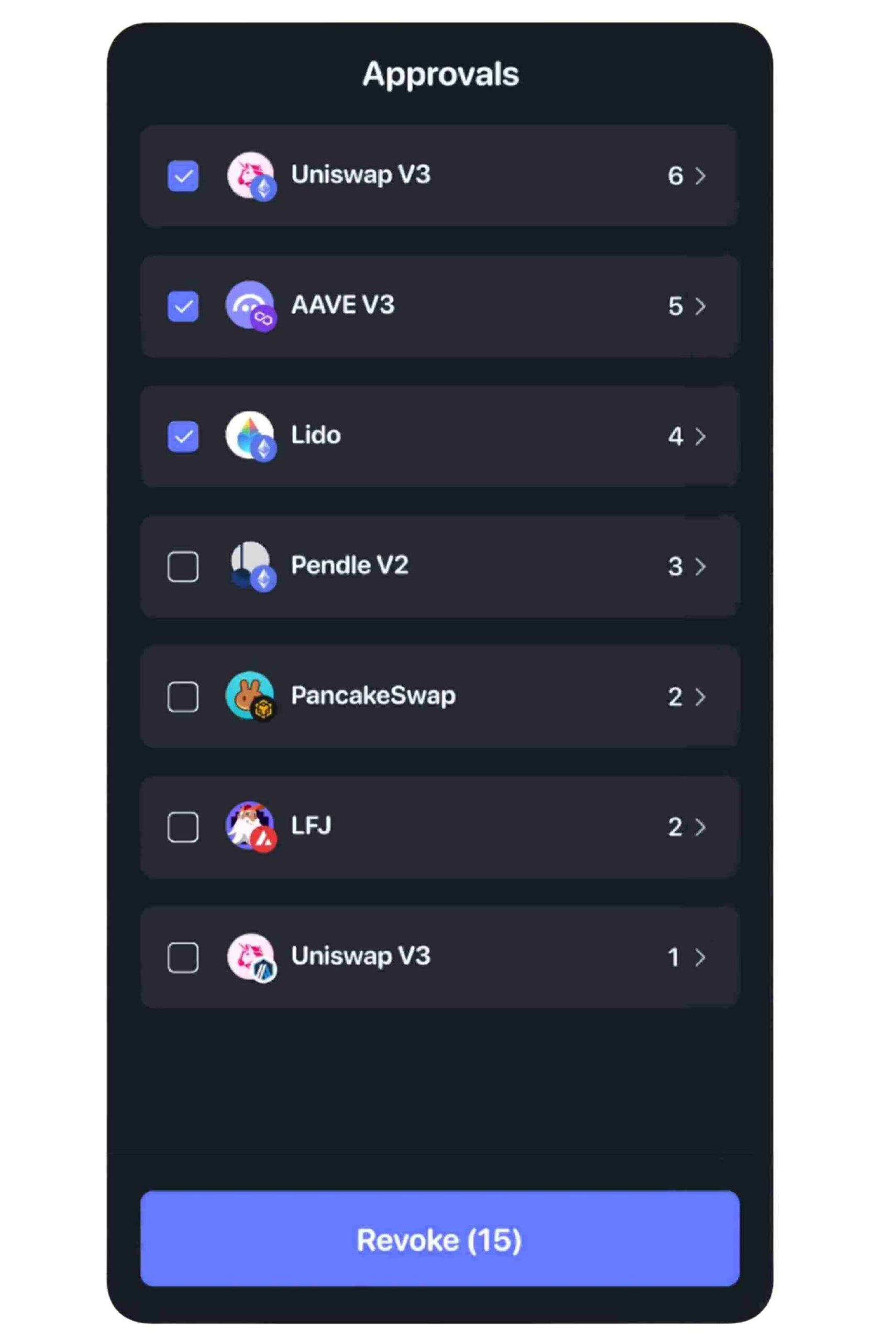
One of Rabby’s key security features is its transaction verification system. Before a transaction is signed, Rabby clearly displays contract details, token approvals, and potential risks, helping users understand exactly what they are authorizing. This reduces the likelihood of blind signing, which remains a common cause of wallet related losses.
Rabby Wallet also includes MEV protection when supported by the connected network or service. This helps reduce exposure to front running and sandwich attacks during swaps and other onchain actions. By routing transactions through protected paths when available, Rabby adds an extra layer of defense for users interacting with DeFi protocols.
Rabby Wallet Customer Support
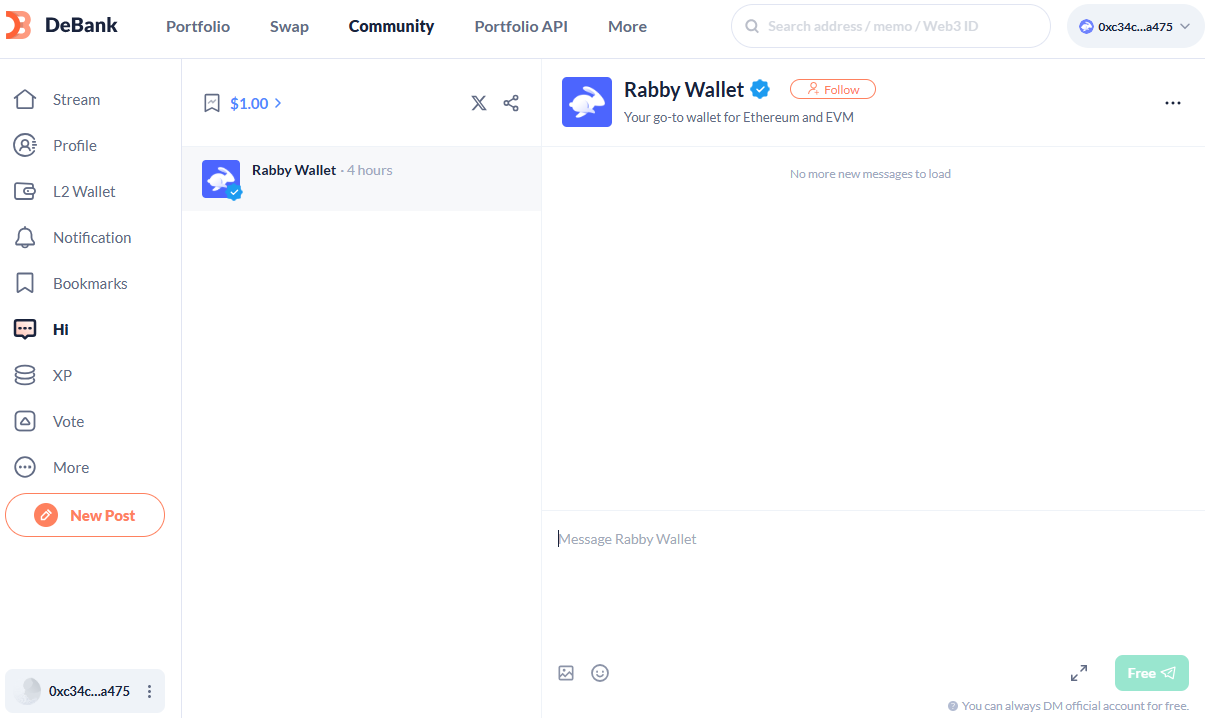
Rabby Wallet provides customer support through its official Help Center, email support, and community channels. Users can access documentation and guides on the Rabby support site or contact the team directly via email for technical issues. Community support is also available through Discord and DeBank messaging. As a non custodial wallet, Rabby cannot recover lost funds or reverse transactions. Support mainly assists with troubleshooting, transaction clarification, and wallet behavior. Users are advised to avoid unofficial channels and phishing attempts.
MetaMask vs Rabby Wallet
MetaMask and Rabby Wallet are both built primarily for Ethereum and EVM-compatible networks, but their product direction is starting to differ. Rabby focuses on improving the EVM experience through automatic network switching, transaction simulation, and clear risk previews, making it well suited for users active across multiple EVM chains and DeFi protocols.
MetaMask, on the other hand, has recently expanded beyond EVM. It now supports Solana and Bitcoin, and introduced the MetaMask Snaps system, which allows developers to integrate additional networks, wallets, and custom features into MetaMask itself. This makes MetaMask more extensible and ecosystem-driven, while Rabby remains more focused on refining EVM usability and safety for everyday on-chain activity.
Is Rabby Wallet Safe?
Yes, Rabby Wallet is considered safe for everyday use when proper security practices are followed. It is a non-custodial wallet, meaning users retain full control over their private keys and funds. Rabby is open-source and has undergone multiple third-party security audits. It also includes transaction simulation, approval verification, and clear risk warnings before signing on-chain actions, which helps users avoid malicious contracts. Hardware wallet support adds another layer of protection. Like all self-custody wallets, overall safety still depends on the user safeguarding their recovery phrase and avoiding suspicious dApps or links.
Bottom Line
Rabby Wallet makes the most sense for users who spend most of their time inside the Ethereum and EVM ecosystem and want a wallet that prioritizes control, transparency, and smooth dApp interaction. Its focus on transaction clarity, pre signing checks, and audited open source code gives security conscious users more visibility into what is happening before anything is approved. At the same time, Rabby has continued to expand its feature set. The addition of tools like swaps, bridges, lending access, and more recently perpetual trading shows that the wallet is not standing still or falling behind other major Web3 wallets, like MetaMask Wallet.
The main limitation is scope. Rabby is intentionally focused on EVM compatible networks and does not support non EVM chains. If your activity is centered around Ethereum and its Layer 2s, Rabby fits naturally. Users seeking wider multi network coverage may prefer options like Trust Wallet.
FAQs
1. Is Rabby Wallet free to use?
Yes, Rabby Wallet is free to use for basic functions such as storing assets, connecting to dApps, and managing accounts. Users only pay standard blockchain gas fees and applicable third party protocol costs.
2. Does Rabby Wallet support hardware wallets?
Yes, Rabby Wallet supports hardware wallet integration, including Ledger and Trezor. This allows users to manage assets and approve transactions while keeping private keys offline.
3. Does Rabby Wallet support non EVM blockchains?
No, Rabby Wallet is focused exclusively on Ethereum and EVM compatible networks. It does not support blockchains such as Bitcoin, Solana, or Cardano.
4. Can I import my existing wallet into Rabby?
Yes, users can import existing wallets using a recovery phrase or connect hardware wallets. This allows switching to Rabby without moving assets to a new address.
5. Does Rabby Wallet charge extra fees for GasAccount usage?
No, Rabby does not charge an additional service fee for using the GasAccount feature. Users still pay standard blockchain gas fees required to process transactions.