


- •Choose an exchange legally available in your region, with clear KYC rules and withdrawal access.
- •Check security, incident response, insurance funds, and proof of reserves before trusting user funds.
- •Match the exchange with your needs: spot, futures, Earn, cards, DEX, or tokenized assets.
- •Do not only count coins; check supported markets, liquidity, deposits, withdrawals, and Earn availability.
- •Fees, volume, reliability, and support matter most when markets move fast or account issues happen.
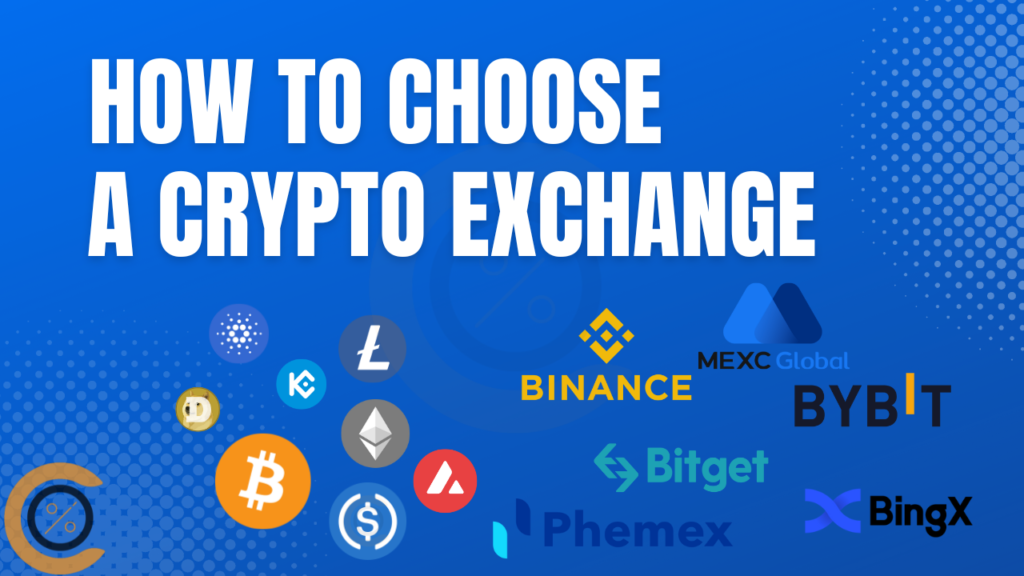
Cryptocurrency exchanges are easily accessible for retail traders in 2026 due to the rapid growth of the crypto space. There are hundreds of trading platforms tracked by CoinMarketCap, offering their services in cryptocurrencies, but which is the best choice for you? There are a couple of key factors to consider when signing up to a crypto exchange, such as security, fees, liquidity, regional restrictions, regulations, features, and more.
There is no single crypto exchange that will be right for everyone, which is why you should be careful about the platform you choose to trade on. The last thing you want is your money being stuck due to regulations or your funds being drained by high fees. Furthermore, you should make sure that the platform is secure and properly audited.
In this article, we will go over the key factors for choosing a crypto exchange for buying and trading.
13 Key Factors for Choosing A Crypto Exchange
Before choosing a crypto exchange, it helps to break the decision into a few clear factors. Some of these are about safety, while others are about trading costs, supported products, ease of use, and how easily you can move funds in and out of the platform.
- Regulations
- Security
- Insurance
- Proof of reserves
- Reputation and History
- Available Products
- Ease of Use
- Supported assets
- Liquidity
- Fees
- Reliability
- Deposits and Withdrawals
- Customer support
1. Regulations and Jurisdictions
First things first, you must make sure that the exchange you plan to trade on is actually available in your region. Crypto regulations vary heavily from one country to another. Some governments allow crypto trading, some restrict it, and others still have unclear rules around how exchanges can operate.
A good example is the United States. The US has made it difficult for many global crypto exchanges to operate under the same structure they use elsewhere. That is why Binance created a separate platform, Binance.US, specifically for US users, and this platform is very different from the global version of Binance.
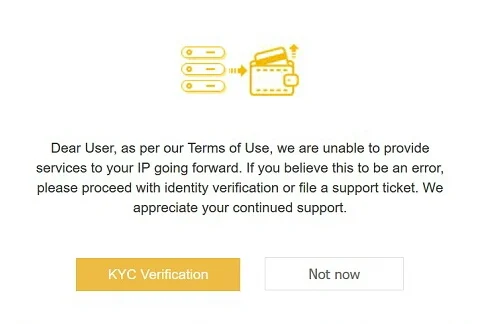
You should also be very careful with non-KYC exchanges. While some users may try to access them through a VPN from restricted regions, that can put their funds at risk. If the exchange later makes identity verification mandatory, users from restricted areas may not be able to complete KYC, which can leave their funds stuck on the platform.
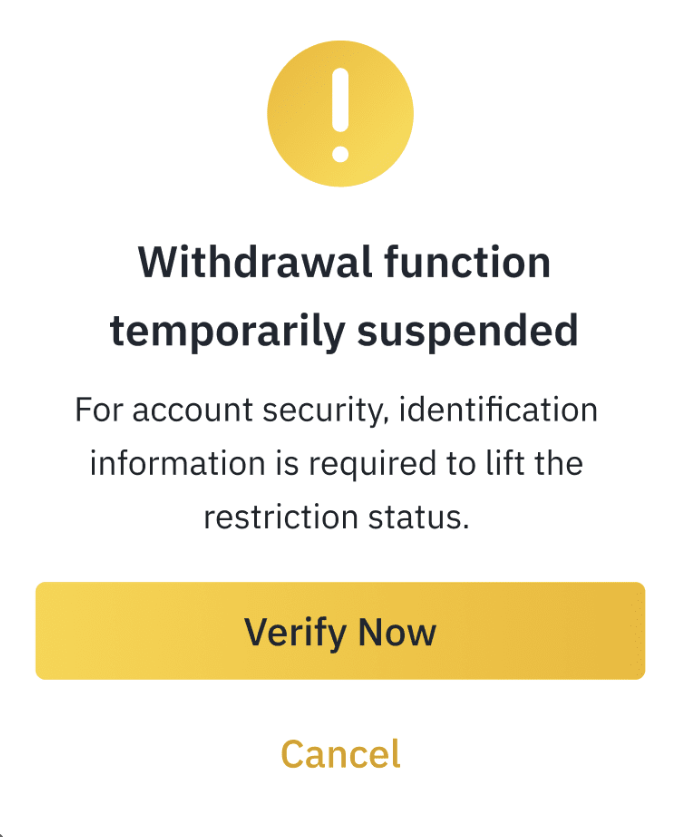
So, before signing up, always make sure that the exchange you want to use is legally available in your region.
2. Security
Hacks and security incidents are not rare in crypto, so security should never be judged from one feature alone. A good crypto exchange needs a complete security infrastructure, including cold storage, hot wallet controls, multi-signature or MPC custody, withdrawal monitoring, account protection, internal access controls, and regular security testing.
This is important because even strong wallet setups can still face risks during transfers, approvals, or third-party integrations. The Bybit exchange hack is a good example of this. It was not just a basic case of someone breaking into a weak wallet system. The incident showed how attackers can target the transaction process itself, especially when assets are being moved between wallets. So, when you check an exchange’s security, look beyond simple claims like “cold storage” and see how the platform manages transfers, signing approvals, wallet access, and emergency controls.
You should also look at how proactive the exchange is. Security risks keep changing, and exchanges now have to think about newer threats as well, including quantum-related risks to cryptography. This does not mean quantum computers are already breaking crypto wallets today, but it does mean serious platforms should be paying attention to post-quantum security, stronger key management, and long-term protection plans.
At the same time, users often see the word “hacked” in exchange reviews and immediately treat it as a permanent red flag. That is not always the best way to look at it. Financial platforms always carry security risks, whether we are talking about crypto exchanges, banks, payment companies, or trading apps. What matters is how the exchange handled the situation. Did it communicate clearly? Did it pause affected systems in time? Did it protect users from further damage? Did it investigate the issue properly? And most importantly, did it improve its security setup afterward?
So, a dented security history is worth noting, but it should be judged together with the exchange’s response, transparency, and improvements after the incident.
3. Insurance
Check whether an exchange has an insurance fund, protection fund, or security reserve for users. These funds are usually created to help the platform handle extreme situations, such as security incidents, platform-side failures, or losses created during leveraged trading. Binance has SAFU, Bitget has its Protection Fund, and some futures exchanges also maintain insurance funds to absorb losses from liquidated positions.
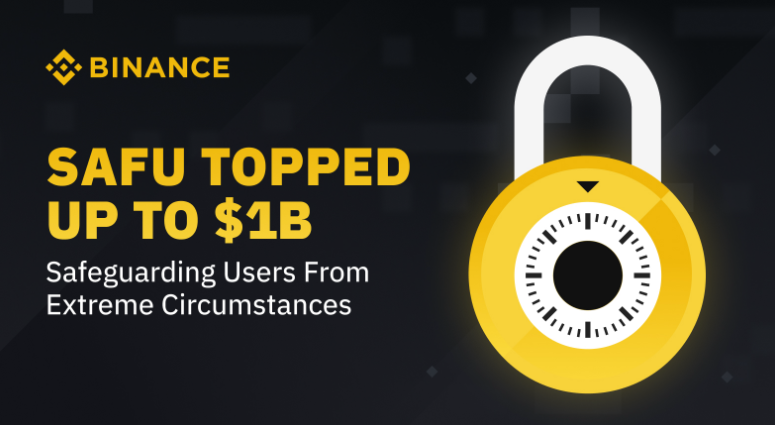
However, not every fund works the same way. Some funds are designed to protect users in extreme security or platform-risk situations, while others are mainly used for futures trading. In futures markets, an insurance fund can help cover the shortfall when a liquidated position cannot be closed at a safe price. This reduces the chance of Auto-Deleveraging, where profitable traders may have their positions reduced to cover losses from bankrupt accounts.
So, when checking an exchange, do not just look for the word “insurance”. Look at what the fund actually covers, how it is funded, whether the wallet addresses are public, how often the value is updated, and whether the exchange clearly explains when the fund can be used.
It is also important to remember that crypto exchanges are not banks. A protection fund does not always mean every user will be fully compensated in every situation. If an exchange goes bankrupt, users may still face delays, legal processes, or partial recovery. That is why long-term holdings are usually safer in a personal wallet, while exchange balances should be limited to the funds you actively need for trading.
4. Proof of Reserves
Proof of reserves is one of the clearest ways to check how transparent a crypto exchange is with customer funds. After the FTX collapse, many exchanges started publishing reserve reports to show that customer assets are backed. But readers should not look at proof of reserves as just another number shown on a website. The real question is whether the reserves are verifiable.
A strong proof-of-reserves system should allow users to verify that their own balance was included in the report. This is usually done through Merkle Tree verification, where users can check their account balance without exposing personal details. Some exchanges also publish wallet addresses, reserve ratios, and third-party attestations, which makes the report easier to verify.
Another important thing to check is asset coverage. Some exchanges may only show reserves for major assets like BTC, ETH, and stablecoins, while others provide proof of reserves for a much larger list of supported assets. This matters because holding Bitcoin on an exchange is different from holding a smaller altcoin, using margin collateral, or keeping funds in Earn, staking, or lending products.
The reserve ratio also matters. Ideally, customer assets should be backed by more than 100%, which means the exchange holds more assets than customer liabilities for that coin. However, a very high ratio does not automatically mean the exchange is safer. Readers should still check how often the report is updated, which assets are included, whether liabilities are counted properly, and whether the data can be verified independently.
This becomes even more important when using yield products. If you are staking, lending, or using Earn products, you should understand whether those balances are included in the exchange’s reserve reporting and how the platform manages those assets. A simple “100% reserves” claim does not always explain where your funds are, whether they are being lent out, or what risks come with the product.
So, proof of reserves is useful, but only when it is transparent, verifiable, updated regularly, and clear about what it actually covers.
5. Reputation and History
Have you ever heard the term “people don’t change”? While this sounds a bit negative at first, it is absolutely crucial to be skeptical in the crypto space. If an exchange was fraudulent in the past, there is no reason to trust them blindly now. Research if the exchange has been involved in wash trading, fake volume, liquidation hunts, withdrawal issues, or misleading practices against its customers.
Hacks should be looked at separately. An exchange getting hacked is a serious concern, but it is not the same as the exchange itself acting fraudulently. What matters is whether the exchange handled the incident properly, protected users where possible, and improved its security afterward.
You can also go a step further and research if the CEO or founding team was involved in shady crypto projects, such as one of the many ICO scams in 2017.
You can also check out their social media accounts. What do people say on their Twitter posts? Do they complain about withdrawals, support, and account restrictions, or is the feedback mostly positive?
6. Available Products
A crypto exchange should match the way you plan to trade or invest. Before signing up, check whether it supports the products you actually need.
The most popular products on crypto exchanges are the spot market and the perpetual futures market. On the spot market, you are buying the asset, which you can then send to your wallet. On the futures market, you are trading a contract, usually with leverage, representing the underlying asset.
Other popular products include staking, copy trading, trading bots, crypto debit cards, and earning products. But crypto exchanges are no longer limited to only spot and futures trading. Many platforms now also offer DEX access, Web3 wallets, tokenized stocks, tokenized commodities, tokenized real-world assets, prediction-style markets, and other TradFi-linked products.
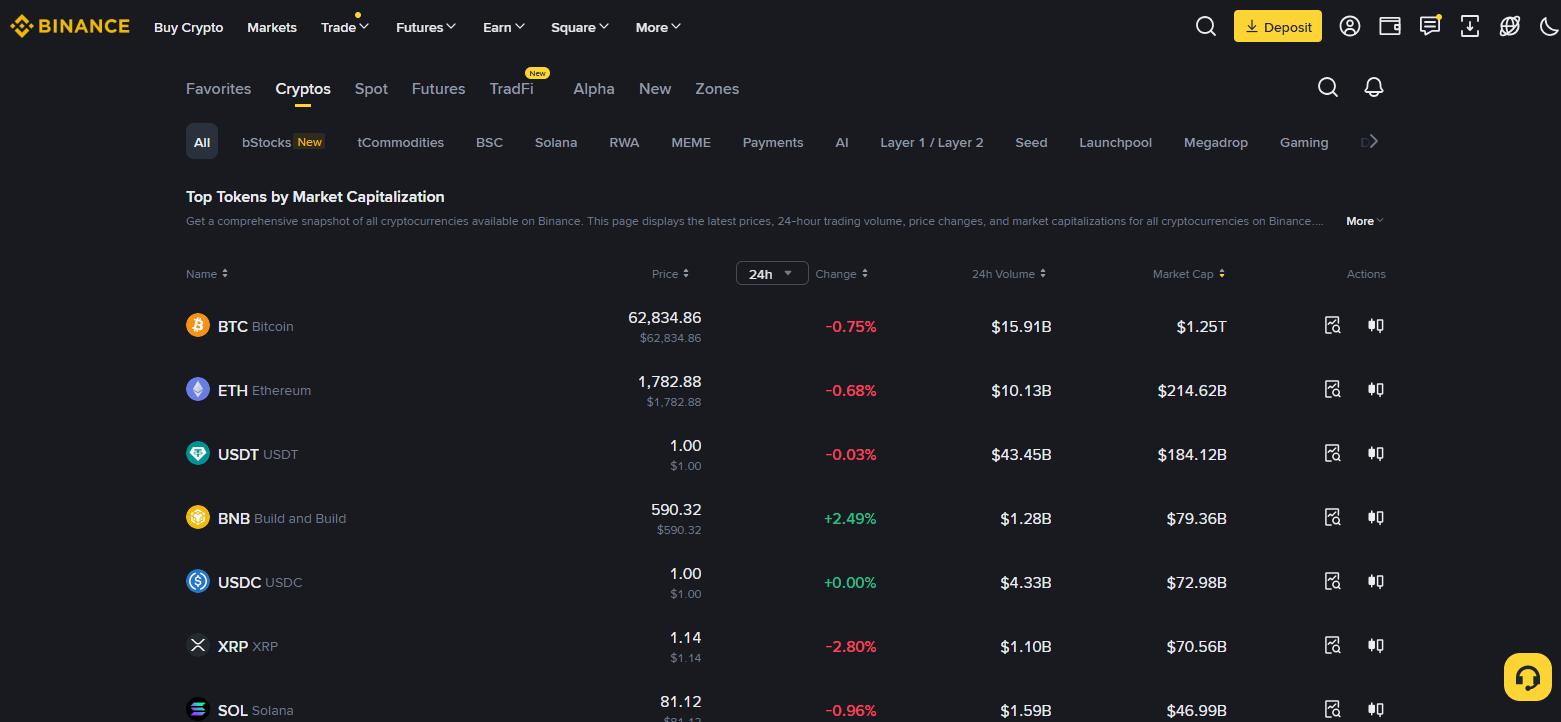
This is why you should not only check whether an exchange supports crypto trading, but also what kind of trading experience it offers. Some users may only need a simple spot market, while others may want futures, copy trading, bots, staking, fiat tools, card services, or tokenized assets from traditional markets.
Most tier 1 exchanges offer many of these products, but it is still best to manually check if the exchange you would like to choose supports what you are looking for. You can also go through detailed crypto exchange reviews to learn more about the assets an exchange supports, its trading features, fees, order types, mobile app, and other tools before signing up.
And if you are mostly trading on your phone, you should make sure that the exchange has a reliable mobile app. Most tier 1 exchanges do have iOS and Android applications. However, some apps are not as fast or stable as they should be, especially during high-volume trading periods.
7. Supported Coins
An exchange will not be useful for you if it does not support the cryptocurrencies you are planning to buy or trade. If you want to learn more about this, we made a separate guide about the crypto exchanges with the most coins and trading pairs.
If you want to buy and hold a cryptocurrency for the long term, make sure that the coin is supported on the spot market so that you can send it to your own wallet. You can also check whether the asset is available in Earn, staking, savings, or lending products, especially if you plan to hold it for a longer period. Just make sure you understand the terms, lock-up period, and risks before using these products.
It is also important to check whether deposits and withdrawals are available for that asset, because some exchanges may list a coin for trading but temporarily restrict withdrawals.
If you want to use margin, you should check whether margin trading is supported for that specific asset. And if you want to trade futures, you must make sure that the coin is available on the futures market, not just the spot market.
Also, do not only look at the number of supported coins. Some exchanges list hundreds of assets, but not every coin has strong liquidity, active trading volume, or enough trading pairs. So, before choosing an exchange, check whether it supports the coins you need and whether those markets are actually active.
8. Ease of Use
Cryptocurrency exchanges can be very confusing, especially when they offer too many features in one place. While more products can be useful, beginners may find it harder to use the platform if the interface is crowded.
Look for a crypto exchange with a clean and beginner-friendly trading interface. Basic actions like buying, selling, depositing, withdrawing, and tracking assets should be easy to find.
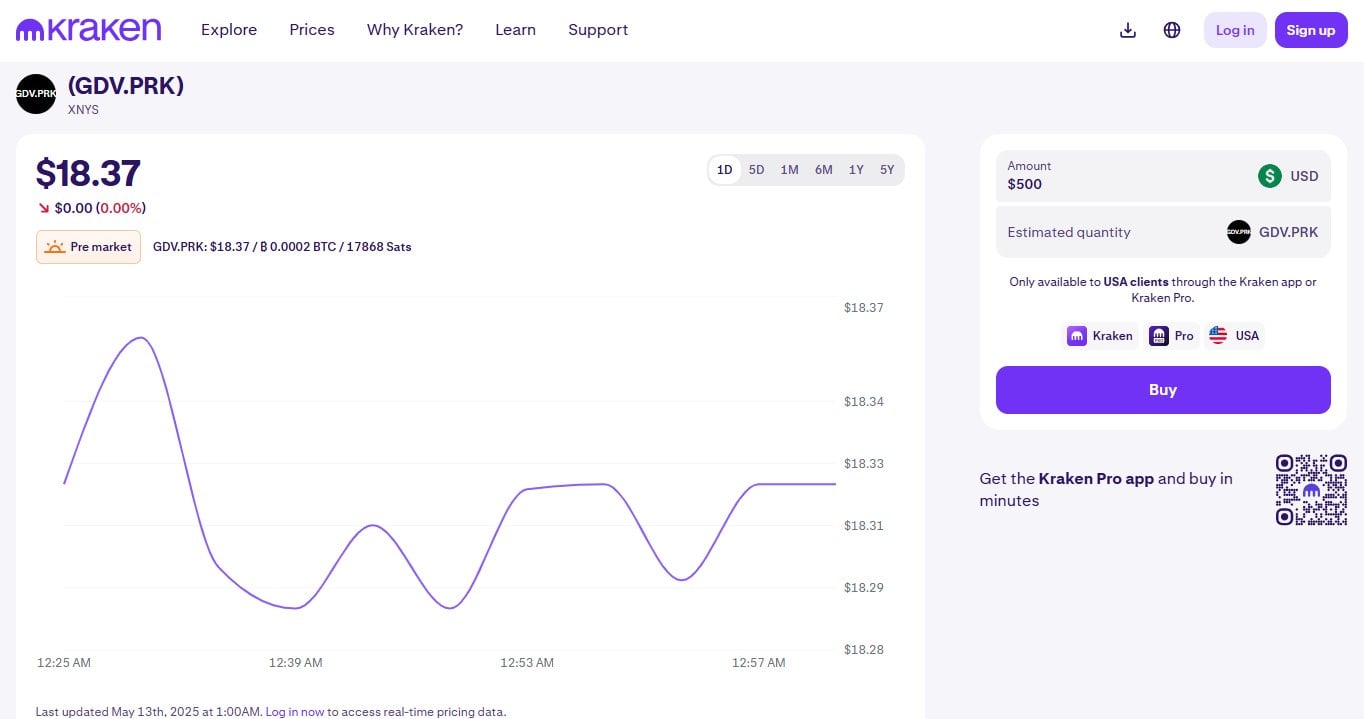
Some exchanges also offer simple buy/sell windows for complete beginners. For example, Kraken allows users to buy crypto without opening the full trading interface, which can be helpful for users who do not want to deal with charts, order books, and advanced order settings right away.
9. Liquidity and Volume
Liquidity is an often overlooked part. Liquidity is provided by market makers through limit orders in the order book. If there were no market makers providing liquidity, you could not properly trade, buy, or sell assets. Below, you will find the order book of MEXC, which has shown strong liquidity in the crypto space.
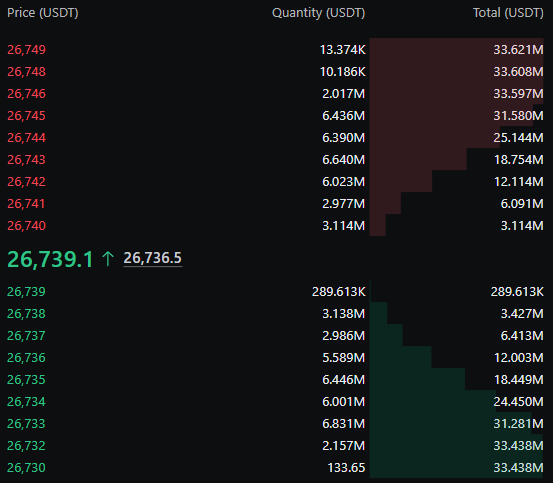
You can see that in order to move the price of Bitcoin by only $9, you would have to buy $33 million dollars worth of Bitcoin (this would be a move of barely 0.03%). That means that even larger orders do not move prices too heavily.
High liquidity supports healthy and natural price movements and helps the market stay efficient.
In terms of volume, you should look for platforms with strong daily trading activity. If volume is too low, price movements may not be reliable, and the market can feel inactive, with no trades happening for minutes or hours. You can check crypto exchanges with the most trading volume on CoinMarketCap.
10. Fees
An often overlooked factor, especially by beginners, is trading fees. A good example of this is Coinbase. It is one of the most user-friendly crypto exchanges, but many active traders may find its fee structure expensive compared to other platforms.
Coinbase Advanced fees can go up to 0.4% maker and 0.6% taker, while many crypto futures exchanges usually charge around 0.02% maker and 0.06% taker. This can make a major difference for active traders, especially if they are opening and closing positions frequently.
On the spot market, many exchanges charge around 0.1% for makers and takers, although the exact fee depends on the platform, trading volume, VIP level, and whether the exchange offers token-based discounts.
High trading fees can eat up a large portion of your profits in the long run. You can test this with our free profit and trade simulator.
11. Reliability
This is an important factor, especially for day traders. If you want to trade on an exchange, you must make sure that the platform is stable, available 24/7, and does not suffer from frequent lags, bugs, or network issues.
Some exchanges slow down during high volatility because their systems get overloaded. When you are day trading crypto, even a small delay can affect your entry price, exit price, or stop-loss execution. In the worst case, your order may not go through at all because the platform is facing a technical issue.
This is why reliability is not only about whether the website opens or not. You should also look at page speed, app stability, order execution, chart loading, and whether the exchange has a history of downtime during major market moves.
12. Deposits and Withdrawals
Deposits and withdrawals are not only about whether an exchange supports payments. You also need to check how funds move in and out, which assets are supported, and what limits or restrictions apply.
Crypto Deposits and Withdrawals
Before sending any cryptos to an exchange, make sure that the platform supports deposits and withdrawals for said crypto. Some smaller or shady exchanges accept deposits but do not allow withdrawals for certain coins. An example of this is HitBTC which accepts DOGE deposits but no DOGE withdrawals (I fell for an arbitrage trap…). You will mostly experience this on smaller exchanges. You will mostly experience this on smaller exchanges. This should never happen on a tier 1 exchange.
You should also check the supported network before depositing. For example, USDT can be available on different networks, and sending funds through the wrong network can lead to losses. So, before sending funds, always make sure that the coin and the network are both supported.
FIAT Deposits and Withdrawals
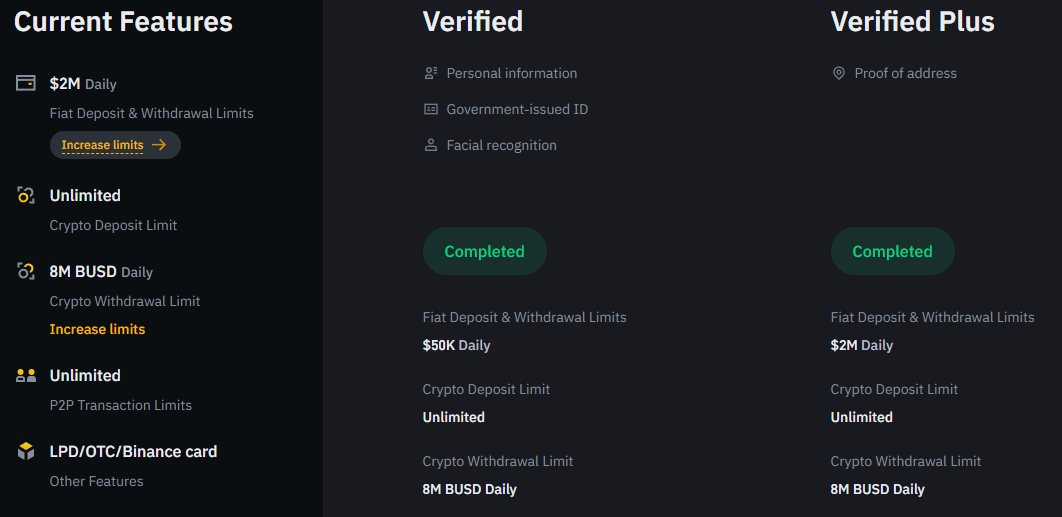
Aside from crypto transactions, you should also check the fiat deposit and withdrawal rules on a crypto exchange. While many exchanges support fiat deposits through credit cards, debit cards, bank transfers, or third-party payment providers, not every exchange offers direct fiat withdrawals.
Furthermore, you should check the daily and monthly withdrawal limits on the exchange. Some platforms have low withdrawal limits for users without KYC, while others may require full identity verification before allowing fiat withdrawals or higher crypto withdrawal limits.
13. Customer Support
Last but not least, you should make sure that the customer support of the exchange you want to choose is solid. Most tier 1 cryptocurrency trading platforms offer multilingual 24/7 live chat support directly integrated into their platform. This is now expected from any major exchange.
Other than that, you can try reaching out to them via email or social media channels such as X, Telegram, or Instagram. Just be careful of fake customer support accounts on social media. Customer support staff will never ask you to send cryptos, share your password, or reveal your seed phrase.
Good customer support matters the most when your deposits are delayed, withdrawals are stuck, KYC is pending, or your account is restricted. So, before choosing an exchange, it is worth checking how easy it is to contact support and how users describe their response quality.
Final Thoughts
Selecting the right crypto exchange can take time, especially as a beginner, but it will be worth doing the research and trying thigns out. At the end of the day, you should feel safe and happy with the crypto exchange you registered on. Also, you don’t just have to stick to one single crypto platform. Sending cryptos is very cheap and does not take a lot of time, so whenever you want to use a service on another platform, you can simply send your funds over.
Also, it is important to really understand what you need and which features your needs require. If you just want to buy and hold cryptos, you must look for the best exchange for the spot market that supports the asset you desire.
If you want to day trade, you should look for the exchange that suits your needs on the futures market. Key factors for day traders are fees, liquidity, volume, reliability, and supported assets.
If day trading is your main focus, you can read our guide on the best crypto exchanges for day trading.
FAQs
1. What should I check before choosing a crypto exchange?
Focus on region availability, security, fees, supported coins, liquidity, deposits, withdrawals, and customer support.
2. What is the safest way to choose a crypto exchange?
Check regulation, security infrastructure, proof of reserves, insurance funds, reputation, and how the exchange handled past incidents.
3. Should beginners choose a simple crypto exchange?
Yes, beginners should look for a clean interface, simple buy/sell options, clear fees, and easy deposit and withdrawal methods.
4. Is it better to use one crypto exchange or multiple exchanges?
One exchange can be enough for basic use, but some traders use multiple platforms for different coins, products, fees, or features.
5. Why do fees and liquidity matter when choosing a crypto exchange?
Fees affect trading costs, while liquidity affects slippage, execution, and how easily users can enter or exit trades.