

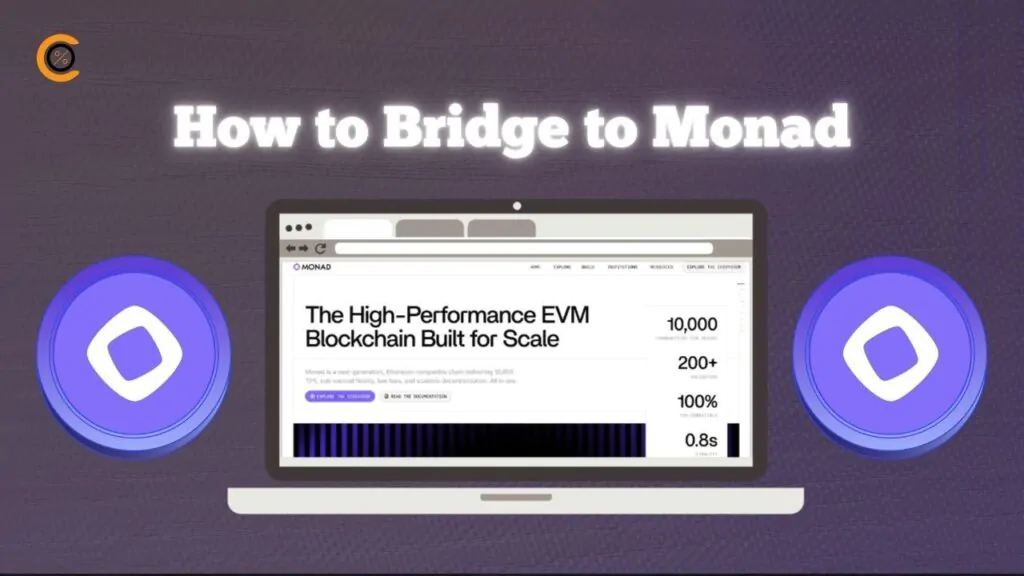
- •Monad supports bridging through its official bridge and selected third-party protocols.
- •Users need an EVM-compatible wallet with Monad added before receiving funds.
- •Bridging fees depend on the source network, selected token, route, and gas costs.
Monad has had one of the strongest marketing runs among new Layer 1 projects. It was the first project to launch on Coinbase’s new Token Sales platform and gained major attention through presale hype, airdrop demand, and strong community activity. Since then, Monad has stayed among the top 20 networks by volume, showing that interest has continued after launch. The network is also still new, so yield opportunities are easier to find and can be quite lucrative for early users.
This has many people looking for ways to bridge to Monad and compare the right tools to find cheaper routes. In this guide, we will explain how to bridge to Monad and which options are worth using.
Can I Bridge to Monad?
Yes, you can bridge to Monad, although the number of options is still limited. Monad has released its own official native bridge to help users move funds from other networks with lower fees. Apart from that, some third-party bridge protocols have also added Monad support due to the network’s rising activity and user demand.
Before you bridge your assets, there are a few things you should check so the process goes smoothly.
1. Gas Fees:
Every blockchain transaction requires a gas fee. This fee is usually paid in the native token of the network you are using.
For example, if you are bridging assets from Ethereum to Monad, you will need ETH in your wallet to pay the source-chain gas fee. Once your funds are on Monad, you will also need MON tokens for transactions inside the Monad network.
Token Symbol
MON
Current Price
Loading...
Daily Change
Loading...
All-Time High
Loading...
Daily Low
Loading...
Daily High
Loading...
24h Volume
Loading...
Market Cap
Loading...
FDV
Loading...
Total Supply
Loading...
Max Supply
Loading...
2. Wallet:
When using a bridge, you need to connect a wallet that supports Monad so you can receive your funds properly.
Monad is EVM-compatible, which means most EVM-compatible wallets should work. This includes wallets like MetaMask, and Trust Wallet. Before bridging, make sure your wallet is set up correctly and supports the Monad network.
3. Add Support to Wallet:
Monad does not have a separate native wallet in the usual sense. So, if you are using a wallet like MetaMask or Rabby, you may need to add the Monad network manually before connecting to apps or receiving funds.
Download MetaMask for your device

How to Bridge to Monad?
To move your assets to Monad, you will need a bridge protocol that supports the Monad network. We have gathered a list of bridge protocols, along with a bridge aggregator, that support Monad and can help users transfer funds to the network more easily.
Using Monad Bridge
The most secure option is the official Monad Bridge, which is powered by Wormhole. It allows users to bridge funds to Monad from EVM-compatible networks and also supports Solana.
Currently, Monad Bridge supports 10+ networks, mainly EVM-compatible chains. It can be considered the ideal option for users who want low fees and fast transactions. However, the bridge only supports transfers to Monad, which means users cannot bridge from Monad to another network using the official bridge. Here is how you can bridge assets to Monad using Monad Bridge:
Step 1: Start by opening Monad Bridge in your browser, and then click on the “Connect Source Wallet” button.
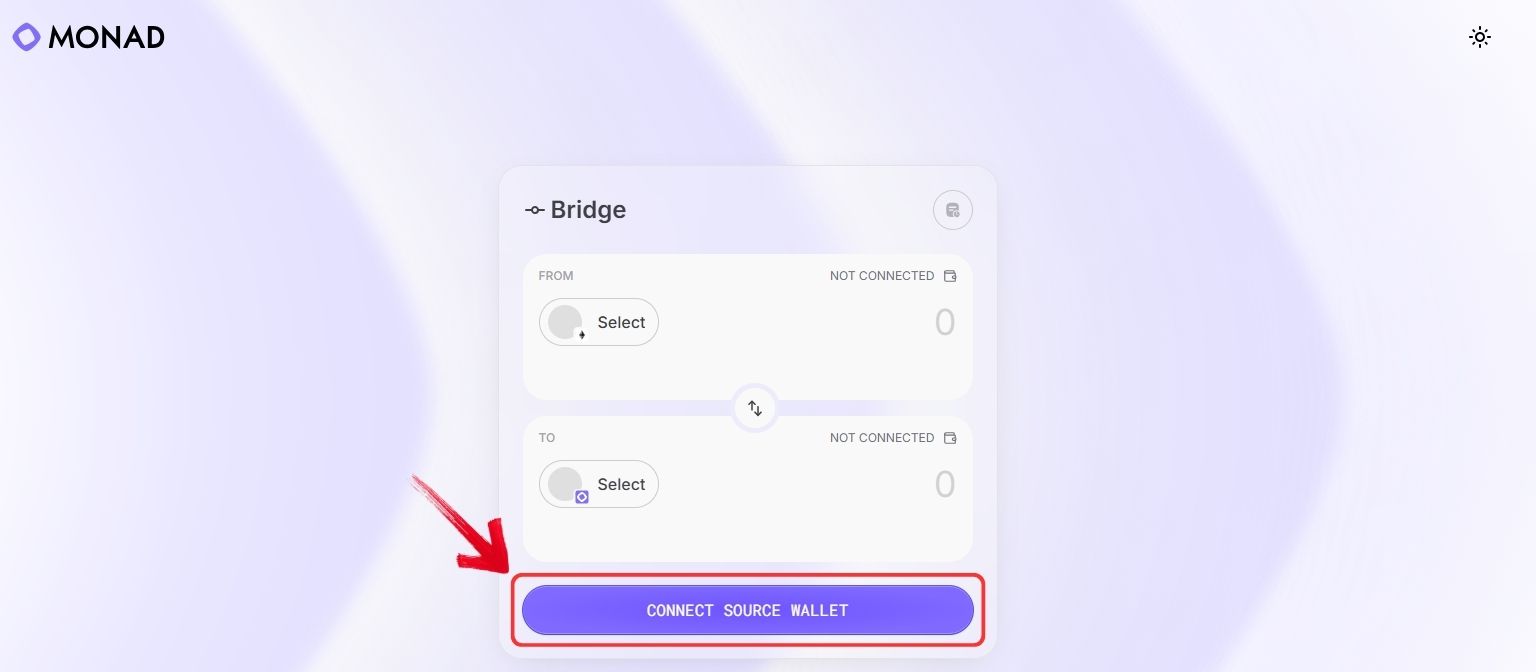
Tip: Since mostly EVM networks are supported, you can use a single wallet to bridge from the source network to Monad, except for Solana.
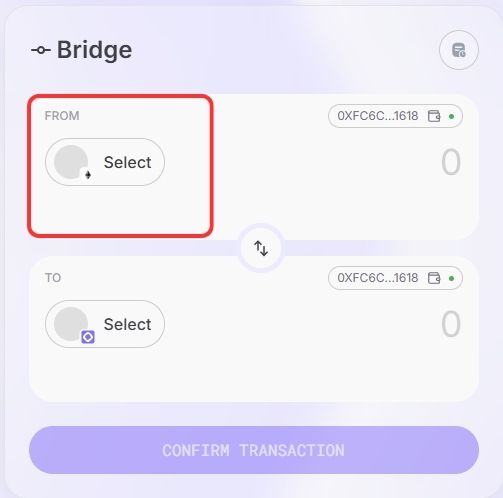
Step 2: With your source wallet connected, go to the “From” field, open the dropdown menu, and select the token you want to bridge and the source network.
Step 3: Now open the “To” dropdown menu, and select the token you want to receive on your Monad address.
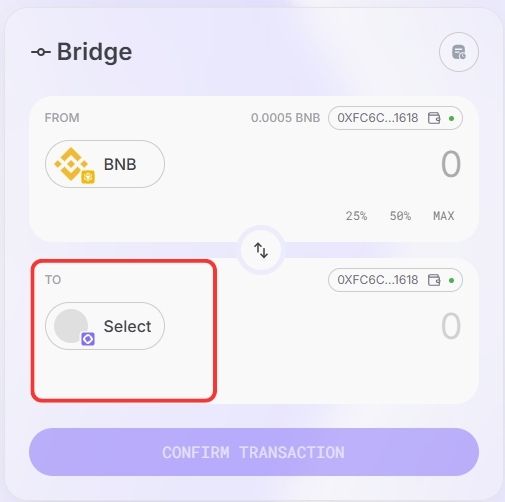
Step 4: Next, enter the amount of tokens you want to bridge to Monad.
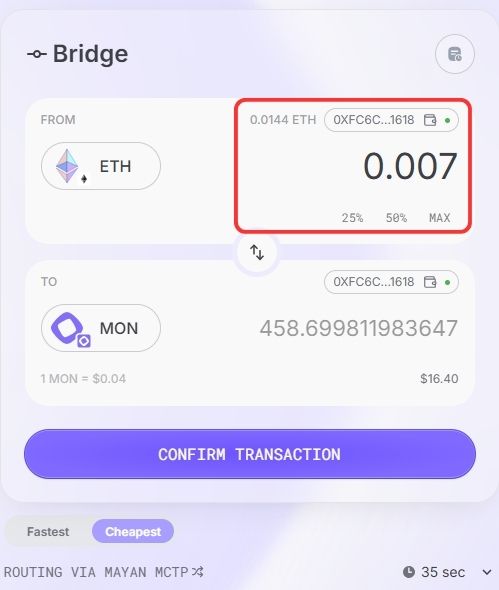
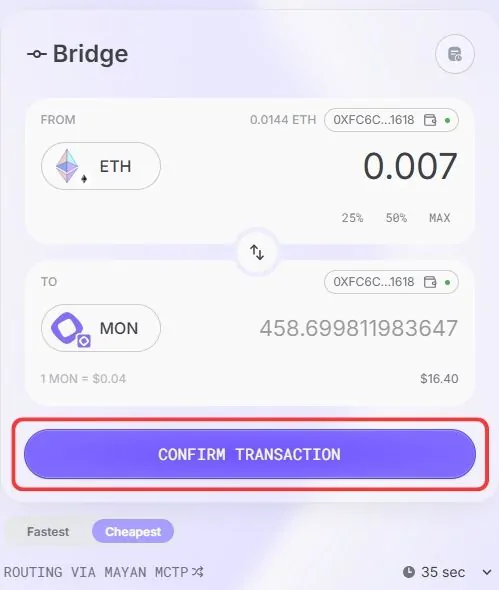
Step 5: Now review the transaction details, and then click on the “Confirm Transaction” button to bridge your assets. You will receive a signature request in your wallet for confirmation.
Using Across Protocol
Across Protocol is another bridge that supports Monad, along with 23+ other networks. It has processed billions in bridged volume with zero exploits, making it one of the more trusted bridge options in DeFi. Every transfer on Across is verified on-chain, with no multisigs and no custodial risk. The protocol is also used by leading DeFi apps and has handled over $34B+ in bridged volume. Here is how you can move funds to Monad using Across Protocol:
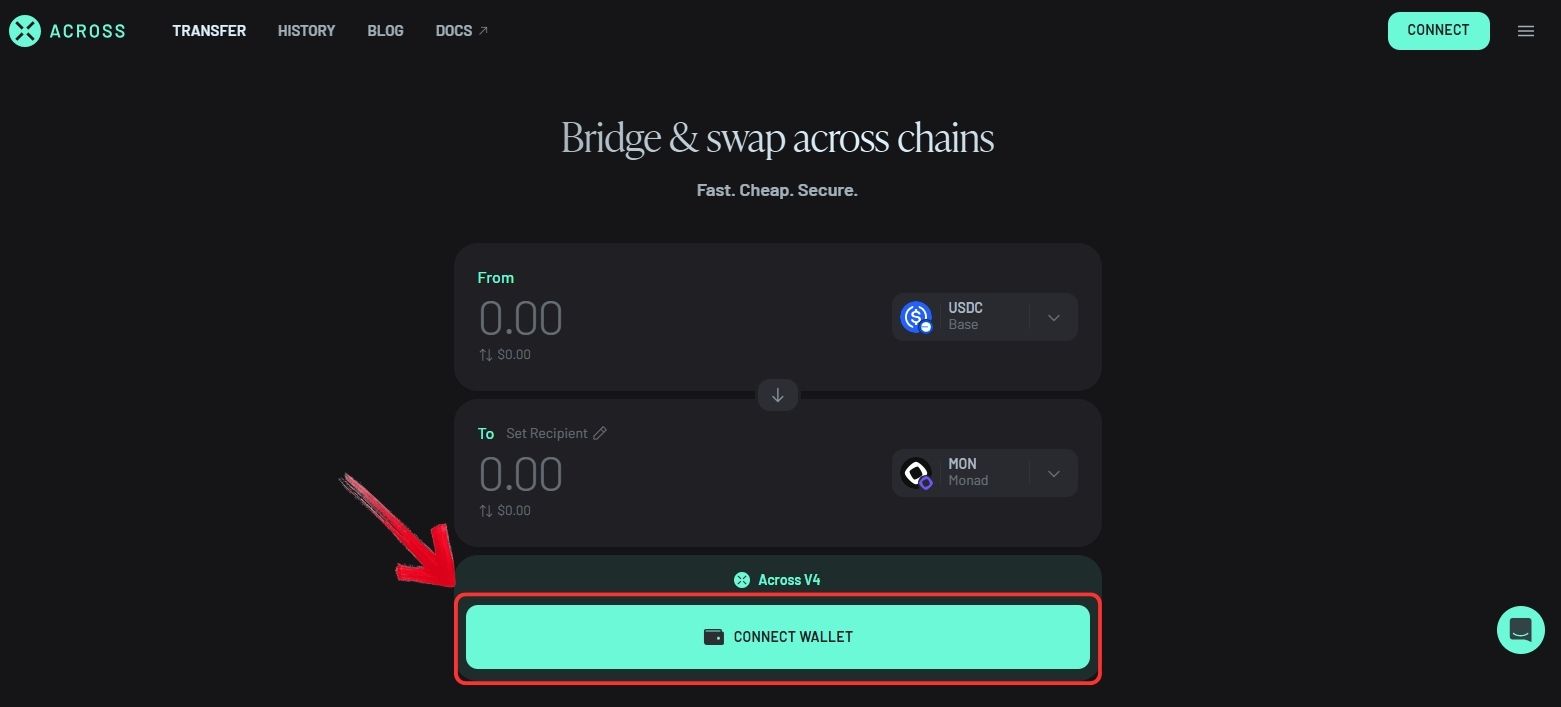
Step 1: Open your browser and go to the Across Protocol website. Then connect your wallet by clicking on the “Connect Wallet” button.
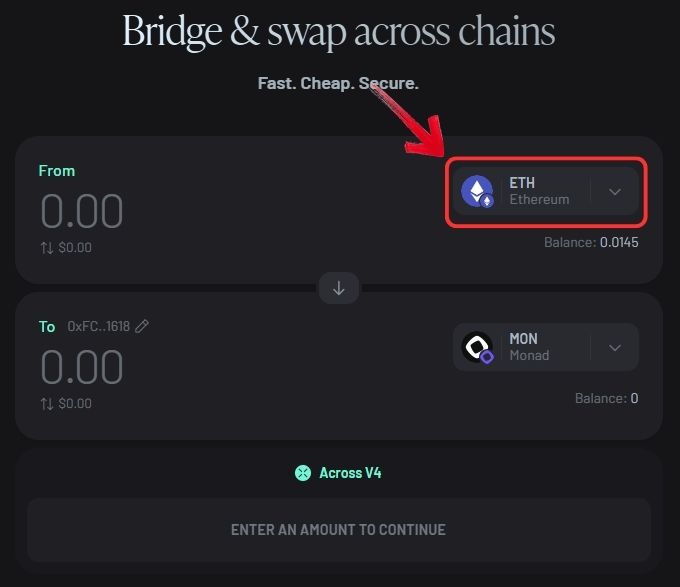
Step 2: Next, go to the “From” section and select the source network and the token you want to bridge.
Step 3: After that, select “Monad” in the “To” field, and then choose the token you want to receive in your Monad wallet address.
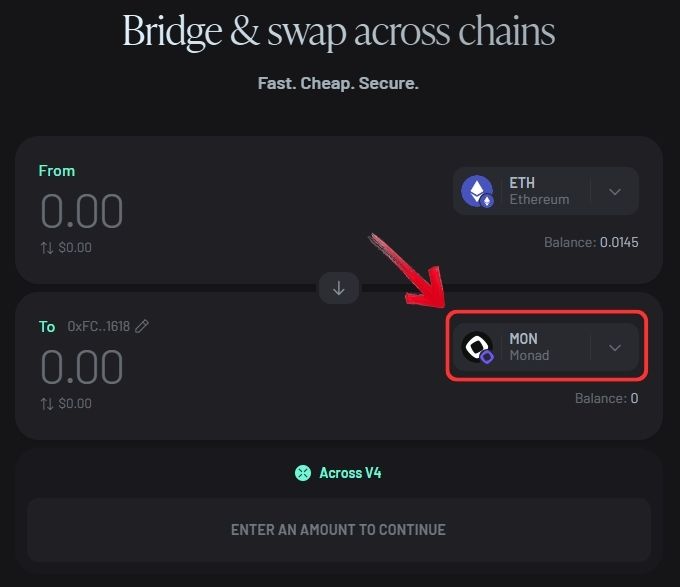
Step 4: Once the networks and token are selected, enter the amount you want to bridge to Monad.
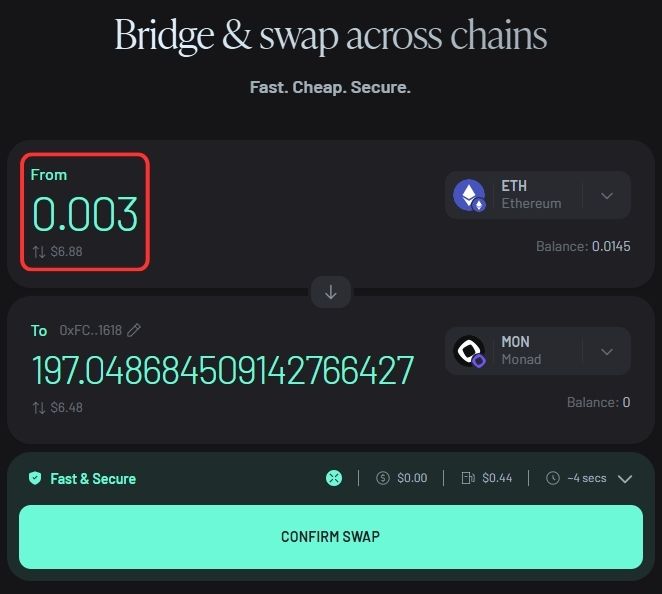
Step 5: Across Protocol will then show the total cost of the transaction, including gas fees. Review the details, and then click on the “Confirm Swap” button to proceed.
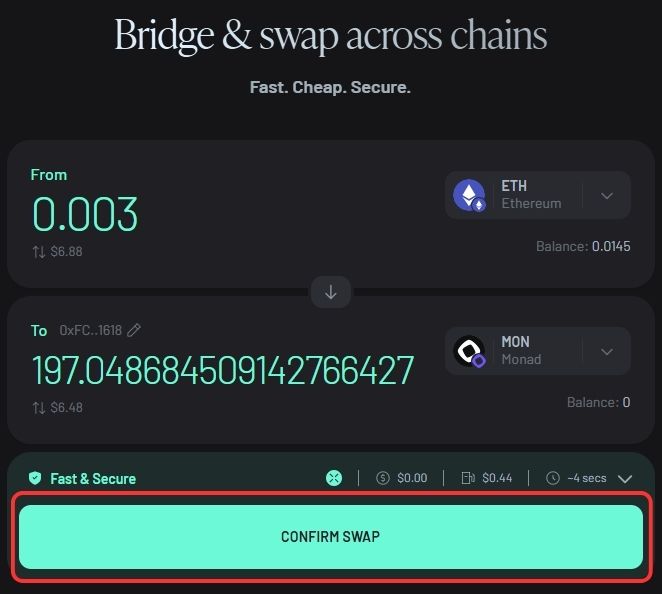
Once the swap is approved, Across Protocol will submit the transaction for approval on the next block. You will then receive the selected token on your Monad address. The process usually takes a few minutes, depending on the source network and network congestion.
Monad Bridging Fees
Monad bridging fees depend on the bridge you use, the source network, the token being moved, and current network activity. In most cases, the total cost includes the source-chain gas fee, the bridge or route fee, and sometimes a small destination-chain fee.
If you are bridging from Ethereum, the cost can be higher because Ethereum gas fees change based on demand. Bridging from cheaper EVM networks usually costs less. Once funds arrive on Monad, you will also need MON tokens for future transactions on the network. Before confirming any bridge transaction, always review the final amount, gas fee, route fee, and the token you will receive on Monad.
Bottom Line
Bridging to Monad is becoming easier as more bridges add support for the network. The official Monad Bridge gives users a direct way to move assets to Monad, while Across Protocol can help when you need more routes or token options.
Since Monad is EVM-compatible, the process feels familiar for users already using wallets like MetaMask or Rabby. You only need an EVM-compatible wallet with Monad configured before receiving funds. For that setup, you can follow our add Monad to MetaMask guide.
FAQs
1. What is the best way to bridge to Monad?
The official Monad Bridge is the most direct option for moving funds to Monad. It is powered by Wormhole and supports transfers from several EVM-compatible networks, as well as Solana.
2. Does Monad have an official bridge?
Yes, Monad has an official bridge. The Monad Bridge lets users move assets from supported networks to Monad with low fees and fast transactions.
3. Which wallets can I use to bridge to Monad?
Monad is EVM-compatible, so wallets like MetaMask, Rabby, and Trust Wallet can be used. You may need to add Monad manually before receiving funds or connecting to Monad apps.
4. Can I bridge to Monad from Ethereum?
Yes, you can bridge to Monad from Ethereum if the bridge supports the asset and route. You will need ETH in your wallet to pay Ethereum gas fees before the transaction can be processed.