


- •CRV is used for governance, reward boosts, and earning a share of protocol fees through veCRV.
- •CRV is available on major exchanges, with fees, liquidity, and trading features varying by platform.
- •Using CRV in DeFi requires transferring tokens to a Web3 wallet to access governance and liquidity features.
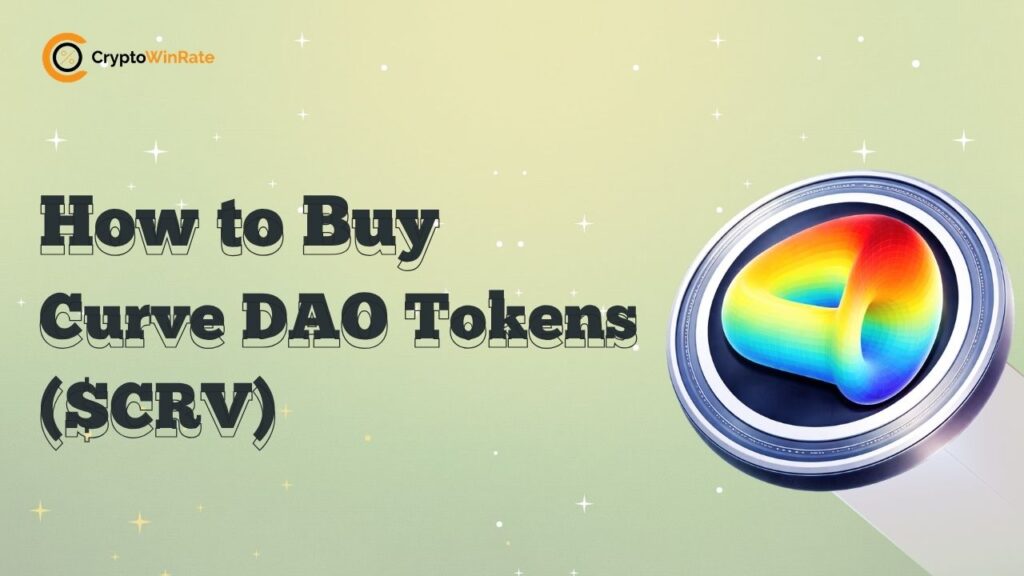
Curve Finance has been one of the early protocols to shape how liquidity and incentives work across DeFi. Today, it remains a core part of the ecosystem, with over $1.83 billion in total value locked across its pools. At its core, Curve focuses on low-slippage swaps between stablecoins and similarly priced assets, which is why it continues to see consistent usage across market cycles. Its native token, CRV, is tied directly to governance, liquidity incentives, and protocol revenue through the veCRV model. In this guide, we’ll walk through how to buy CRV tokens and the exchanges where they are available.
Where to Buy Curve DAO
CRV is widely available across both centralized and decentralized platforms, reflecting its position as one of the more established DeFi tokens. Over time, it has secured listings on major exchanges due to its role within the Curve ecosystem and consistent trading demand. That said, availability alone should not drive your decision. Different platforms offer very different trading conditions. For some users, lower fees and tighter spreads may be the priority, especially when trading larger amounts. Others may prefer exchanges that offer optional KYC, higher withdrawal limits, or access to derivatives like perpetual futures.
There are also differences in liquidity depth, supported trading pairs, and bonus programs for new users. To make this easier, we have shortlisted a few reliable exchanges where you can buy CRV, along with the key details that actually impact your trading experience.
How to Buy $CRV on Bitget
For this guide, we’ll use Bitget to walk through how to buy CRV. It is a practical choice due to its mix of spot and derivatives trading, along with relatively low fees. Bitget supports over 598 cryptocurrencies, along with access to tokenized stocks, commodities, and forex markets, which gives flexibility if you plan to trade beyond CRV. For more active users, CRV perpetual contracts are also available, with up to 75x leverage on the CRVUSDT pair.
Trading fees are competitive, and you can reduce them further by holding BGB tokens. New users can also access bonuses of up to $6,200 using a Bitget referral code. Below, we’ve listed the step-by-step process to help you buy CRV on Bitget.
Step 1: Open your browser and head to the Bitget website. Sign up if you’re new, and complete the KYC verification to start trading.
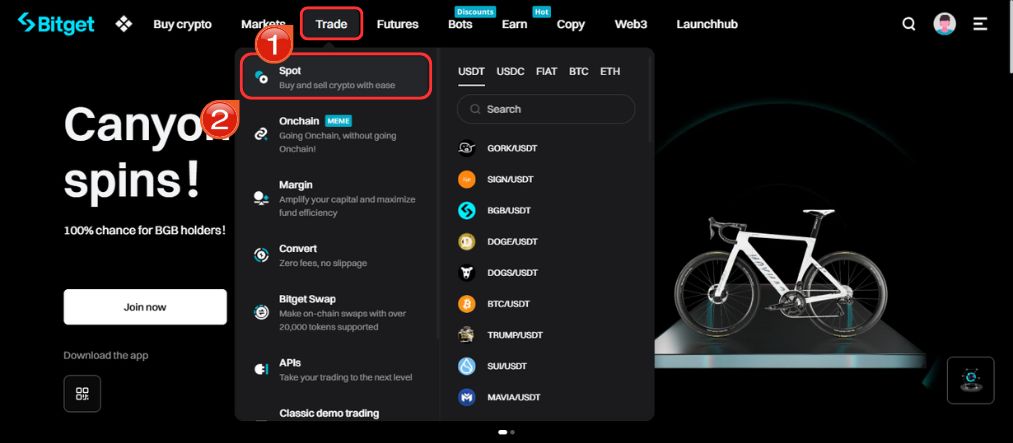
Step 2: Once your account is set up, go to the homepage. Hover over the “Trade” tab in the top menu and click on “Spot” to enter the trading interface.
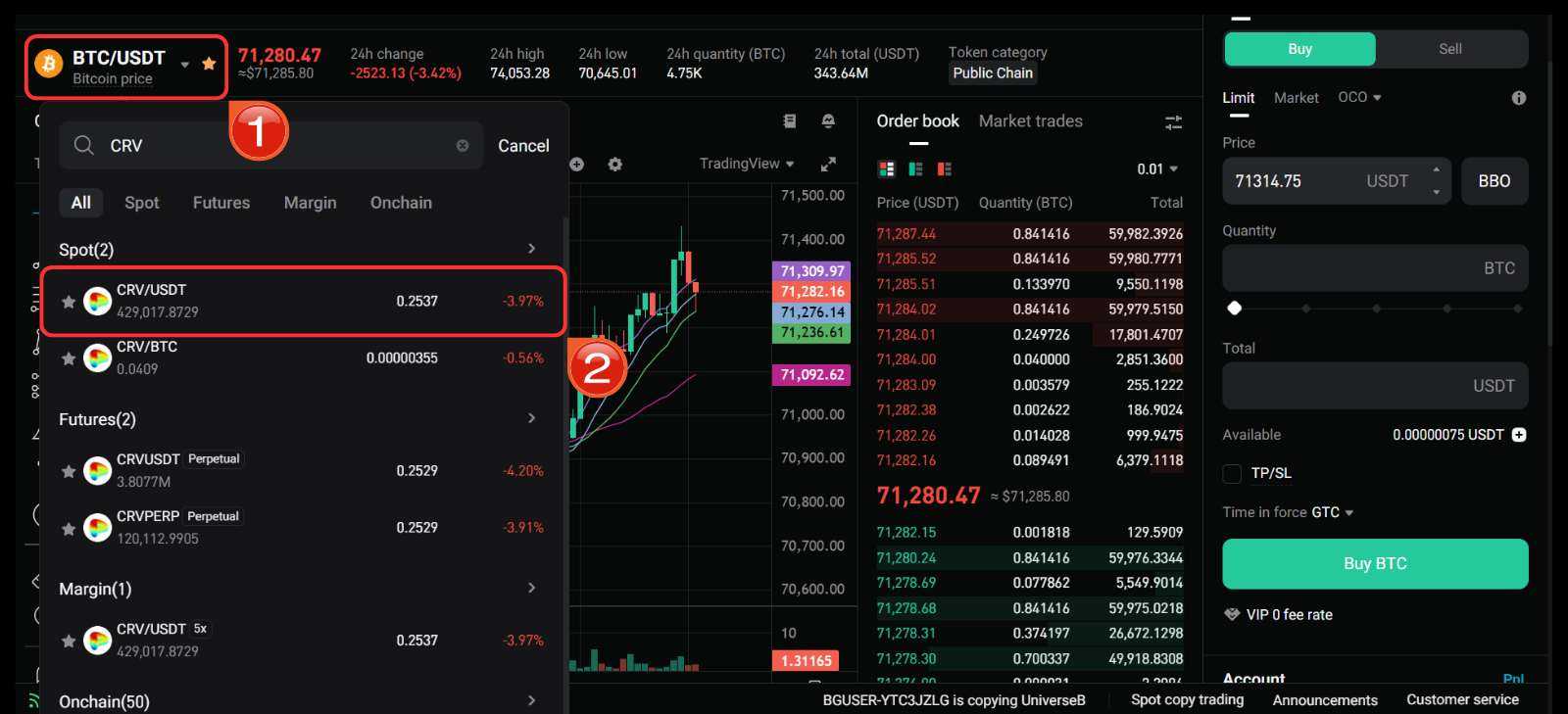
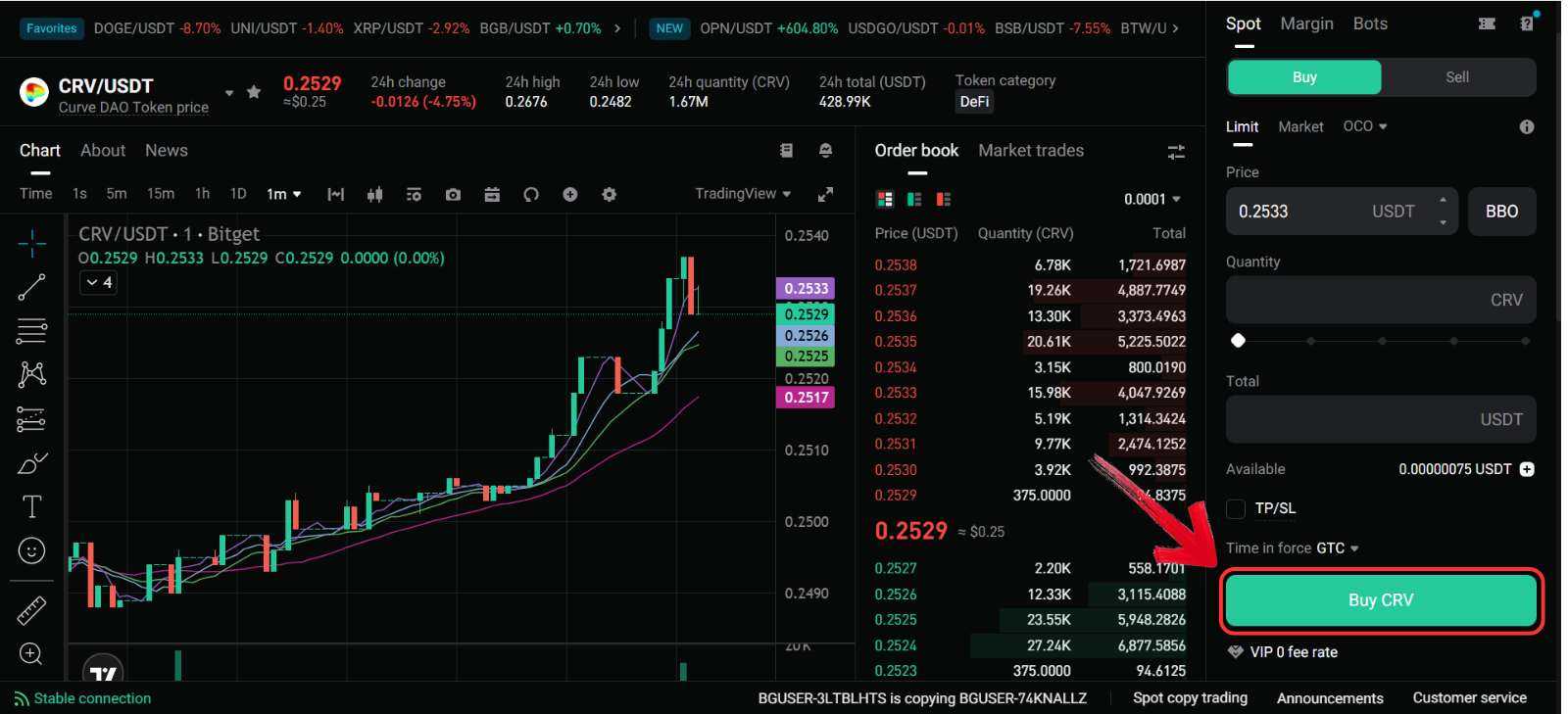
Step 3: On the Spot trading page, use the search bar to find the CRV trading pair, and select the CRV/USDT pair.
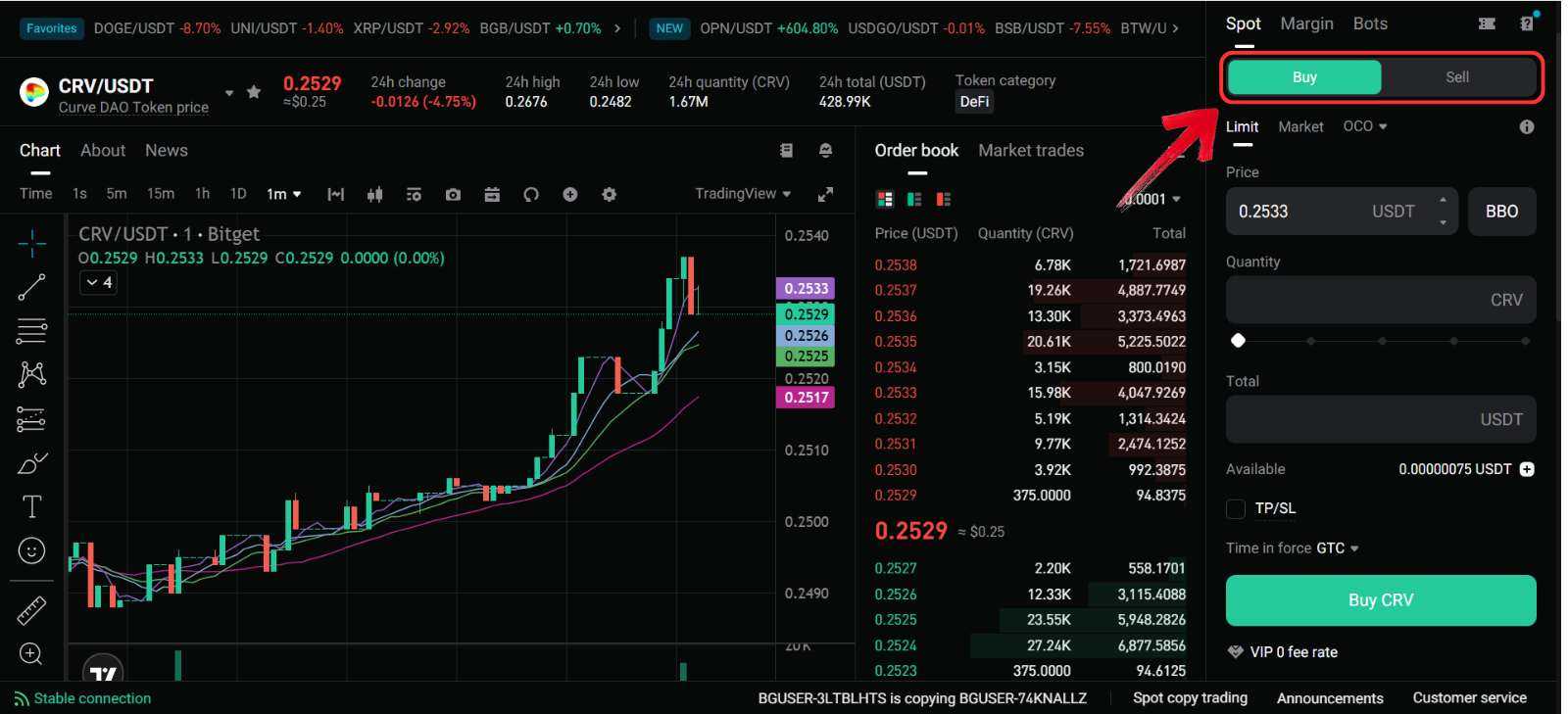
Step 4: On the right-hand side, locate the Buy/Sell panel where you can choose between a Market order for instant execution or a Limit order to set your own price.
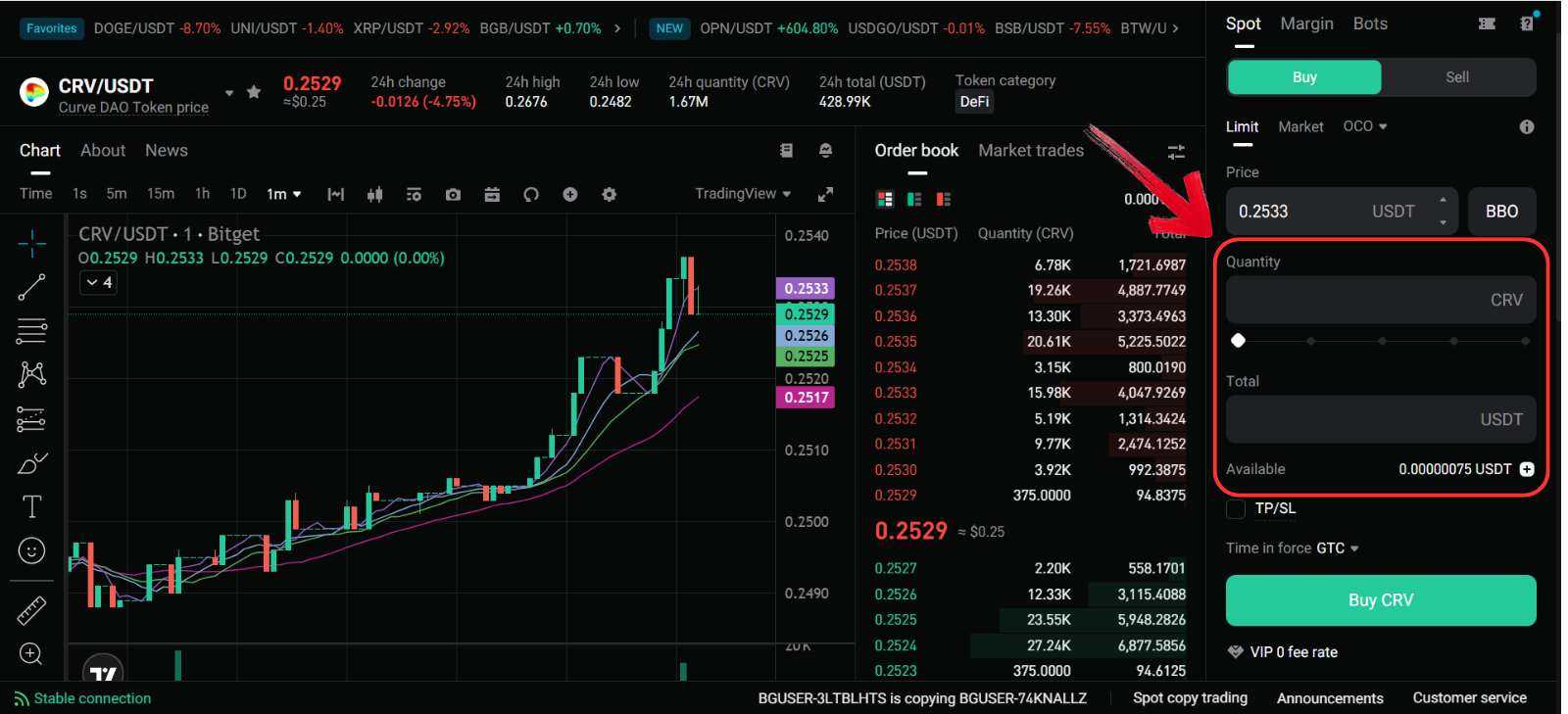
Step 5: Enter the amount of CRV you want to buy. You can type it manually or use the slider to allocate a portion of your USDT balance.
Step 6: Review the order details carefully, then click “Buy CRV” to complete your purchase.
Fees When Buying Curve DAO on Bitget
When buying CRV on Bitget, trading fees are kept relatively low compared to many platforms. The standard spot fee is 0.10% for both maker and taker orders, which is in line with industry averages. To put this into perspective, if you purchase $100 worth of CRV, the fee would be $0.10, leaving you with $99.90 in CRV after the trade is executed.
For users looking to reduce costs further, holding Bitget’s native BGB token can lower fees to around 0.08% for both maker and taker trades. This can make a noticeable difference over time, especially if you trade frequently or in larger volumes.
How to Transfer $CRV to a Web3 Wallet
Buying CRV on a centralized exchange like Bitget is straightforward, especially if your goal is to trade or hold. Your tokens remain on the platform, and you don’t need to interact with wallets or on-chain tools.
That changes if you want to actually use CRV within the Curve ecosystem. Features like locking CRV for veCRV, voting on governance proposals, or increasing rewards as a liquidity provider require your tokens to be held in a Web3 wallet.
To do this, you’ll first need a wallet that supports Ethereum-based assets. Trust Wallet is commonly used because it integrates well with most DeFi applications, including Curve.
Here’s how you can transfer CRV to a MetaMask wallet:
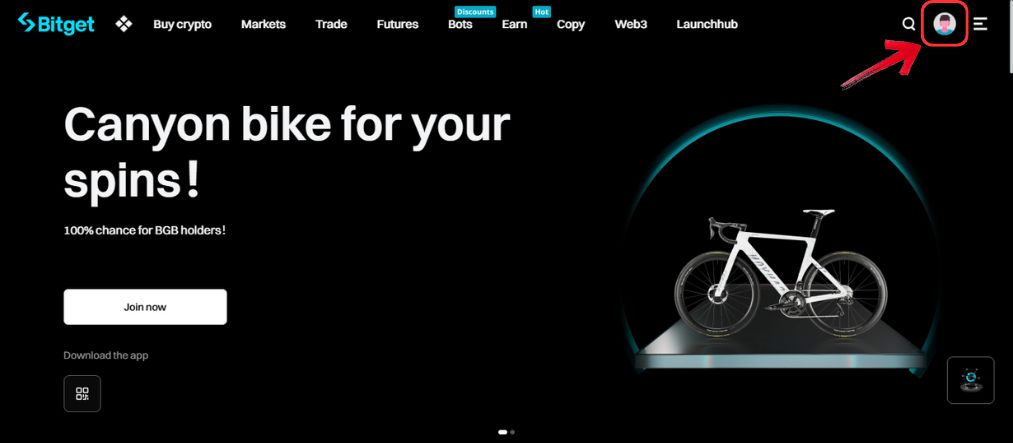
Step 1: Click the “User” icon at the top right corner of the Bitget homepage.
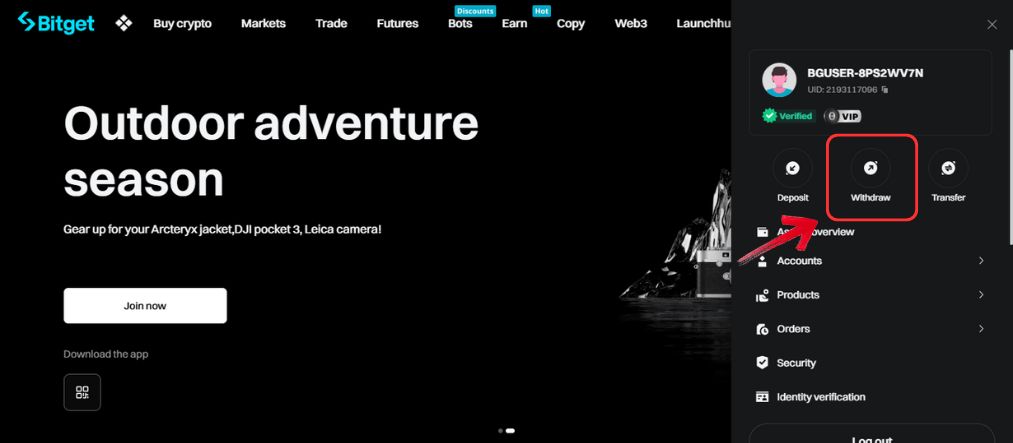
Step 2: From the dropdown menu, select “Withdraw” to start the withdrawal process.
Step 3: You’ll be taken to the withdrawal page. Choose CRV from the “Select a Coin” list.
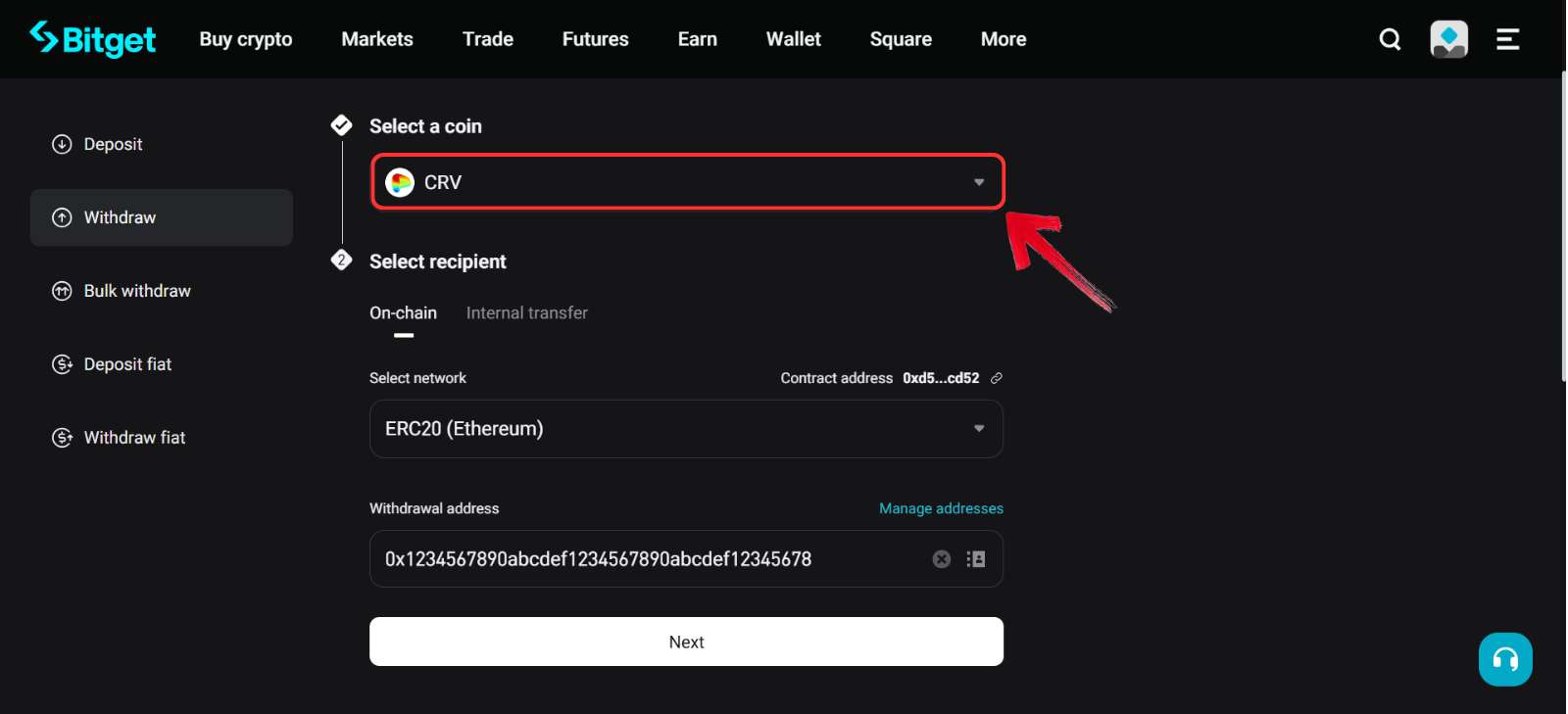
Step 4: In the network section, select ERC 20 (Ethereum), since CRV runs on the Ethereum network.
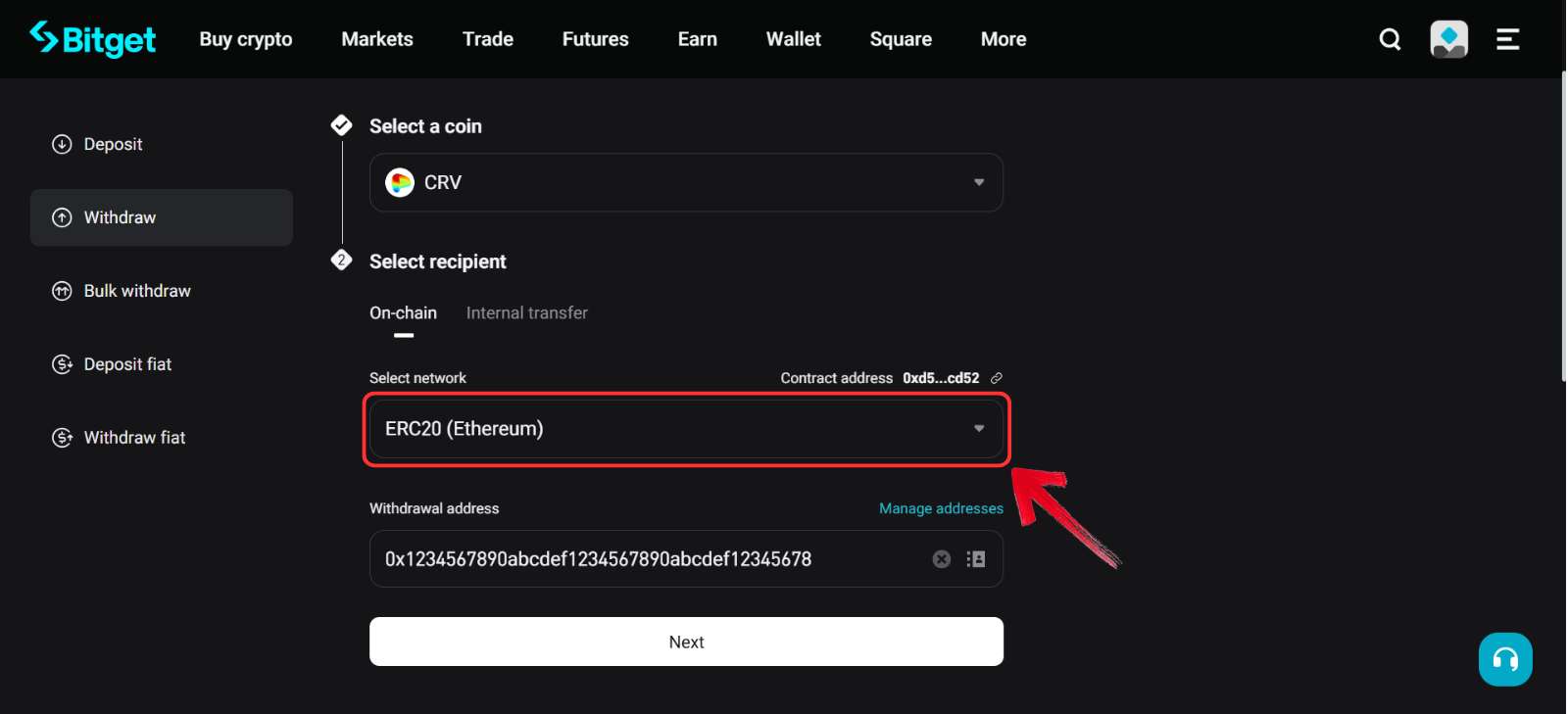
Step 5: Open your Ethereum-compatible wallet, copy your receiving address, and keep it ready.
Step 6: Paste the copied address into the “Withdrawal Address” field on Bitget.
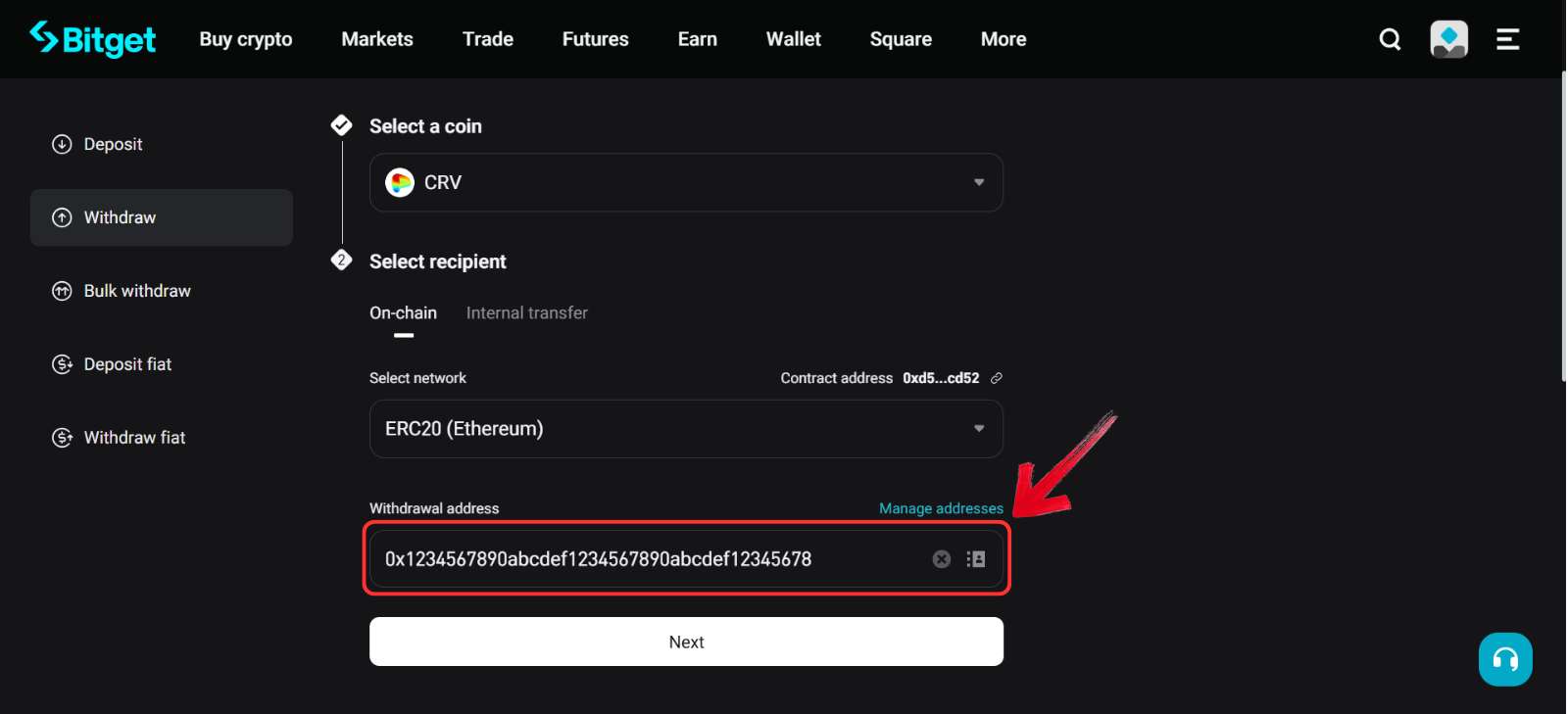
Step 7: Click “Next” to move forward with the withdrawal.
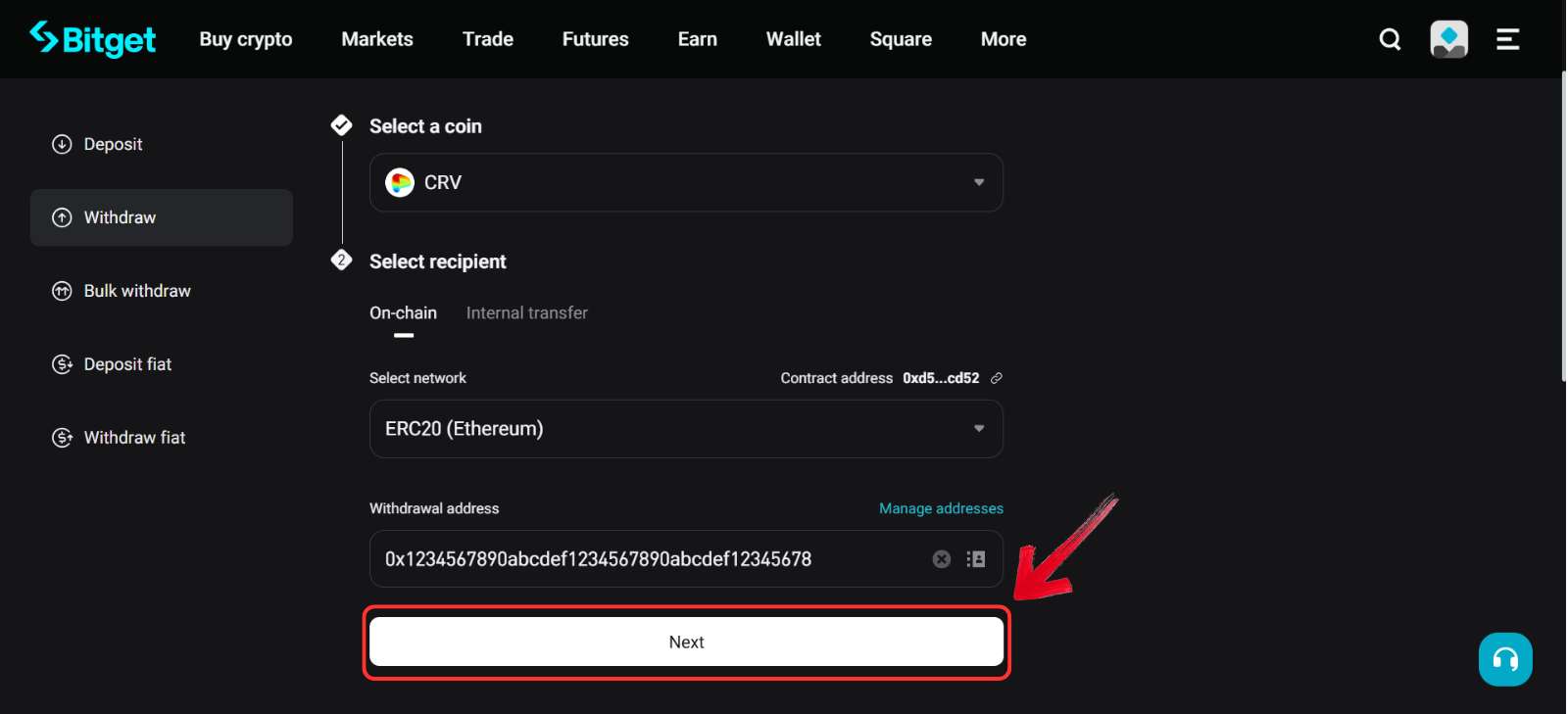
Step 8: Enter the amount of CRV you want to withdraw in the “Withdrawal Amount” field.
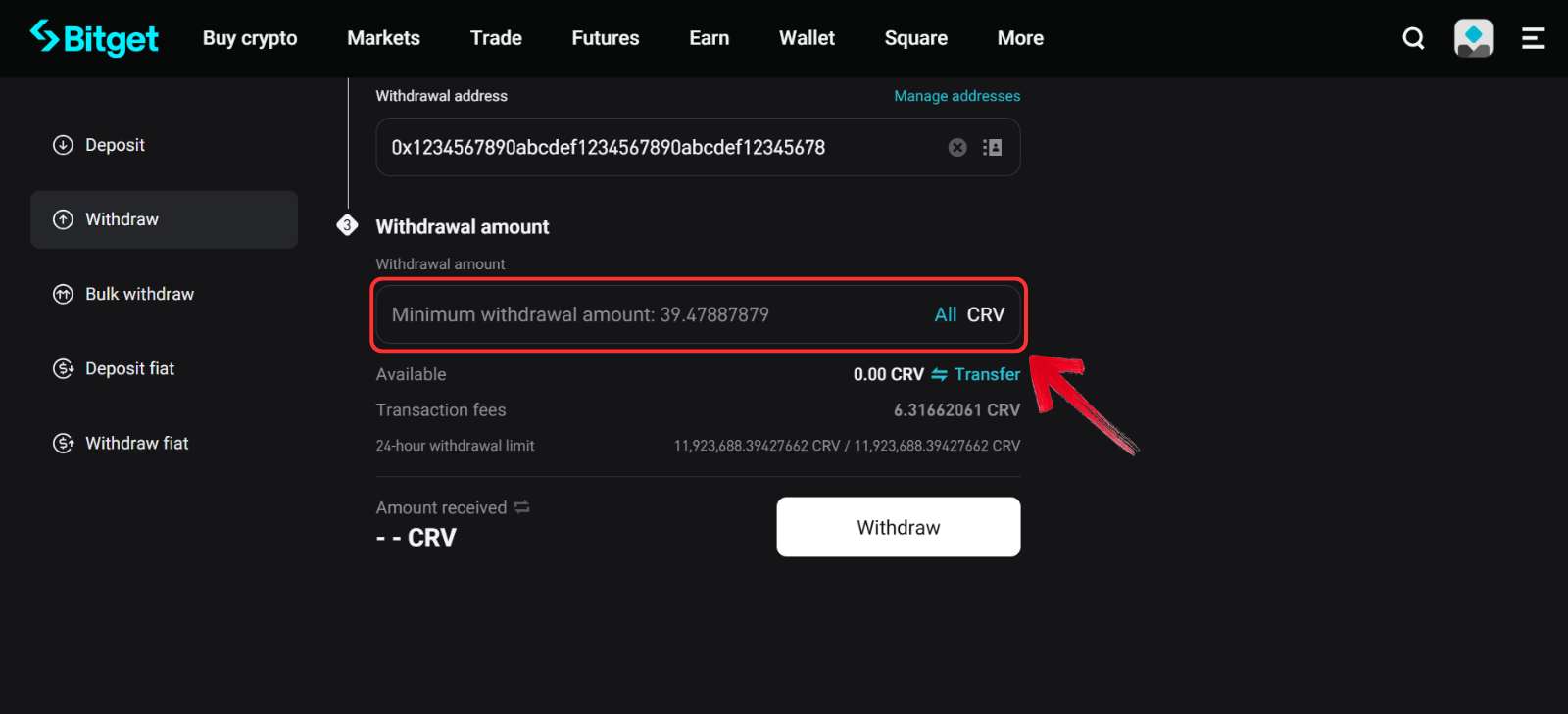
Step 9: Review all the details carefully, including the final amount and fees. Once everything looks correct, click “Withdraw” to complete the process.
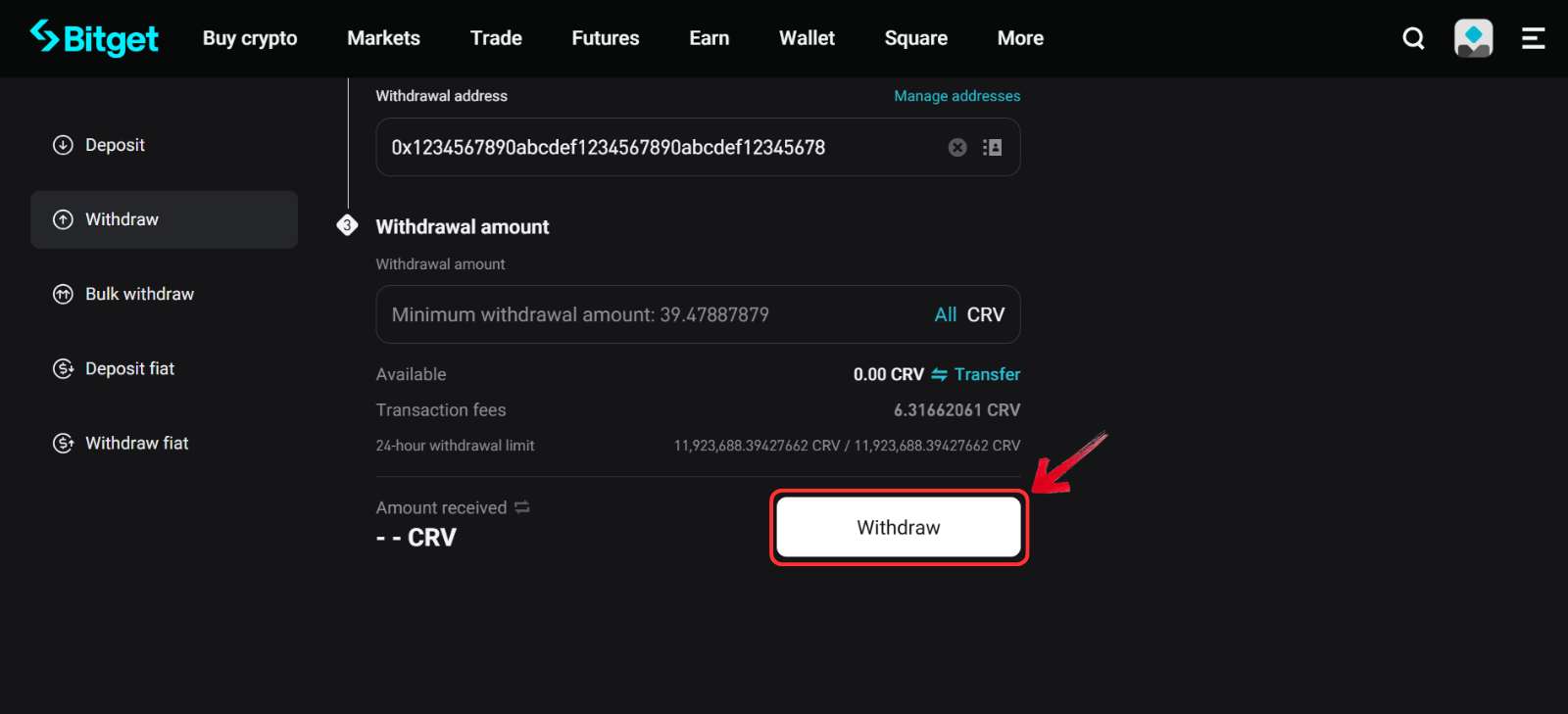
You can track the status of your CRV transfer using the transaction ID provided by Bitget. After submission, the transaction can be monitored on Etherscan, and the tokens will appear in your wallet once confirmed.
Curve DAO Explained
Curve DAO revolves around CRV, but its value comes from how you use it. Instead of just holding, you can lock CRV to receive veCRV, which gives you voting power over how rewards are distributed across liquidity pools.
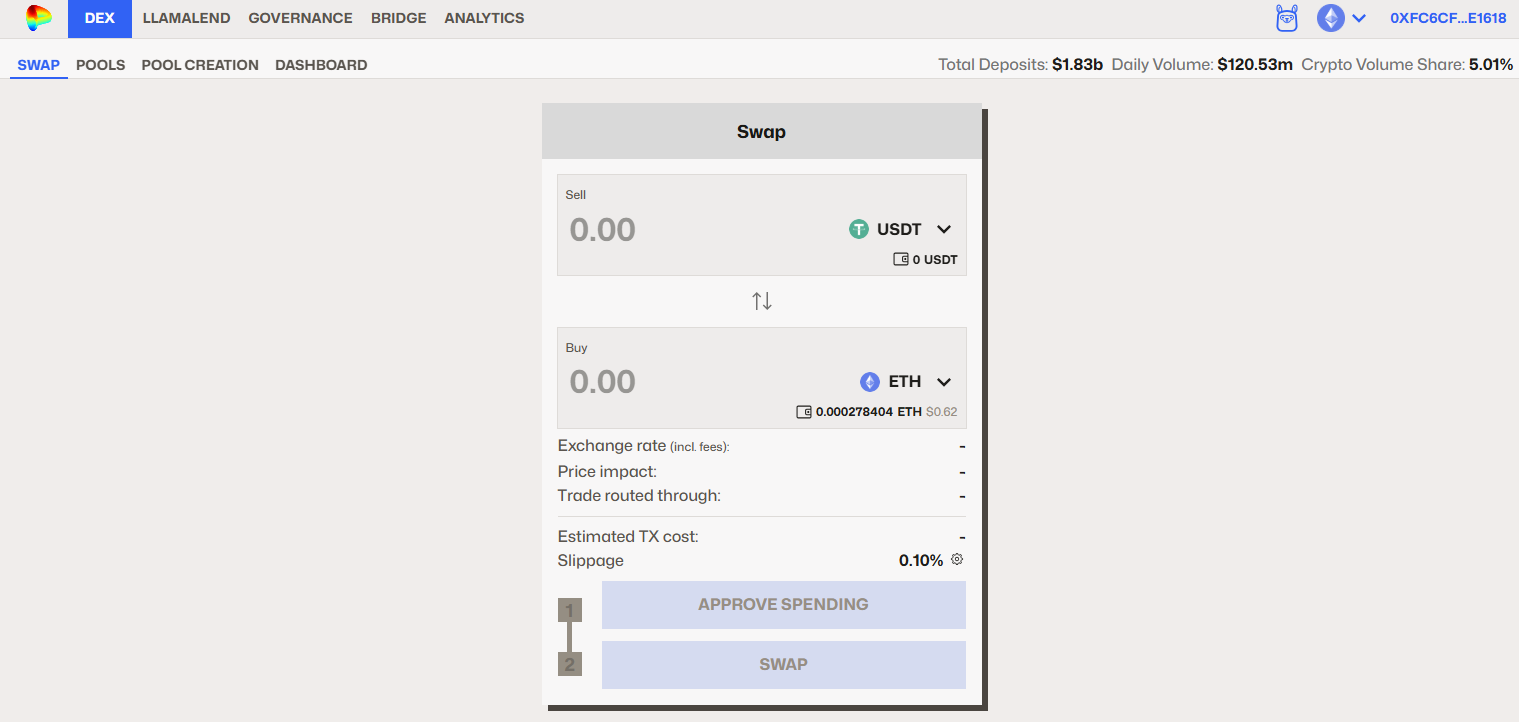
This matters because it directly affects yields. If you provide liquidity, holding and locking CRV can increase your rewards by up to 2.5x. On top of that, veCRV holders earn a share of trading fees generated by the protocol. In simple terms, CRV is less about price speculation and more about participating in how Curve runs and earning from its activity.
Bottom Line
Curve has stayed relevant by focusing on efficient stablecoin trading, and that utility reflects directly in how CRV is used. Whether it is governance through veCRV, boosting liquidity rewards, or earning a share of protocol fees, the token is tied closely to real activity on the platform. That said, CRV is not built for passive holding. Its value becomes clearer when you actively use it within the ecosystem. If you are looking beyond CRV, it helps to see how other DeFi tokens are evolving as well. You can check our top DeFi tokens list to compare different use cases and opportunities.
FAQs
1. Does Curve DAO (CRV) generate yield?
CRV itself does not generate yield automatically, but it can be locked to receive veCRV, which provides fee rewards and boosted returns for liquidity providers.
2. What is veCRV in Curve DAO?
veCRV is received when you lock CRV for a fixed period. It gives you voting power and access to higher rewards within the Curve ecosystem.
3. Is Curve DAO safe to use?
Curve is one of the more established DeFi protocols, but it still carries risks like smart contract vulnerabilities and market volatility.
4. Can CRV token reach $1?
With a current price around $0.22 and a market cap near $330M, reaching $1 would push CRV toward a $1.5B+ valuation, assuming supply stays similar. This would require stronger demand, higher protocol usage, and sustained DeFi growth. It is possible in a strong market cycle, but depends heavily on adoption and token dynamics.
5. Can you stake CRV?
CRV is not staked in the traditional sense, but it can be locked to earn veCRV, which provides governance rights and reward benefits.