



- •BNB’s outlook depends on more than price action, since token burns, Binance utility, and BNB Chain usage all shape demand.
- •BNB Chain activity gives the token a practical role through gas fees, DeFi apps, staking, and ecosystem participation.
- •Regulation, exchange dependence, and competition from other chains remain the main risks behind long-term BNB forecasts.
BNB is tied to Binance, BNB Smart Chain, opBNB, token burns, gas fees, and exchange-based utilities. That makes its price outlook more layered than a normal market forecast. A practical BNB price prediction needs to look at supply reduction, on-chain activity, Binance-related demand, technical structure, and the risks that still follow the asset. BNB Chain’s DeFi TVL, active address growth, and recent network upgrades show that usage remains part of the discussion. At the same time, regulation, exchange dependence, and competition from other chains continue to shape how the market values BNB in 2026 and beyond.
Historical Pattern: Volatility, Cycles, and Survival
BNB has already survived more than one full crypto cycle. It started in 2017 as Binance Coin, first issued on Ethereum, before later moving into Binance’s own chain ecosystem. Its biggest early use case was simple: users could pay lower trading fees on Binance by holding and using BNB.
That utility helped BNB stand out during its early years, but the larger growth phase came when Binance Smart Chain gained traction in DeFi. In 2021, BNB moved from around $41 at the start of the year to above $700 during the bull market. The move was aggressive, but like most major crypto rallies, it did not hold without a correction. BNB later dropped near the $180 range during the 2022 bear market.
The important point is not that BNB fell. Most crypto assets did. What matters is that BNB remained liquid, kept its position among the largest crypto assets, and stayed tied to one of the most active exchange ecosystems in the industry.
The 2024 and 2025 period brought another shift. Binance moved past major regulatory uncertainty after its U.S. settlement, while BNB Chain activity recovered. BNB later reached fresh highs during the 2025 cycle before cooling again into the current price area. That history matters because BNB has repeatedly shown that it can take heavy pressure, reset, and still remain relevant.
Token Symbol
BNB
Current Price
Loading...
Daily Change
Loading...
All-Time High
Loading...
Daily Low
Loading...
Daily High
Loading...
24h Volume
Loading...
Market Cap
Loading...
FDV
Loading...
Total Supply
Loading...
Max Supply
Loading...
What’s Really Moving BNB: The Fundamental Drivers
BNB’s price is being shaped by four main drivers: exchange utility, on-chain demand, supply burns, and institutional attention.
BNB is still used on Binance for trading fee discounts, Launchpool, Launchpad, VIP benefits, and other platform-linked features. For active Binance users, this gives the token a direct reason to exist beyond speculation.
BNB is also the native gas token of BNB Smart Chain and opBNB. Users need it for DeFi transactions, swaps, NFT activity, games, transfers, and smart contract interactions. This creates on-chain demand whenever the network sees more user activity.
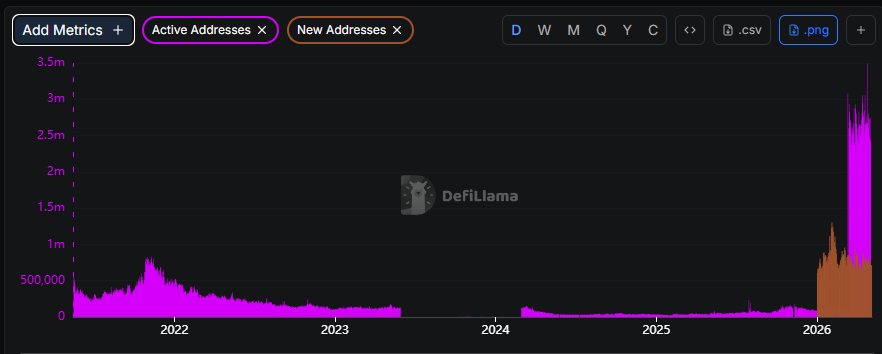
The latest on-chain data also supports the participation story. BNB Chain is showing consistent inflows of new users, with active addresses and new addresses rising sharply in recent periods. That does not guarantee price growth, but it does show that BNB Chain is not sitting idle.
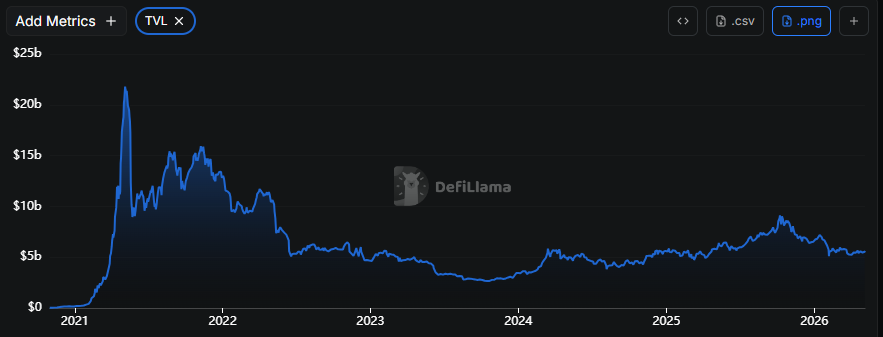
DeFi activity is also meaningful. BNB Chain’s DeFi TVL sits above $5.56 billion, which keeps it among the more active smart contract ecosystems. If that value continues to grow, BNB benefits from more gas usage, more app activity, and stronger network relevance.
Bullish Catalysts
The most obvious bullish factor is BNB’s burn structure. BNB has a hard supply cap of 200 million and a long-term target of reducing supply toward 100 million tokens. Quarterly burns remove large amounts of BNB, while BEP-95 burns a portion of transaction fees in real time. This gives BNB a continuing scarcity angle.
Recent burns have been large. The 30th quarterly burn removed 2.14 million BNB, while the 31st removed 1.58 million BNB. Depending on supply estimates, total supply has already moved down into roughly the 134 million to 145 million range. Lower supply does not force price upward by itself, but it can make strong demand more powerful.
BNB Chain upgrades are another catalyst. The Fermi hard fork in January 2026 reduced block times from 0.75 seconds to 0.45 seconds. The Osaka and Mendel upgrades in April 2026 were also aimed at improving efficiency and scalability. The roadmap target of 100 million transactions per day and sub-second finality shows that BNB Chain wants to compete more directly with fast Layer-1 and Layer-2 networks.
Institutional narratives are also getting stronger. Tokenized finance products linked to BlackRock’s BUIDL, Franklin Templeton’s BENJI, and VanEck’s VBILL have been associated with BNB Chain. The first 2x leveraged BNB ETF in the U.S. also added another access route for traders. Spot BNB ETF filings from major firms would add further attention if they keep progressing.
Russia’s Moscow Exchange launching crypto indices for Solana, XRP, TRON, and BNB also matters. It places BNB inside a more formal market data structure, with futures expected later. That is not the same as direct spot buying, but it adds institutional visibility.
Bearish Pressures
BNB still carries risks that investors should not ignore. The biggest one is Binance dependence. Even though BNB Chain has its own ecosystem, the token’s reputation and demand are still closely linked to Binance. Any major regulatory issue, compliance action, listing restriction, or loss of market share at Binance can affect BNB sentiment quickly.
Another pressure is competition. Ethereum, Solana, Base, and other networks are all fighting for developers, liquidity, users, and stablecoin flows. BNB Chain has scale, but it must keep proving that users are there for more than low fees.
There is also a valuation risk. Some bullish targets, such as calls for BNB to reach $5,000 or even $12,000, require very large assumptions about adoption, supply reduction, and institutional capital. These targets are possible only in an extreme bull cycle. They should not be treated as normal expectations.
Technical Analysis: BNB’s Current Market Setup
BNB is trading around $626, with short-term forecast data placing its May 2026 range between $593.99 and $692.71. That puts the token near the middle of its current projected range, not at a confirmed breakout point. The first important support area sits around $590 to $600, while the first resistance zone is closer to $690 to $700.
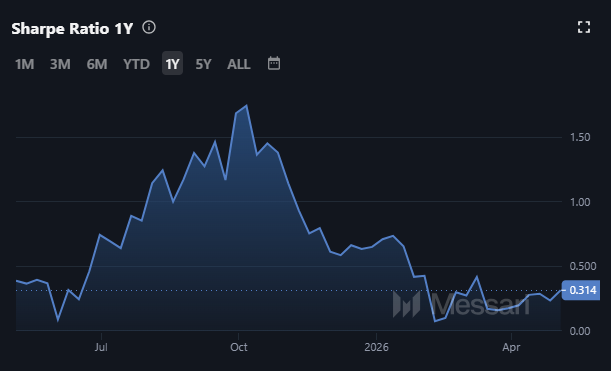
BNB’s 30-day volatility is 0.299, which is relatively controlled for a large crypto asset. Its 1-year Sharpe ratio is also positive at 0.314, showing that recent risk-adjusted performance is slightly positive, though not strong enough to call the setup highly bullish. On-chain participation also remains active, with recent address data showing a sharp rise in both active addresses and new addresses in 2026.
Current Price and Market Position
BNB is trading around $626, which places it close to the middle of its May 2026 forecast range of $593.99 to $692.71. This means price is not sitting at a major breakout level yet, but it is also not trading near the lower end of the range. For now, the market is treating BNB as a large-cap asset in consolidation rather than a token in aggressive price expansion.
The monthly forecast data turns stronger later in 2026. June projections place BNB between $653.41 and $768.13, while July extends the upper range to $937.97. By December 2026, the projected range moves between $797.94 and $1,007.50. These levels show that market models are pricing in gradual upside through the year, but not a clean vertical move from current levels.

Technical Setup
The first support zone to watch is around $590 to $600, which lines up with the lower side of the May 2026 forecast range. If BNB loses that area with weak volume, the next short-term downside zone could sit closer to $550, especially if the wider crypto market turns risk-off.
On the upside, the first resistance area is around $690 to $700. A move above that level would push BNB beyond its current May range and shift attention toward the June forecast band near $768. If momentum continues beyond that, the July upper target around $937.97 becomes the next major level before the psychological $1,000 zone.
BNB’s 30-day volatility is 0.299, which is relatively controlled for a major crypto asset. That can make the chart easier to trade than smaller altcoins, but it also means breakouts may need stronger volume confirmation instead of relying only on sudden price spikes.
Sentiment and Participation Trends
BNB’s 1-year Sharpe ratio is currently 0.314, which shows slightly positive risk-adjusted performance. That reading is not strong enough to confirm a highly bullish setup, but it does show that BNB has not been delivering negative risk-adjusted returns over the period.
Participation data is more supportive. Recent on-chain charts show active addresses moving sharply higher in 2026, with activity rising into the multi-million address range. New addresses also increased during the same period, which suggests fresh user inflow rather than only existing wallets rotating activity.
BNB Chain’s DeFi TVL is also above $5.56 billion, giving the network a real liquidity base across DeFi apps. This matters for sentiment because BNB is used as the native gas token across BNB Smart Chain and opBNB, so higher network usage can support demand beyond exchange trading alone.
Price Outlook Based on Current Conditions
The current BNB setup is balanced. The bullish case is supported by burns, BNB Chain upgrades, Binance utility, DeFi TVL above $5.56 billion, and institutional product attention. The bearish case comes from regulation, Binance-linked risk, and heavy competition from other chains.
So, the practical BNB price prediction should avoid extremes. BNB can move higher if the broader crypto market improves, but a straight move to ultra-bullish targets would need a much stronger market cycle.
Short-Term Outlook for 2026
- Bear case:
If BNB loses momentum and falls below the lower May range near $590, the market could revisit the $500 to $550 area. This would likely happen if Bitcoin weakens, regulatory headlines return, or BNB Chain activity cools.
- Base case:
The most realistic 2026 path is a gradual move between $700 and $900. This lines up with monthly forecast data showing stronger levels through June, July, and December. In this case, BNB keeps rising, but without a full euphoric breakout.
- Bull case:
A clean move above $1,000 by late 2026 becomes possible if BNB Chain activity stays strong, ETF attention increases, burns continue reducing supply, and the wider crypto market turns risk-on again. In a stronger cycle, $1,100 to $1,250 would be a reasonable bullish extension.
Future Outlook and BNB Price Predictions
BNB’s longer-term outlook depends on whether it can keep its place as both an exchange-linked asset and a major smart chain gas token.
| Year | Bear Case | Base Case | Bull Case |
|---|---|---|---|
| 2026 | $500 | $850 | $1,250 |
| 2027 | $700 | $1,400 | $2,200 |
| 2028 | $900 | $1,800 | $3,200 |
| 2029 | $1,100 | $2,300 | $4,500 |
| 2030 | $1,500 | $3,000 | $6,500 |
For 2030, outside forecasts vary heavily. Some models place BNB around $1,700 to $3,500, while more aggressive forecasts move above $6,000 and even much higher. A balanced 2030 BNB price prediction should place the base case near $3,000, with higher targets only justified if Binance remains dominant, BNB Chain keeps growing, and institutional access improves.
Bottom Line
BNB’s future pricing depends on how Binance utility, BNB Chain usage, token burns, and institutional access develop over time. The token remains connected to trading fee discounts, gas fees, Launchpool participation, staking, governance, and DeFi activity across its ecosystem. Readers comparing access points may also look at how to buy BNB token through supported exchanges and review platform-level details in a full Binance review before assessing fees, regional availability, and account requirements. Price forecasts for BNB vary widely, so the market case is best understood through utility, supply trends, participation data, and regulatory conditions.
FAQs
1. Can BNB reach $1,000 again?
A move above $1,000 is possible if BNB Chain activity stays strong, Binance maintains market share, and the broader crypto market enters another bullish cycle.
2. What gives BNB its utility?
BNB is used for trading fee discounts, gas fees on BNB Chain, Launchpool participation, staking, DeFi activity, and ecosystem-related payments across Binance-linked services.
3. Is BNB still a good investment in 2026?
BNB still has strong utility through Binance, BNB Chain, staking, gas fees, and token burns. However, its long-term performance also depends on regulation, exchange growth, and competition from other blockchains.