

- •You can bridge assets into Cardano using reputable cross-chain bridges and aggregators.
- •You need a Cardano-compatible wallet, such as Eternl or Daedalus, to receive and store the bridged assets.
- •Bridging costs typically come from source chain gas fees, while Cardano transactions remain low-cost.
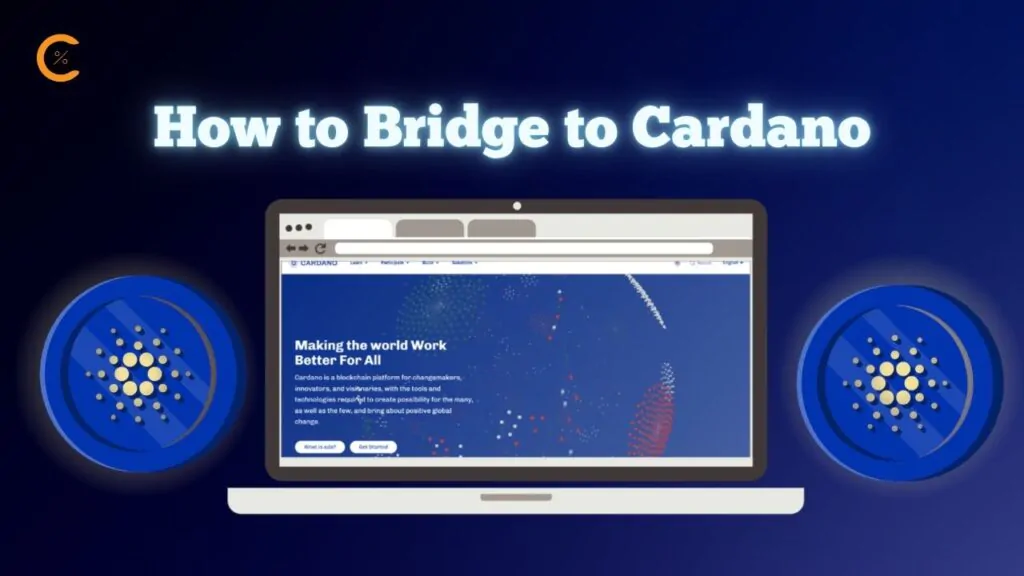
Investors often move stablecoins (like USDC or USDT) into the Cardano ecosystem to hedge against risks on other networks. The blockchain, powered by $ADA, also offers a highly scalable environment, unique liquid staking opportunities, and a growing suite of decentralized finance (DeFi) protocols. If you’re moving to the ecosystem, deciding on a suitable way to convert assets from other networks into Cardano can be a hurdle. If you’re also indecisive about this, then you’re in the right place. This article explains the best methods to bridge to Cardano, helping you avoid common mistakes, reduce costs, and get started on the ADA network efficiently.
Can I Bridge to Cardano?
Yes, you can bridge assets into Cardano from both EVM and non-EVM networks using specific cross-chain protocols. Because Cardano is a non-EVM blockchain, its bridging options are more limited compared to EVM-compatible networks; however, several major protocols support it due to the ecosystem’s high demand and popularity.
It is important to note that not every token can be bridged to Cardano. Most protocols prioritize high-liquidity assets like USDT, ETH, or USDC. Once these major assets arrive in your Cardano wallet, you can then swap them for ADA or other Cardano-native tokens through local decentralized exchanges (DEXs).
To ensure a successful bridge, you must properly prepare your environment. We’ve outlined the essential conditions below; once these are in place, follow the steps in this guide to bridge your assets.
Key Things to Keep in Mind
Before bridging, check out these important tips to guarantee a complete, successful cross-chain transaction.
Wallet:
To bridge to Cardano, you must set up two separate wallets. First, you need a wallet compatible with the source network (for example, MetaMask for bridging from Ethereum). Second, you need a Cardano-native wallet like Eternl, Vespr, or Lace, to receive and manage your assets on the Cardano network once the transaction is complete.
Gas Fee:
Bridging involves costs on both networks. You will pay a gas fee on the source blockchain (e.g., ETH for Ethereum) to initiate the transfer. Additionally, Cardano wallets require a small amount of ADA (typically ~2 ADA) to be present before bridging. This fulfills the network’s “min-UTXO” requirement, which is a mandatory deposit for holding any non-ADA tokens or NFTs.
How to Bridge to Cardano
Once you’ve set aside tokens for gas and configured your wallet to display the token after bridging, it’s time to initiate the swap. Visit a reputable ADA-supported bridge protocol to transfer the assets from another network into Cardano. Here are the best cross-chain bridge options that you can use:
Method 1. Using Wanchain Bridge
As the first to link Cardano’s UTXO architecture to the wider crypto world, Wanchain is the ecosystem’s premier decentralized bridge. Supporting 50+ blockchains via a secure, non-custodial ‘Storeman’ node network, it is best known for its XFlows feature. This feature enables ‘native-to-native’ transfers, allowing you to move assets like USDC from Ethereum directly into native Cardano tokens rather than risky wrapped versions. Below are the steps to use Wanchain to bridge to Cardano:
Step 1: On your favorite browser, visit the Wanchain bridge.
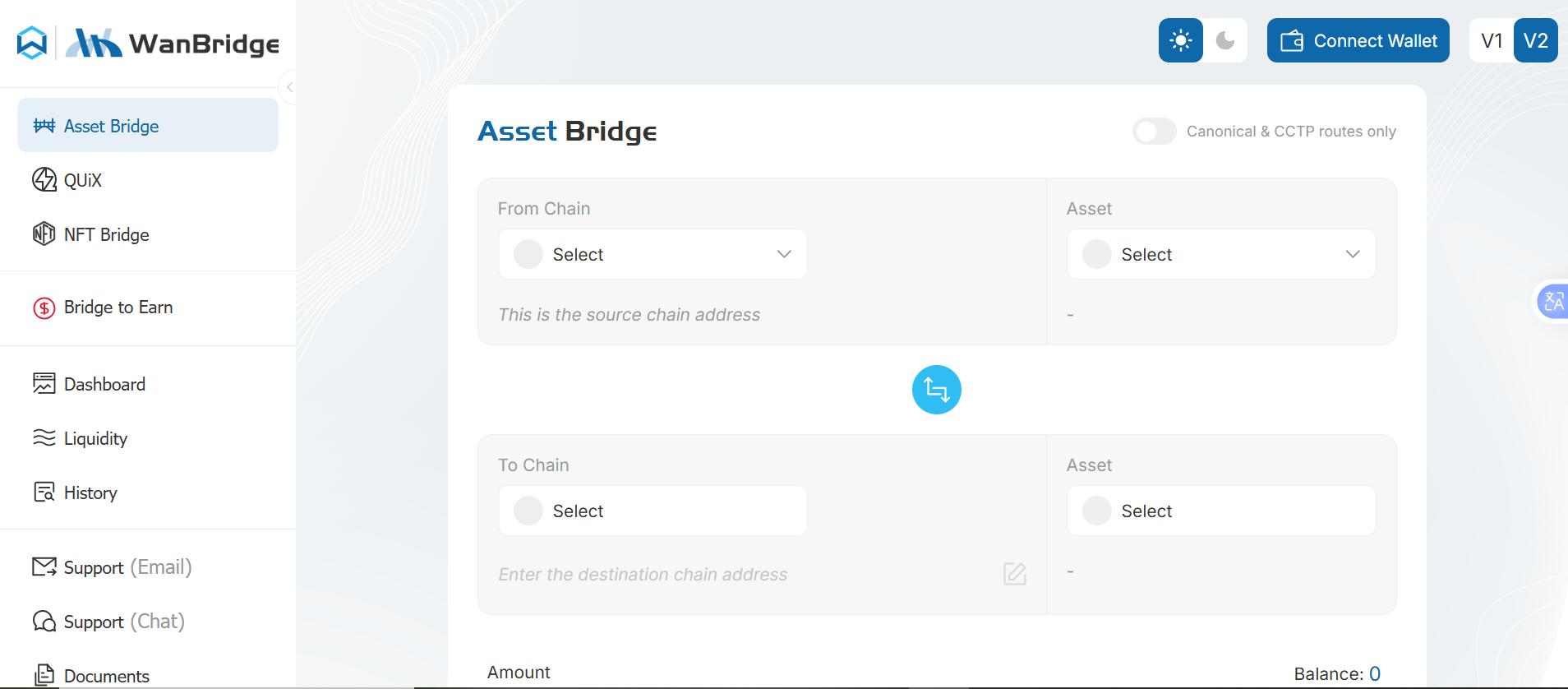
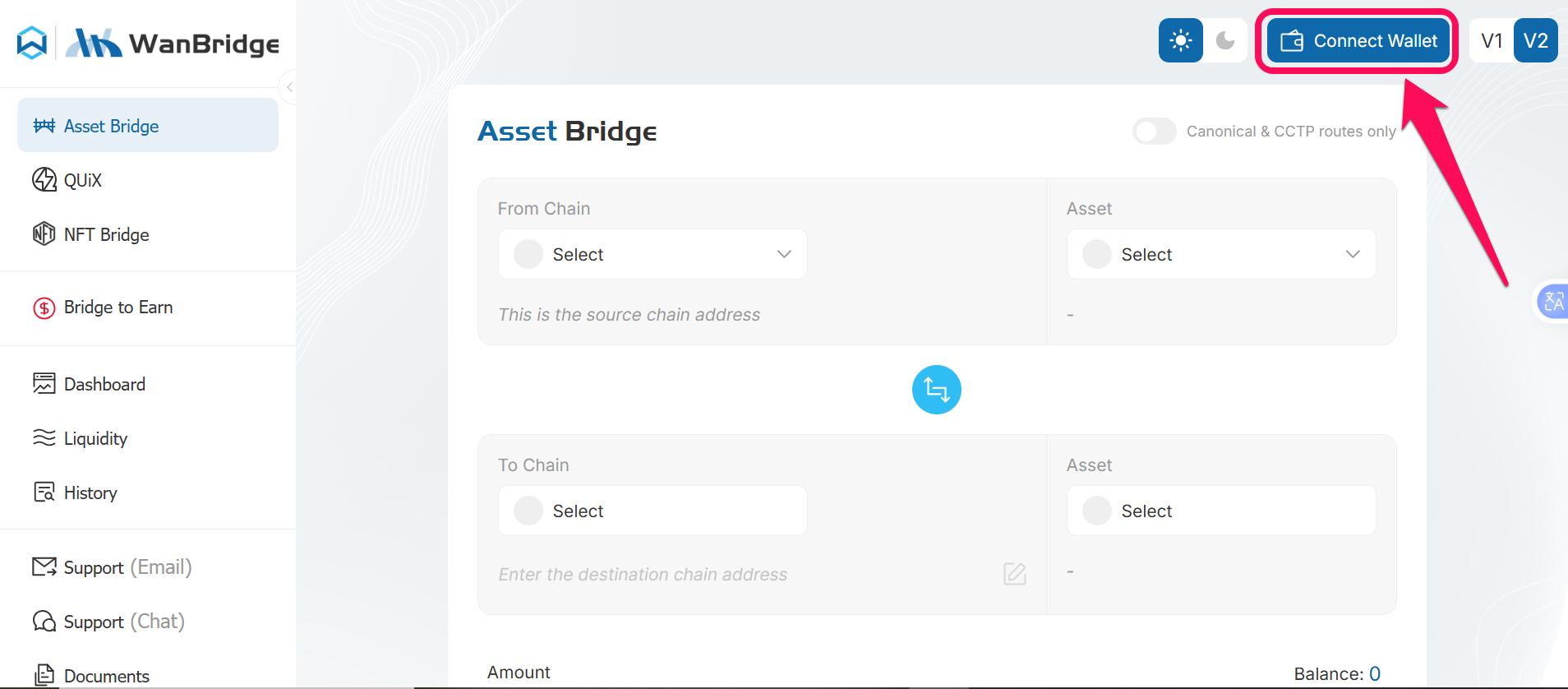
Step 2: Connect both your source wallet (e.g., Metamask for ETH bridging) and your destination wallet (Cardano wallet) to the platform.
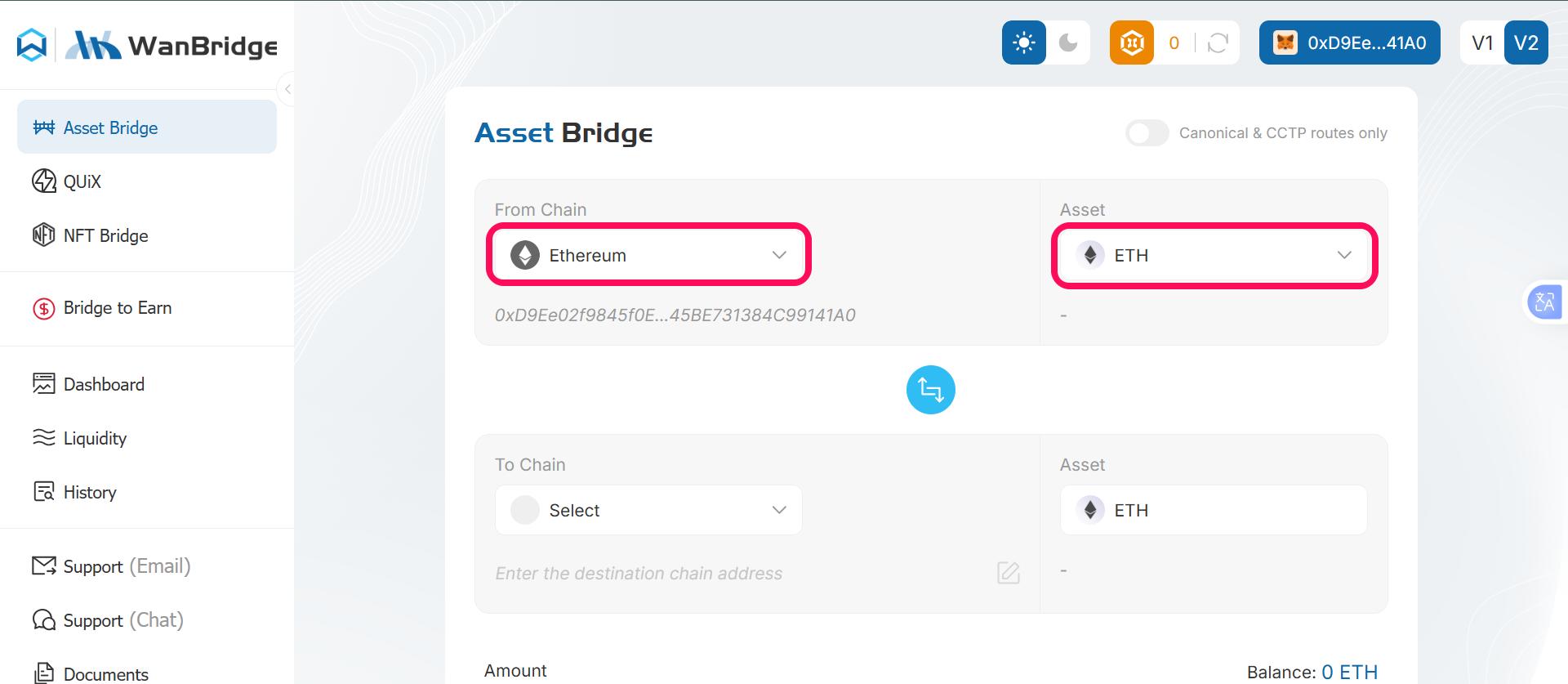
Step 3: In the From Chain field, select the chain and asset you want to bridge.
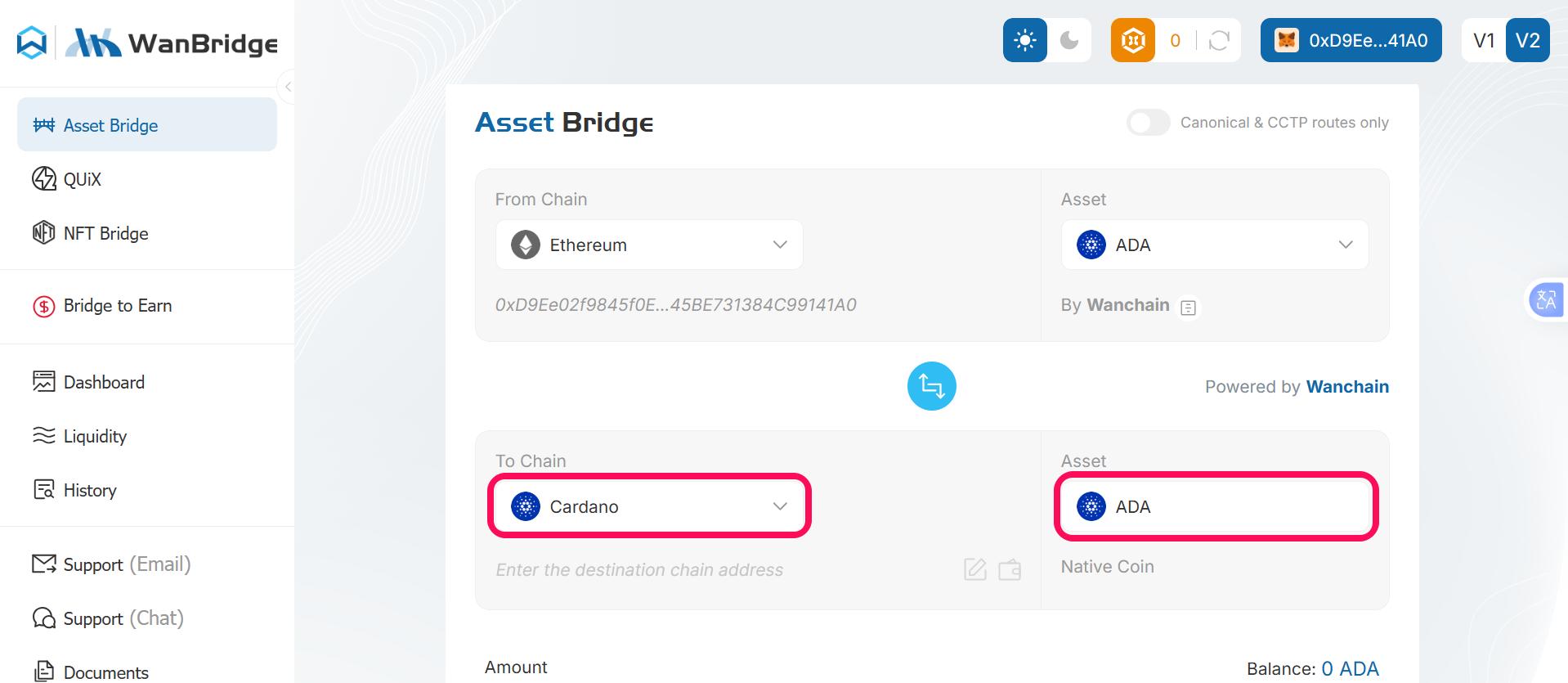
Step 4: In the To Chain field, select Cardano and your preferred asset (e.g., ADA).
Step 5: Enter the amount of tokens you wish to bridge.
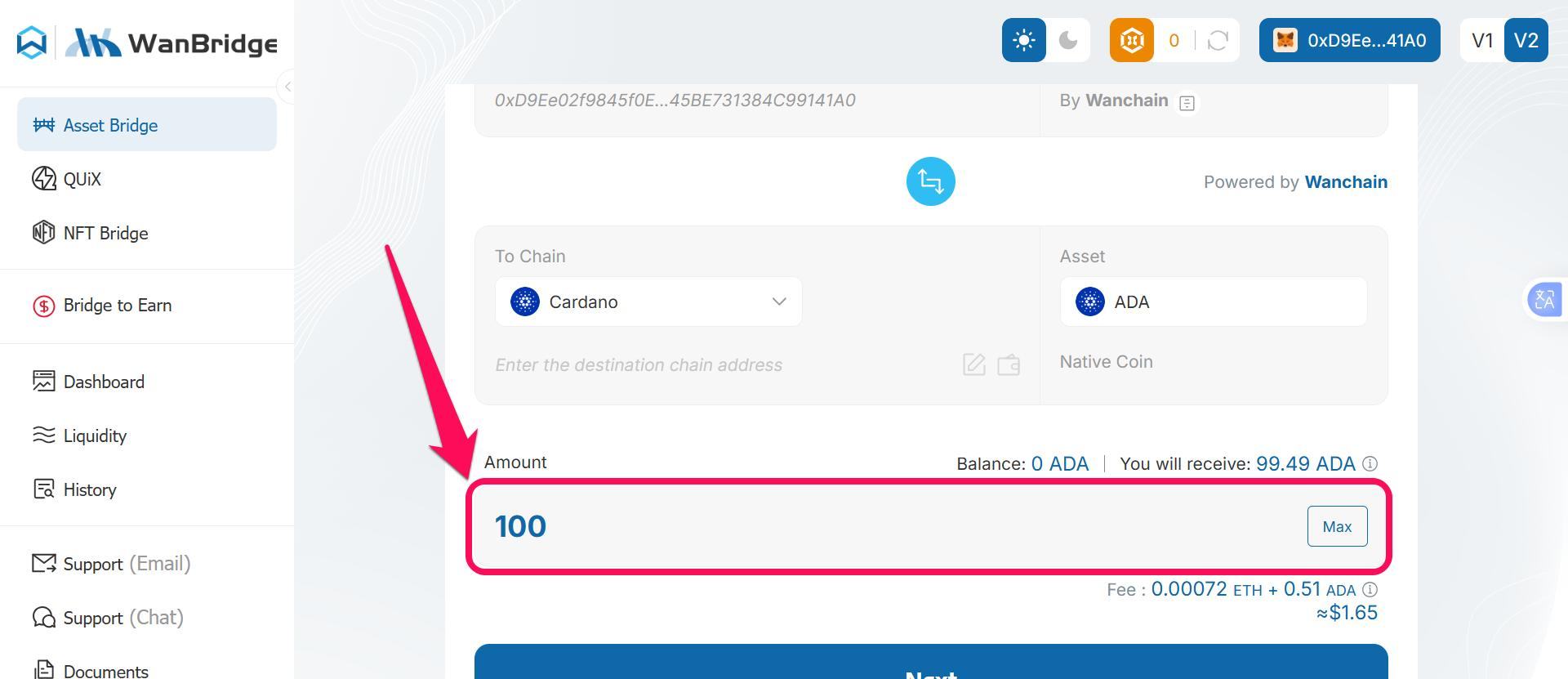
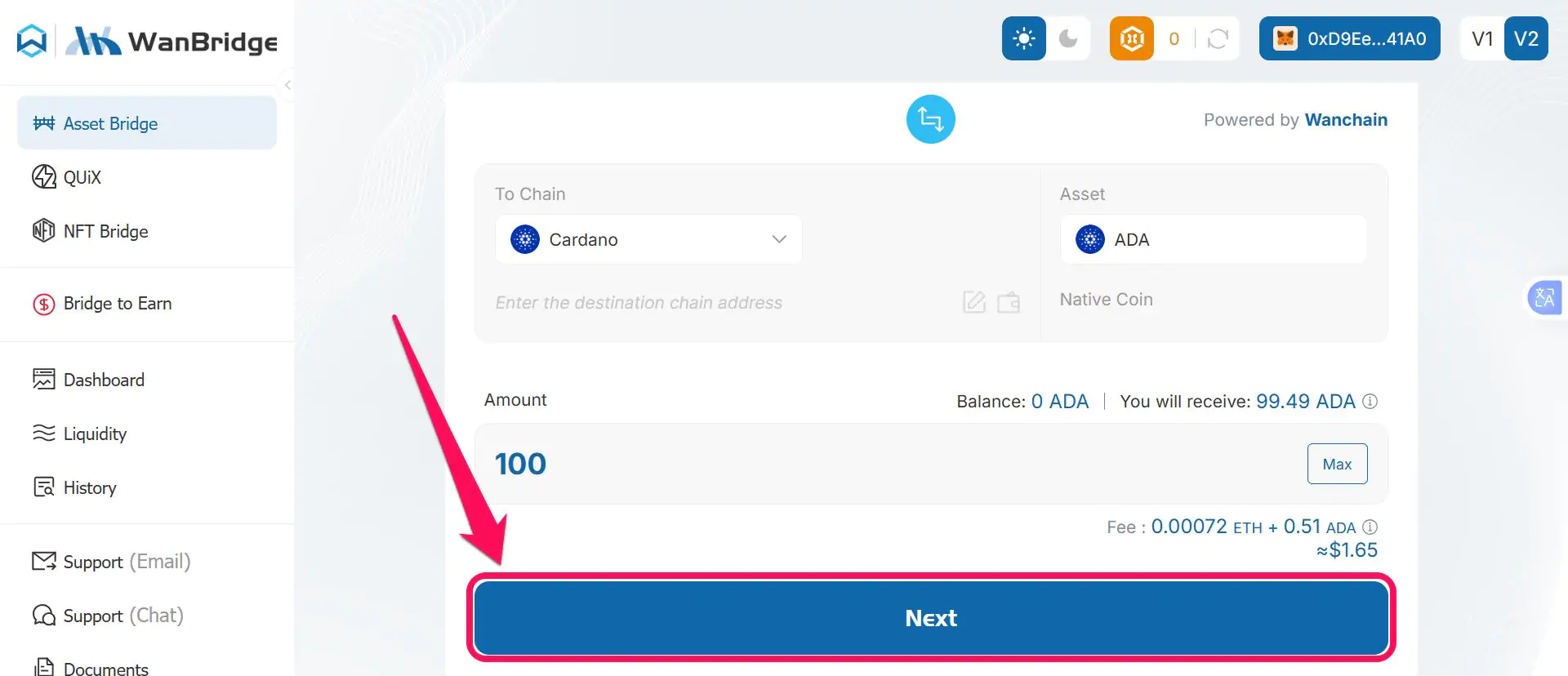
Step 6: Check all transaction details, including the fees, and click Next to finalize the bridge.
Method 2. Using ChainPort Bridge
ChainPort is a trusted, secure cross-chain exchange that supports transfers to the Cardano network. In addition to Cardano, ChainPort also supports interoperable token transfers across 25+ blockchains, including Ethereum, Polygon, and BNB Chain. It prioritizes security through MPC-based multi-signature wallets and segregated funds, allowing users to move assets without complex transactions. Here’s how to migrate your assets into Cardano using the ChainPort bridge:
Step 1: On your browser, visit the ChainPort bridge.
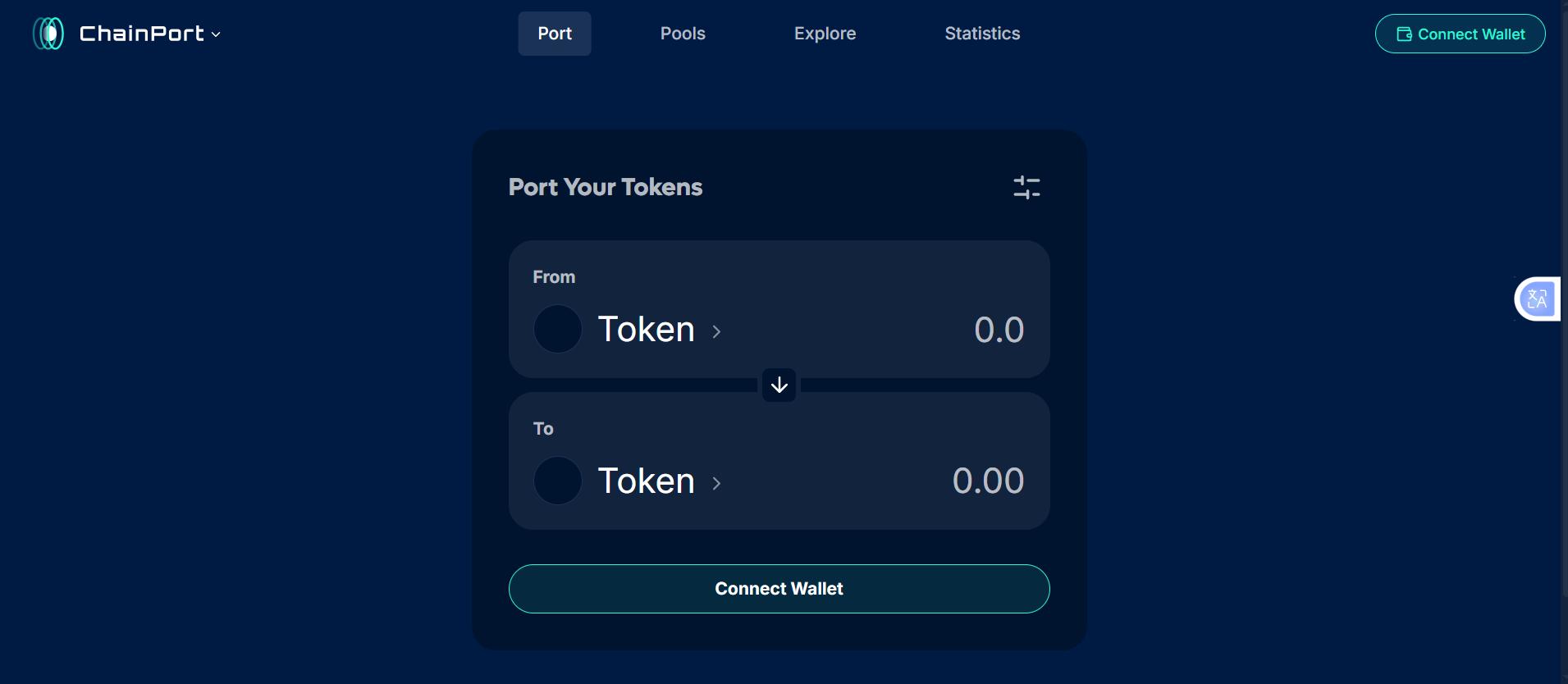
Step 2: Connect both your source wallet (e.g., Metamask for ETH bridging) and your destination (Cardano wallet) to the bridge.
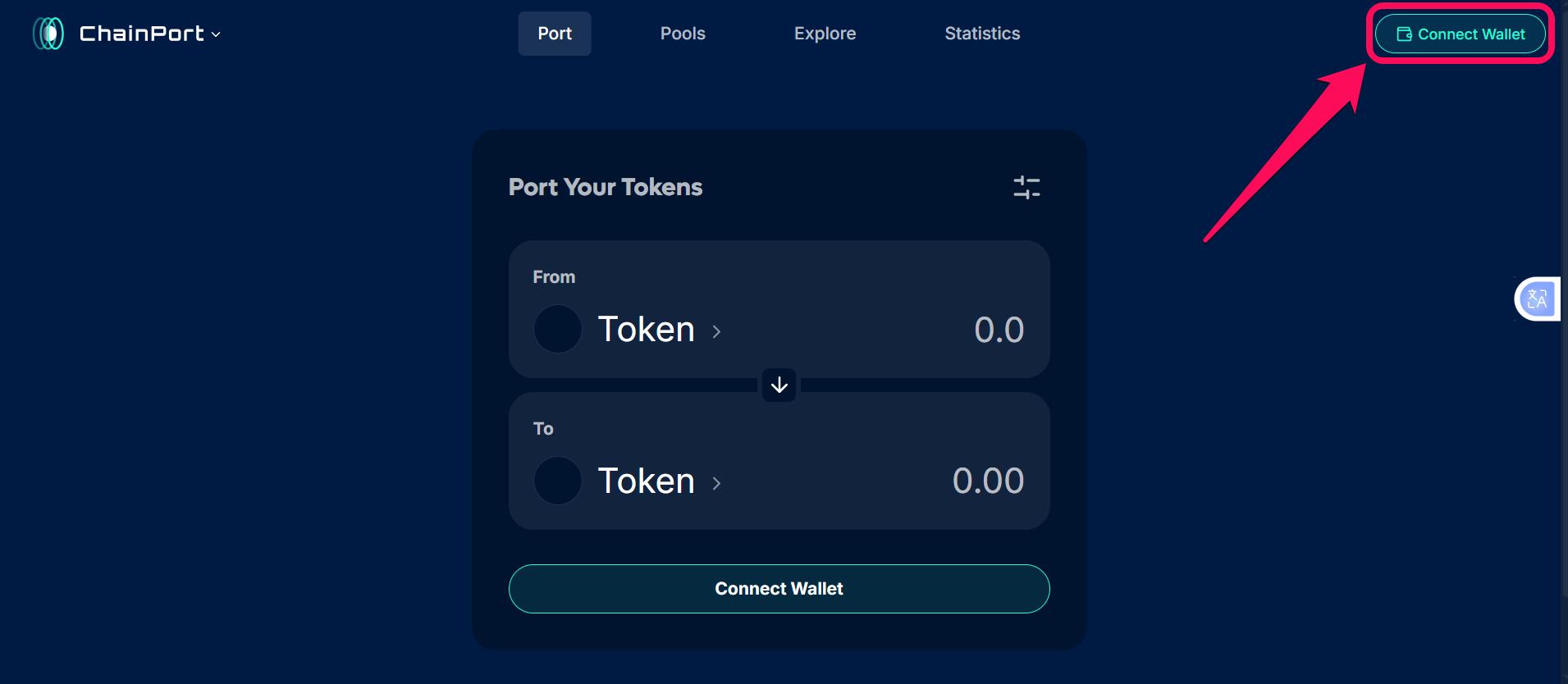
Step 3: Choose the source chain and token in the From field. Next, select Cardano and your preferred token (e.g., ADA) in the To field.
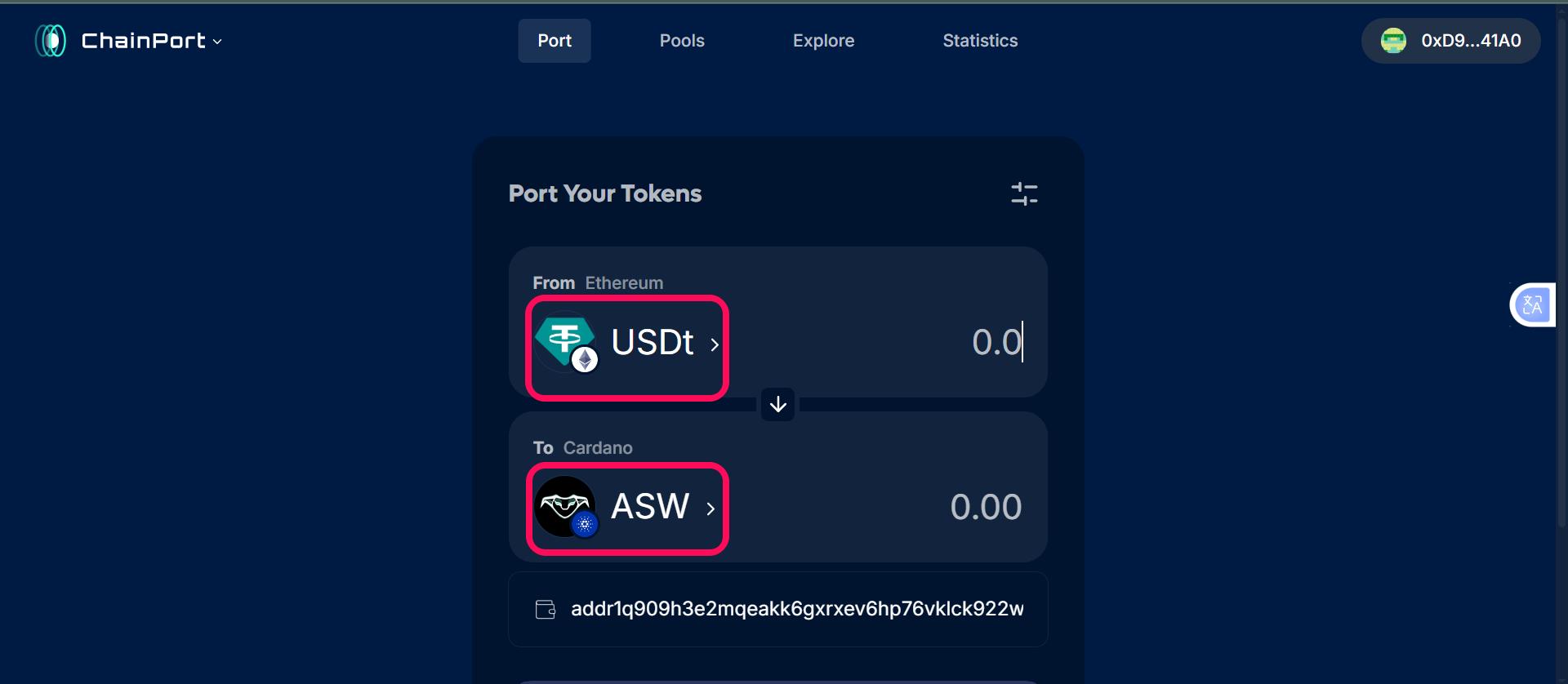
Step 4: Enter the amount of tokens to bridge, and input your Cardano address if you’re unable to connect to your Cardano wallet.
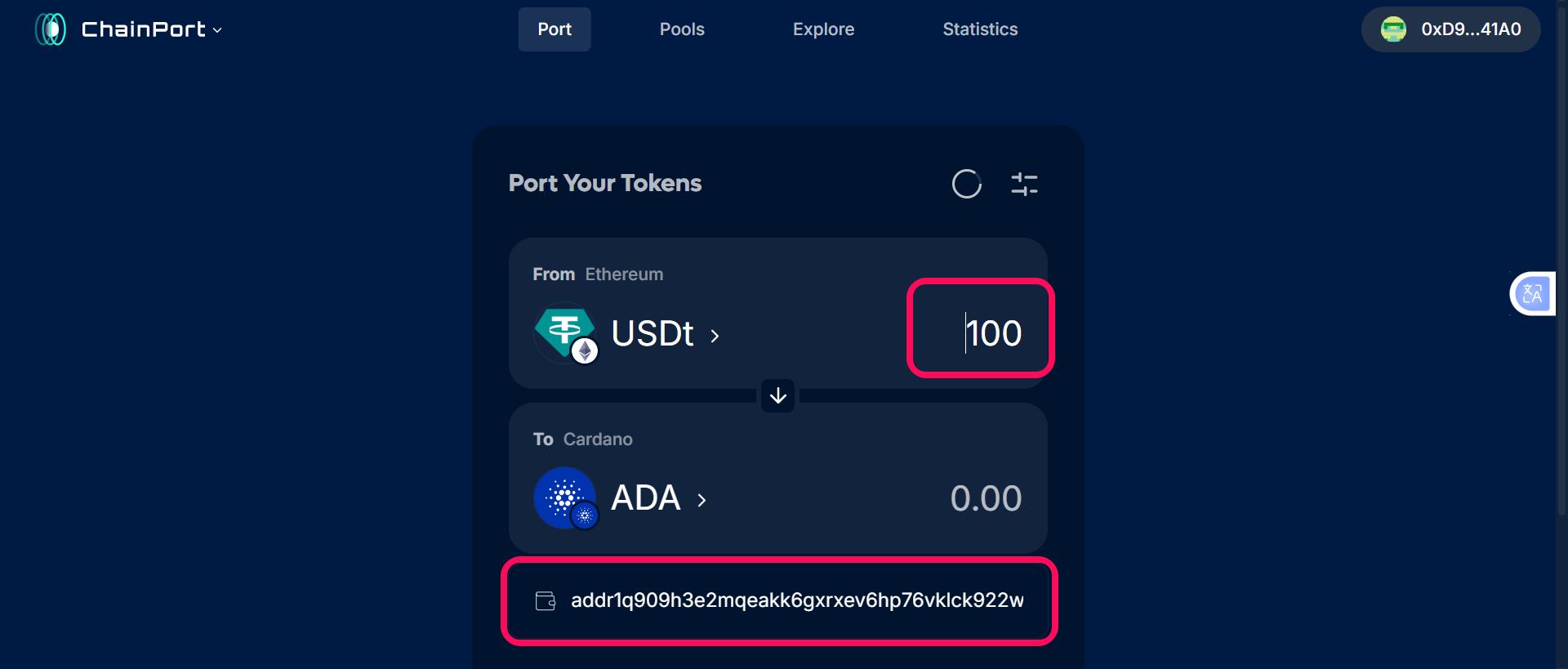
Step 5: Review details, then sign the transaction in your source wallet to lock the funds. Bridged tokens should appear in your Cardano wallet within 2–5 minutes.
Method 3. Using a Bridge Aggregator (RocketX Exchange)
RocketX Exchange is a popular cross-chain transfer aggregator that supports swaps across 170+ blockchains. The app locks funds, then finds the best routes to bridge selected assets between chains. RocketX pulls liquidity from over 250 centralized and decentralized exchanges to ensure you receive the best rates for every transfer. Here’s how to use RocketX Exchange for bridging from EVM/non-EVM networks into Cardano:
Step 1: Head to the RocketX Exchange website.
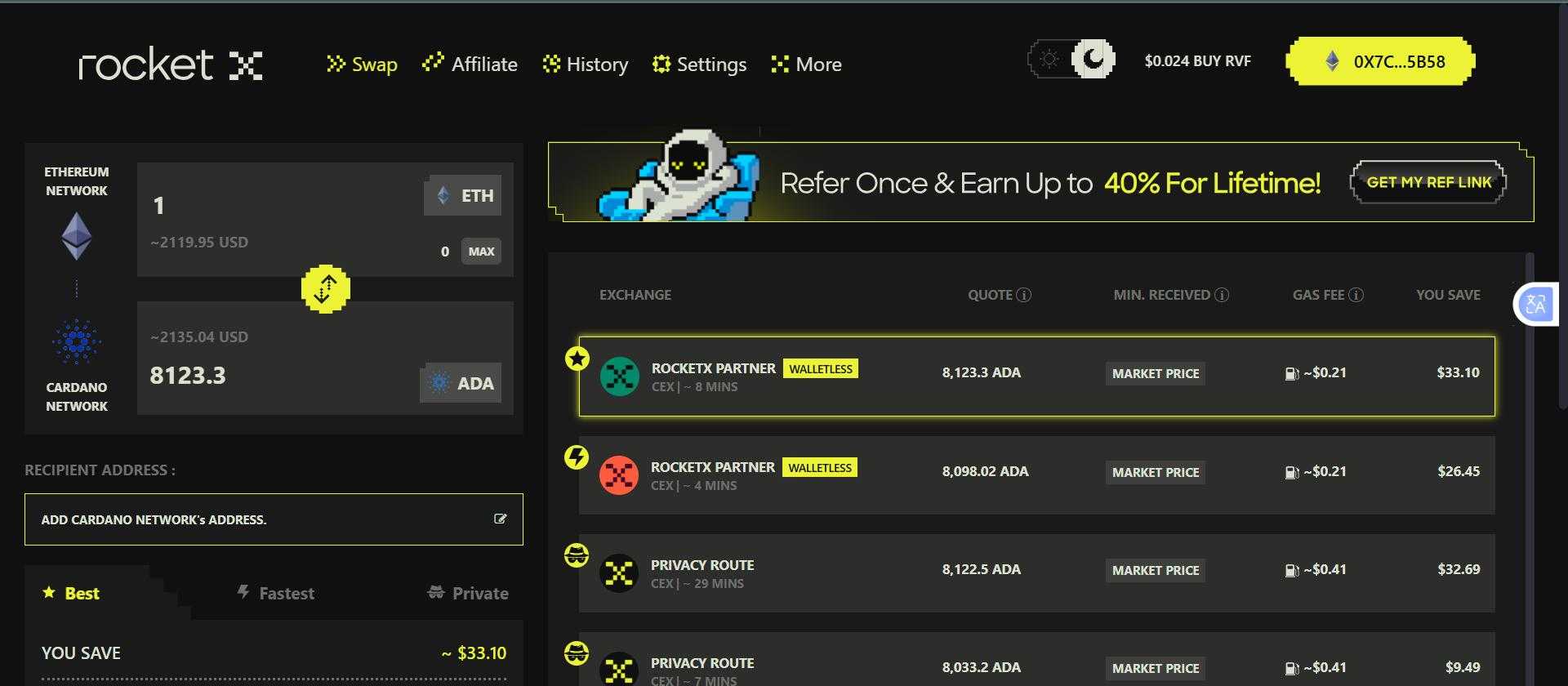
Step 2: Click Connect wallet to link your source and destination (Cardano) wallet to the bridge.
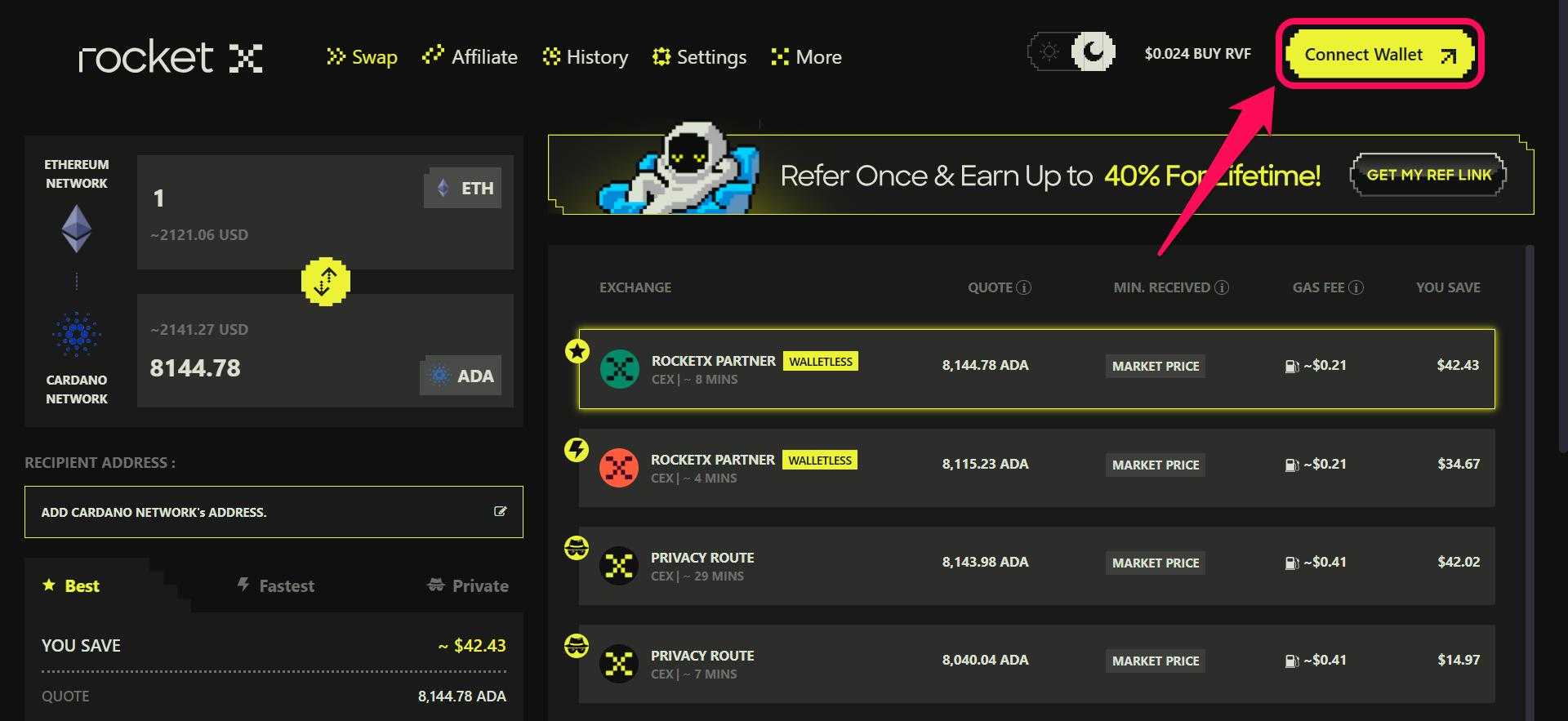
Step 3: Select the network and token you want to bridge to Cardano. Choose Cardano as the recipient network.
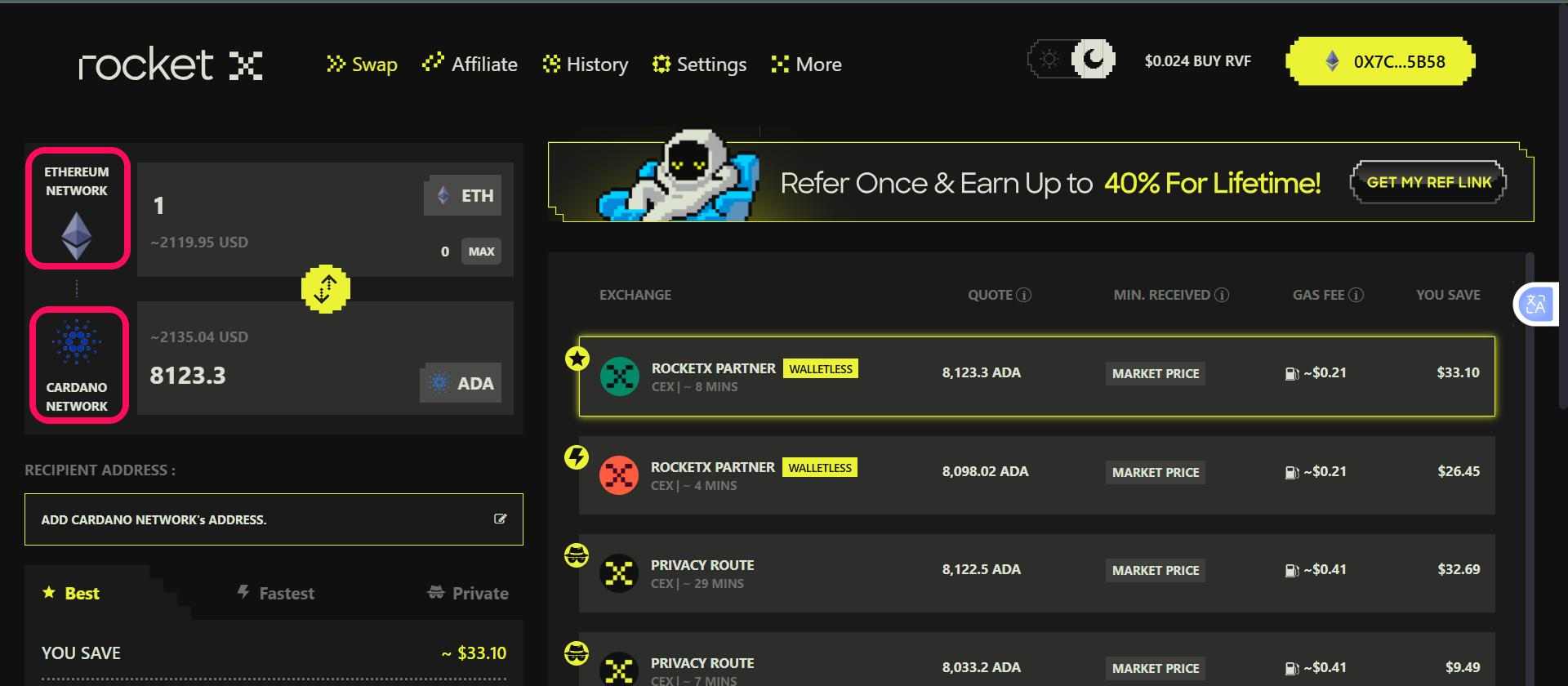
Step 4: Enter the amount of tokens you want to bridge.
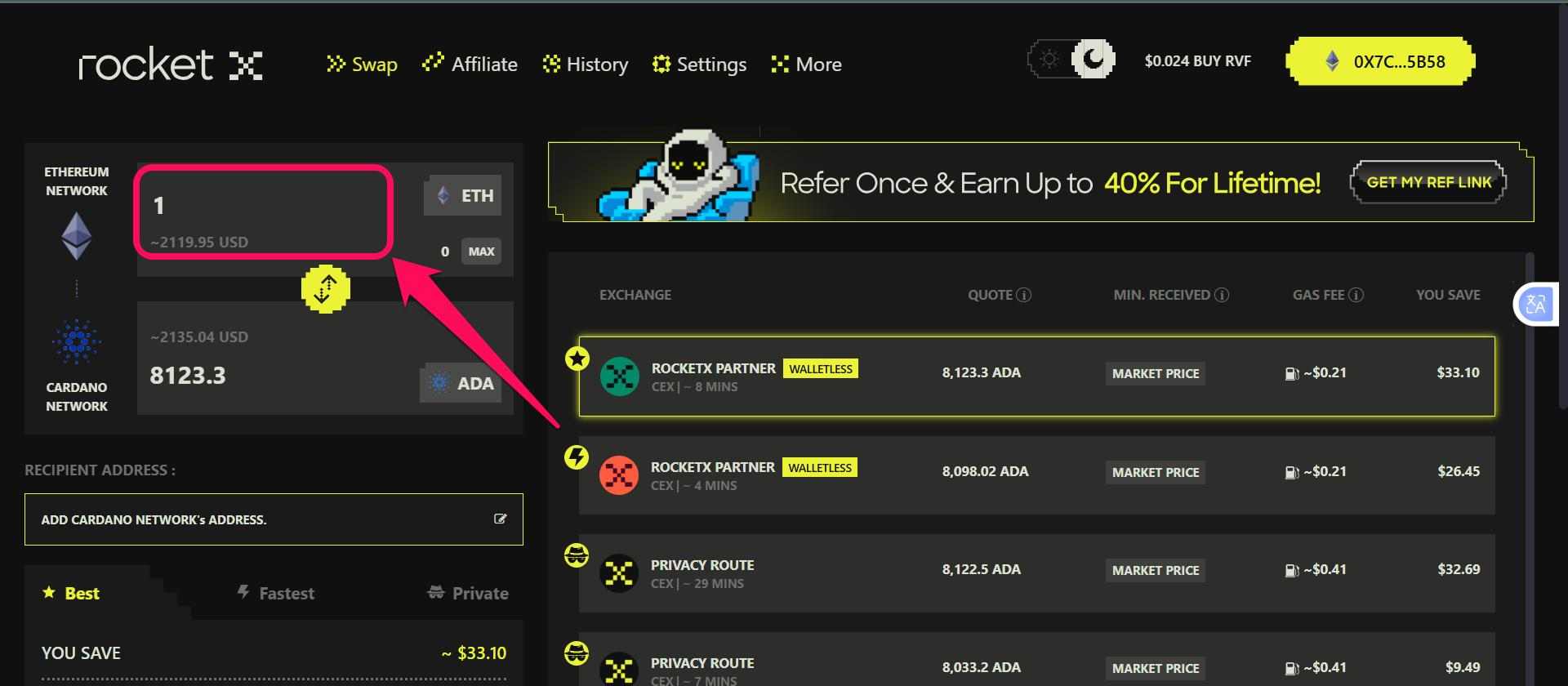
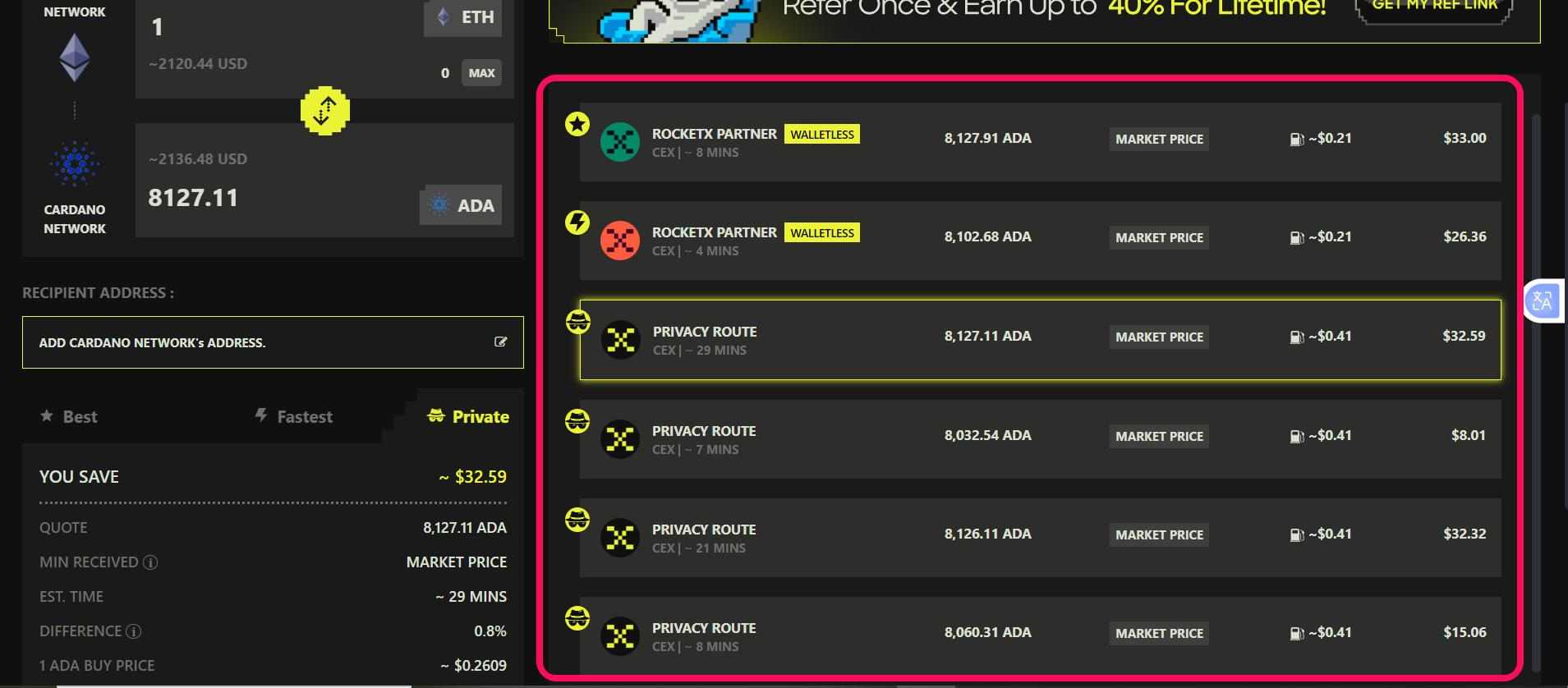
Step 5: The aggregator will locate the best routes for the transaction. Select the one that offers the best rates and fastest arrival time.
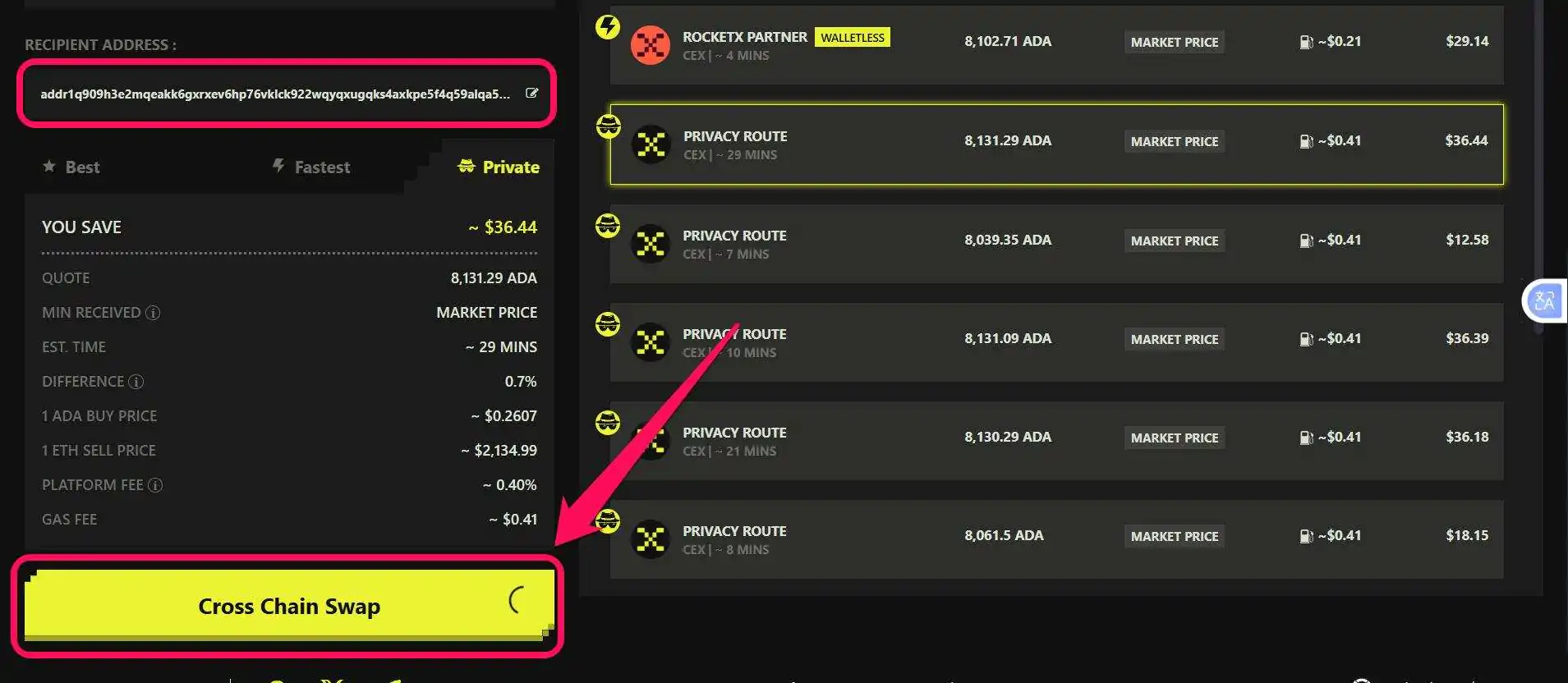
Step 6: Review the transaction, then add the recipient Cardano mainnet address. Finally, click Cross-chain Swap to initiate the transfer.
Cardano Bridging Fees
Bridging fees on Cardano are usually influenced by costs on the source chain, particularly Ethereum, rather than by Cardano itself. Although gas fees are the biggest expense, bridges may also charge processing fees. Ethereum gas fees, for example, may range from about $0.1 to over $2, though these can spike during periods of intense network activity.
ChainPort and other direct bridge protocols typically charge a service fee of aroudn 0.1% to 0.3% of the transaction value. Lastly, bridge aggregators like RocketX Exchange charge slightly higher service fees, though they aim to route transactions to the cheapest available bridge.
Bottom Line
Ongoing developments in interoperability tools, such as cross-chain bridges, have made the Cardano network more accessible. Now, users can avoid the high costs and limited scalability of other networks and enter the ADA ecosystem without spending extra cash to buy new tokens. The steps discussed above will easily get you to bridge to Cardano to enjoy all the ecosystem’s perks. Remember, you need a Cardano wallet to get a smooth bridging process. But if you’re unsure how to set one up, check out our guide on getting started with Eternl Wallet to explore the network’s growing DeFi landscape.
FAQs
1. Can I bridge ETH directly to Cardano?
Yes, but you aren’t sending native ETH. Instead, you use a bridge to swap your Ethereum-based ETH for Wrapped ETH on the Cardano network.
2. Is Cardano faster than Ethereum?
In terms of raw block production, Ethereum is faster, creating a new block every 12 seconds compared to Cardano’s 20 seconds. On the base layer, Ethereum also leads in throughput, processing roughly 15–30 TPS in real-world conditions (with a recorded max of 62), compared to Cardano’s real-world average of under 2 TPS and a theoretical base layer cap of just 18 TPS.
3. What Consensus Mechanism does Cardano use?
Cardano uses a Proof of Stake (PoS) protocol called Ouroboros, allowing users to stake their ADA to become validators and help secure the network. Proof-of-stake blockchains use far less energy than Proof of Work chains, making Cardano a more environmentally sustainable option.