


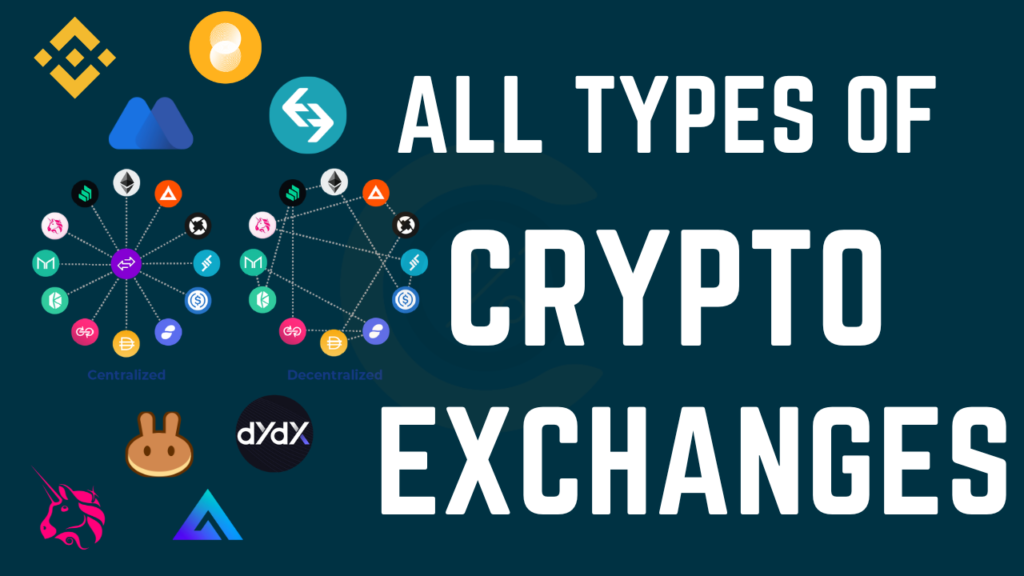
- •The main types of crypto exchanges are centralized, decentralized, hybrid, P2P, instant swap, and OTC platforms.
- •Centralized exchanges simplify trading but retain control over deposited assets and user accounts.
- •Decentralized exchanges support self-custody but require users to protect their wallets and private keys.
- •AMM DEXs use liquidity pools, while perpetual DEXs provide order books, leverage, and derivatives trading.
Crypto exchanges come in several forms, and each handles your funds and trades differently. Centralized exchanges manage user accounts and custody, while decentralized exchanges let traders operate through their own wallets. There are also hybrid exchanges, P2P marketplaces, instant swap services, and OTC desks, each built for a different purpose. This article explains how these types of crypto exchanges work, who controls the assets, and the main benefits and risks of each model, helping you decide which one suits the way you want to buy or trade crypto.
What Is a Crypto Exchange?
A crypto exchange is a platform or protocol used to buy, sell, or trade digital assets. Some exchanges match buyers and sellers through an order book, while others process trades through liquidity pools or provide a direct conversion rate.
Depending on the platform, users may deposit fiat currency, trade spot or derivatives, and withdraw crypto to a personal wallet. Some exchanges also provide staking, lending, bots, and copy trading, but these are additional features rather than part of the exchange’s basic function.
How Crypto Exchanges Work
The different types of crypto exchanges do not process trades in the same way. On a centralized exchange, users deposit funds into an account, and the platform records trades through its internal system. Transactions only appear on the blockchain when crypto enters or leaves the exchange.
A decentralized exchange connects to the user’s wallet and executes trades through smart contracts, liquidity pools, or on-chain order books. P2P exchanges use escrow to facilitate direct transactions, while instant swap platforms source a rate and send the converted asset to the provided wallet. OTC desks arrange larger trades privately to avoid moving the public market price.
Types of Crypto Exchanges
Each exchange type handles custody, trade execution, and user access differently, creating a distinct balance between convenience, control, and responsibility.
1. Centralized Exchanges
A centralized exchange, or CEX, is operated by a company that manages user accounts, holds deposited assets, and processes trades through its own systems. Users create an account, complete any required identity verification, and deposit fiat or cryptocurrency before they can begin trading.
Once funds are deposited, the exchange controls the private keys and credits the balance to the user’s account. Trades are processed through an internal order book and matching engine, so every transaction does not need to be recorded separately on the blockchain. Blockchain transactions generally occur when crypto enters or leaves the exchange.
Features of Centralized Exchanges
- Account-based access: Users trade through a familiar interface without connecting or managing a personal wallet.
- Custodial asset storage: The exchange controls private keys and records deposited funds within each user’s account.
- Centralized trade execution: An internal matching engine processes buy and sell orders without settling every trade on-chain.
- Fiat payment support: Many CEXs accept bank transfers, cards, and third-party payment services for deposits and withdrawals.
- KYC and compliance: Exchanges may verify user identities and review transactions that trigger internal compliance requirements.
Pros & Cons of Centralized Exchanges
| 👍 Centralized Exchange Pros | 👎 Centralized Exchange Cons |
|---|---|
| ✅ Easy for beginners to use | ❌ Exchange controls deposited assets |
| ✅ Deeper liquidity on major markets | ❌ Accounts can be restricted or frozen |
| ✅ Fast order execution | ❌ Withdrawals may be delayed or suspended |
| ✅ Fiat deposits and withdrawals | ❌ KYC reduces user privacy |
| ✅ Customer support and account recovery | ❌ Platforms may fail during high volatility |
| ✅ Advanced trading and security tools |
2. Decentralized Exchanges
A decentralized exchange, or DEX, allows users to trade through their own crypto wallets instead of depositing funds into an account controlled by a company. Trades are processed through blockchain-based protocols, giving users greater control over their assets and making transaction activity publicly verifiable.
There is no conventional exchange account that can be frozen, and permissionless protocols generally do not require KYC before users move their own funds. During volatile markets, users are also not entirely dependent on one company’s website or account system. Some protocols can be accessed through another interface if the main frontend stops working.
However, this places more responsibility on the user. Private keys, recovery phrases, wallet permissions, and network selections must be managed carefully. If wallet access is lost or compromised, there is usually no support team that can recover the funds.
Features of Decentralized Exchanges
- Wallet-based access: Users connect a personal wallet instead of creating and funding a conventional exchange account.
- Self-custody: Users retain control of their private keys and approve transactions directly from their wallets.
- On-chain transparency: Transactions and protocol activity can be publicly verified through blockchain records.
- Smart contract execution: Trades follow rules encoded into the protocol rather than decisions made by a central operator.
- Permissionless access: Many protocols allow wallet trading without account-level KYC or withdrawal approval.
Pros & Cons Decentralized Exchanges
| 👍 Decentralized Exchange Pros | 👎 Decentralized Exchange Cons |
|---|---|
| ✅ Users retain control of funds | ❌ Lost keys can lock funds permanently |
| ✅ Transactions remain publicly verifiable | ❌ Wallet compromise can drain assets |
| ✅ No KYC | ❌ Smart contracts may contain vulnerabilities |
AMM and Swap DEXs
AMM and swap DEXs allow users to exchange one token for another through liquidity pools. Instead of matching a buyer with a seller, the protocol calculates the exchange rate based on the assets available in the pool.
Users pay a trading fee and a blockchain network fee. Larger trades can also experience price impact or slippage when the pool does not have enough liquidity near the expected rate. Liquidity providers supply the assets used for these swaps and receive a share of the collected fees.
Order-Book and Perpetual DEXs
Order-book DEXs provide a trading experience closer to a centralized exchange. Users can place market and limit orders, view available liquidity, and trade through a familiar chart-based interface.
Perpetual DEXs add long and short positions, leverage, funding rates, margin requirements, and liquidations. Depending on the platform, orders may be matched entirely on-chain or through a faster matching system before final settlement is recorded on the blockchain.
3. Hybrid Exchanges
A hybrid exchange combines parts of centralized and decentralized trading. It may use a centralized matching engine to process orders quickly while keeping custody or final settlement on-chain.
The exact setup differs between platforms. Some let users trade directly from their wallets, while others require funds to be deposited into a smart contract or platform-controlled account. For this reason, the word “hybrid” alone does not explain who controls the assets or how withdrawals work.
Features of Hybrid Exchanges
- Combined infrastructure: Centralized systems handle certain operations while blockchain networks record custody or settlement.
- Faster order matching: Trades may be matched off-chain before the final transaction is settled on-chain.
- Flexible custody: Assets may remain self-custodial or move into a smart contract during trading.
Pros & Cons Hybrid Exchanges
| 👍 Hybrid Exchange Pros | 👎 Hybrid Exchange Cons |
|---|---|
| ✅ Familiar trading interface | ❌ Structure can be difficult to assess |
| ✅ Faster order processing | ❌ Smart contract vulnerabilities still apply |
| ✅ Greater control over custody | ❌ Fewer established platforms |
| ✅ Publicly verifiable settlement |
4. P2P Exchanges
A peer-to-peer exchange connects individual buyers and sellers rather than processing trades through a conventional order book. Sellers post advertisements stating the cryptocurrency, price, payment method, and amount they are willing to trade.
Once a buyer accepts an offer, the platform places the seller’s crypto in escrow. The buyer sends payment directly to the seller, and the crypto is released after the payment is confirmed. P2P marketplaces are useful in regions where direct bank deposits to crypto exchanges are limited.
A P2P platform is not automatically decentralized. Many are operated by centralized exchanges, require KYC, and control the escrow and dispute process.
Features of P2P Exchanges
- User-created listings: Buyers and sellers publish offers with their preferred prices, limits, and payment methods.
- Escrow protection: The platform temporarily holds crypto until the seller confirms receiving payment.
- Local payment methods: Users can trade through bank transfers, mobile wallets, cash services, and other regional options.
- Merchant profiles: Ratings, completion rates, and trade histories help users assess potential counterparties.
- Dispute resolution: Platform support can review evidence when buyers and sellers disagree about a transaction.
Pros & Cons P2P Exchanges
| 👍 P2P Exchange Pros | 👎 P2P Exchange Cons |
|---|---|
| ✅ Supports local payment methods | ❌ Counterparty scams remain possible |
| ✅ Useful where banking access is limited | ❌ Payments can be reversed |
| ✅ Often charges low trading fees | ❌ Prices vary between merchants |
| ✅ Provides escrow protection |
5. Instant Swap Exchanges
An instant swap exchange converts one cryptocurrency into another without requiring users to place orders or navigate a trading screen. The user selects the assets, enters the amount, provides a receiving address, and sends the required crypto.
The service sources a rate from its own liquidity providers or connected exchanges and sends the converted asset to the provided wallet. Some platforms offer fixed rates, while others use floating rates that can change before the swap is completed.
Instant swap exchanges are not necessarily decentralized. A service can be non-custodial while still being operated by a centralized company. Transactions may also be delayed if automated compliance checks request identity or source-of-funds documents.
Features of Instant Swap Exchanges
- Direct crypto conversion: Users exchange one asset for another without using an order book.
- Wallet-to-wallet delivery: Converted assets are sent directly to the receiving address provided by the user.
- Fixed or floating rates: Users may choose price certainty or accept changes during transaction processing.
Pros & Cons Instant Swap Exchanges
| 👍 Instant Swap Exchange Pros | 👎 Instant Swap Exchange Cons |
|---|---|
| ✅ Simple conversion process | ❌ Spreads can be expensive |
| ✅ No trading screen required | ❌ Rate calculation may lack transparency |
| ✅ Accounts are often optional | ❌ No advanced trading controls |
6. OTC Crypto Exchanges
Over-the-counter crypto desks arrange large transactions directly between a buyer and seller without placing the full order on a public exchange order book. The desk provides a private quote, and the parties agree on the price and settlement method before completing the trade.
OTC trading is mainly used by institutions, funds, miners, businesses, and individuals placing orders large enough to move the public market price. These desks may be operated by crypto exchanges, brokerage firms, or independent trading companies.
Features of OTC Crypto Exchanges
- Private quotations: The desk provides a price based on the asset, order size, liquidity, and market conditions.
- Large trade execution: OTC desks process orders that could create considerable slippage on public exchange order books.
- Direct settlement: Funds and assets are transferred according to terms agreed between the client and desk.
Pros & Cons OTC Crypto Exchanges
| 👍 OTC Crypto Exchange Pros | 👎 OTC Crypto Exchange Cons |
|---|---|
| ✅ Reduces public market impact | ❌ High minimum trade requirements |
| ✅ Provides greater price certainty | ❌ Counterparty risk still applies |
| ✅ Handles large transaction sizes | ❌ Not designed for smaller trades |
| ✅ Offers coordinated settlement |
Crypto Markets and Features
Beyond their operating structure, crypto exchanges can also be grouped by the markets and trading tools available to their users.
Spot Exchanges
Spot exchanges allow users to buy and sell actual cryptocurrencies at current market prices. Purchased assets can usually be held or withdrawn to a personal wallet.
Derivatives Exchanges
Derivatives exchanges offer perpetual contracts, futures, and options linked to cryptocurrency prices. Traders can use leverage and take long or short positions without owning the underlying asset.
Bot Trading Platforms
Bot trading platforms automate strategies using preset rules. Bots may be built into an exchange or connected through an API. Our crypto bot trading platforms page explains the available choices.
Copy Trading Platforms
Copy trading platforms let users automatically replicate another trader’s positions. Results depend on the selected trader, market conditions, and risk settings. You can compare the leading crypto copy trading platforms.
Crypto Exchange Comparison
The table below compares how each exchange type handles custody, identity verification, trade execution, and its primary risks.
| Exchange Type | How It Works | Best For | Main Trade-Off |
|---|---|---|---|
| Centralized | Company holds funds and processes trades. | Beginners and active traders. | Reduced asset control. |
| Decentralized | Wallet trades through on-chain protocols. | Self-custody traders. | Greater user responsibility. |
| Hybrid | Central matching with on-chain settlement. | Non-custodial active traders. | Structure varies by platform. |
| P2P | Users trade through escrow. | Local fiat transactions. | Counterparty risk. |
| Instant Swap | Service converts crypto at quoted rates. | Quick wallet-to-wallet swaps. | Higher spreads. |
| OTC | Large trades are privately negotiated. | Institutions and large traders. | High minimum requirements. |
Which Exchange Type Suits You?
The right exchange type depends on how you plan to use crypto and how much responsibility you want to manage yourself.
- Beginners: A centralized exchange offers easier access, fiat payments, and customer support.
- Active traders: A liquid CEX or order-book DEX provides faster execution and advanced orders.
- Self-custody users: A decentralized exchange keeps wallet control with the user.
- Local fiat users: A P2P exchange supports regional banks and payment methods.
- Simple conversions: An instant swap exchange avoids charts and order books.
- Large traders: An OTC desk can process private transactions with less market impact.
What to Check Before Choosing
Custody: Confirm who controls the private keys and how withdrawals work.
Security: Check platform history, proof of reserves, audits, and account protection.
Liquidity: Deeper order books usually provide tighter spreads and better execution.
Fees: Review trading, withdrawal, network, spread, and funding costs.
Access: Check regional restrictions, KYC requirements, and supported payment methods.
Reliability: Consider platform uptime, transaction processing, and customer support availability.
Bottom Line
Understanding the label behind a crypto platform changes how you look at it. Instead of seeing only a trading screen, you can now recognize who controls the assets, where trades are settled, and what responsibility remains with you. If a particular platform has caught your attention, our crypto exchange reviews examine individual exchanges on their own terms, rather than treating every CEX or DEX as the same.
FAQs
1. What Is the Difference Between a CEX and DEX?
A CEX is operated by a company that manages user accounts and usually holds deposited assets. A DEX processes trades through blockchain-based protocols while allowing users to trade through their own wallets.
2. Which Type of Crypto Exchange Is Safest?
Neither type is automatically safer. Centralized exchanges provide account recovery and security controls but carry custody risk. Decentralized exchanges remove exchange custody but place wallet security, private keys, and transaction approvals under the user’s control.
3. Are Crypto Swap Platforms Exchanges?
Yes, crypto swap platforms provide an exchange service by converting one cryptocurrency into another. However, they may use external liquidity providers instead of their own order books and are not necessarily decentralized.
4. Are P2P Exchanges Decentralized?
Not always. P2P describes a transaction between individual buyers and sellers. The marketplace itself may still be operated by a centralized company that manages KYC, escrow, merchant listings, and disputes.