


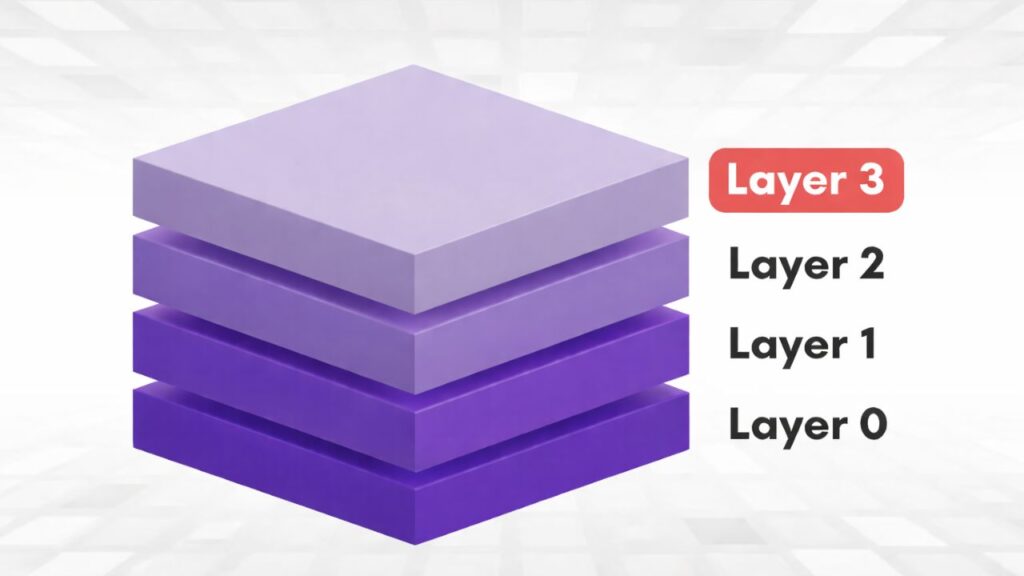
- •Layer 3 blockchains sit above Layer 2 and focus on application execution rather than raw scaling.
- •L3s address cross-chain coordination, usability gaps, and fragmented user experiences that earlier layers could not solve.
- •For users, this means smoother interaction. For developers, it means control without touching base infrastructure.
Blockchain infrastructure has matured quickly over the last decade. Layer 1 networks solved decentralised consensus. Layer 2 networks improved speed and costs. Yet, when you actually use decentralised applications, friction still shows up in the form of repeated onboarding, slow cross-chain actions, and interfaces that feel disconnected. This gap is where Layer 3 blockchains start to matter.
Layer 3 blockchains are not another scaling race. They exist to organise execution, identity, and application logic on top of Layer 2 networks. If you are interacting with Web3 products rather than studying protocol design, this layer is the one you notice most. It is where applications start behaving like real software instead of infrastructure experiments.
Layer 1 Blockchains: The Base Infrastructure
Layer 1 blockchains form the foundation of the entire ecosystem. They handle consensus, transaction validation, and final settlement. Bitcoin, Ethereum, Solana, and similar networks fall into this category. Their role is to keep the system secure, neutral, and decentralised.
From a user perspective, Layer 1 is rarely friendly. Transactions are slower, fees fluctuate, and design choices prioritise security over experience. That trade-off is intentional. Layer 1 networks were never meant to host complex applications directly, which is why higher layers became necessary as usage increased.
Layer 2 Blockchains: Scaling Single Networks
Layer 2 solutions sit on top of Layer 1 and focus on improving performance. Rollups, sidechains, and state channels reduce congestion and lower transaction costs by moving execution off the base layer while still relying on it for security.
If you are trading, bridging assets, or using DeFi today, you are likely interacting with a Layer 2 without thinking about it. These networks work well when activity stays within one ecosystem. The limitations appear when applications need to coordinate across multiple chains, manage identity, or handle advanced logic without adding friction.
What Are Layer 3 Blockchains?
Layer 3 blockchains build on Layer 2 networks and focus on application-specific execution. Instead of being general-purpose environments, they are designed around a defined use case, such as gaming, social platforms, identity systems, or cross-chain coordination.
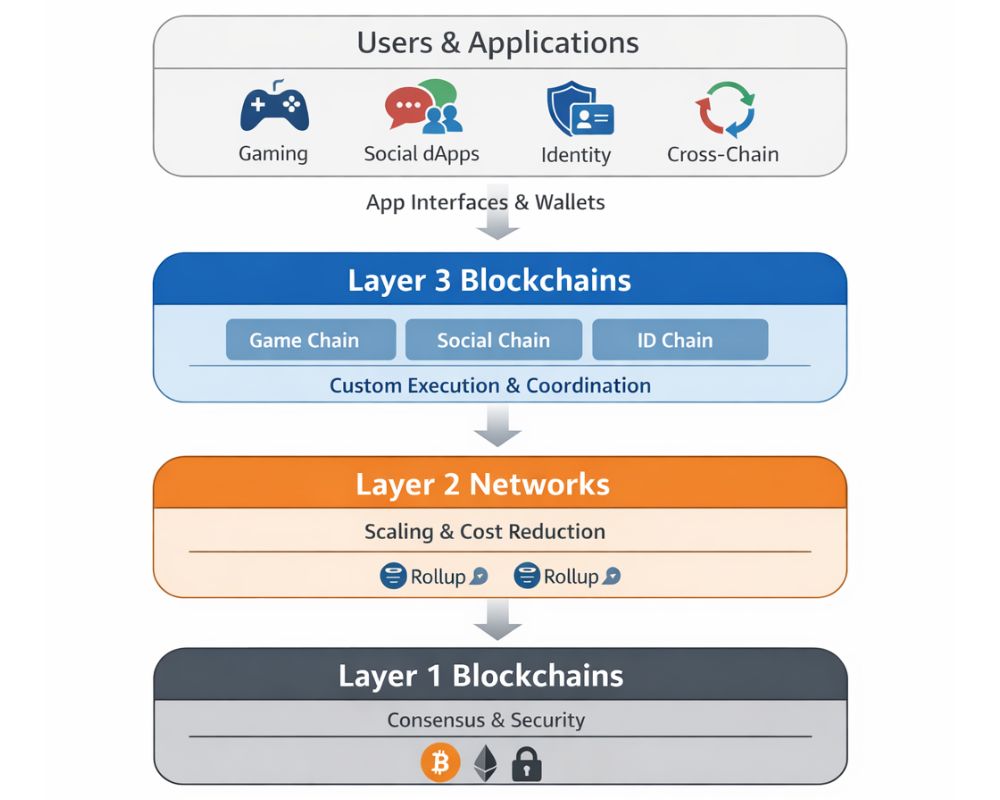
For you as a user, this means interacting with software that feels responsive and consistent, even though it still settles on decentralised infrastructure underneath. For developers, it offers a controlled environment where performance, logic, and rules can be tuned without modifying Layer 1 or Layer 2 protocols.
Why Layer 3 Is Emerging Now
The need for Layer 3 blockchains did not come from theory. It came from practical pain points. Liquidity remains fragmented across chains. Cross-chain actions are slow and costly. Onboarding often requires repeating verification steps across applications, which discourages real adoption.
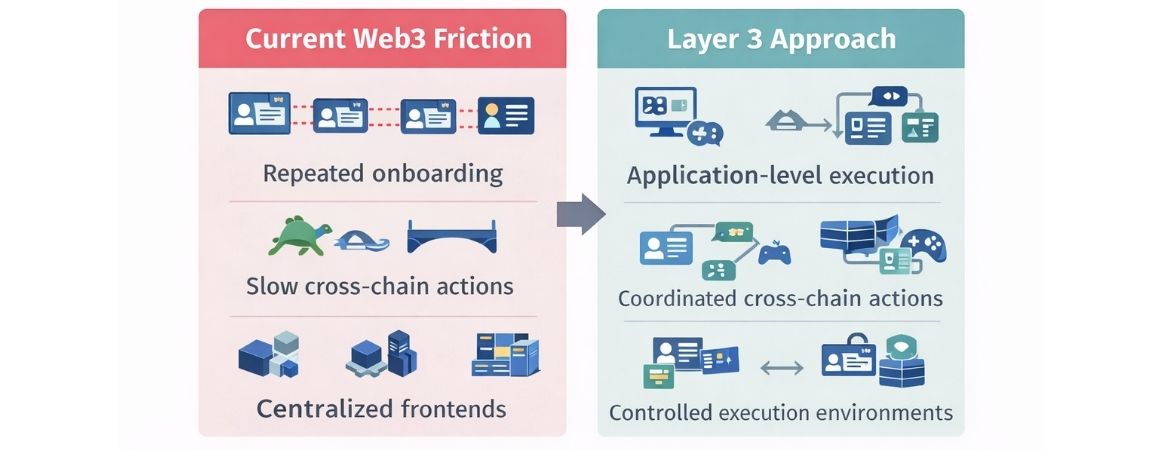
At the same time, many decentralised apps still depend on centralised browsers, hosted frontends, and shared RPC infrastructure. Control shifted from miners to service providers. Layer 3 networks attempt to address these gaps by moving execution and coordination closer to the application itself, where trade-offs can be managed more deliberately.
Layer 1 vs Layer 2 vs Layer 3
Each layer in the blockchain stack serves a defined role. They are designed to work together rather than replace one another. Understanding how responsibilities are divided makes it easier for you to see why newer layers were introduced instead of modifying the base network again and again.
| Layer | Primary Role | What It Focuses On | How You Experience It |
|---|---|---|---|
| Layer 1 | Base infrastructure | Consensus, security, final settlement | Slower transactions, variable fees, strong security guarantees |
| Layer 2 | Network scaling | Speed and cost improvements on a single chain | Faster transfers, lower fees, smoother DeFi activity |
| Layer 3 | Application execution | Coordination, identity, and cross-chain interaction | Direct app usage, simplified onboarding, consistent interfaces |
Looked at practically, Layer 1 sets the rules, Layer 2 manages traffic, and Layer 3 is where activity actually happens. These layers are not in competition. Each one exists because the previous layer was not designed to handle that responsibility efficiently on its own. Together, they move blockchain closer to software that people can use without constantly thinking about the infrastructure underneath.
Layer 2 vs Layer 3: Where the Shift Happens
Layer 2 focuses on improving performance within a single network. Layer 3 introduces structural changes in how applications are executed and connected. This difference explains why Layer 3 is often discussed in the context of usability rather than raw scalability.
| Area | Layer 2 Solutions | Layer 3 Blockchains |
|---|---|---|
| Core goal | Improve speed and reduce fees | Organize application execution |
| Network scope | Operates on one blockchain | Coordinates across multiple chains |
| User visibility | Users still notice network limits | Infrastructure mostly hidden |
| Identity handling | Managed at wallet or app level | Managed at application level |
| Application design | General-purpose execution | Application-specific environments |
| Overall role | Performance layer | Application layer |
This shift moves blockchain from being mainly infrastructure-focused to behaving more like usable software. For you as a user, the underlying complexity matters less, while interaction becomes more consistent and predictable across applications.
How Layer 3 Extends Blockchain Capabilities
By the time users reach Layer 3, the focus is no longer on raw scalability or base-layer security. The conversation shifts toward coordination, usability, and how decentralized applications actually function in practice. Layer 3 blockchains sit at this intersection, bringing together execution, identity, and cross-chain interaction in a way earlier layers were never designed to handle.
Instead of treating each problem in isolation, Layer 3 blockchains bundle these concerns into application-specific environments. The table below summarizes how this layer changes the way blockchain applications are built and used.
| Focus Area | What Layer 3 Blockchains Enable |
|---|---|
| User interaction | Direct application-level execution through tailored interfaces |
| Cross-chain activity | Coordinated actions and liquidity across multiple networks |
| Infrastructure access | Reduced reliance on shared browsers and hosted RPCs |
| User experience | Fast actions with low visible costs |
| Identity and onboarding | Verify-once access using selective data disclosure |
| Developer control | Tuned logic and performance without base-layer changes |
Taken together, these changes explain why Layer 3 blockchains are often described as the application layer of the blockchain stack. They are not replacing Layer 1 or Layer 2, but building on top of them to make decentralized applications feel coherent, usable, and connected across ecosystems.
Why Layer 3 Blockchains Matter
Layer 3 blockchains exist because infrastructure alone was not enough. They sit at the point where users, applications, and networks come together. By focusing on execution, identity, and coordination, this layer helps decentralised applications function like real products rather than technical demonstrations built only for early adopters.
If you are trying to understand where Web3 is heading, Layer 3 blockchains offer a practical signal. They are not about pushing limits for the sake of scale. They are about making systems work together in ways people can actually use. As this application layer matures, attention is also shifting downward, toward Layer 0 networks, which focus on how blockchains connect, share security, and communicate at the base level of the stack.
FAQs
1. Are Layer 3 blockchains the same as appchains?
Not exactly. Some appchains behave like Layer 3 blockchains, but Layer 3 is more clearly built on top of Layer 2 and focuses on application execution.
2. Do Layer 3 blockchains replace Layer 2 networks?
No. Layer 3 blockchains rely on Layer 2 for speed and cost efficiency rather than replacing it.
3. Where do users interact when using Layer 3 blockchains?
You interact at the application level, while settlement still happens through Layer 2 and Layer 1 in the background.
4. Why do Layer 3 blockchains improve usability?
They let applications control execution, fees, and logic instead of sharing space with unrelated activity.
5. Are Layer 3 blockchains already mainstream?
Not yet. Most adoption is still experimental, with real use cases emerging gradually.