



- •KYC in crypto verifies customer identities and supports anti-money laundering requirements.
- •Exchanges typically request personal details, identification documents, and live facial verification.
- •Higher verification levels generally provide increased withdrawal limits and additional account features.
Crypto may have started as a decentralized form of money, but much of the industry now operates within an increasingly regulated environment. As governments tighten requirements for crypto service providers, more exchanges are making identity verification mandatory. KYC in crypto is simply the process through which an exchange or another service provider collects and verifies your personal information to confirm who you are. But why is this information required, what happens to it, and how does the process actually work? These are the questions we will answer throughout this article.
What Is KYC in Crypto?
KYC stands for Know Your Customer. It is the process crypto exchanges use to confirm that the person creating an account is who they claim to be. This usually involves collecting personal details, checking an identity document, and completing a facial verification.
KYC also forms part of an exchange’s anti-money laundering program. It helps the platform assess customer risk and identify activity that may involve fraud, money laundering, sanctions violations, or other financial crimes.
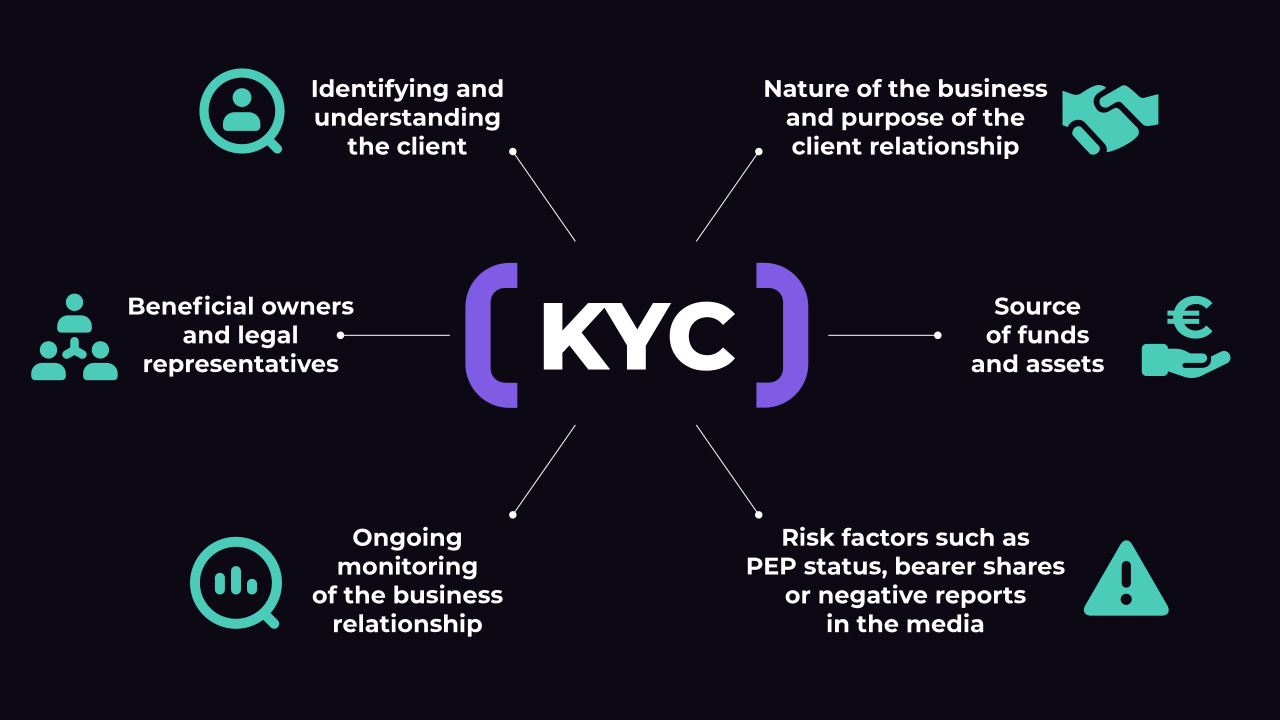
Crypto exchanges use KYC to:
- Confirm the identity of each customer.
- Check whether the information provided is genuine.
- Understand how the customer intends to use the platform.
- Assess the risk associated with the account.
- Monitor activity that may require further review.
Why Exchanges Require KYC
Crypto exchanges provide financial services and, in many cases, hold digital assets on behalf of their customers. They require KYC to verify customer identities, prevent financial crimes, comply with sanctions, protect user accounts, and meet licensing requirements.
Over the last decade, Bitcoin, Ethereum, and other cryptocurrencies have gained considerable popularity around the globe. Some people associate crypto with financial freedom and direct control over their money, while institutions may treat it as an investable asset or an inflation hedge. However, as legitimate uses for crypto have increased, money launderers, fraudsters, terrorist organizations, and other criminals have also found ways to use digital assets.
Since these services fall under financial regulations in many jurisdictions, exchanges need to know who is using their platforms and assess the risks associated with each customer. KYC helps exchanges detect identity fraud, screen customers against sanctions lists, review suspicious activity, and satisfy the conditions attached to their registration or licence.
Crypto KYC Regulations Today
KYC in crypto varies by jurisdiction because countries apply different identity-verification and anti-money laundering requirements. Regulated exchanges may need to collect personal details, verify identity documents, screen customers against sanctions lists, and monitor account activity. The exact information requested depends on the exchange, the services it provides, and where the customer lives.
KYC also supports the Crypto Travel Rule. For certain transfers, regulated crypto service providers may need to collect and share information about the sender and recipient. Since an exchange must know who its customer is before providing this information, KYC forms the basis of Travel Rule compliance.
How Crypto KYC Works
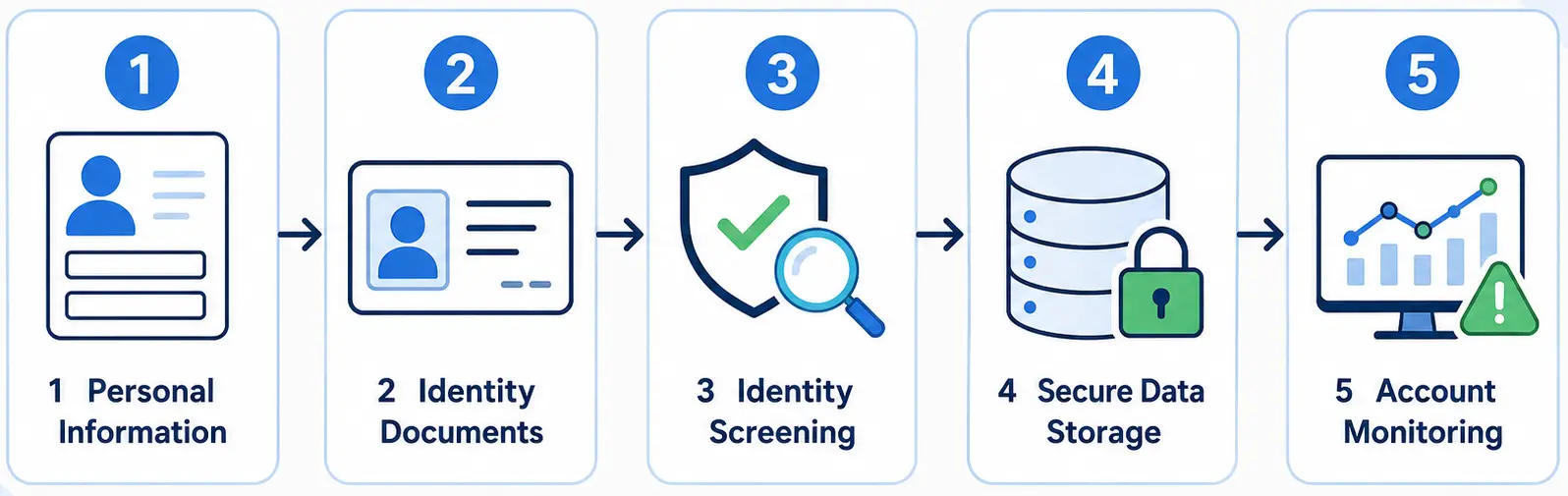
Crypto KYC begins when an exchange collects your personal information and continues after your identity has been verified.
Step 1: Personal Information
The exchange collects details such as your full name, date of birth, nationality, and residential address.
Step 2: Identity Documents
Your details are compared with a government-issued passport, national identity card, or driver’s licence. A live selfie may also be required.
Step 3: Identity Screening
The exchange checks your identity against sanctions lists, politically exposed persons databases, and other risk records.
Step 4: Secure Data Storage
Your information and submitted documents are stored using security measures such as encryption and restricted access.
Step 5: Account Monitoring
After approval, the exchange may continue monitoring transactions and request further information if it detects unusual activity.
What KYC Documents Are Required?
The documents required for crypto KYC vary by exchange and country. Most platforms request one government-issued identity document, while proof of address or source of funds may be required for higher verification levels.
Accepted documents may include:
- Passport
- National identity card
- Driver’s licence
- Residence permit
- Utility bill
- Bank statement
- Tax document
- Source-of-funds document
The document must usually be valid, clearly visible, and issued in the same name used for the exchange account.
Why KYC Gets Rejected
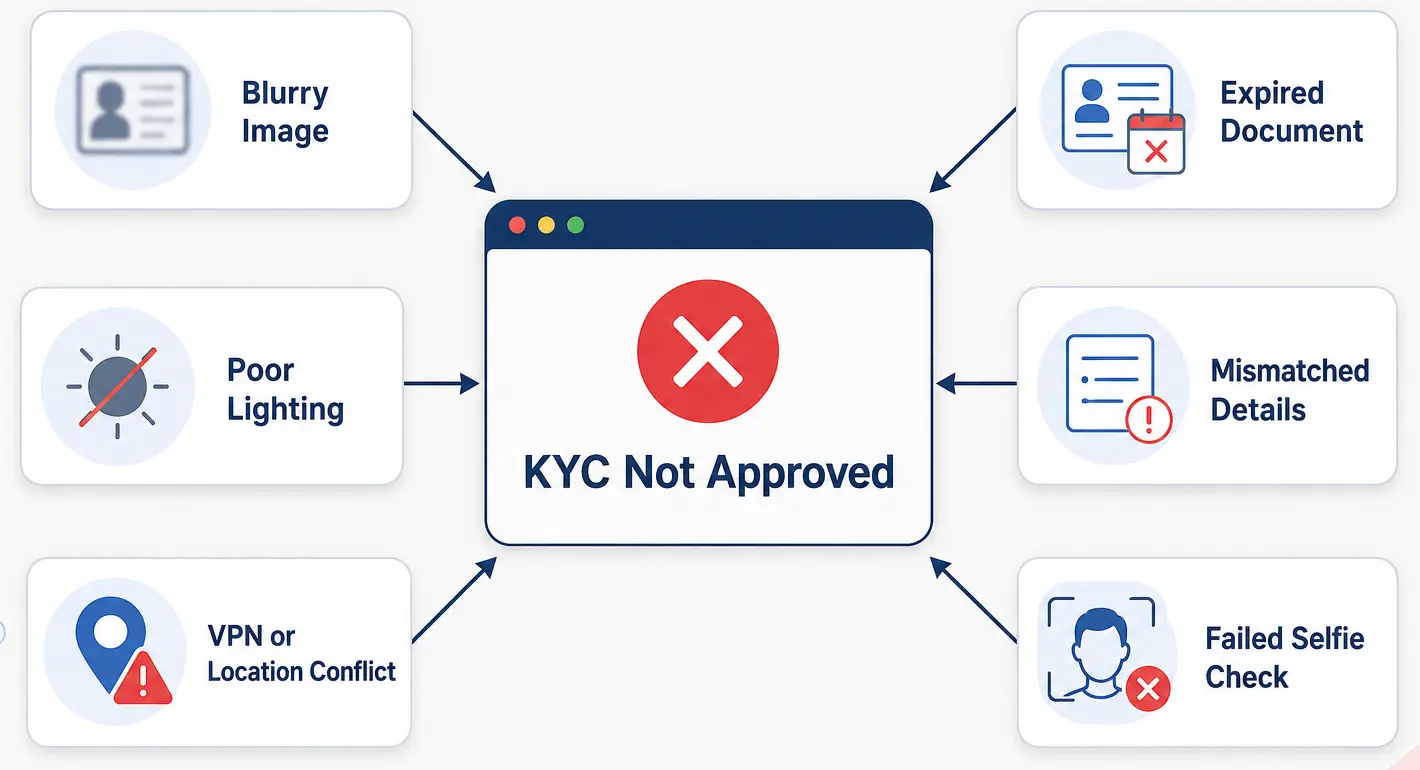
Crypto KYC may be rejected when the exchange cannot verify your identity or finds that your details do not meet its requirements. Common reasons include:
- Expired identity documents
- Blurry or cropped images
- Mismatched personal details
- Unsupported document types
- Failed facial verification
- VPN or location conflicts
- Multiple accounts under one identity
- Documents from unsupported countries
An exchange may also request additional verification if the submitted information is incomplete or the account requires a higher level of review.
How Crypto Transactions Are Monitored
Crypto exchanges use automated systems to monitor deposits, withdrawals, trades, and wallet connections for unusual activity. These systems may flag sudden changes in transaction size, repeated transfers, activity involving high-risk wallet addresses, or patterns that do not match a customer’s usual account behaviour.
A flagged transaction does not automatically mean that a crime has occurred. The exchange may review the activity, request further information, ask for proof of funds, delay the transfer, or report suspicious activity when legally required. This ongoing monitoring helps exchanges identify financial crime risks even after the customer has completed KYC.
Is Crypto KYC Safe?
Crypto KYC is generally safe when completed through a reputable exchange with suitable data-protection measures, but submitting sensitive information is never entirely risk-free. Exchanges commonly use encryption, restricted employee access, and other security controls to protect identity documents and personal data.
However, exchange databases can still be targeted by hackers, and a data breach may expose information that cannot simply be changed like a password. Phishing websites and fake verification emails also attempt to trick users into uploading their documents. KYC information should only be submitted through the exchange’s official website or mobile application. Users should verify the website address and avoid sending identity documents through email, social media, or unofficial support channels.
Can You Buy Crypto Without KYC?
Yes, it is possible to buy and trade crypto without completing KYC. Decentralized exchanges connect directly to Web3 wallets, so users can trade without creating a conventional account or submitting identity documents. Since these platforms are self-custodial, users remain responsible for protecting their private keys, checking smart contracts, and approving the correct transactions.
Some centralized crypto exchanges also follow an optional KYC policy, allowing unverified users to deposit, trade, and withdraw within certain limits. However, no-KYC access can involve weaker regulatory protection, restricted fiat payments, country limitations, and policies that may change later. Our list of reliable no-KYC crypto exchanges includes platforms used by many traders that still permit trading without mandatory identity verification.
Do Crypto Wallets Require KYC?
Self-custody wallets generally do not require KYC because users control their own private keys and can create a wallet without submitting personal information. However, custodial wallet providers may require identity verification. Third-party services integrated into wallets, including crypto purchases, swaps, or payment services, may also request KYC before processing transactions.
The Travel Rule and KYC
KYC allows an exchange to identify its customer, while the Travel Rule may require regulated crypto businesses to collect and transmit information about the sender and recipient of qualifying transfers. The information required, applicable transfer thresholds, and treatment of self-hosted wallets vary according to the regulations followed in each jurisdiction.
Bottom Line
For traders, KYC in crypto can feel like an uncomfortable trade-off between accessing an exchange and sharing sensitive personal information. Policymakers consider it a necessary financial check against money laundering, sanctions evasion, and other illicit activities. If you are concerned about how exchanges protect your identity documents, refer to our list of the safest crypto exchanges.
FAQs
1. How Long Does Crypto KYC Take?
Crypto KYC may take a few minutes when automated checks succeed. Manual reviews can take several hours or days, depending on the exchange and submitted documents.
2. Can You Trade Crypto Without KYC?
Yes, some decentralized and centralized exchanges permit trading without KYC. However, available features, withdrawal limits, fiat payments, and regional access may be restricted.
3. Why Do Crypto Companies Need KYC?
Crypto companies use KYC to verify customers, meet regulatory requirements, screen sanctioned individuals, and detect fraud, money laundering, or other suspicious activity.
4. Can an Exchange Request KYC Later?
Yes. An exchange may introduce mandatory KYC, request additional verification, or require documents when account activity, withdrawal limits, or regulatory requirements change.
5. What Happens If KYC Fails?
The exchange may ask you to resubmit documents or provide additional information. Until verification succeeds, certain account features may remain restricted or unavailable.
6. What are KYC Levels in Crypto Exchanges?
KYC levels are different stages of identity verification, although their requirements vary between exchanges. Some platforms request an identity document at Level 1 and facial verification at Level 2. Others complete both checks at Level 1, while Level 2 requires proof of address or source-of-funds documents. Higher KYC levels generally provide larger withdrawal limits and access to additional features.