

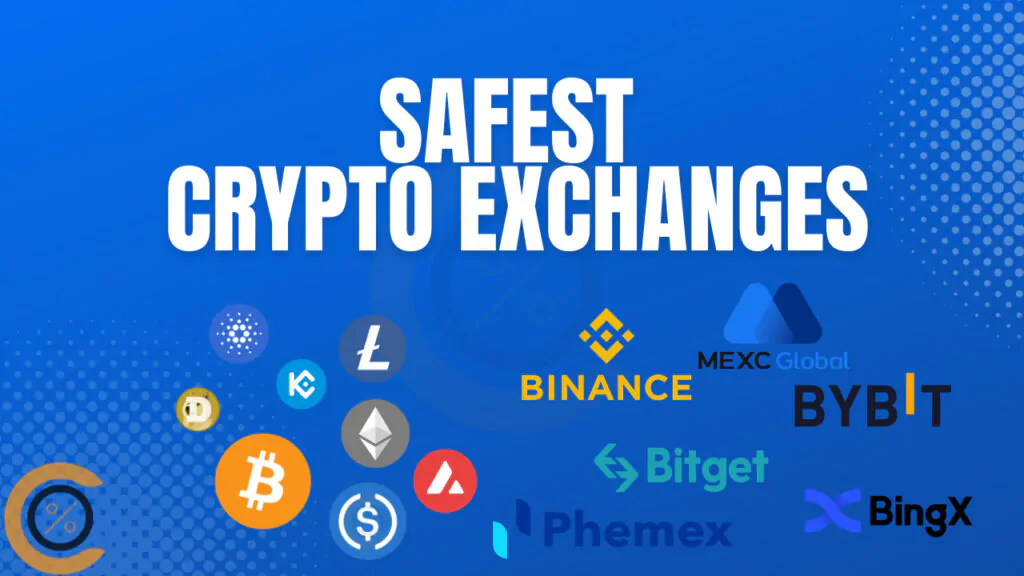
- •Coinbase, Kraken, and Bitvavo are the top three safest crypto exchanges on this list.
- •Safety is judged by prevention, user protection, reserves, regulation, and crisis response.
- •Past hacks matter, but how an exchange responds matters even more.
- •Proof of reserves and protection funds give users stronger confidence in asset backing.
- •Users should still use 2FA, passkeys, whitelisting, and verified official channels.
One question that has always followed the crypto industry is exchange security. After all, crypto exchanges now operate much closer to financial institutions, and the days of zero regulatory oversight are no longer the norm.
If you have been in the market long enough, you may have heard stories of exchanges locking user funds, shutting down without warning, or being used for illicit activity. Standards have changed a lot since then. Today, a safe crypto platform is judged by more than just whether it has ever been hacked.
Crypto exchange safety now depends on preventative security, financial remediation, and corporate accountability. In this article, we’ll look at the safest crypto exchanges based on how they protect user funds, respond to incidents, and maintain trust over time.
How We Ranked the Top 10 Safest Crypto Platforms
Our ranking methodology was not based only on whether an exchange has been hacked before. Security incidents have affected some of the biggest names in crypto, and even major institutions in the traditional financial sector have faced breaches.
Instead of judging safety by hack history alone, we looked at how each exchange is built to prevent incidents, how it responds when something goes wrong, and how seriously its corporate governance structure follows security protocols.
We also considered factors such as licenses, compliance standards, proof of reserves, protection funds, and user security features. These factors matter because a regulated exchange is often required to follow certain procedures, maintain stronger internal controls, and remain answerable to regulatory bodies.
After reviewing these factors, these are the safest crypto exchanges that we believe users can consider in 2026.
- Coinbase - Public Company Accountability
- Kraken - Longstanding Security Reputation
- Bitvavo - Regulated European Exchange
- Binance - SAFU-Backed Market Leader
- Crypto.com - Insurance-Backed Global Exchange
- Gate - Altcoin Depth With Reserves
- OKX - Secure Trading With Reserves
- Bybit - Crisis Tested Exchange
- Bitpanda - Investor Focused Asset Protection
- Bitget - Fund Backed Trading Platform
1. Coinbase – Public Company Accountability
Coinbase ranks first because it combines long operating history, public-company transparency, deep liquidity, and one of the strongest regulatory footprints in the crypto industry. Founded in 2012 by Brian Armstrong, Coinbase is listed on Nasdaq and serves more than 110 million users, making it the largest crypto exchange in the United States.
The platform supports around 398 cryptocurrencies for spot trading and 235 futures contracts with up to 10x leverage. However, Coinbase is not the cheapest exchange on this list, with spot fees starting around 0.40% for makers and 0.60% for takers, while futures fees are around 0.05% for both makers and takers.
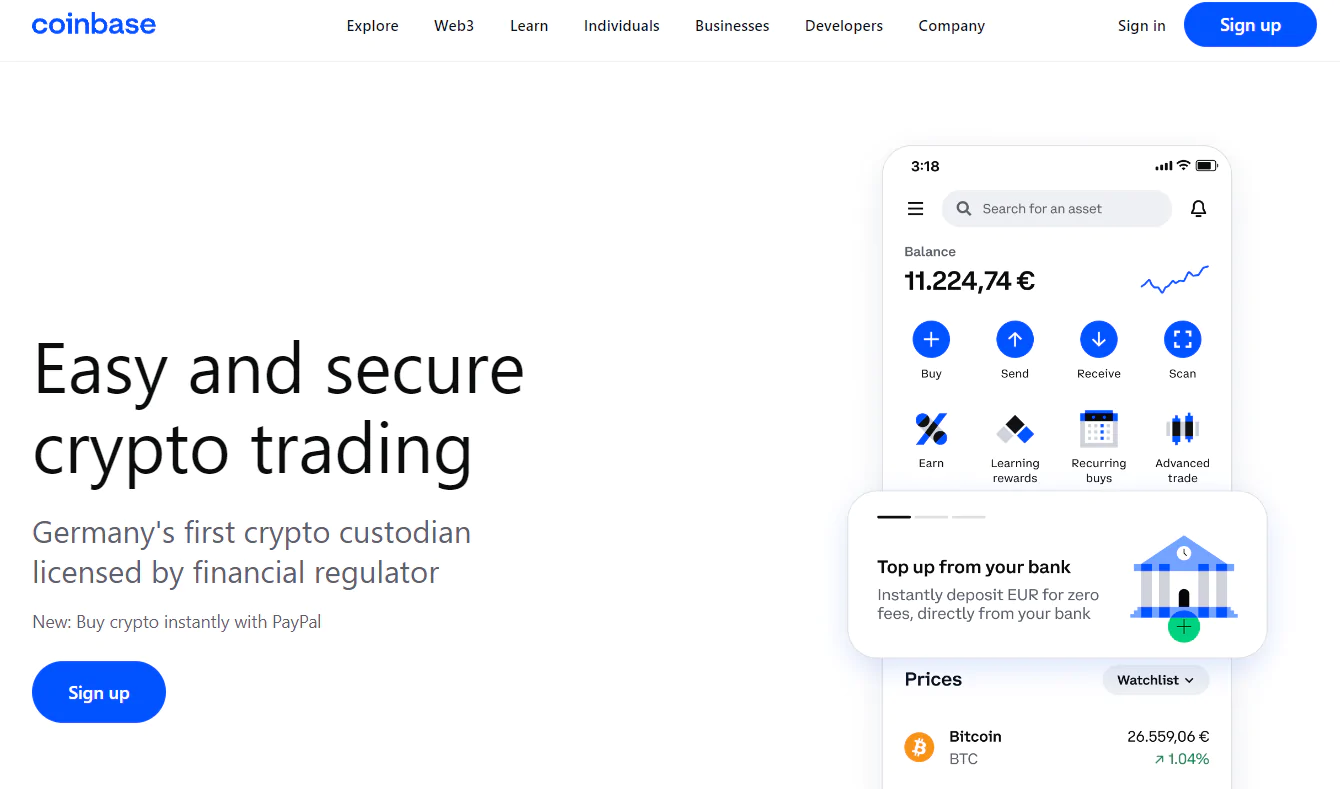
From a security and governance perspective, Coinbase stands out because it files audited annual reports and quarterly statements with the SEC. Its financial reporting and internal controls are reviewed under public-company standards, while Coinbase Custody and Coinbase Prime also maintain SOC 1 and SOC 2 Type 2 audits by Deloitte & Touche. Unlike some exchanges, Coinbase does not publish a separate Merkle-tree proof of reserves report. Instead, it relies more on public financial audits, regulated custody controls, and corporate disclosures.
Coinbase also has a strong licensing profile, including money transmitter licenses across 46 US jurisdictions, a New York virtual currency license, UK and European registrations, a MiCA license through Luxembourg, CySEC authorization, and a Major Payment Institution license in Singapore.
That said, Coinbase is not flawless. In 2025, it faced a major data breach involving rogue support agents, although Coinbase said no passwords, private keys, or customer funds were directly exposed, and it committed to reimbursing affected users. It has also faced regulatory fines, including Ireland’s €21.46 million penalty over AML and counter-terrorist financing monitoring failures. So, Coinbase ranks high for governance, audits, regulation, and crisis handling, but past compliance issues should still be considered.
2. Kraken – Longstanding Security Reputation
Kraken has one of the longest operating records in the crypto exchange industry, and much of its reputation has been built around security, transparency, and responsible asset custody. Founded in 2011 by Jesse Powell, Kraken is a US-based exchange that has expanded from spot crypto trading into futures, stocks, advanced trading tools, and its own Layer 2 network, Ink.
The exchange offers deep liquidity and supports around 735 cryptocurrencies for spot trading. Its spot fees start from 0.25% for makers and 0.40% for takers, while futures fees are more competitive at 0.02% maker and 0.05% taker. Kraken also supports around 331 futures contracts with up to 50x leverage, making it a stronger choice for users who want both security and advanced trading access.
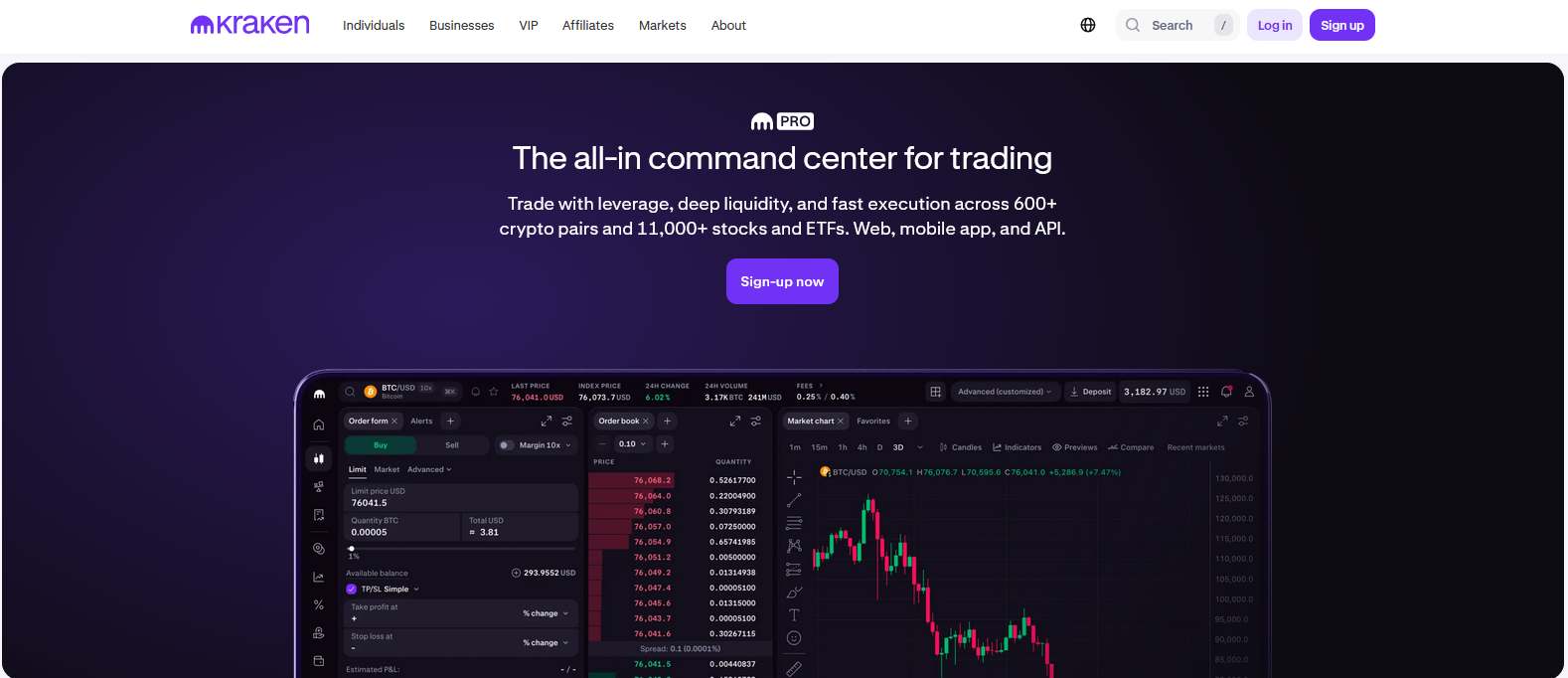
Kraken is also closely associated with proof of reserves. It was one of the earliest exchanges to adopt this practice, with previous audits administered by Armanino, allowing users to verify that supported balances are backed by assets held in custody.
On the regulatory side, Kraken holds several registrations and licenses, including FinCEN Money Services Business registration, a MiCA Crypto Asset Service Provider license in Ireland, MiFID authorization through Cyprus, FCA registration in the UK, MSB registration in Canada, and VARA approval in Dubai.
However, Kraken has also faced regulatory penalties from bodies such as the CFTC, SEC, US Treasury, and ASIC. It has also dealt with security-related issues, including a 2024 zero-day exploit where around $3 million was taken from Kraken treasuries, along with a separate support-related incident involving roughly 2,000 accounts. Even with these issues, Kraken remains one of the more trusted names because of its long history, proof-of-reserves approach, and security-focused culture.
3. Bitvavo – Regulated European Exchange
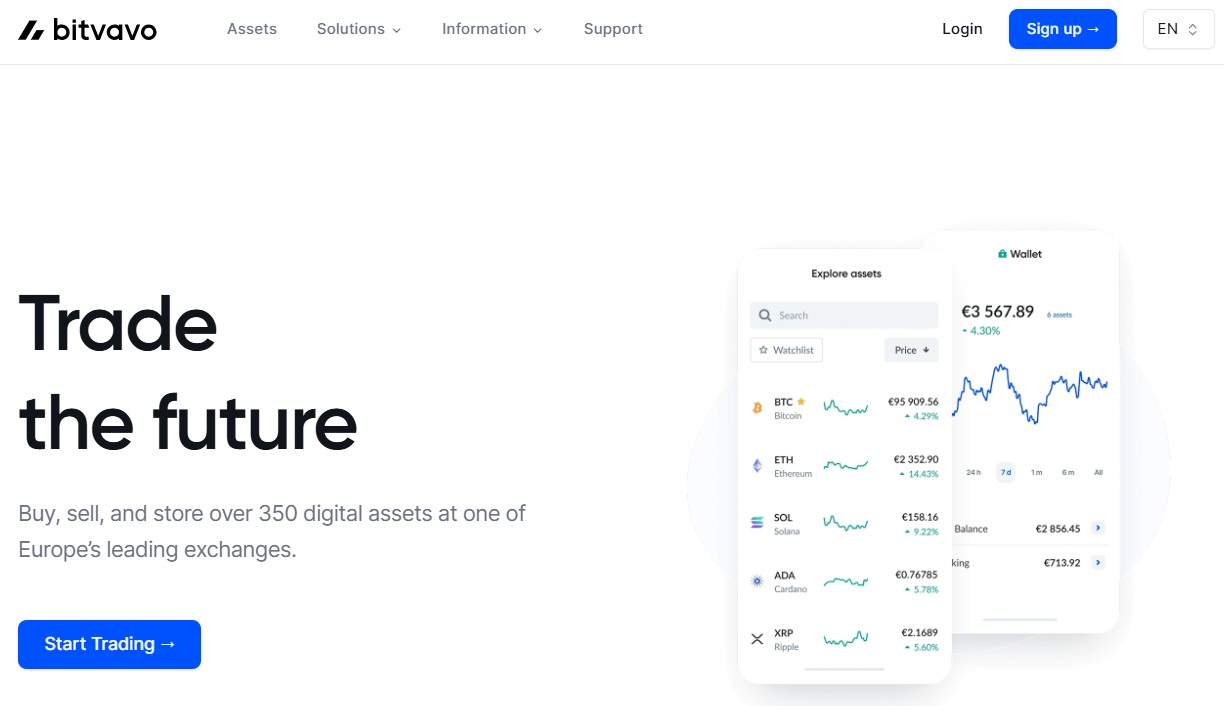
Bitvavo is a euro-first trading platform and one of the more transparent names among Dutch central bank registered crypto exchanges. Founded in 2018 by Mark Nuvelstijn and based in Amsterdam, Bitvavo has built its platform mainly for European users who want simple spot trading, strong EUR liquidity, and local funding options such as SEPA transfer, EPS Überweisung, and Bancontact.
The exchange is spot-only and supports around 367 crypto assets, with fees starting from 0.15% maker and 0.25% taker. It does not offer the same advanced product depth as Binance or Kraken, but its focus is more on regulated crypto access in Europe.
Bitvavo entered the market with a compliance-first approach, first operating among Dutch central bank registered crypto exchanges through De Nederlandsche Bank registration. It later received a MiCA license from the Dutch Authority for the Financial Markets in 2025, making it a regulated crypto exchange Europe users can access under a clearer legal framework. Beyond the Netherlands, Bitvavo also maintains registrations in Austria with the FMA and in France with the AMF, further strengthening its position as a compliant European crypto platform.
For safety, Bitvavo separates customer assets from its own company funds through Stichting Bitvavo Payments, which helps reduce counterparty risk if the company ever faces financial trouble. The exchange also publishes quarterly proof-of-reserves attestations through The Network Firm LLP, giving users a clearer view of whether customer balances are properly backed. On top of that, Bitvavo supports Merkle tree verification, so users can personally check whether their balances were included in the reserve snapshot.
Another important safety feature is Bitvavo’s Account Guarantee, which can reimburse eligible users up to €100,000 if unauthorized access leads to losses and the user meets the required conditions. This does not make Bitvavo risk-free, but it gives users an added layer of protection that many crypto exchanges still do not provide.
4. Binance – SAFU-Backed Market Leader
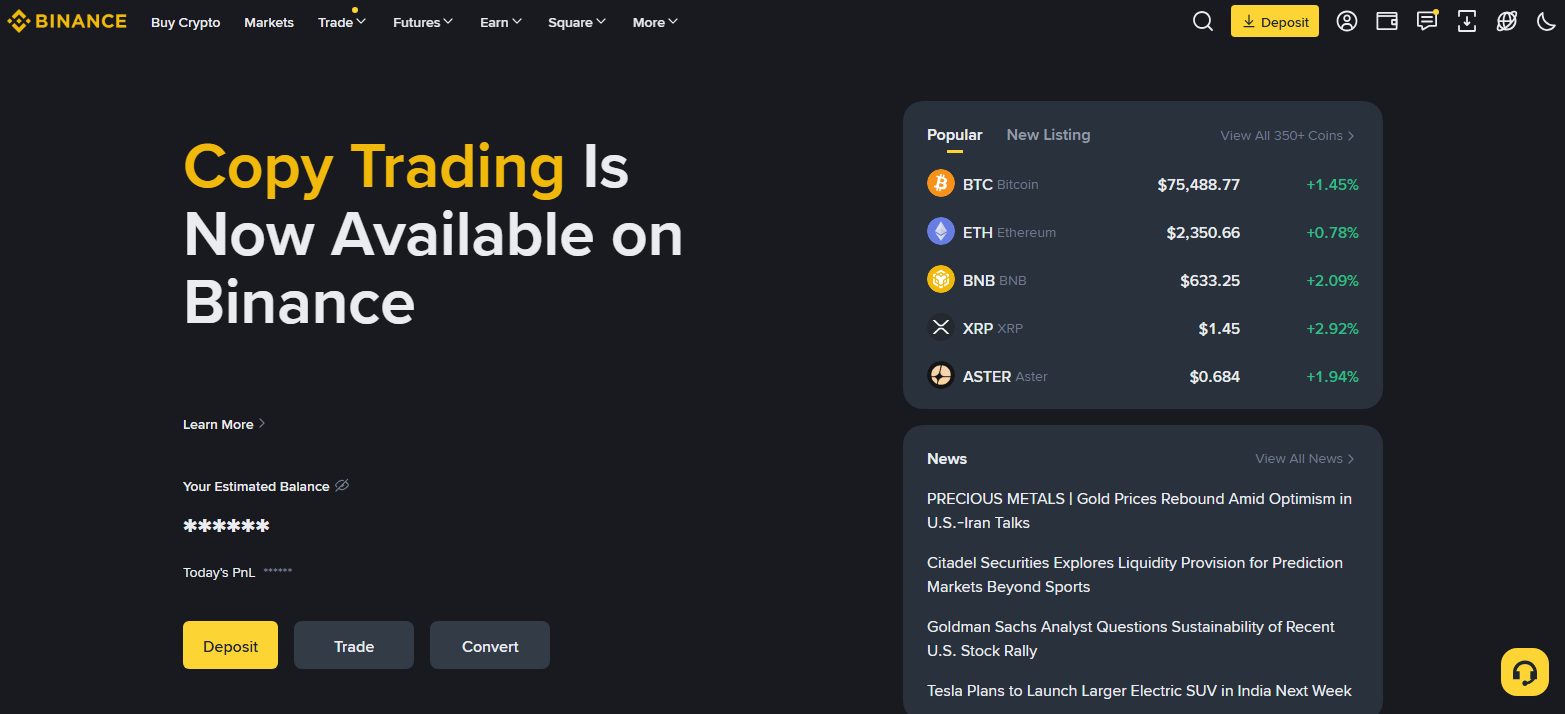
Binance is currently the busiest crypto exchange by daily trading volume, with more than 300 million users and one of the largest product suites in the market. Launched in 2017 by Changpeng Zhao, Binance grew quickly because of its liquidity, low trading fees, and fast expansion across spot, futures, copy trading, bot trading, Earn products, and multi-asset trading features.
For traders, Binance supports over 437 spot assets and more than 700 perpetual futures contracts, with deep order books across major pairs. But its stronger safety angle is that it is a crypto exchange with SAFU fund protection. Binance created the Secure Asset Fund for Users to cover emergency losses, and this became important in 2019 when hackers stole around 7,000 BTC from the exchange. Binance covered the loss through SAFU instead of passing it to users.
Binance also publishes proof of reserves using Merkle-tree snapshots and zk-SNARK verification, allowing users to check that their balances are included in the reserve system. Its licensing profile includes approvals and registrations across the Middle East, Asia-Pacific, and other regions, although the global platform remains restricted in the US and faces ongoing challenges around full MiCA access in Europe.
However, Binance’s regulatory history remains an important consideration. In 2023, the exchange reached a $4.3 billion settlement with US authorities over AML failures, unlicensed money transmission, sanctions violations, and unlawful derivatives access for US users. Changpeng Zhao also stepped down as CEO as part of the broader resolution. While Binance continues to maintain major security systems, SAFU protection, and proof-of-reserves reporting, its past compliance issues still weigh on its overall safety profile.
5. Crypto.com – Insurance-Backed Global Exchange
Crypto.com is a global crypto exchange founded by Kris Marszalek and now serves more than 100 million users. The platform has grown into a full crypto ecosystem, offering spot trading, derivatives, card products, staking, custody, and other financial services for retail and institutional users.
Its safety profile is supported by proof-of-reserves reporting, where user balances can be checked through Merkle tree verification. Crypto.com has also had its reserves independently attested by Mazars Group, with reports confirming 1:1 backing for in-scope assets.
Crypto.com also has a strong regulatory footprint. It holds a full MiCA license through Malta, placing it on the mica compliant crypto exchanges list, along with registrations or approvals in the UK, Singapore, Australia, Dubai, Canada, Hong Kong, and several US jurisdictions.
Crypto.com also adds another safety layer through its insurance coverage. The commonly cited Crypto.com insurance fund size is $750 million, but it is better understood as total insurance coverage across custody, cold storage, and crime-related protection, not a simple user compensation pool like Binance’s SAFU. This still matters because it shows that Crypto.com has structured coverage in place for certain loss scenarios.
However, its record is not completely clean. The exchange has faced penalties in Texas and the Netherlands, and in 2022, hackers bypassed 2FA on 483 accounts. Crypto.com reimbursed affected users and later strengthened its security controls.
6. Gate – Altcoin Depth With Reserves
Gate has been around since 2013, originally launched in China as Bter.com by Lin Han before later rebranding into Gate.io and then moving under the Gate.com brand. The founder’s early experience with weak exchange infrastructure is part of why Gate has often positioned itself around asset access, security controls, and reserve transparency.
Today, Gate is mandatory-KYC and remains one of the largest altcoin-focused exchanges, with more than 1,600 spot assets and over 2,300 markets. It also offers futures trading across roughly 799 contracts, with leverage up to 200x, and is often ranked among the stronger exchanges for global liquidity.
On the compliance side, Gate operates through regional entities such as Gate US and Gate Europe. Its licensing footprint includes a Hong Kong TCSP license, Gibraltar registration, Malta MFSA MiCA authorization, AUSTRAC registration in Australia, VARA approval in Dubai, Japan FSA status, and approval in The Bahamas.
For security, Gate publishes proof of reserves using Merkle Tree and zk-SNARK verification, while also documenting disaster recovery systems and regular security audits. However, the older Bter/Gate history still matters. Past incidents include the alleged 2018 North Korea-linked theft and the StatCounter supply-chain attack targeting Gate.io users. There are also claims around Gate Shield or an insurance fund, but no clear public record confirms a SAFU-style protection pool.
7. OKX – Secure Trading With Reserves
OKX has grown into a major global exchange since its launch in 2017 by Star Xu, now serving more than 60 million registered users. The platform offers low spot fees starting from 0.08% maker and 0.10% taker, along with around 298 spot assets and more than 400 perpetual futures contracts.
Its strongest safety signal is its proof-of-reserves system. OKX publishes monthly reserve reports using zk-STARK proofs, Merkle trees, and on-chain wallet checks, while Hacken has also verified its proof-of-reserves process. This gives users a stronger way to check whether balances are backed without exposing private account details.
OKX also holds a full MiCA CASP license from the Malta Financial Services Authority and has VARA approval in Dubai. However, its compliance history needs context. In 2025, OKX pleaded guilty in the US to operating an unlicensed money transmitting business and agreed to pay over $504 million. Its European subsidiary was also fined €1.1 million in Malta for AML control failures.
8. Bybit – Crisis Tested Exchange
Bybit is one of the largest crypto exchanges by product depth, liquidity, and asset support, with more than 82 million users. The platform offers over 756 spot assets and around 759 futures contracts, along with CFDs, tokenized stocks, copy trading, trading bots, and Shariah-compliant accounts for Muslim users.
Its safety profile is supported by regular proof-of-reserves reporting, where users can verify assets through Merkle tree and on-chain checks. Hacken has also reviewed Bybit’s proof-of-reserves process, adding another layer of external verification for user balances.
Bybit has also expanded its regulatory footprint. It received a full MiCA CASP license from Austria’s FMA and has approvals in the UAE, including SCA and VARA-related permissions. However, its compliance record is not completely clean. Bybit has faced penalties in the Netherlands, Canada, and India for earlier registration or securities-law issues.
The biggest concern is its 2025 hack, where North Korea’s Lazarus Group stole around $1.4 billion to $1.5 billion in ETH-related assets from an Ethereum cold wallet during a routine transfer. What keeps Bybit on this list is its response: withdrawals continued, the company said client assets remained 1:1 backed, and management publicly stated that Bybit could cover the loss even if the stolen funds were not recovered.
9. Bitpanda – Investor Focused Asset Protection
Bitpanda is built more like a European investment platform than a high-leverage crypto exchange. Founded in Austria by Christian Trummer, it is designed for users who want a simple buy and sell interface, crypto indices, stocks, ETFs, precious metals, and a more familiar investing experience instead of a futures-heavy trading setup.
The main safety angle is Bitpanda user asset protection laws. Under its Austrian custody structure, Bitpanda says crypto assets are held on a trustee basis, where the user remains the beneficial owner and Bitpanda acts as the custodian. This matters because, if Bitpanda ever faces insolvency, customer crypto should not be treated the same way as company property.
Bitpanda is also heavily regulated in Europe. It secured MiCA licenses from BaFin in Germany and Austria’s FMA, and it also holds regulatory permissions through Malta. Outside the EU, Bitpanda has FCA registration in the UK and a VARA VASP license in Dubai.
From a security standpoint, Bitpanda says customer crypto is held in cold storage and supported by regular third-party reserve reviews to confirm 1:1 backing. It has not suffered a major public platform hack draining customer funds, which strengthens its position as a safer broker-style option for European investors.
10. Bitget – Fund Backed Trading Platform
Bitget has grown into one of the safest crypto exchange options for users who want a regulated multi-asset crypto platform with more than 125 million users. The exchange is known for crypto spot trading, futures, copy trading, trading bots, and access to tokenized assets, including stocks, ETFs, commodities, forex, and metals. This makes it more than a simple crypto-only exchange, especially for users who want different market products from one account.
Its main safety strength is the Bitget Protection Fund. The fund was launched with an initial $300 million commitment and is designed to help protect users during security incidents, extreme market conditions, or unexpected platform risks. Bitget publishes regular Protection Fund reports, and its May 2026 report showed an average valuation of $428 million. The fund is held separately from user deposits, which gives Bitget a stronger financial safety layer than exchanges that only rely on proof of reserves.
Bitget also publishes monthly Proof of Reserves using Merkle tree verification, on-chain wallet checks, and a self-verification tool. On the regulatory side, it has a VASP license in Bulgaria and registrations in several European markets while preparing for MiCA compliance. It has reported user-level account issues, but no major public platform-wide hack has drained customer funds.
What Makes a Crypto Exchange Truly Safe?
Crypto exchange safety depends on several factors, but most reviews usually focus only on past hacks and compliance standards. Both matter, but they do not tell the full story.
A clean hack history can be a positive sign, but it should not be treated as the only proof of safety. Even some of the largest exchanges in the world have faced security incidents, regulatory pressure, or internal control failures. The real question is not just whether something has ever gone wrong, but how prepared the exchange was before the incident and how responsibly it acted after it.
So, if you are wondering how to know if crypto exchange is safe, these are the main factors to check.
Preventative Security
The first thing to check is the exchange’s security infrastructure. This includes where user funds are stored, how much is kept in cold wallets, whether the exchange uses MPC wallets, multi-signature approvals, withdrawal monitoring, and independent security audits.
The transfer process also matters. Exchanges regularly move funds between hot wallets and cold wallets, so the approval system behind those transfers needs to be extremely secure. The Bybit hack is a reminder that even cold wallet operations can become risky if attackers compromise the signing or approval flow.
A safer exchange is usually proactive, not reactive. It keeps updating its systems because hackers are also improving. This includes bug bounty programs, internal security reviews, wallet monitoring, and preparation for future risks such as quantum computing threats.
Financial Remediation
Hacks can happen even to major exchanges. Binance, Bybit, Kraken, and Coinbase have all faced security-related incidents in different forms, which shows that past incidents alone should not decide whether an exchange is safe.
What matters more is what happens after the incident. Does the exchange accept responsibility? Does it absorb the financial loss itself? Does it reimburse affected users, keep withdrawals working, and communicate clearly with customers?
This is where financial remediation becomes important. Binance has SAFU, Bitget has a Protection Fund, Crypto.com has insurance coverage, and Bitpanda benefits from user asset protection laws. A crypto exchange insurance policy for users is not always the same across platforms, but the idea is simple: users should not be left alone when the platform’s systems fail.
Corporate Accountability & Executive Action
Crypto exchanges are run through corporate structures, just like banks and financial institutions. That means leadership, internal controls, and governance standards matter a lot.
Good corporate governance decides how seriously an exchange handles KYC, licensing, custody, reserve reporting, internal approvals, risk checks, and crisis response. If leadership is weak or dishonest, even a large exchange can collapse from the inside.
FTX is the clearest example of what poor governance can do. The issue was not just market risk. It was a failure of internal controls, leadership accountability, and responsible fund management. This is why a safe exchange should have transparent leadership, proper audits, clear fund separation, and executives who are answerable when something goes wrong.
Customer Reviews
Customer reviews are often ignored, but they can help you understand how an exchange actually treats its users. Before choosing a platform, it is worth checking feedback on withdrawals, account freezes, customer support response times, KYC delays, and dispute handling.
Apart from customer reviews, you should also read detailed exchange reviews before signing up. We have a complete list of crypto exchange reviews where we break down each platform’s fees, supported assets, security measures, licenses, trading features, and user protection policies. This can help you compare exchanges more clearly instead of relying only on marketing claims or surface-level ratings.
Critical Personal Security Measures for Retail Investors
Keeping funds safe is not only the exchange’s responsibility. Users also need to follow basic account-level security practices so their funds are harder to access, withdraw, or compromise. Even if you are using a safe crypto exchange, these controls can reduce your personal risk.
1. 2FA
Two-factor authentication should be enabled on every crypto exchange account. It adds another approval step before someone can log in, withdraw funds, or make account changes. App-based 2FA is usually safer than SMS because phone numbers can be targeted through SIM-swap attacks.
2. Withdrawal Whitelisting
Withdrawal whitelisting lets you approve specific wallet addresses before funds can be sent out. If an attacker gains access to your account, they still cannot instantly withdraw to a new wallet. This gives you extra time to notice suspicious activity and stop unauthorized withdrawals.
3. Passkeys
Passkeys are becoming one of the safer login methods because they reduce reliance on passwords. Instead of typing a password that can be stolen or phished, passkeys use device-based authentication. When available, they can make account access harder for attackers to compromise.
4. Email Verification
Your exchange account is only as secure as the email linked to it. Use a strong password, enable 2FA on your email, and avoid using the same email for risky websites. Since withdrawal alerts and account changes often go through email, it needs strong protection too.
5. Verify Official Channels
Always verify that you are using the exchange’s official website, app, email, and social media channels. Fake support accounts, phishing links, and copied websites are common in crypto. Before clicking any link or sharing details, check the domain, app publisher, and official announcements directly.
Final Verdict
The safest crypto exchange is not always the one with the cleanest history. It is the one with strong security infrastructure, clear reserves, user protection systems, and accountable leadership when something goes wrong. Still, exchanges are best understood as trading platforms, not permanent storage solutions. For anyone thinking about the safest way to store crypto long term, exchange safety should be viewed as only one part of the overall custody decision.
FAQs
1. What is the most secure crypto exchange?
There is no single most secure crypto exchange for every user, but Coinbase, Kraken, Binance, Bitvavo, and Crypto.com are among the stronger names because of their audits, licensing, proof-of-reserves systems, and security controls. The safer choice depends on your region, trading needs, and how much importance you give to regulation, liquidity, and user protection funds.
2. What factors contribute to the safety of a crypto exchange?
The safety of a crypto exchange depends on its security infrastructure, regulatory status, proof of reserves, fund protection policies, and corporate accountability. A safer exchange should use cold storage, strong wallet controls, independent audits, 2FA, withdrawal monitoring, and clear user protection systems. It should also follow licensing requirements, keep user assets separate from company funds where applicable, and communicate clearly during security or withdrawal issues.
4. How to check crypto exchange proof of reserves?
To check proof of reserves, visit the exchange’s official PoR page, which is usually linked in the website footer or security section. Look for reserve ratios, supported assets, wallet balances, and third-party attestations. Some exchanges also provide Merkle tree or zk-proof tools that let users verify whether their own balances were included in the reserve snapshot.
5. What happens if a crypto exchange goes bankrupt?
If a crypto exchange goes bankrupt, the result depends on how customer assets are held. If user funds are clearly segregated, customers may have stronger claims. If funds are mixed with company assets, users may become creditors in bankruptcy proceedings and may have to wait for recovery through the legal process.
6. Has Coinbase exchange ever been hacked?
Coinbase has faced security incidents, but not a major platform-wide hot wallet hack like some other exchanges. In 2021, at least 6,000 customer accounts were compromised. In 2025, Coinbase also reported a data breach involving rogue support agents, but said passwords, private keys, and customer funds were not directly exposed.