


- •ENA is the governance token of Ethena, a DeFi protocol built around a synthetic dollar called USDe.
- •ENA can be bought on exchanges like Ourbit with 0% spot trading fees and access to perpetual trading.
- •To use Ethena features like staking USDe or interacting with the app, tokens must be moved to a Web3 wallet like MetaMask.
DeFi is expanding, and projects like Ethena are attracting fresh investment by offering yield opportunities through USDe. The protocol is also evolving, reducing concentration risk by expanding beyond crypto-backed mechanisms and introducing institutional lending with partners like Anchorage Digital and Coinbase Asset Management. For investors, buying ENA and storing it securely can still feel unclear. Questions around where to buy, how the process works, and whether centralized exchanges are safe often come up. This guide answers those concerns, starting with simple steps to buy ENA tokens.
Where to Buy Ethena Tokens
Ethena is not a new entrant in the crypto space. It has been around long enough to secure listings across multiple exchanges, mainly driven by rising demand for its ENA token. However, availability alone is not enough. Not all exchanges offer the same level of reliability. Some may list ENA, but differ significantly when it comes to security standards, yield options, trading features like futures, fee structures, and bonus programs.
To make things simpler, we have shortlisted a set of reliable exchanges where you can buy ENA tokens. Along with availability, we have also included key factors such as trading fees, potential yield options, and KYC policies. This helps you understand the actual cost of buying and what to expect from each platform before making a decision.
How to Buy $ENA on Ourbit
While several exchanges support ENA, we will use Ourbit to walk through the complete buying process step by step. It is a relatively new centralized exchange that has been gaining attention due to its zero spot trading fee model, which means you can buy ENA without paying additional trading costs. Alongside this, the platform supports over 620 spot assets, giving you flexibility if you plan to diversify beyond Ethena.
New users can also avail bonuses of up to $10,000 using a valid Ourbit referral code, which adds some initial value when getting started. At the same time, for those looking beyond spot buying, ENA perpetual contracts are available with leverage of up to 200x, making it suitable for both regular investors and more active traders. Let’s take a look at the steps you need to follow to buy ENA tokens on Ourbit:
Step 1: Open your browser and go to the official Ourbit website. If you are new, sign up and verify your email before accessing trading features.
Step 2: After logging in, head to the homepage and click on the “Spot” tab from the top menu to enter the trading section.
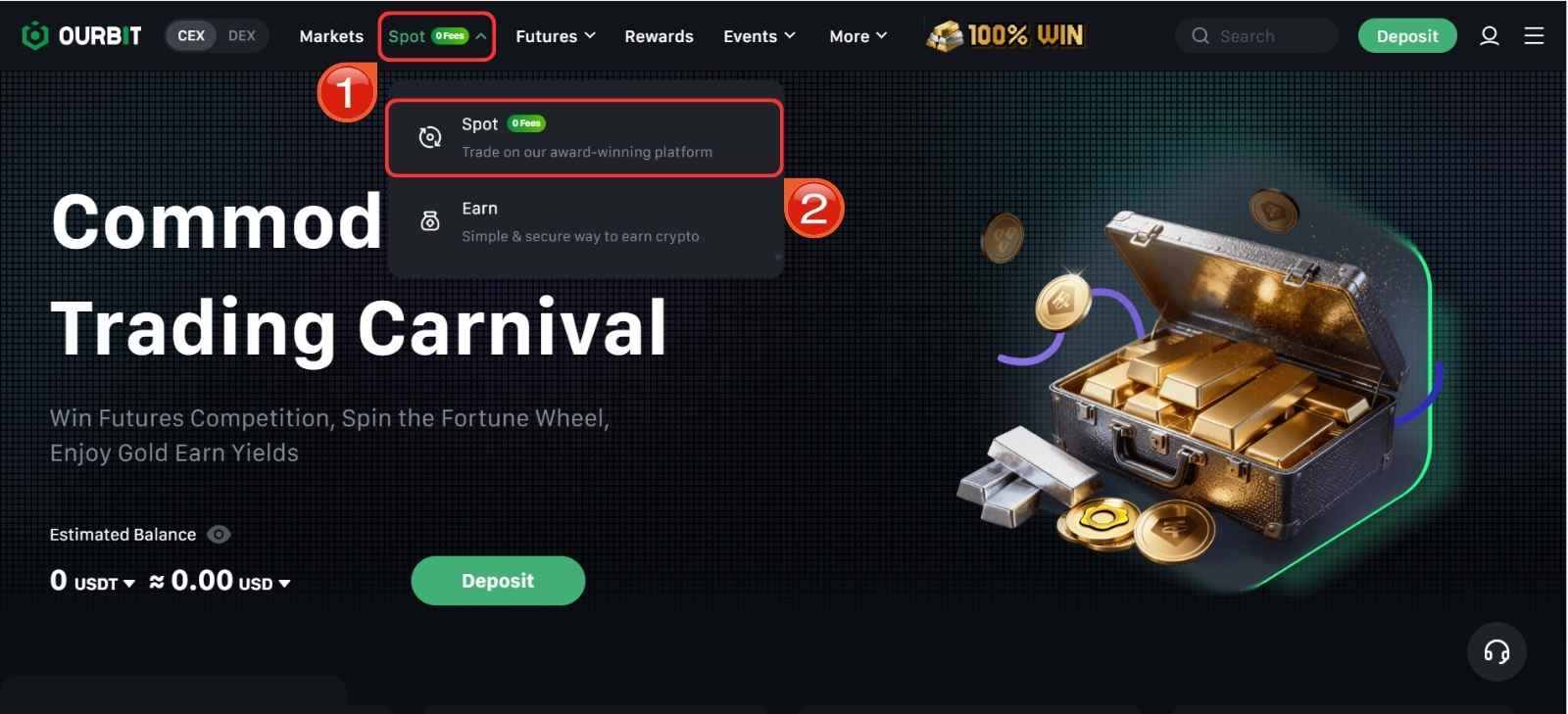
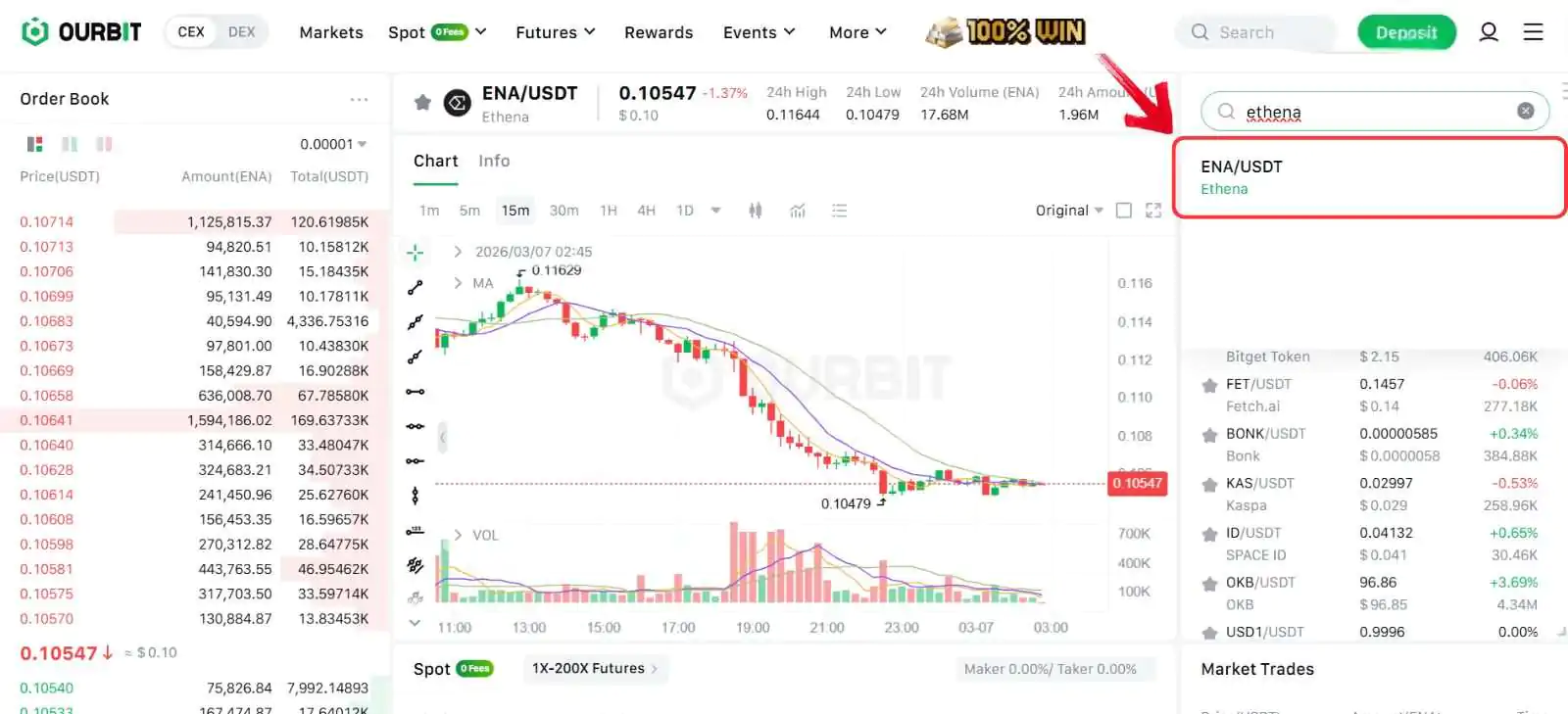
Step 3: On the spot interface, use the search bar on the right, type Ethena, and select the ENA/USDT pair.
Step 4: Move to the trading panel and choose your preferred order type, either Market or Limit.
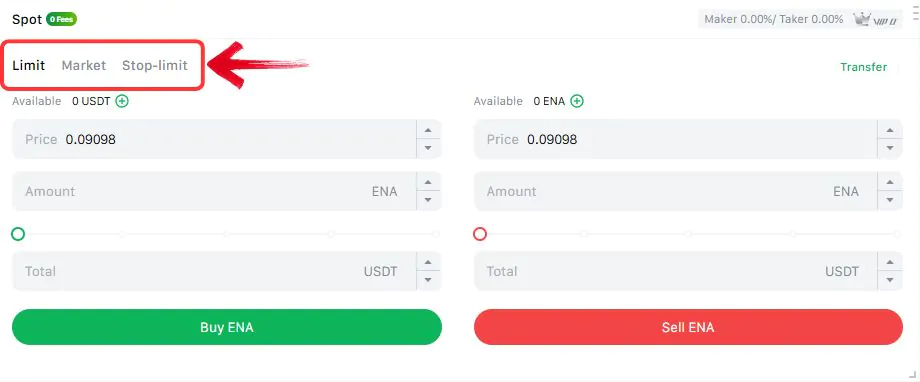
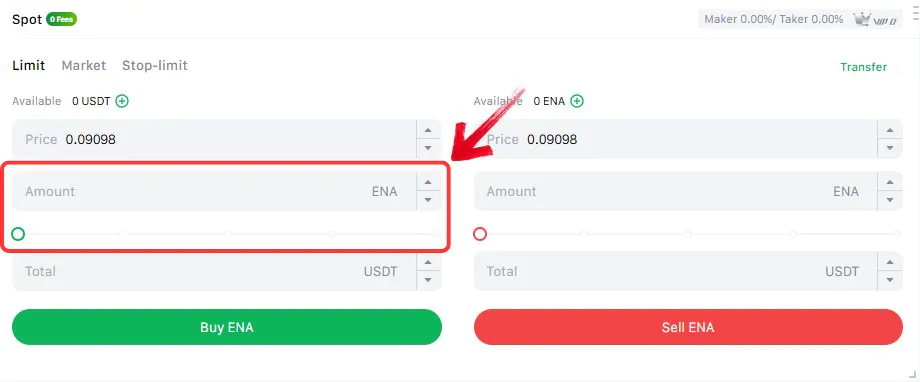
Step 5: Enter the amount of USDT you want to use, or adjust it using the percentage slider.
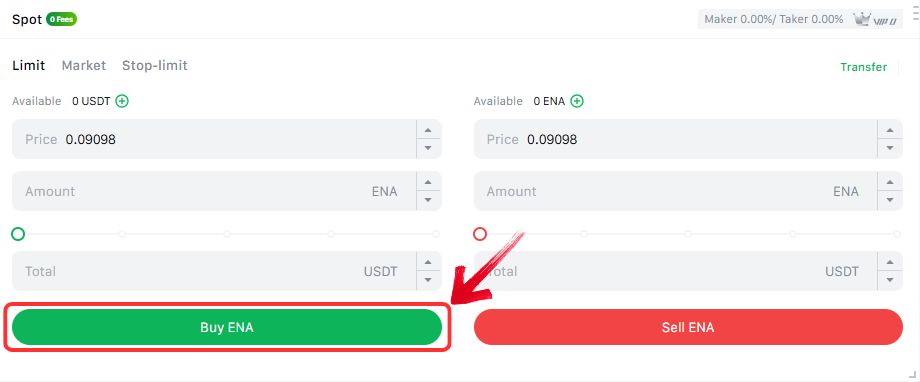
Step 6: Click “Buy ENA” to place your order. Once completed, the tokens will be credited to your spot wallet.
Fees When Buying Ethena on Ourbit
On Ourbit, spot trading fees are set at 0% for both maker and taker orders. This means the cost of buying Ethena (ENA) does not depend on the order type you choose.
For example, if you place a $1,000 limit order for ENA, the trading fee remains $0. Similarly, even if you execute a $1,000 market order, no additional fee is charged on the trade. This allows you to focus entirely on execution price without worrying about trading costs.
How to Transfer $ENA to a Web3 Wallet
Buying on a centralized exchange like Ourbit makes the process simple. You can purchase ENA and hold it directly on the platform without dealing with wallets or dApps. This works well for beginners who want a straightforward experience without technical steps. However, if you plan to use Ethena (ENA) for minting or staking USDe on the Ethena app, you will need to move your tokens to a Web3 wallet. This is because Ethena operates on the Ethereum network, so your wallet must support Ethereum-based assets.
If you are just getting started, MetaMask is a practical option. You can set up your wallet and then transfer your ENA tokens from Ourbit to MetaMask to interact with the Ethena app.
Here is how you can transfer Ethena (ENA) to a MetaMask wallet:
Step 1: On your Ourbit account, open the Withdrawal section and select “ENA” as the asset you want to withdraw.
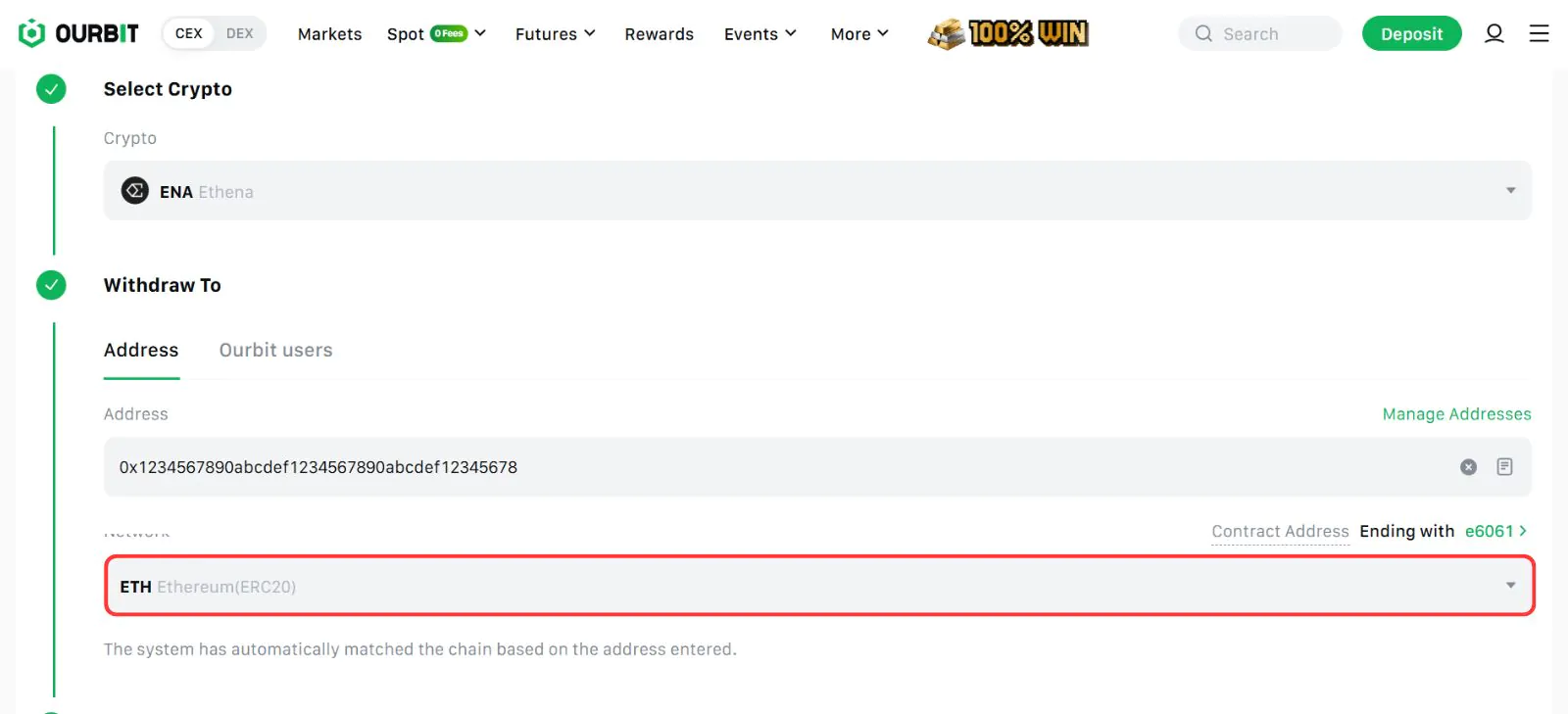
Step 2: Enter your wallet address from MetaMask. Copy your Ethereum receiving address from MetaMask and paste it into the withdrawal field on Ourbit.
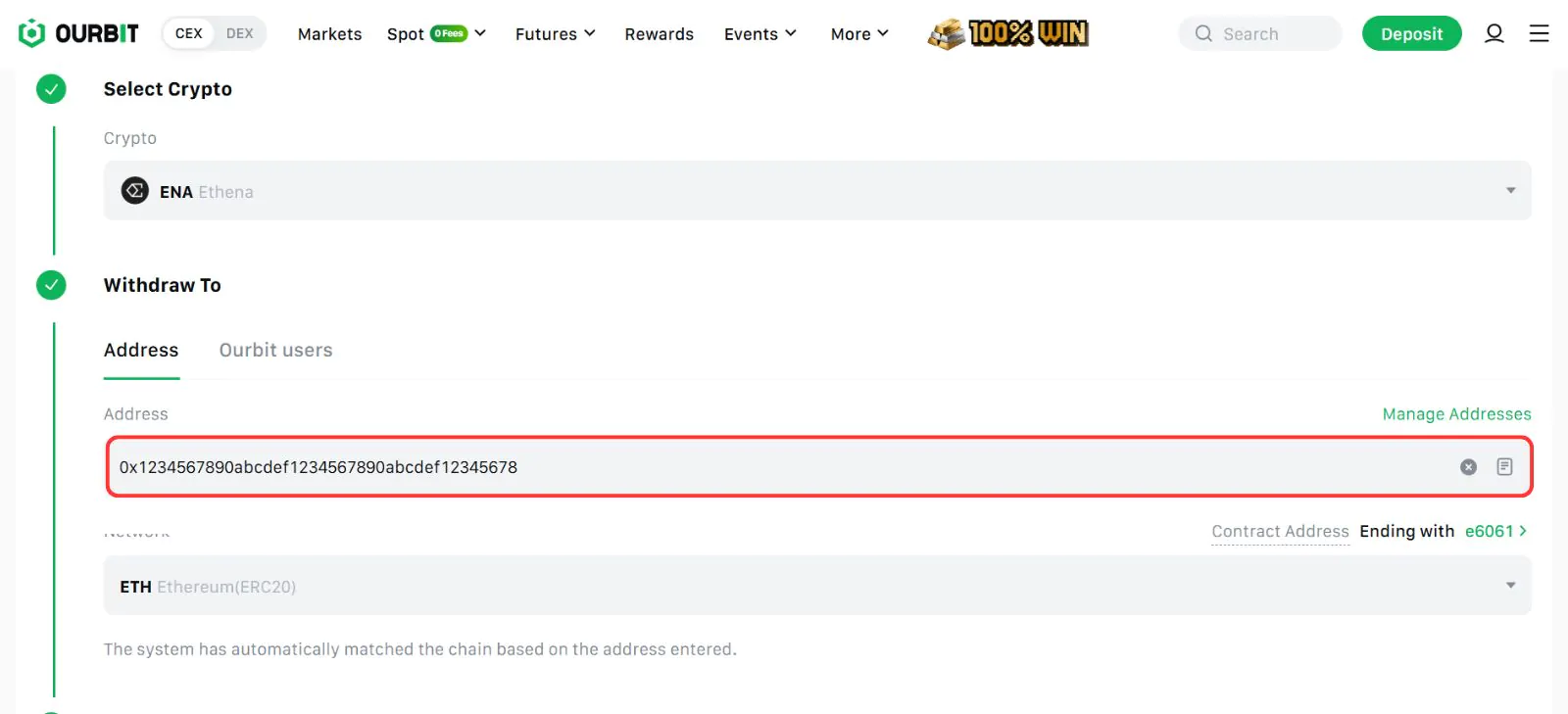
Step 3: Choose the Ethereum network to ensure the transfer is processed correctly.
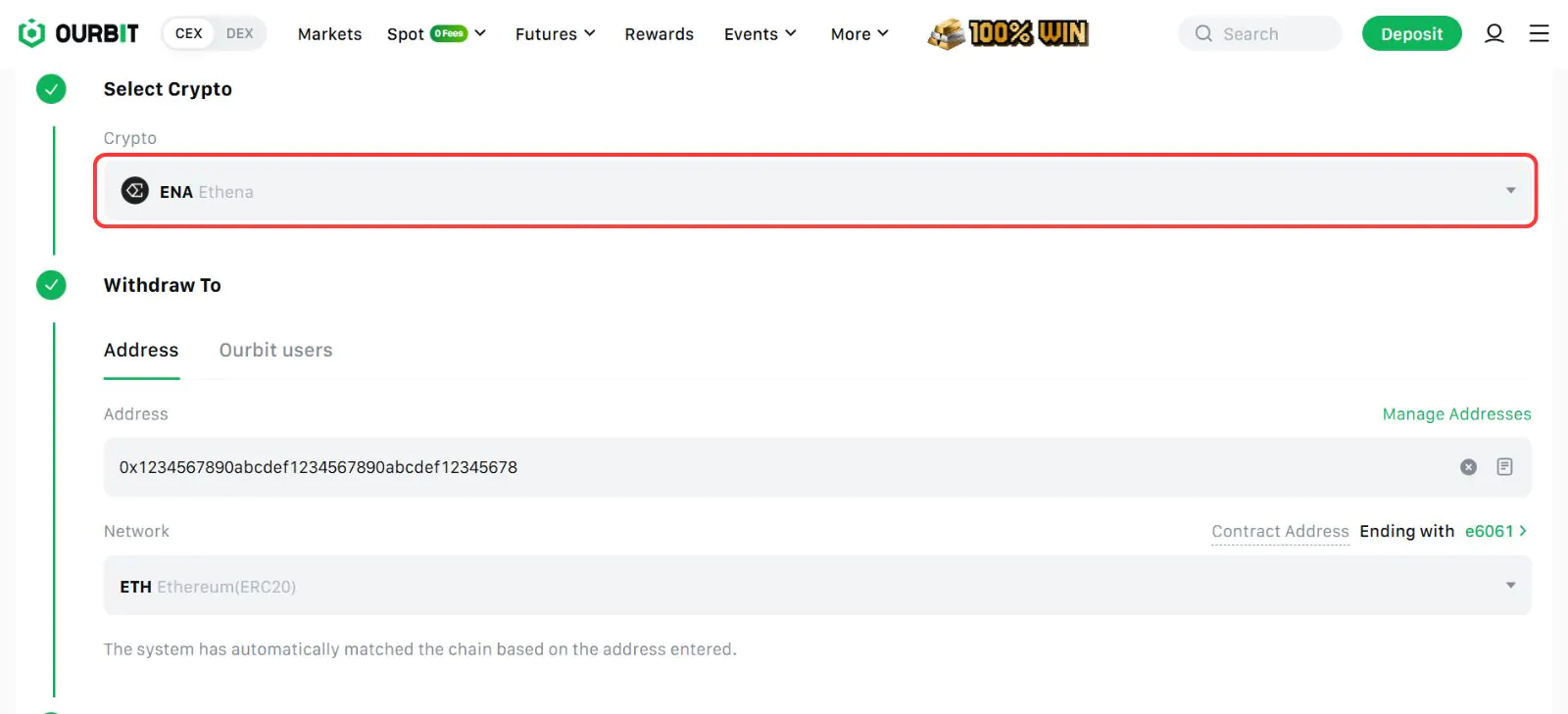
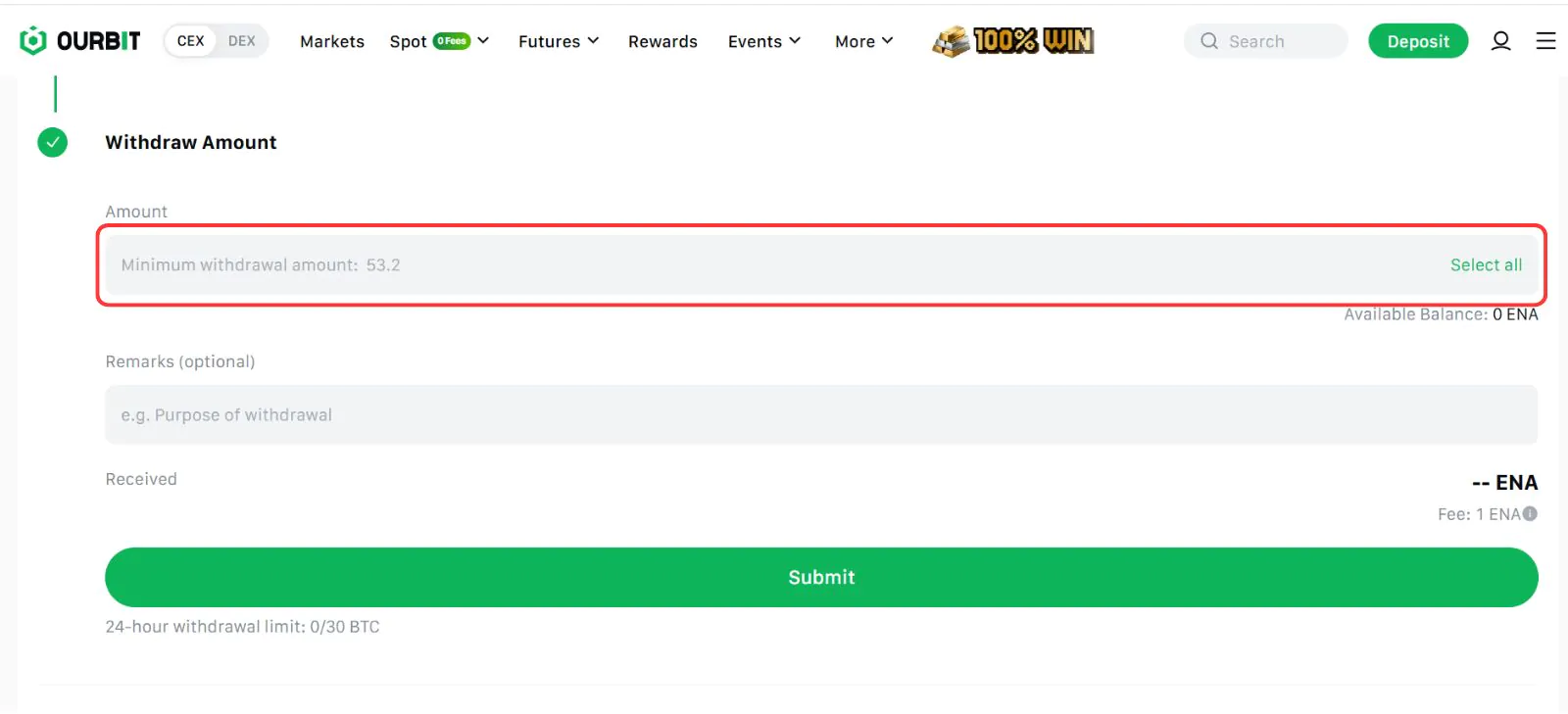
Step 4: Enter the amount of ENA you want to withdraw from Ourbit in the “Amount” field.
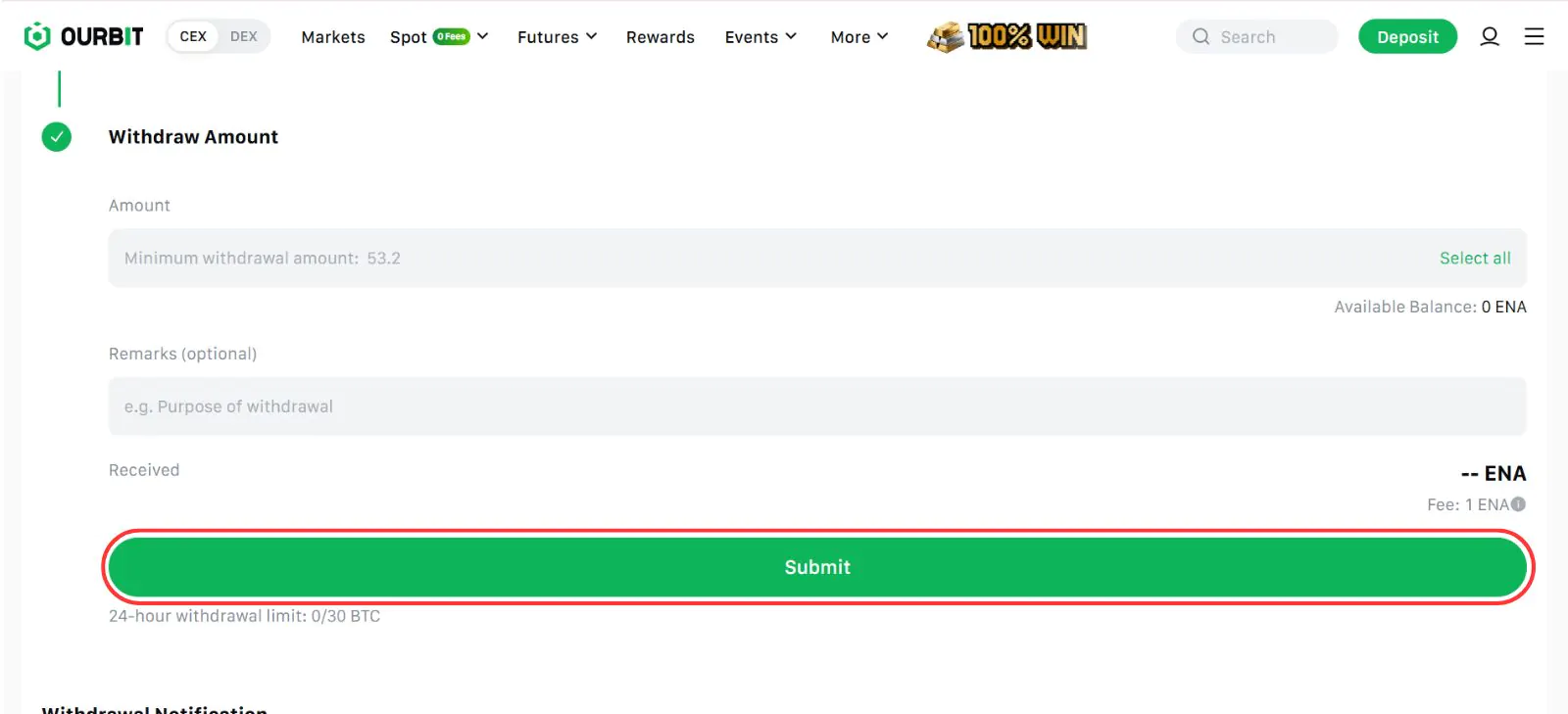
Step 5: Then click “Submit” to complete the withdrawal of Ethena to your MetaMask wallet.
After initiating the transfer, you can track its progress on Etherscan to see when the transaction is processed on the network. Once completed, the tokens will appear in your wallet.
Ethena Explained
Ethena is a DeFi app built on Ethereum around two main products: USDe and ENA. The core idea is fairly simple. Instead of backing its dollar asset with bank-held cash, Ethena uses crypto collateral and hedging strategies to keep USDe relatively stable. That gives users a crypto-native dollar they can move across DeFi and some centralized platforms.
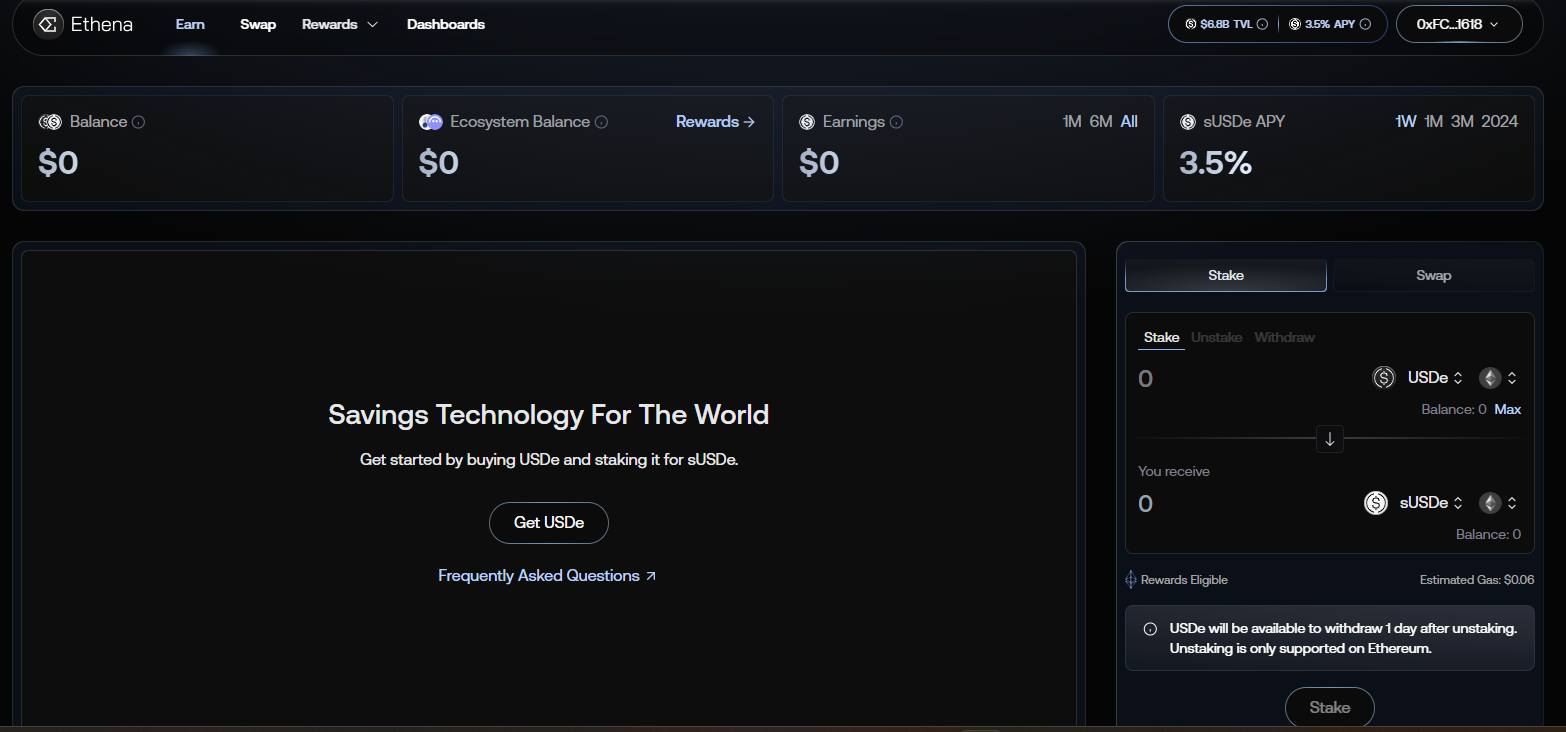
If you hold USDe, you can stake it to receive sUSDe, which is the yield-bearing version tied to protocol revenue. The app also lets users stake ENA, Ethena’s governance token, for voting and possible revenue-linked incentives. In simple terms, Ethena is trying to build an on-chain dollar system with built-in yield, while keeping everything accessible through a clean, user-facing app.
Read more: Ethena Price Prediction
Bottom Line
Ethena reflects how DeFi is shifting toward structured yield models and on-chain dollar systems that operate independently of traditional finance. With USDe and ENA, the focus is clearly on combining stability, utility, and revenue generation within a single ecosystem. For readers exploring this space, it helps to look at how these models are evolving and where they are being adopted. If this direction interests you, Ethena is just one part of a broader trend. You can explore our top DeFi tokens guide to see how other projects are approaching yield, utility, and long-term growth.
FAQs
1. Does Ethena (ENA) generate yield?
ENA itself does not generate yield directly, but it can be staked for governance and potential rewards through the protocol.
2. What is USDe in Ethena?
USDe is a synthetic dollar designed to maintain stability using crypto collateral and hedging strategies.
3. Is Ethena safe to use?
Ethena uses hedging mechanisms and collateral backing, but like all DeFi protocols, it carries market and smart contract risks.
4. Is Ethena a good investment?
Ethena is built around a strong narrative, on-chain dollars with yield. ENA’s value depends on USDe adoption, protocol revenue, and overall DeFi growth. It is not a direct yield token, so its performance is tied to long-term usage and market sentiment.
5. Can ENA reach $1?
For Ethena (ENA) to reach $1, the scale required is significant. With a current market cap of around $785M and price near $0.08, hitting $1 would push its valuation close to $8B, assuming supply remains constant. In reality, circulating supply changes will also affect this calculation, impacting demand and price dynamics. At that level, ENA would need to compete with established DeFi leaders like Uniswap (UNI) and still grow beyond that range. This would require sustained USDe adoption, strong revenue generation, and continued market interest. It is possible in a favorable market cycle, but it depends on execution and broader DeFi growth.