




- •Understanding bull vs. bear markets in crypto requires comparing price structure, investor sentiment, trading volume, and liquidity.
- •Bull markets are characterized by higher highs and higher lows, while bear markets form lower highs and lower lows.
- •A 20% decline in Bitcoin alone does not necessarily confirm that the broader crypto market has entered a bear market.
- •Bitcoin, altcoins, and individual crypto sectors can follow different market cycles at the same time.
- •Laddering entries and exits reduces reliance on identifying the exact market top or bottom.
Crypto markets never move in one direction forever. Periods of rising prices and growing confidence can give way to weaker demand, falling prices, and caution before conditions change again. This movement between optimism and pessimism creates bull and bear markets. Understanding bull vs. bear markets in crypto is not only about learning two definitions. The difficult part is recognizing which phase is developing and what changes when the market turns. In this article, we compare their indicators, explain how one phase becomes the other, and discuss ways to navigate both.
What Are Bull and Bear Markets?
Bull and bear markets describe the wider direction of an asset or market over an extended period. They are not determined by one sharp rise or decline. Both can include temporary movements in the opposite direction without changing the larger trend.
Bull Market Meaning
A bull market is a sustained period of rising prices supported by stronger demand and growing investor confidence. Price charts generally form higher highs and higher lows, although corrections can still occur during the wider upward trend.
Bear Market Meaning
A bear market is an extended period of falling prices, weaker demand, and declining confidence. Rallies may occur along the way, but they repeatedly lose strength while the wider market continues forming lower highs and lower lows.
Differences Between Bull and Bear Markets
Price direction is the clearest difference, but market sentiment, demand, liquidity, and investor behaviour also change as the cycle turns.
| Factor | Bull Market | Bear Market |
|---|---|---|
| Price Direction | Generally rising. | Generally falling. |
| Market Structure | Higher highs and higher lows. | Lower highs and lower lows. |
| Investor Sentiment | Confidence and optimism increase. | Fear and caution become stronger. |
| Demand | Buying demand increases. | Selling pressure becomes stronger. |
| Trading Activity | Participation generally grows. | Activity may weaken between sell-offs. |
| Liquidity | Often improves across the market. | Can decline, especially in smaller assets. |
| Risk Appetite | Investors accept more speculation. | Investors reduce exposure to risk. |
| Media Coverage | Positive narratives and targets increase. | Losses and negative forecasts dominate. |
| Investor Behaviour | Accumulating and holding positions. | Selling or preserving available capital. |
Similarities Between Bull Markets & Bear Markets
Bull and bear markets move in opposite directions, but both are shaped by demand, liquidity, investor sentiment, economic conditions, and market-changing events. Neither develops in a perfectly straight line. Bull markets contain corrections, while bear markets can include strong temporary rallies.
Both can affect an entire market, one sector, or an individual asset. They are also easier to recognize after the trend has already developed, which is why one price movement is rarely enough to confirm that conditions have changed.
Bull vs. Bear Markets in Crypto
Bull and bear markets exist across different asset classes, but crypto moves faster and often experiences much larger price swings. Bitcoin, altcoins, and individual market sectors like DeFi, AI or DePIN may also follow different trends at the same time.
Why the 20% Rule Is Less Useful
Traditional markets commonly use a 20% decline from a recent high to describe a bear market. In crypto, that percentage alone provides limited information. Bitcoin can fall by 20% or more during a wider bull cycle and later recover, while smaller altcoins can experience much deeper losses.
The duration of the decline, wider market structure, number of affected assets, and strength of any recovery provide more context than the percentage alone.
Bitcoin and Altcoins Can Diverge
Bitcoin often leads the early stages of a crypto bull market before capital moves into larger altcoins and more speculative assets. If Bitcoin later trades sideways, altcoins may continue rising as investors look for higher returns.
The opposite can happen during weak conditions. Bitcoin dominance may increase even while Bitcoin’s price is falling because smaller cryptocurrencies are declining faster. This means Bitcoin, altcoins, and individual sectors cannot always be placed under the same market label.
Around-the-Clock Trading
Crypto markets remain open 24 hours a day, including weekends and holidays. Prices can therefore react immediately to economic announcements, hacks, exchange problems, or large liquidations without waiting for markets to reopen.
Liquidity can also become thinner during quieter trading hours. This means that a large order or liquidation may have a stronger effect on prices than it would during a period of active trading.
Bull and Bear Market Indicators
The same market indicators can behave differently as conditions change. Investors generally look for several signals moving in the same direction rather than treating one indicator as confirmation.
| Indicator | Bullish Conditions | Bearish Conditions |
|---|---|---|
| Monthly MACD | Bullish crossover and improving momentum. | Bearish crossover and weakening momentum. |
| Moving Averages | Price trades above major averages. | Price trades below major averages. |
| Market Structure | Higher highs and higher lows. | Lower highs and lower lows. |
| Fear and Greed Index | Confidence and optimism increase. | Fear and pessimism increase. |
| Spot Volume | Participation grows during rallies. | Activity weakens between selling spikes. |
| Bitcoin Dominance | Bitcoin may lead the early cycle. | Dominance may rise as altcoins weaken. |
| On-Chain Activity | Demand and long-term holding improve. | Selling pressure and realized losses increase. |
These indicators are more useful when considered together. Many of them are lagging and may only confirm a change after prices have already moved.
Understanding Crypto Market Cycle Phases
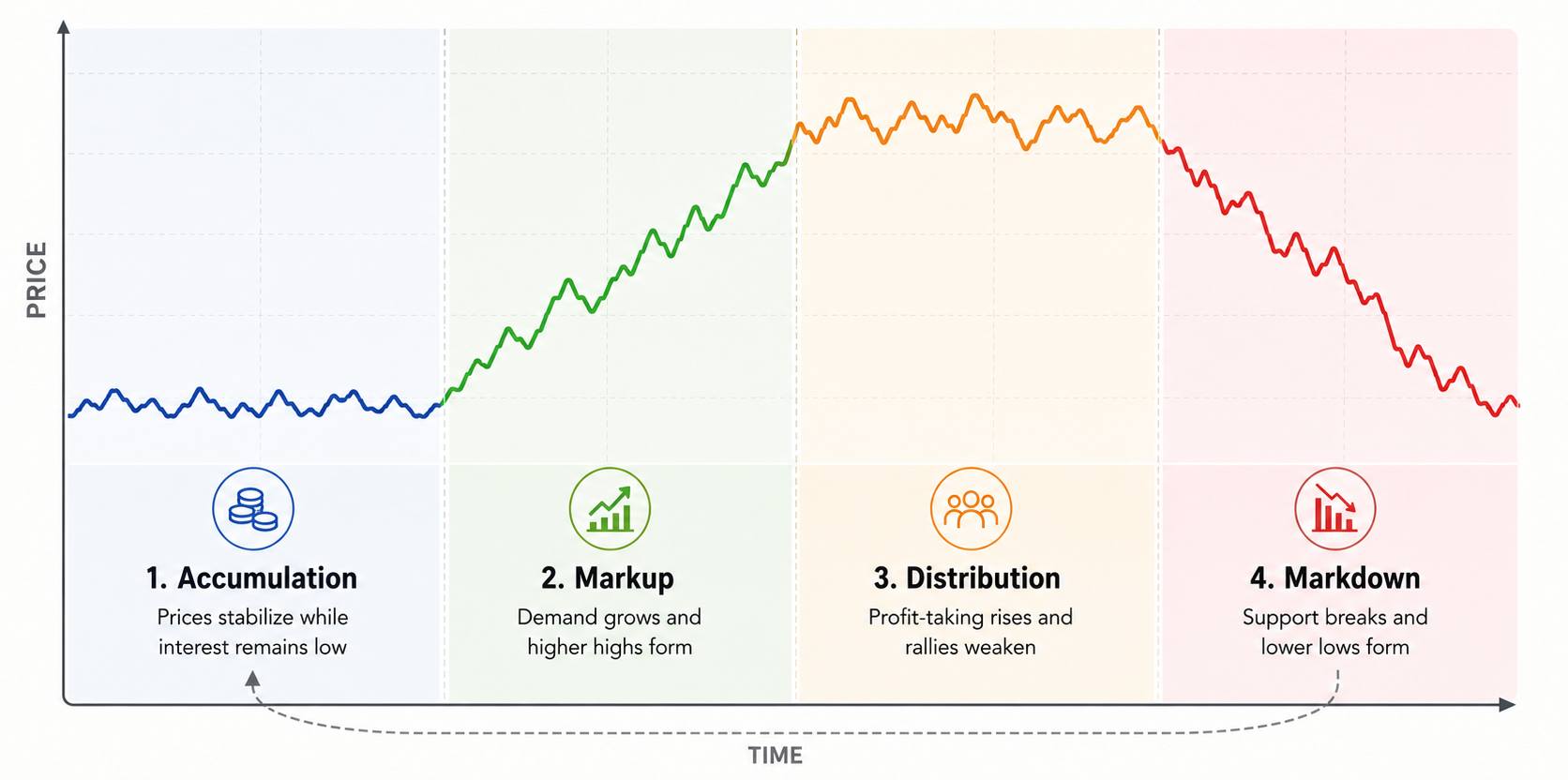
Bull and bear markets are connected parts of a wider market cycle. The length of each phase can vary, and the change from one stage to another is usually clearer in hindsight.
Accumulation
Prices begin stabilizing after a prolonged decline while public interest remains low. Early buyers gradually build positions, but the market may continue moving sideways for some time.
Markup
Buying demand strengthens, resistance levels are broken, and prices begin forming higher highs and higher lows. Growing confidence makes the bull market more visible.
Distribution
Prices remain high and optimism continues, but early investors begin taking profits. Upward progress slows, rallies become weaker, and volatility may increase.
Markdown
Selling pressure takes control, support levels fail, and prices begin forming lower highs and lower lows. As confidence declines, the bear market becomes more visible.
How Bull Markets Turn Bearish in Crypto
A bull market does not become bearish because of one correction. The change becomes more convincing when several warning signs appear together. Prices may stop reaching new highs, major support levels fail, and recovery attempts begin forming lower highs.
Spot demand can weaken while leverage remains high, making the market more vulnerable to liquidations. Market leadership may also narrow, with Bitcoin or a small number of large assets holding up while the wider market declines. A bear market becomes more likely when broken support turns into resistance and selling continues across multiple assets.
How Bear Markets Turn Bullish in Crypto
A sharp recovery does not automatically end a bear market. Selling pressure must first weaken enough for prices to stop making lower lows. The market may then form a base, reclaim important resistance levels, and begin producing higher lows.
The change becomes more credible when spot volume gradually returns, long-term holders accumulate, and reclaimed levels continue holding during pullbacks. Improving liquidity and wider participation can provide further support, but the transition is usually confirmed only after prices have already moved away from the bottom.
Bull Traps vs. Bear Traps
Bull and bear traps are temporary price movements that appear to signal a change in direction before quickly reversing. They can cause investors to enter or exit positions based on a trend that never becomes established.
What Is a Bull Trap?
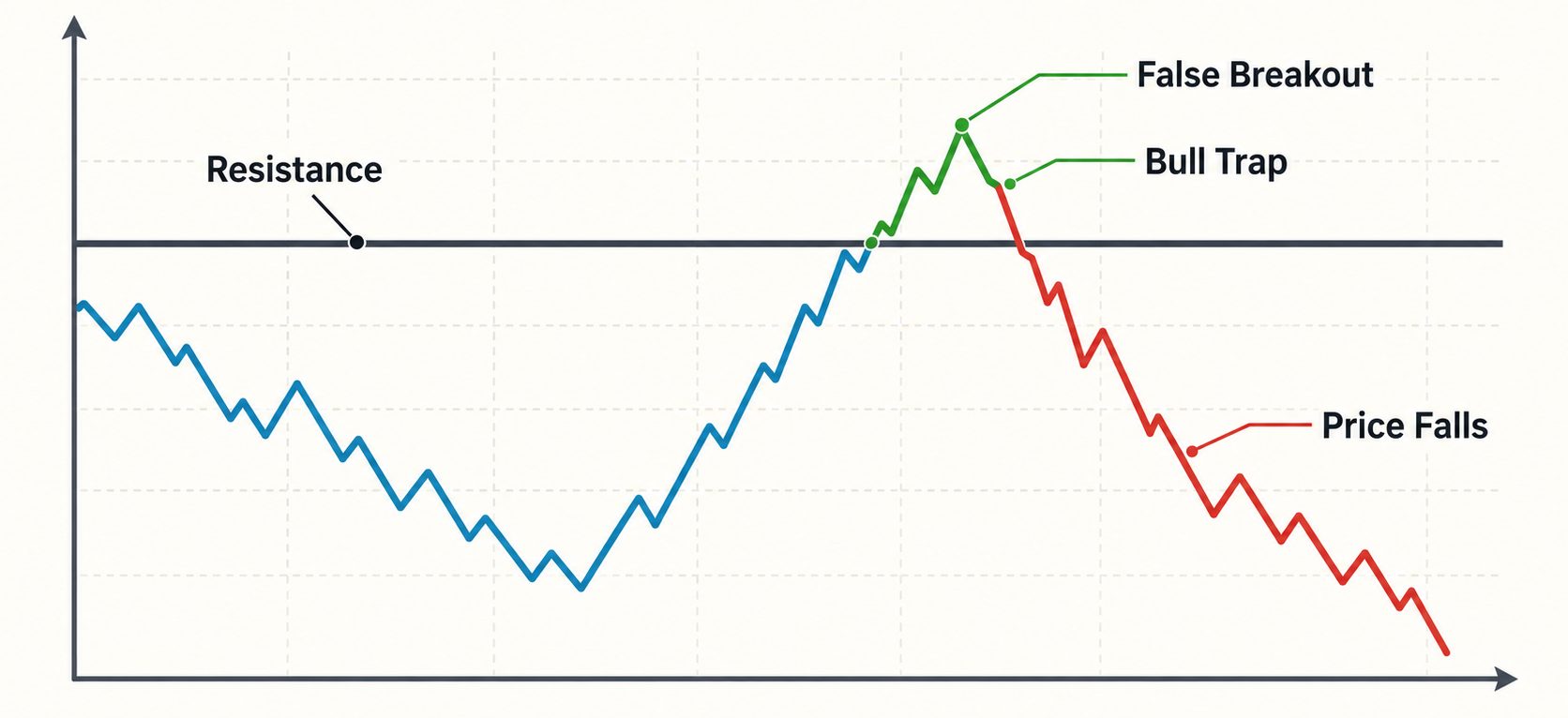
A bull trap occurs when prices rally or break above resistance, convincing buyers that a new upward trend has started. The breakout then fails, prices fall back below the level, and the wider downward trend continues.
Bull traps are common during bear-market rallies, particularly when the recovery is supported by weak spot volume or fails to hold above reclaimed resistance.
What Is a Bear Trap?
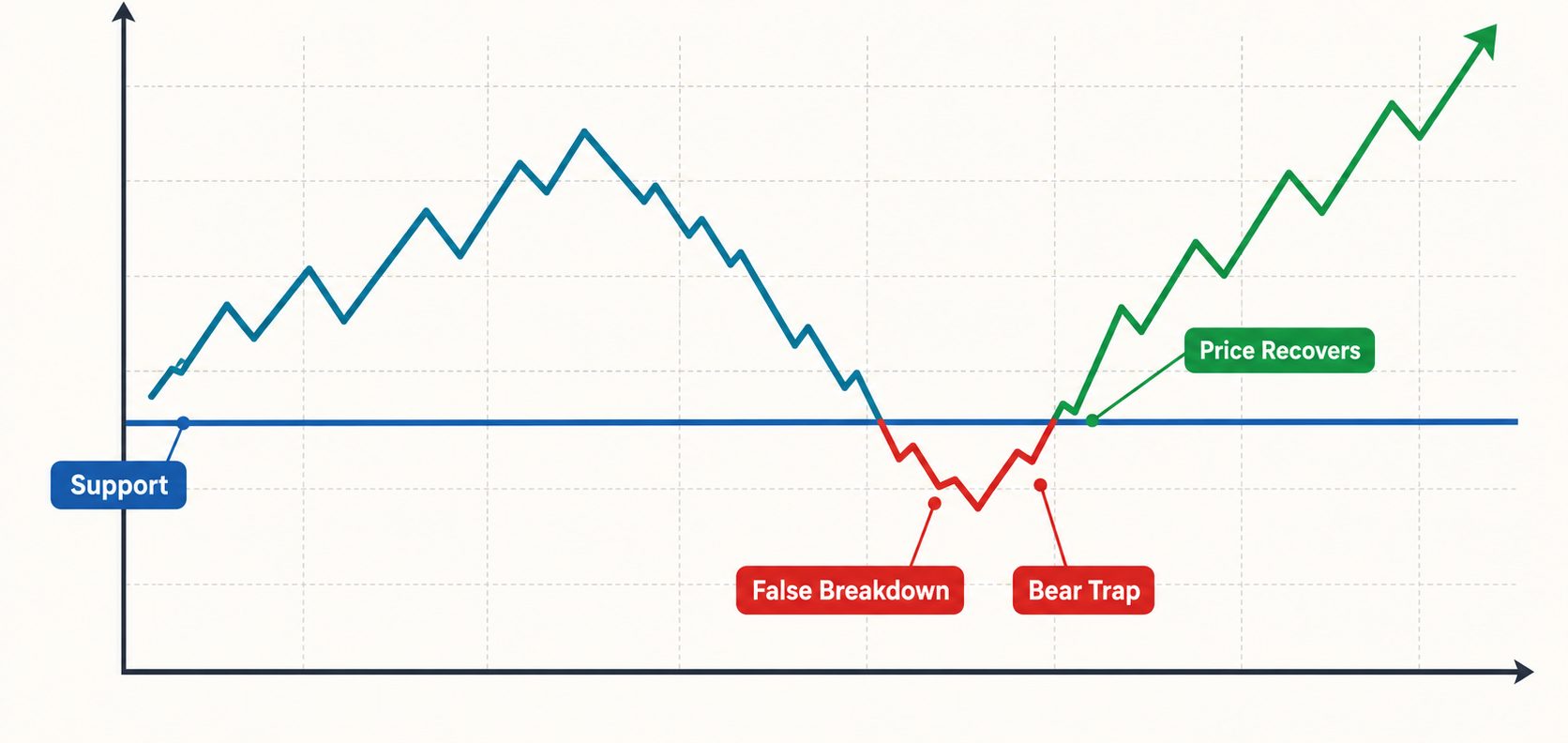
A bear trap occurs when prices briefly break below support, leading investors to expect further losses. Selling and short positions increase, but prices quickly recover and move back above the broken level.
The reversal can force short sellers to close their positions, adding further buying pressure. However, one recovered breakdown is not enough to confirm a new bull market.
Investing in Bull vs. Bear Market
The market phase can change how investors approach entries, position sizes, cash, and profit-taking. Bull markets generally reward participation, while bear markets place greater importance on protecting capital and remaining selective.
| Factor | Bull Market Approach | Bear Market Approach |
|---|---|---|
| Entries | Build positions during controlled pullbacks. | Enter gradually without assuming the bottom. |
| Position Management | Allow strong positions room to develop. | Keep exposure within manageable limits. |
| Profit-Taking | Take profits gradually as prices rise. | Avoid chasing temporary relief rallies. |
| Asset Selection | Focus on liquid assets with continued demand. | Prioritize projects with funding and active development. |
| Portfolio Balance | Rebalance positions that become concentrated. | Maintain sufficient cash for further declines. |
| Leverage | Keep leverage controlled. | Reduce unnecessary leverage. |
| Exit Planning | Set targets before market excitement peaks. | Exit when the original investment case fails. |
Can Bull and Bear Markets Exist Together?
A market label depends on the asset, sector, and period being examined. Bitcoin can remain in an upward trend while smaller altcoins continue making lower lows. Bitcoin can also trade sideways while capital moves into altcoins, creating an altseason without a major rise in Bitcoin itself.
Individual narratives can follow their own cycles as well. AI-related tokens, for example, began rallying after ChatGPT launched in late 2022 and attracted much wider interest during 2023, even though many other cryptocurrencies remained below their previous highs.
Tips for Navigating Both Bull and Bear Markets
If you cannot confidently tell which market phase is developing, your portfolio does not need to depend on one prediction. The following steps can leave room for several possible outcomes.
- Ladder entries and exits: Divide purchases and sales across predetermined levels instead of trying to find the exact bottom or top.
- Rebalance as trends change: Set allocation ranges and reduce positions that become overly concentrated. A popular narrative should not take control of the entire portfolio.
- Look beyond Bitcoin: Altseason and sector rallies can occur while Bitcoin is moving sideways. Examine individual market structures instead of applying one label to every cryptocurrency.
- Consider other asset classes: Some multi-asset crypto platforms provide access to tokenized stocks, indices, and commodities. Check whether each product represents direct ownership, a token, or a derivative before investing.
- Use yield thoughtfully: Yield products can add returns to assets you already intend to hold, but the yield may not offset a major price decline. Platform restrictions and custody risks also remain.
- Do not become attached to one coin: A cryptocurrency that led one cycle may not lead the next. Reconsider the position when its usage, liquidity, development, or original investment case changes.
Reading the Market Cycle
Understanding bull vs. bear markets in crypto requires connecting each label to a specific asset and timeframe. The same decline can appear as a short correction on a monthly chart and a bearish trend on a daily chart. Learning how to read charts makes it easier to assess market structure instead of reacting to every price movement. You can go through our guides on technical analysis to learn how trends, support, resistance, and indicators are used when analysing the market.
FAQs
1. Why Are They Called Bull and Bear Markets?
The exact origin is unclear. A commonly repeated explanation compares rising markets with a bull lifting its horns upward and falling markets with a bear striking its paws downward.
2. Does a 20% Decline in Bitcoin’s Price Mean a Bear Market?
A 20% Bitcoin decline can occur during a wider bull cycle. Its duration, recovery, and overall market structure provide more context than the percentage alone.
3. Can You Profit in Both Market Conditions?
Profits are possible in either market, but the methods and risks differ. Bull markets generally favour rising assets, while bearish strategies such as short selling carry liquidation and timing risks.
4. How do you know when markets change?
A change becomes more credible when price structure, spot volume, liquidity, sentiment, and major support or resistance levels begin moving in the same direction. No single indicator confirms it immediately.
5. Can Crypto Fall During a Bull Market?
Corrections can occur throughout a crypto bull market, including declines of 20% or more. The wider trend can remain bullish if prices recover and continue forming higher highs and higher lows.
6. What Are Bull and Bear Traps?
A bull trap is a failed upward breakout that draws in buyers before prices fall. A bear trap is a failed breakdown that attracts sellers before prices recover.