

- •You can bridge assets to SEI using direct bridges or aggregators that support its ecosystem.
- •SEI V2 is built for high-frequency trading and DeFi, offering fast finality and parallelized execution.
- •A compatible wallet, such as Keplr or MetaMask (for SEI EVM tokens), is required to receive assets.
Users who prioritize execution speed and liquidity access when trading often opt for the SEI blockchain. It is the first parallelized EVM Layer-1 blockchain specifically engineered to provide minimal slippage in active DeFi markets. Likewise, the network’s built-in order block matching engine enables DEXs to process trades more efficiently than traditional AMM-only blockchains. As more trading-focused protocols deploy on SEI, users holding assets on other chains are bridging assets into the network to access these opportunities. As a result, we’ve created this post to guide you on how to bridge to SEI efficiently using verified, fast methods.
Can I Bridge to SEI?
Yes, you can bridge crypto assets to SEI from multiple ecosystems, especially Cosmos-based chains and EVM networks. SEI V2 leverages both the Cosmos SDK and EVM protocols, allowing users to access the network in both ecosystems.
To get started, simply use a verified cross-chain provider to bridge to SEI. This allows you to securely move your assets from your source wallet and immediately start taking advantage of SEI’s high-speed trading, deep liquidity, and optimized on-chain execution.
Key Things to Keep in Mind:
Moving assets to an unfamiliar DeFi network can be complex. To ensure a successful transfer, you need the right wallet and precise network details. Below is our review of the essential elements to consider before bridging your assets to Sei.:
Wallet
The number of wallets you need to bridge into SEI depends on your source network. When bridging from Ethereum or other EVM networks, you only need your MetaMask. However, if you are bridging from a non-EVM chain, you generally need two wallet environments. The first is for the source network, and the second is for the SEI network.
Note that your balances will automatically merge across both SEI address formats once you’ve performed your first ‘association’ transaction on the network. You can also use a multi-chain wallet like Backpack or MetaMask with Solana Snaps to reduce the lengthy preparation process.
Gas Fee
Bridging is not free of charge. To complete a transaction, you must pay gas to the source chain with the network’s native token. Most bridges charge a small convenience fee (typically 0.1% – 0.4%), which is usually deducted from the asset you are moving. Once the assets arrive on the other end, you will need SEI tokens to perform any further actions, like swapping or staking.
How to Bridge to SEI
After configuring and funding your wallets, you’re ready to bridge. The next thing is to find a bridge that supports transfers between your source chain and SEI to get started. We have short-listed some of the best bridge protocols that support bridging to SEI network:
Method 1. Using the Official SEI Bridge
The official SEI bridge is the native interoperability infrastructure that connects SEI to Ethereum, Cosmos, and 50+ Layer-1 and Layer-2 blockchains. The bridge leverages SEI’s Twin-Turbo consensus, allowing users to use bridged tokens for dApp interactions and trading almost immediately after confirmation. The bridge also supports dual compatibility, enabling seamless asset transfers between EVM and non-EVM networks. Follow the steps below to bridge assets into SEI via the official SEI bridge:
Step 1: Open your browser and visit the Official SEI Bridge.
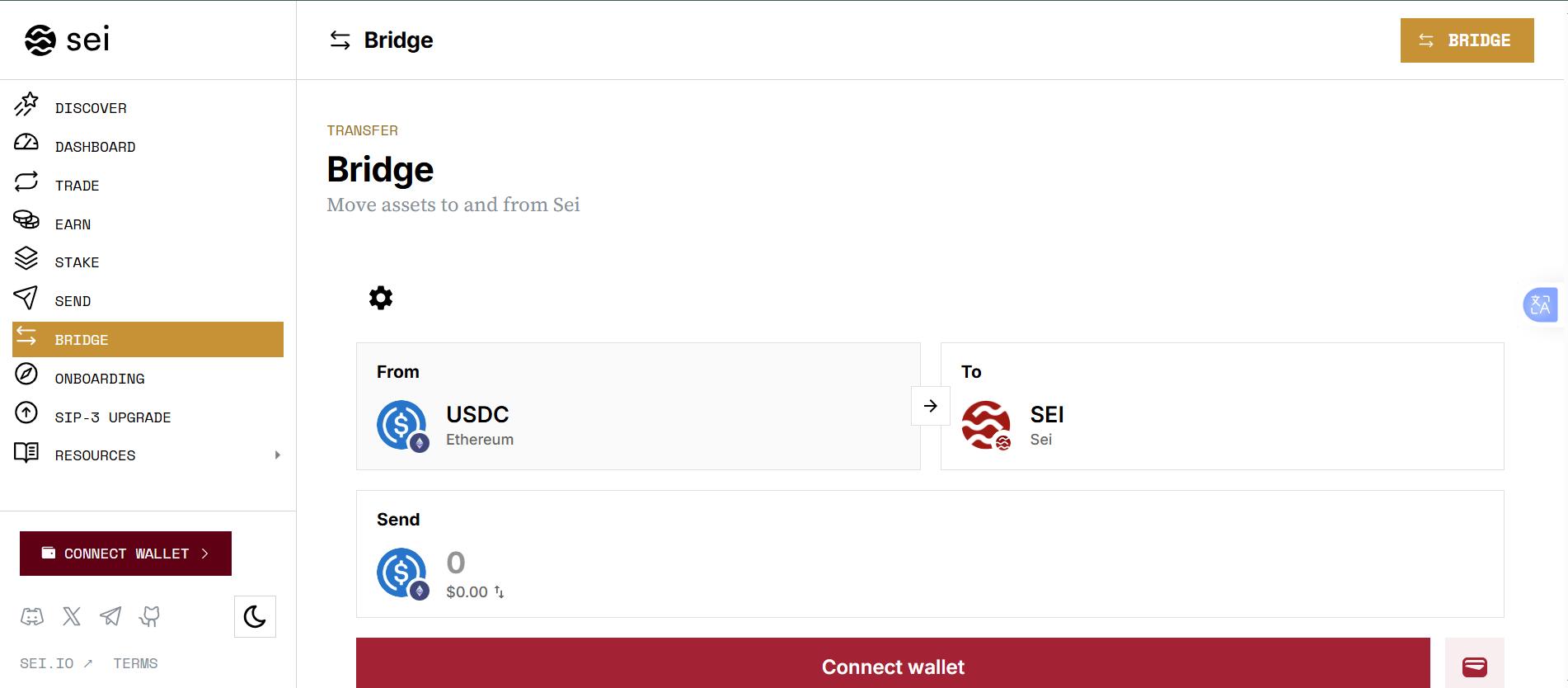
Step 2: Connect your source wallet (e.g., Metamask for Ethereum transfer).
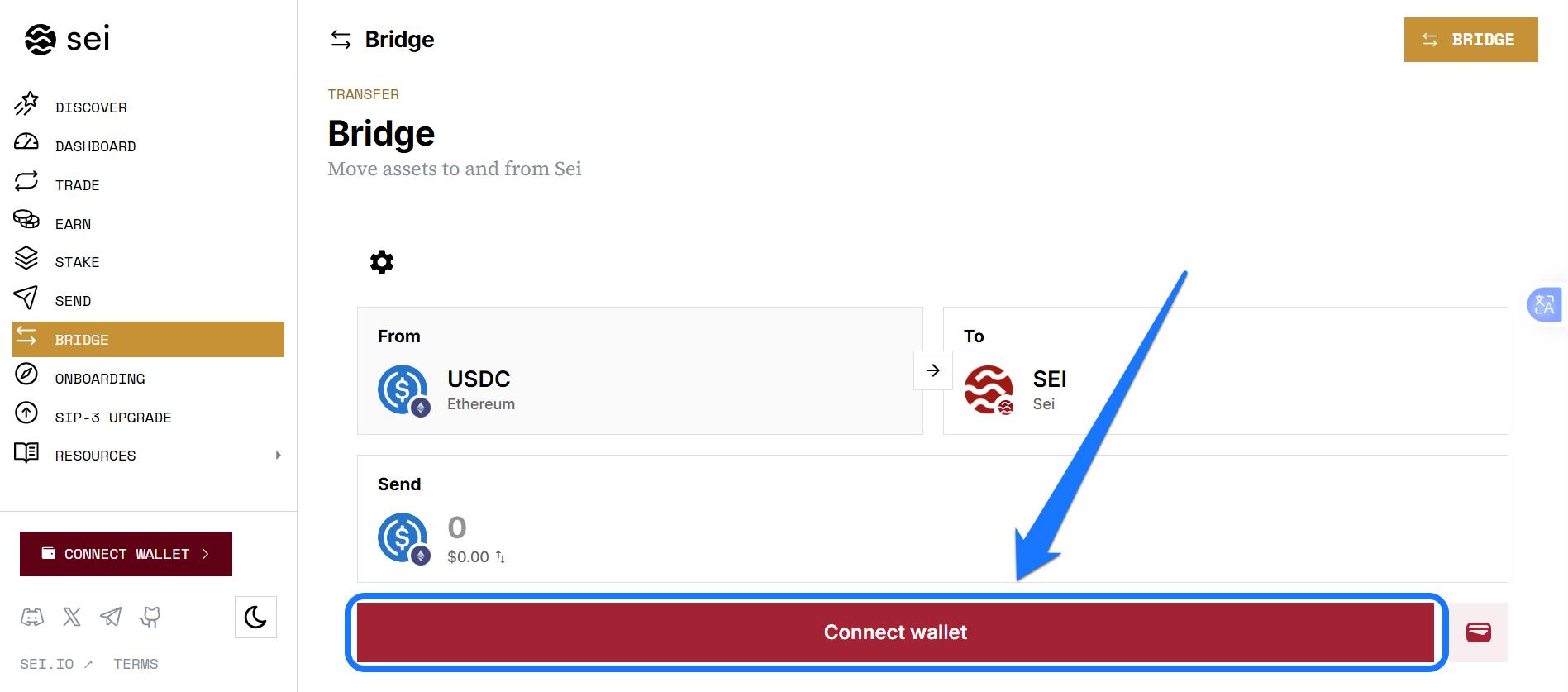
Step 3: Select the source chain and token (i.e., the token you want to transfer into the SEI chain). Also, choose SEI as the destination chain.
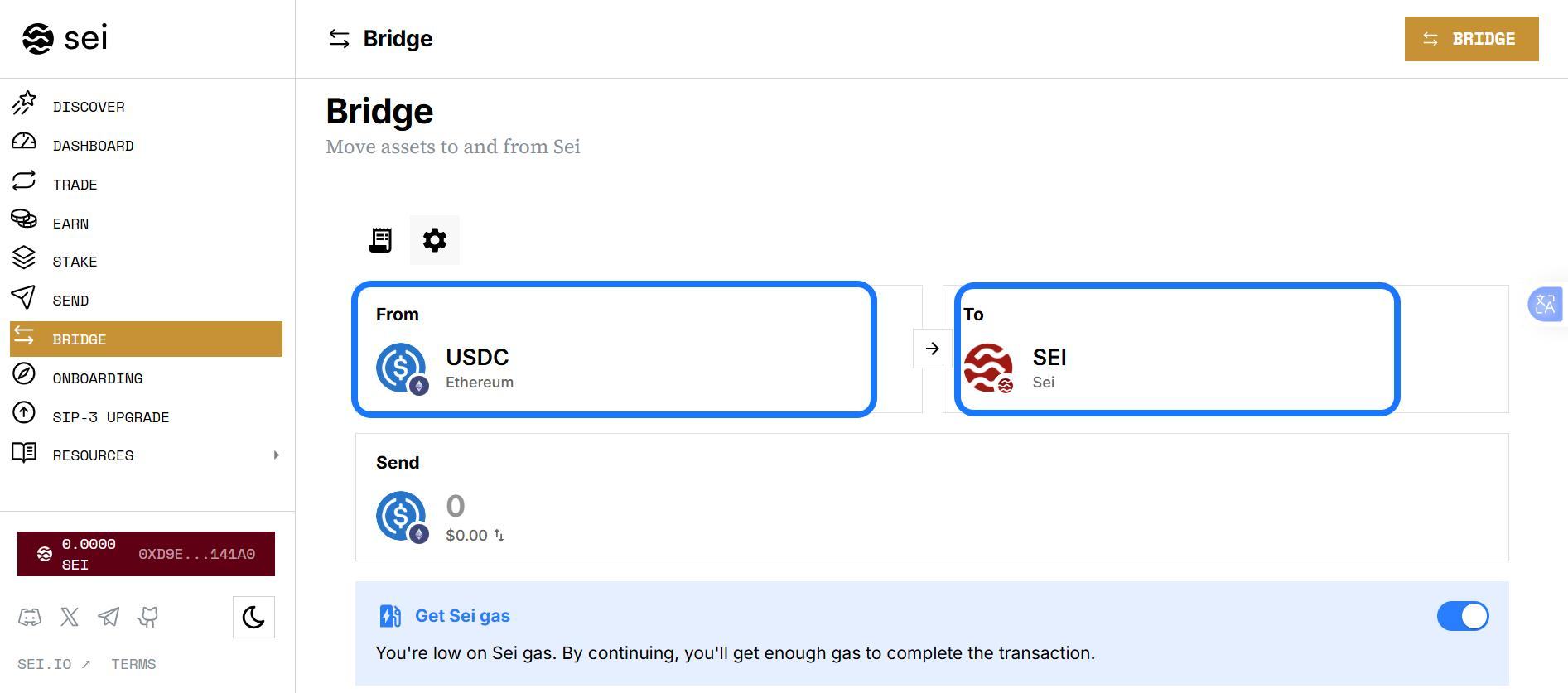
Step 4: Enter the amount of tokens you wish to transfer, then wait for the bridge to find the best routes and display an estimated quote for the tokens you will receive.
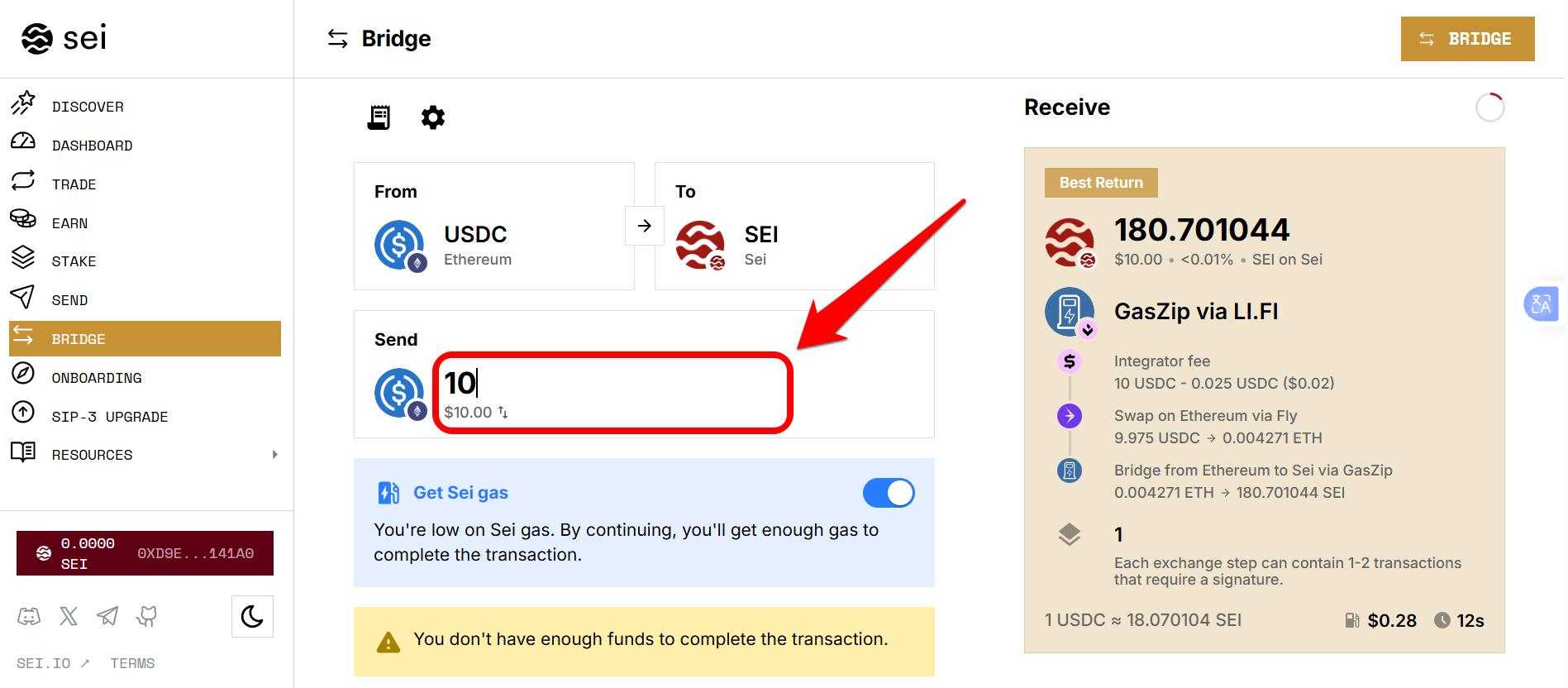
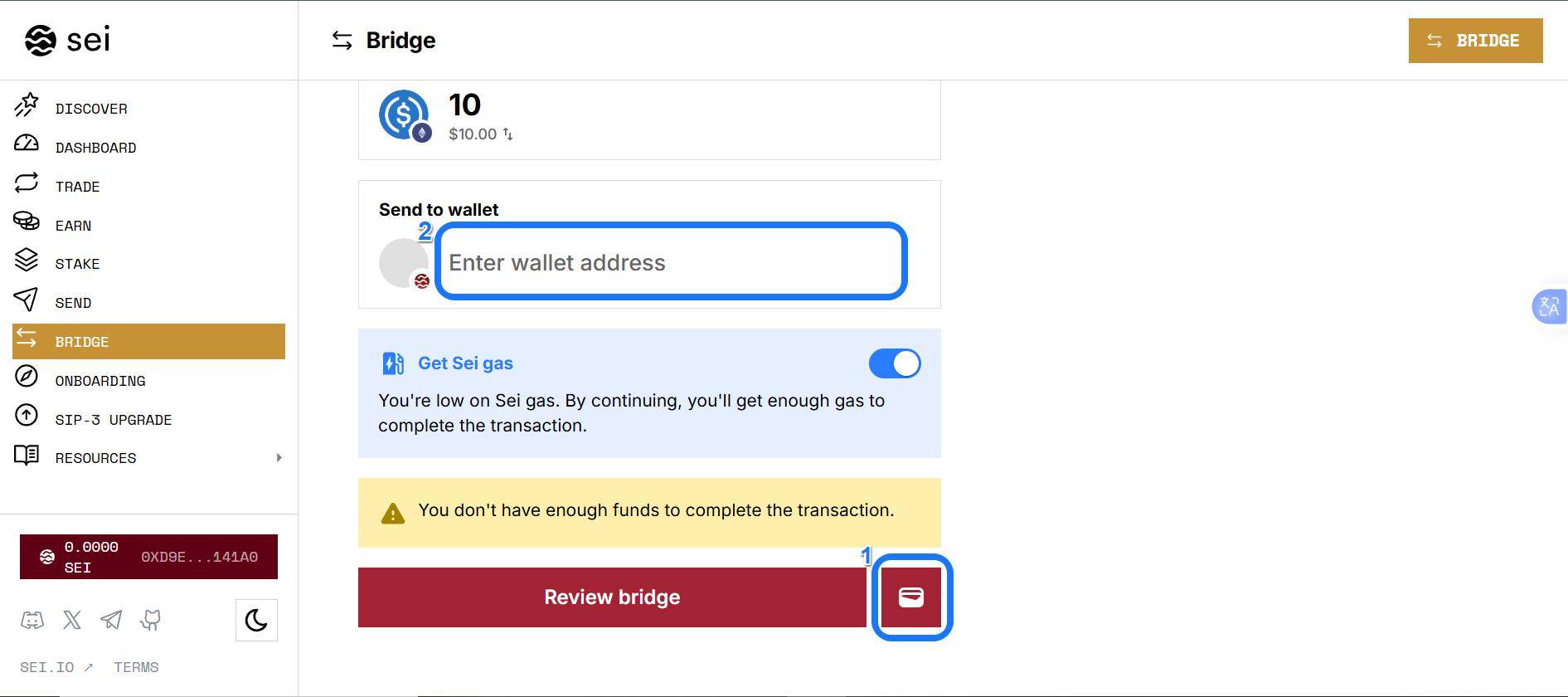
Step 5: Click the wallet icon, then enter the wallet address to send to a different SEI destination.
Step 6: Select your preferred bridge route.
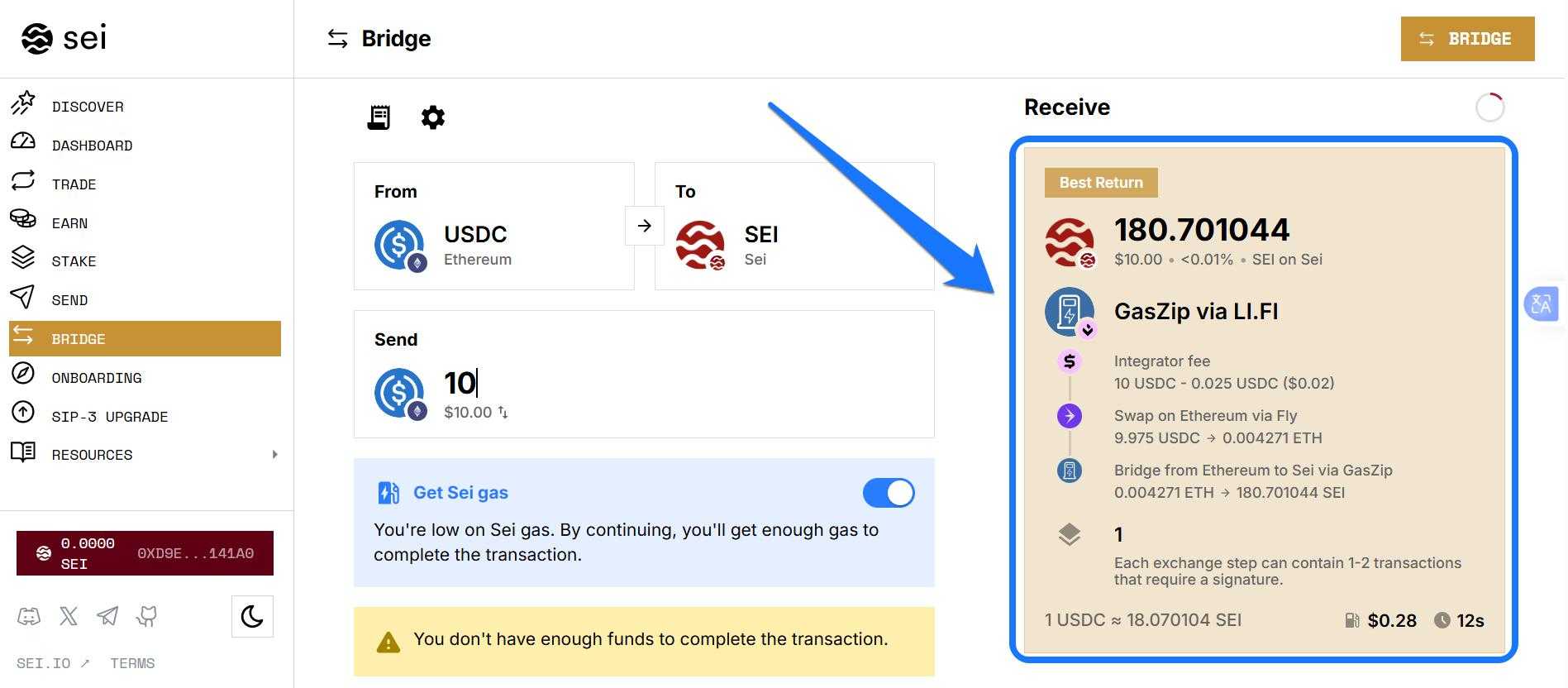
Step 7: Click the bridge, then sign the transaction in your source wallet to confirm.
Method 2: Using a DEX Aggregator (Symbiosis Finance)
Symbiosis Finance is a decentralized, cross-chain DEX that enables token swaps across 30+ EVM and non-EVM networks, including SEI. The app aggregates liquidity from DEXs like Uniswap to provide the best exchange routes for cross-chain transfers. Symbiosis Finance focuses on routing liquidity through Automated Market Makers (AMMs) that hold concentrated pools of stablecoin. When you start a swap, your token is first traded for a stablecoin in its home chain before being converted into the SEI token you desire. Here’s how to use Symbiosis Finance to bridge assets into SEI:
Step 1: Navigate the Symbiosis Finance SEI V2 bridge.
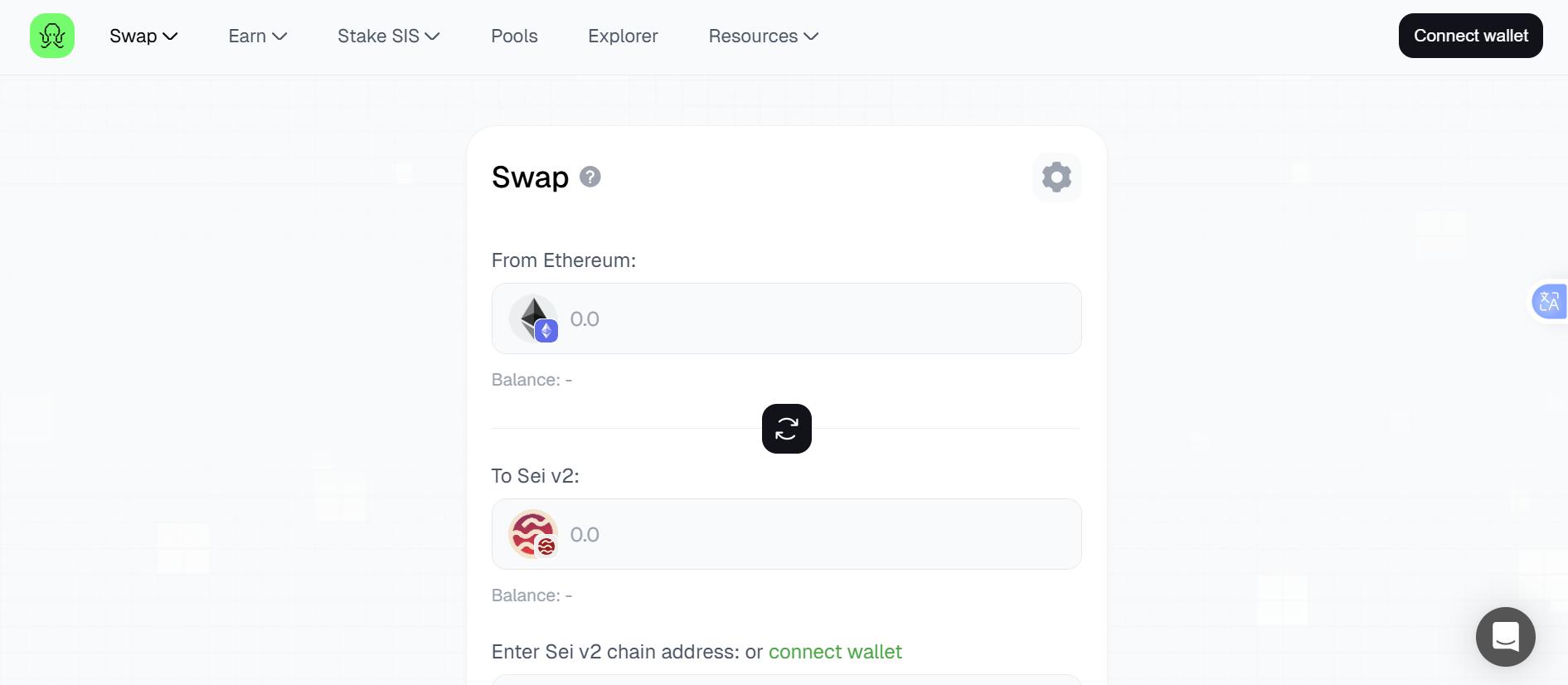
Step 2: Connect your source wallet containing tokens you wish to bridge into SEI.
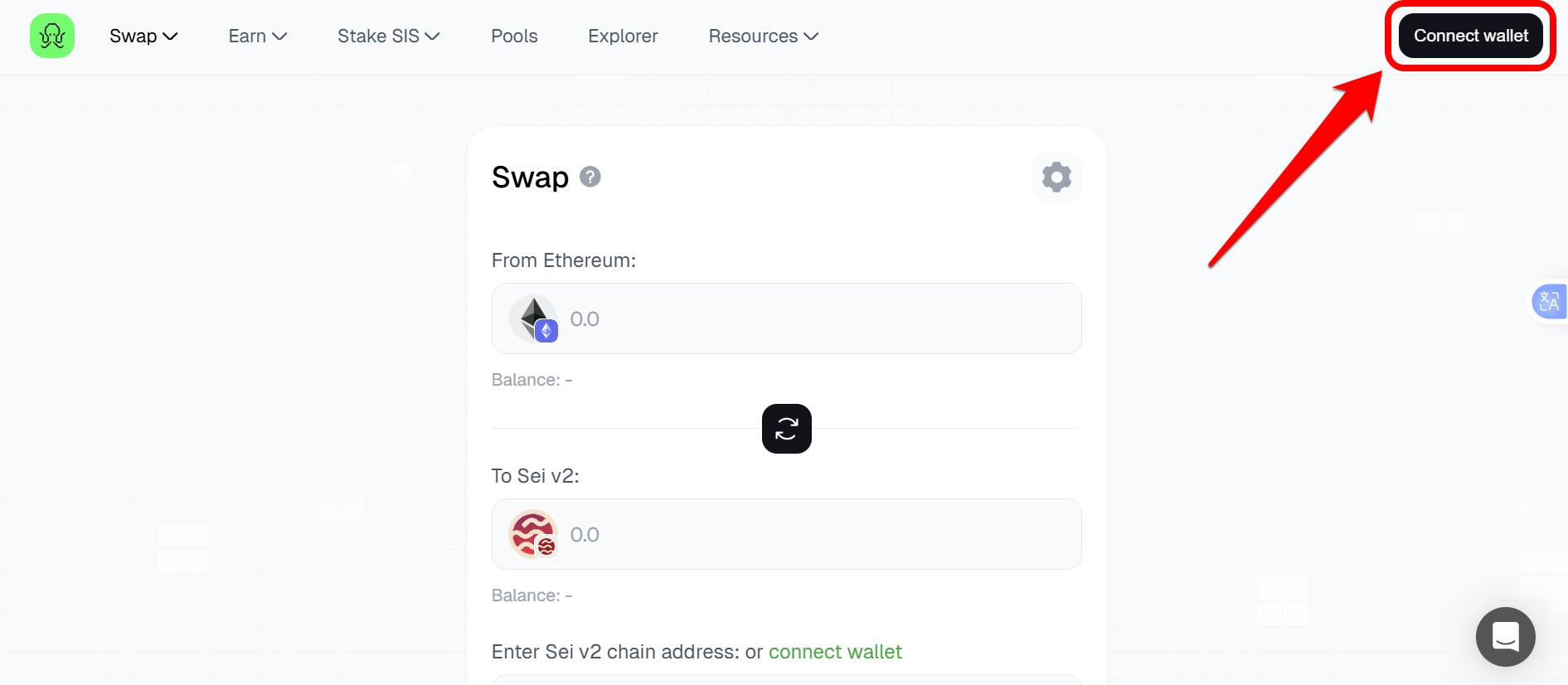
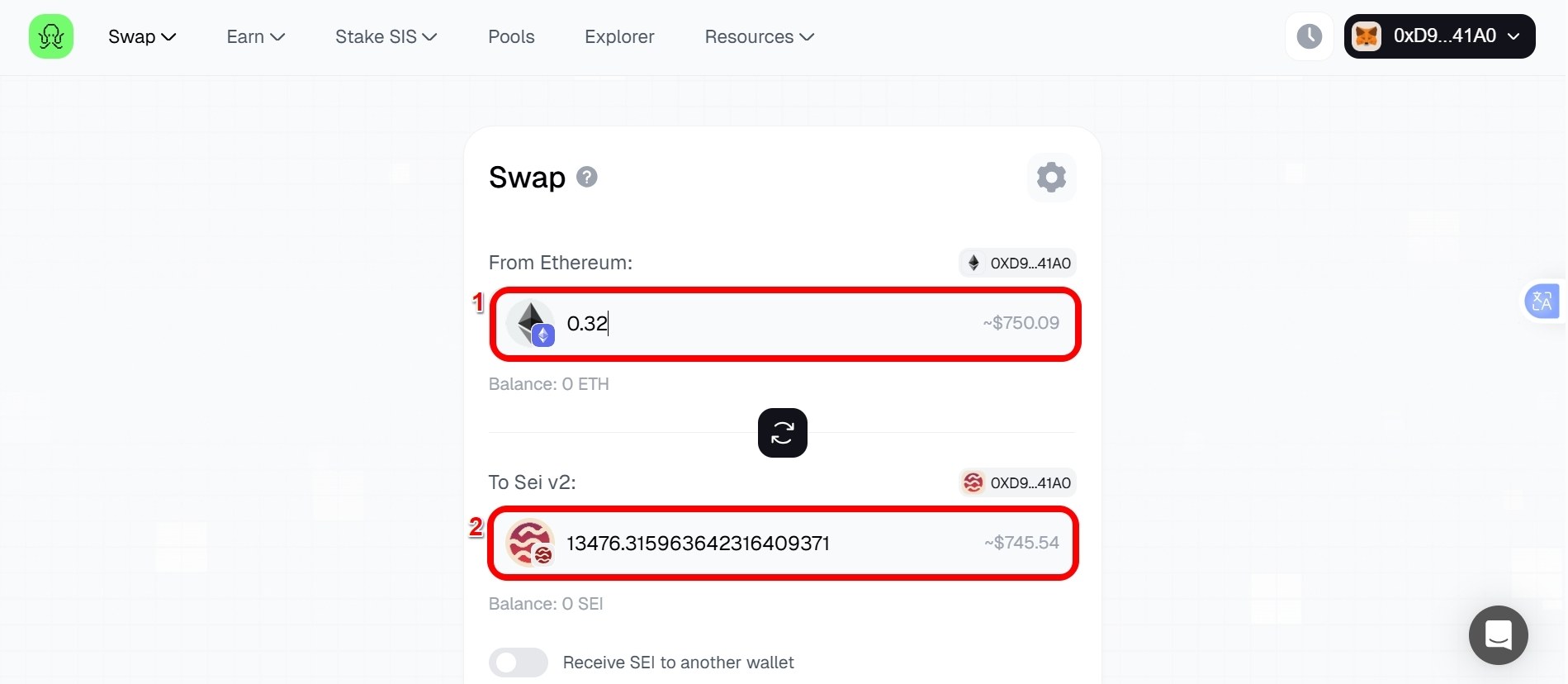
Step 3: Select the token you wish to bridge and enter the amount in the From field. Also, ensure the To field is set to SEI.
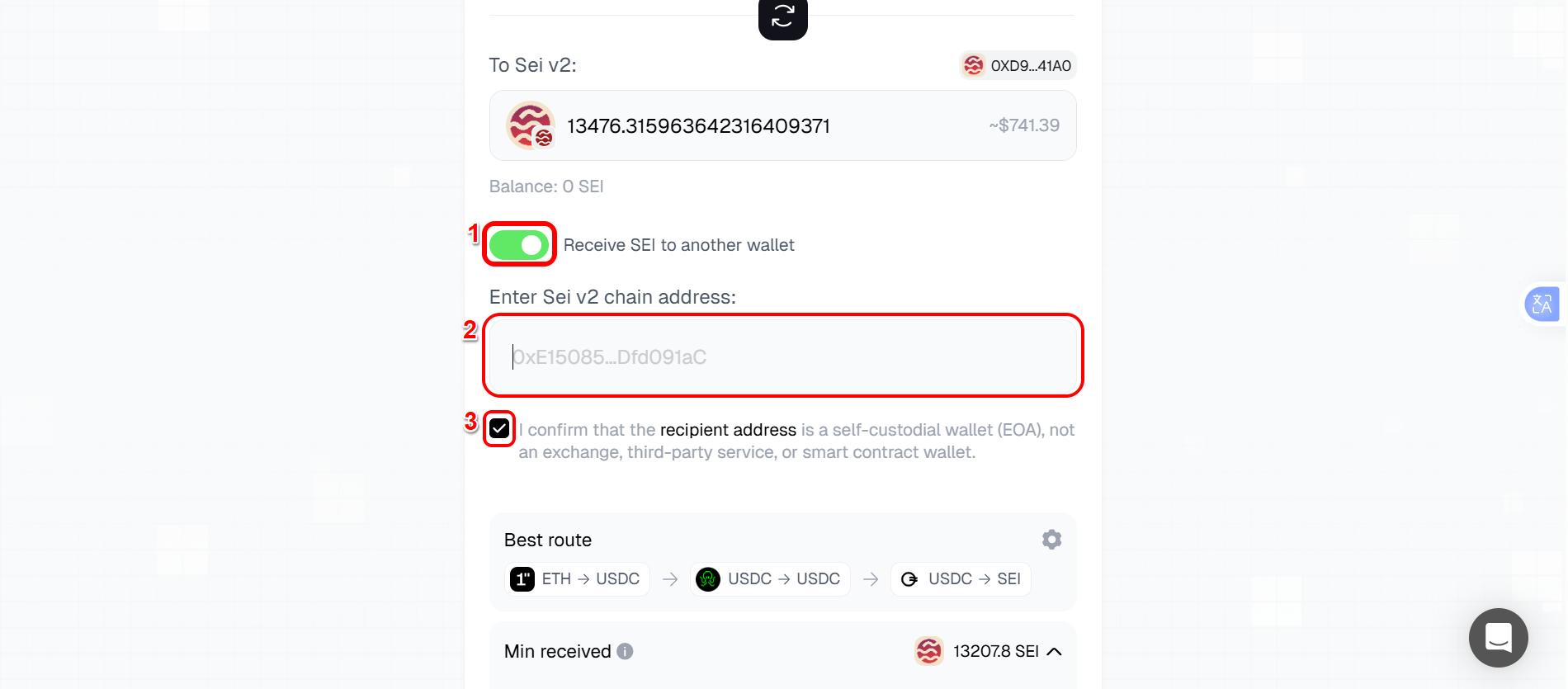
Step 4: Toggle on Receive SEI to another wallet to send assets to a different wallet, enter the SEI address in the provided field, then check the disclaimer box.
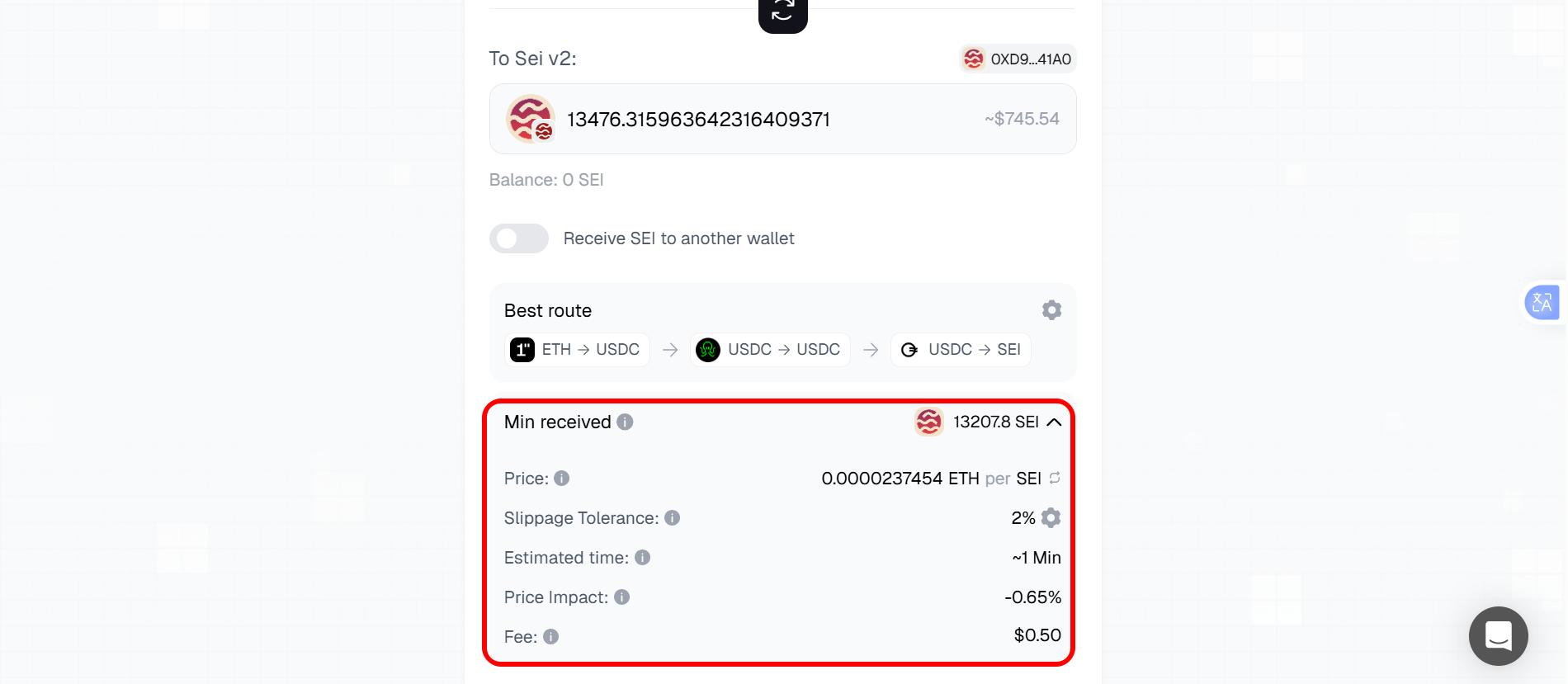
Step 5: Review transaction details, including fees and route info for the token transfer.
Step 6: Confirm the transaction to begin the bridging process.
Method 3. Using a Bridge Aggregator (RocketX Exchange)
RocketX Exchange is a multi-chain bridge aggregator that supports 170+ networks and over 20,000 tokens. A standout feature of this bridge is its selection of the best transfer routes based on cost, speed, and liquidity availability, which can be beneficial for users moving large amounts of capital. It also lets you choose your preferred route, ensuring you control the bridging process from start to finish. Check out the steps below to swap your assets for SEI tokens using RocketX Exchange:
Step 1: Open the RocketX Exchange bridge aggregator.
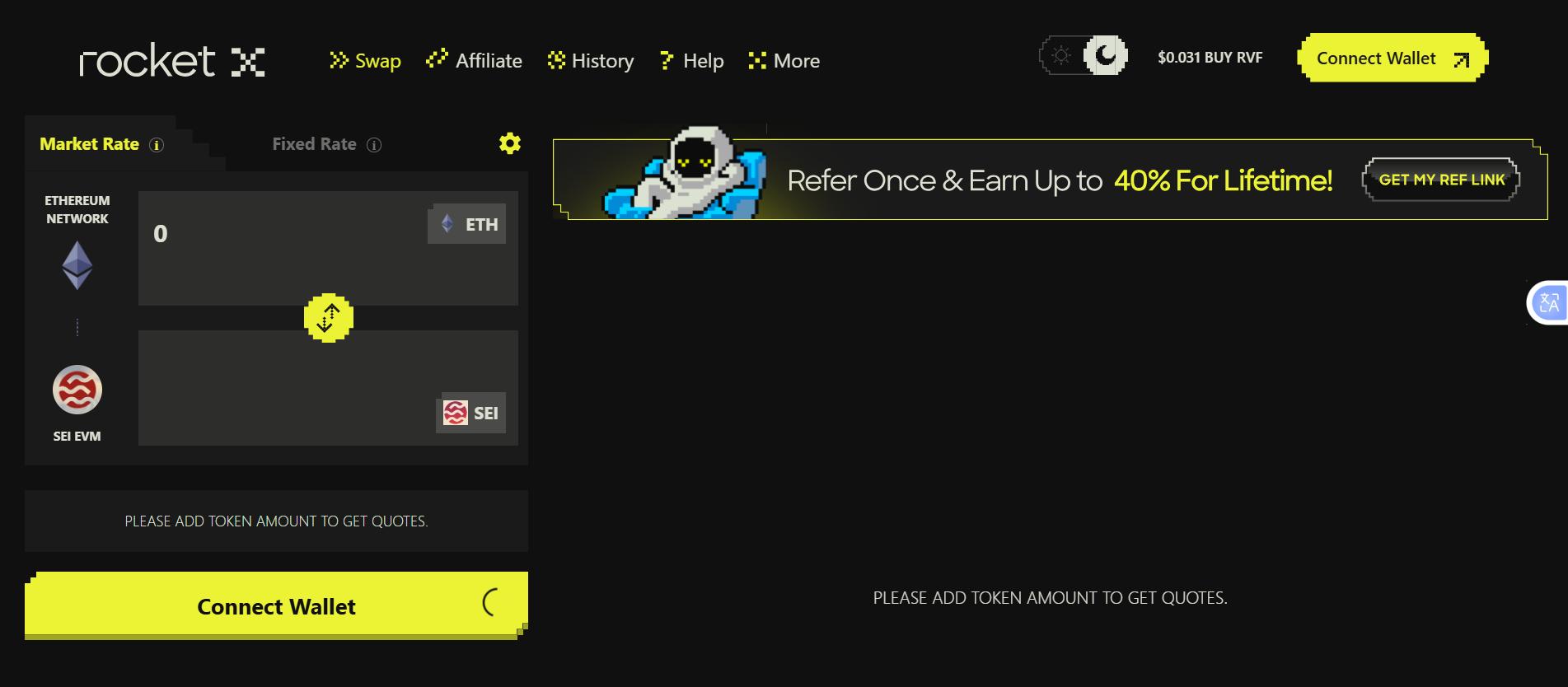
Step 2: Connect your source wallet (e.g., Phantom for Solana) and your destination SEI wallet (e.g., Compass or Keplr).
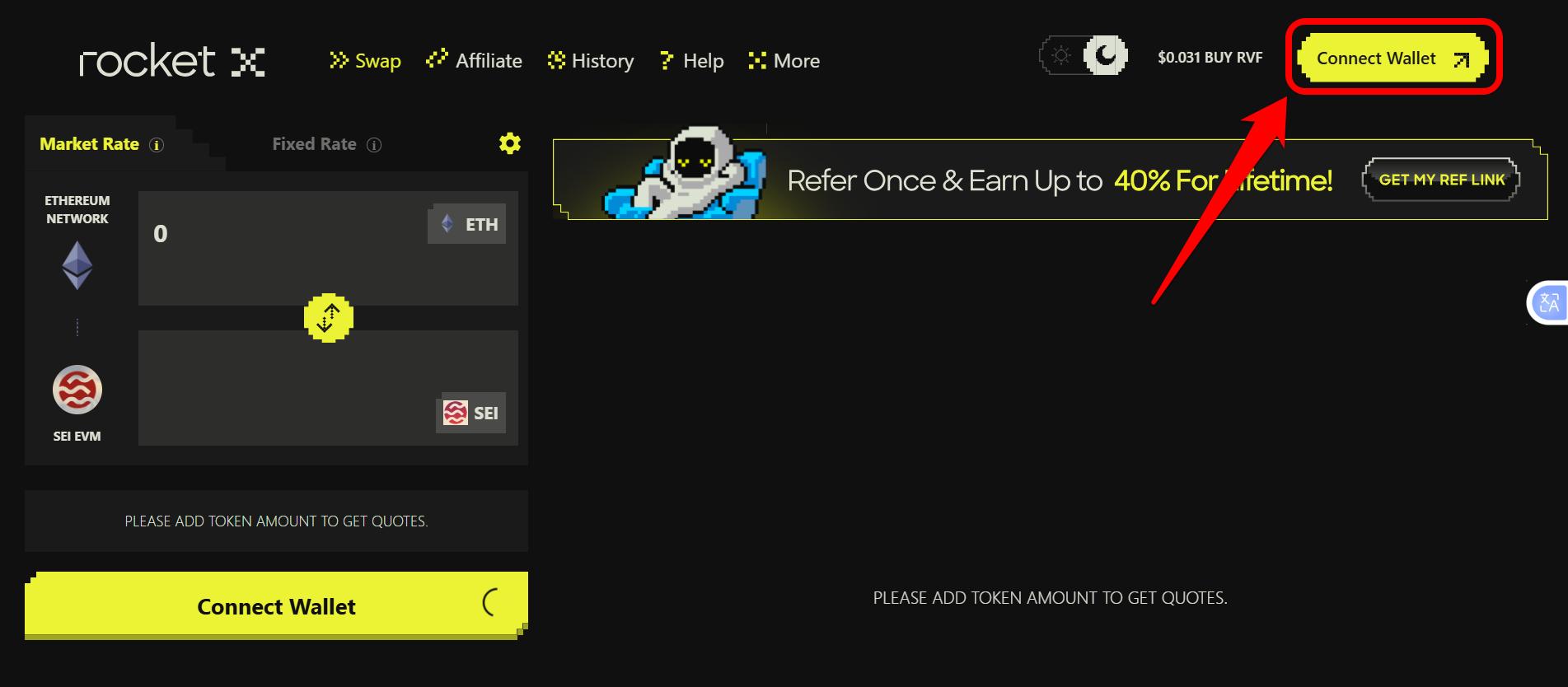
Step 3: Select your source chain and token, then choose SEI as the destination network.
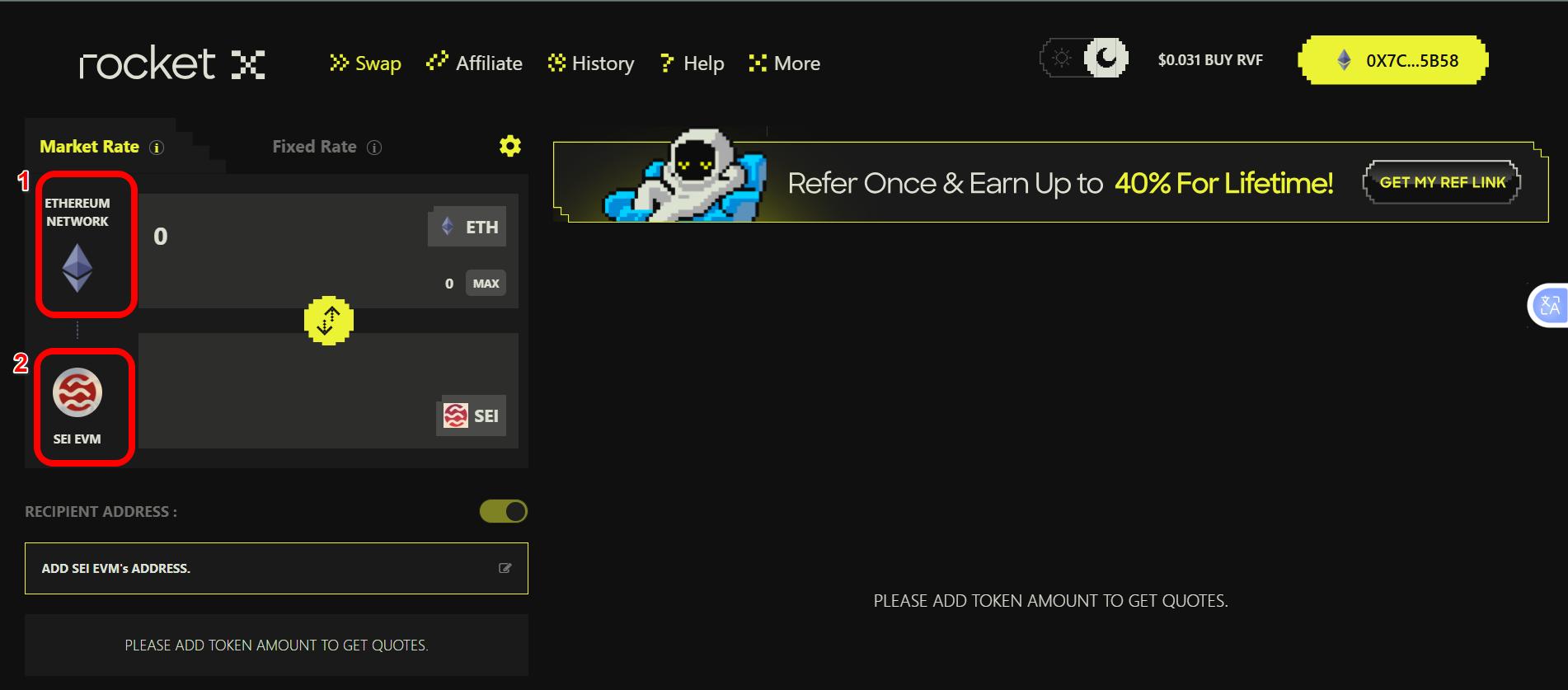
Step 4: Enter the amount, then select your preferred transfer route from the displayed list.
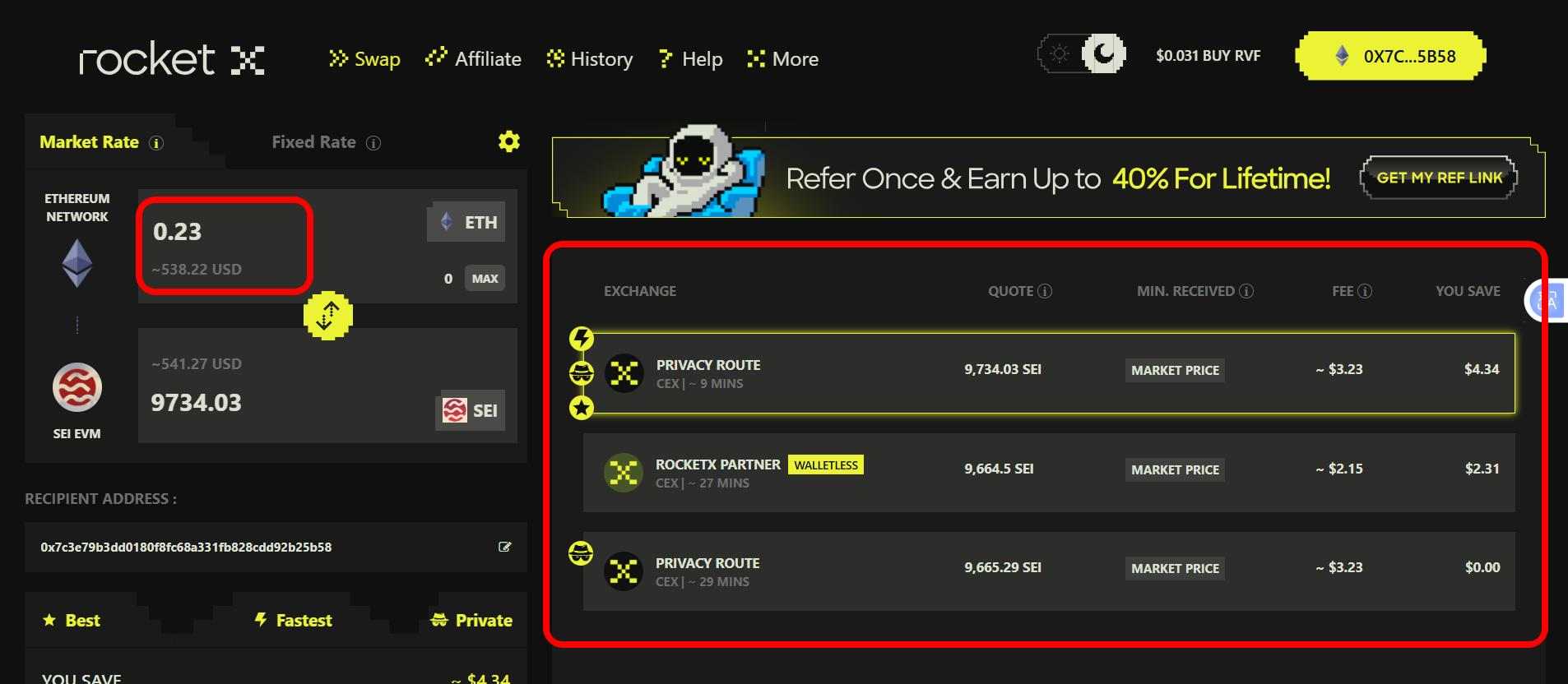
Step 5: Enter your SEI recipient address in the space provided.
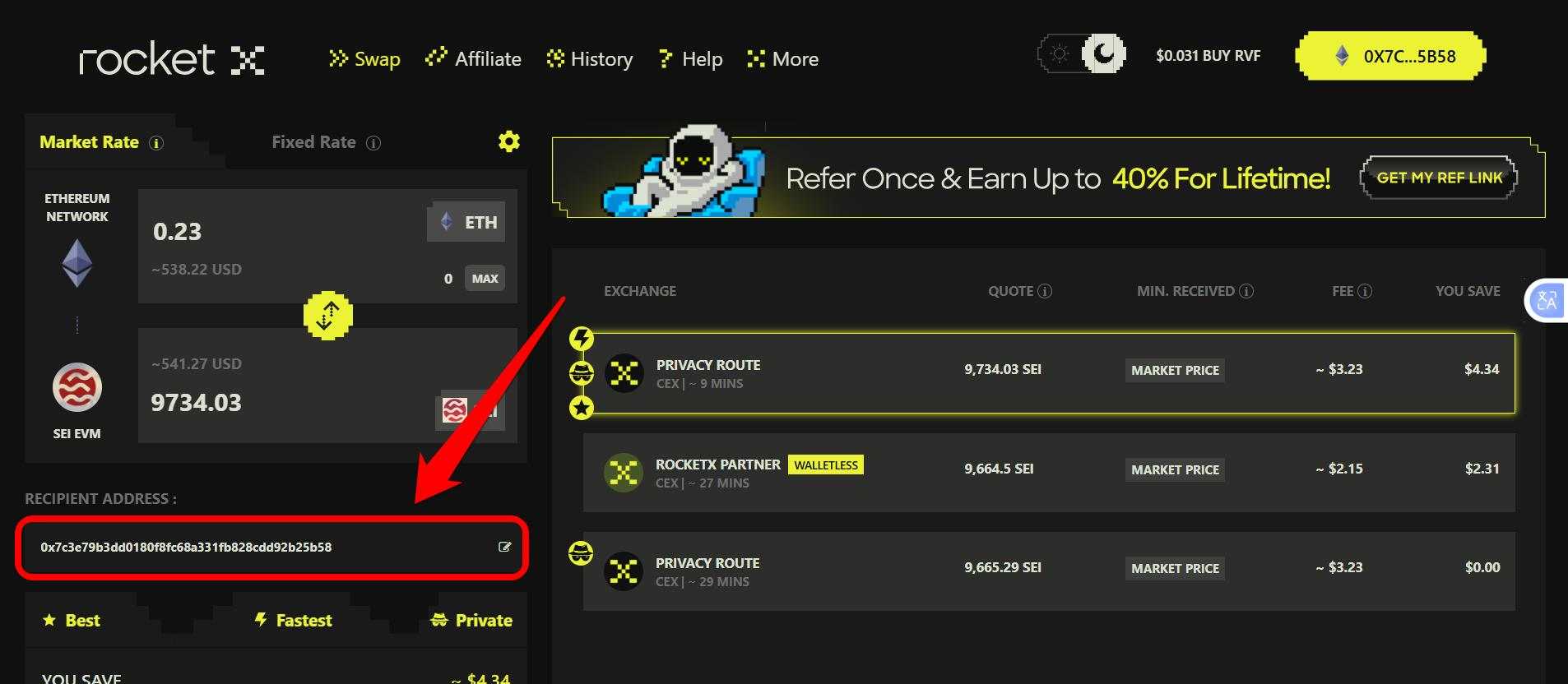
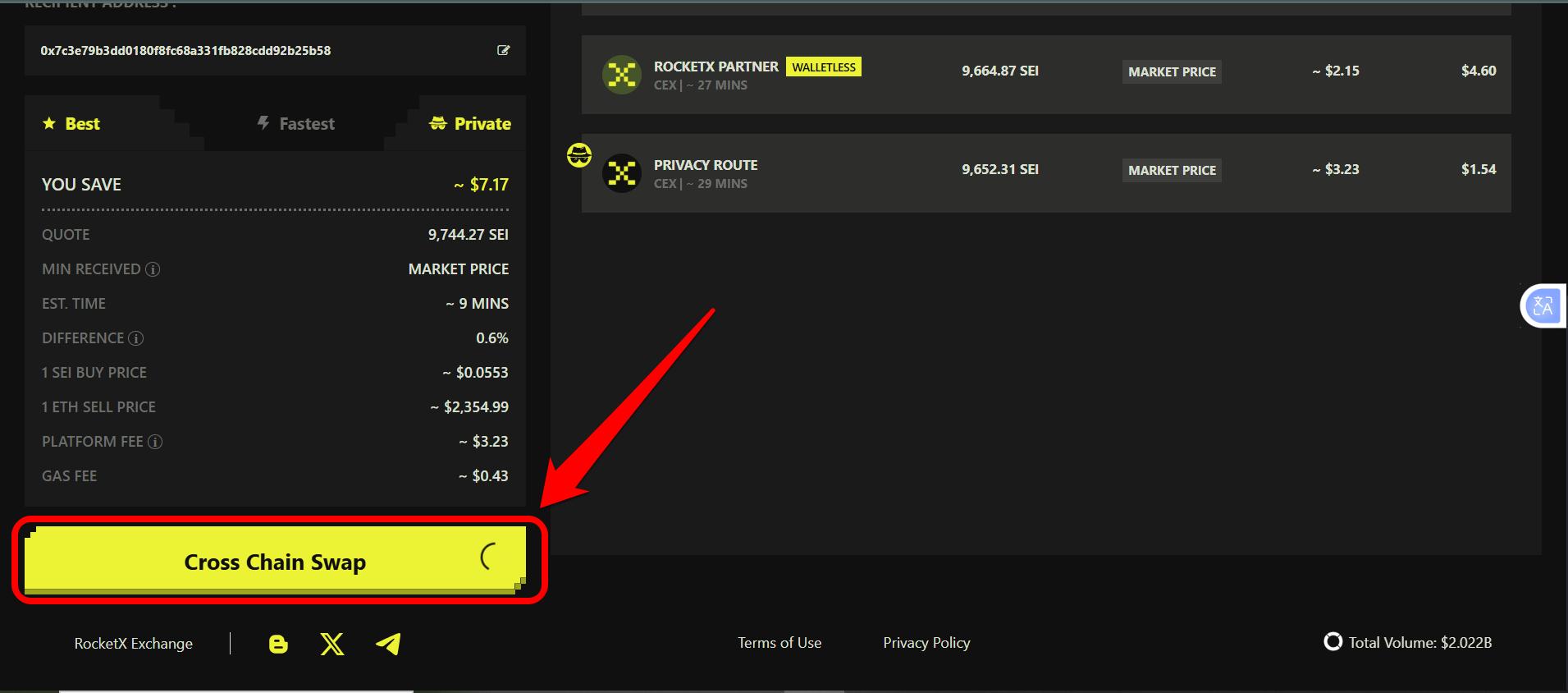
Step 6: Review transaction details and click Cross-chain swap to bridge.
SEI Bridging Fees
The cost of bridging tokens into SEI largely depends on the source chain and the route used. For instance, Ethereum-to-SEI transfers can incur a gas fee of up to $20, while Solana-to-SEI transfers remain at a low $0.01-$0.04 fee range. Cross-chain bridges also often charge a small processing fee, which may reach 0.05% of the transaction amount. However, for Cosmos-native transfers, the IBC offers the cheapest route (often <$0.1).
Bottom Line
With features like parallelized execution and built-in order matching, it is not surprising to see crypto traders move to the SEI network to access them. Since the fastest way to join the trend is through bridging, select one of the methods highlighted in this post based on your source network and budget. However, a successful bridge starts with a ready destination, so ensure you have a Sei-compatible wallet set up to receive your assets before moving them. If you haven’t done this yet, you can check out our detailed guide on how to get started with Keplr Wallet to manage your SEI tokens and begin trading.
FAQs
1. How long does it take to bridge assets to SEI?
Typically, SEI Bridging transactions take 2 – 20 minutes to complete, depending on confirmations, selected route, and network speed at the time you initiate the transaction.
2. Is $SEI an ERC-20 token?
Yes, $SEI is a digital cryptocurrency on the SEI Network, which is compatible with the Ethereum platform. It utilizes the ERC-20 token standard for smooth integration with wallets and exchanges.
3. What happens if I bridge to the wrong address??
Since SEI uses a dual-address system, your “0x” (EVM) and “SEI1” (Native) addresses are linked to the same private key. If you send funds to your “SEI1” address, you can access them by importing your recovery phrase into a compatible wallet like Keplr or linking it via the SEI App.