

- •The Sky Savings Rate lets users earn on idle USDS while keeping full wallet control
- •Users receive sUSDS, which reflects their deposit and accumulates value over time
- •There is no lock-up, no minimum deposit, and withdrawals stay available anytime
Earning yield on stablecoins has become one of the more practical use cases in DeFi, especially for users who want to put idle funds to work without taking direct market risk. Instead of chasing short-term token moves, many now prefer structured savings products that are easier to understand and manage. One example is the Sky Savings Rate, where users can supply USDS and accumulate more over time while keeping control of their assets. This article explains how the system works, what sUSDS does, how rewards are funded, and what costs or risks you should keep in mind before using it.
What Is the Sky Savings Rate?
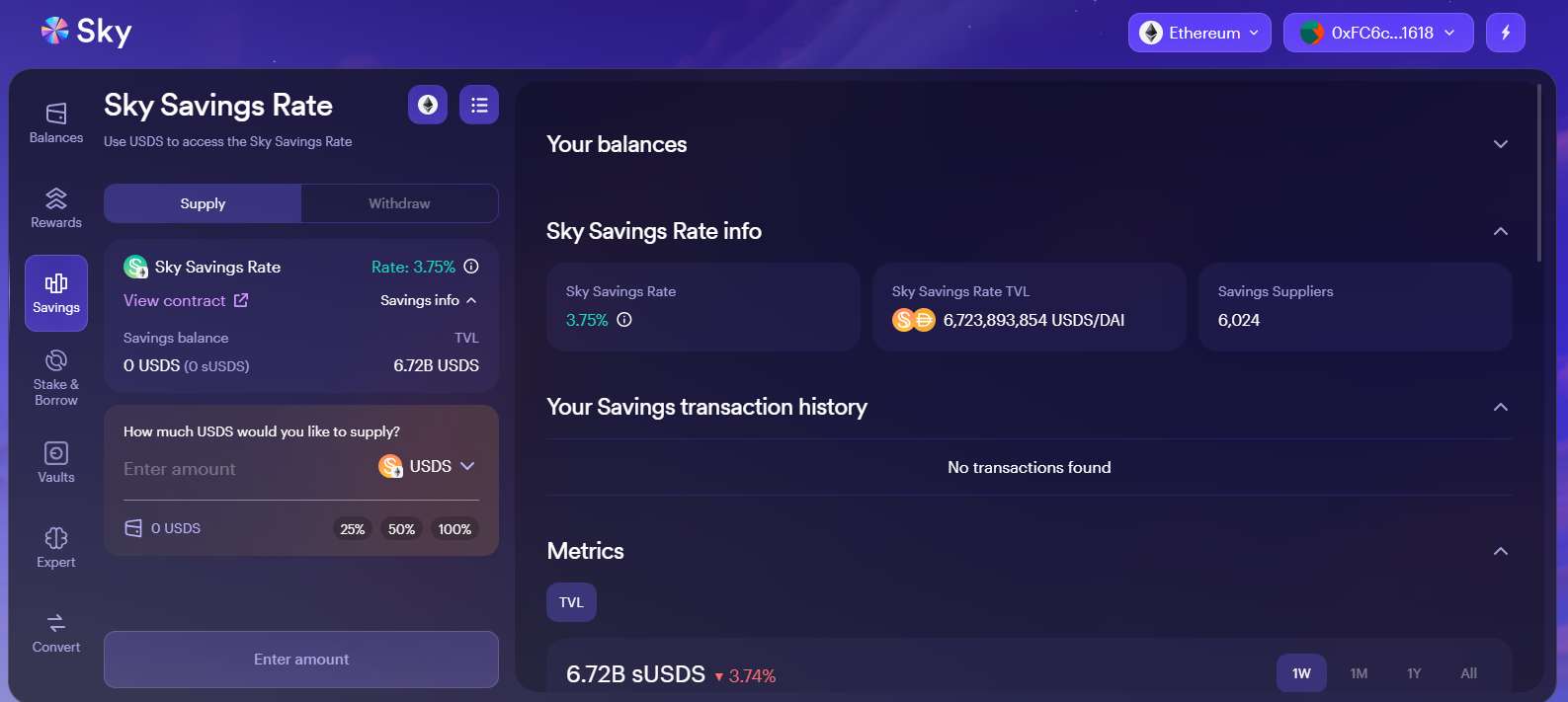
The Sky Savings Rate is a yield mechanism built into Sky Protocol (SKY), formerly MakerDAO. It lets eligible users supply USDS to a smart contract and earn more USDS over time. The current rate is 3.75%, with more than 6.72 billion USDS and DAI deposited in the module and over 6,000 users already participating. That scale gives useful context because it shows this is an active product, not just a feature sitting unused.
Unlike many Decentralized Finance products that depend mostly on price cycles, Sky also gives users a way to earn through a built-in savings system. There is no lock-up period and no minimum deposit. You can enter with a small amount or a large balance.
More importantly, the system is non-custodial. That means you keep control through your wallet, and Sky does not take ownership of your assets. When you deposit USDS, you are not handing it over to a company in the traditional sense. Instead, you are interacting with a decentralized savings module that tracks your position on-chain.
How Does the Sky Savings Rate Work?
When you supply USDS, you receive sUSDS in return. This is the savings token that represents your position in the Sky Savings Rate module.
Think of sUSDS as a live receipt. It shows how much of the pool belongs to you. Over time, the value behind your sUSDS gradually increases because the protocol adds more USDS to the savings pool every few seconds based on the current rate.
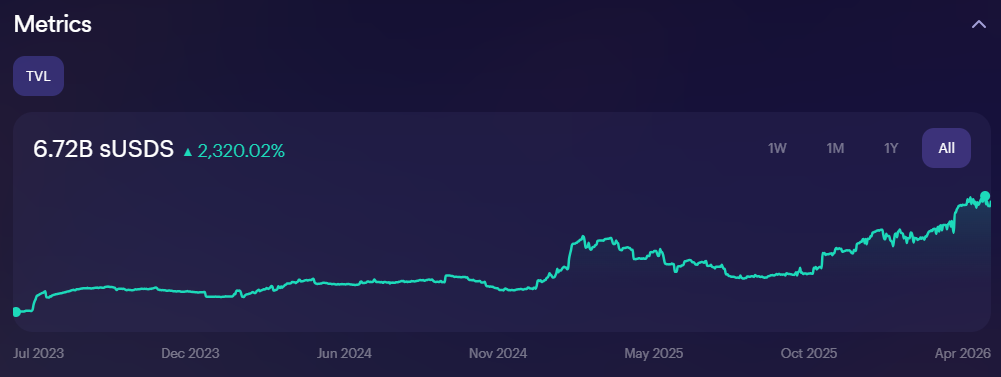
This matters because your balance does not need to be manually claimed or harvested. The yield is built into the system. If you decide to redeem later, you can swap your sUSDS back into USDS and receive your original deposit plus whatever has accumulated during that time.
There are no platform fees charged by Sky for using this feature. The only cost you pay is blockchain gas when supplying or withdrawing.
What Is sUSDS?
sUSDS is the token you receive after depositing USDS into the savings module. It acts as proof of your share in the pool and tracks how much value has built up over time.
You can hold sUSDS in your wallet just like any other token. In some cases, it can also be used on supported third-party platforms or traded through integrations such as decentralized exchanges.
That said, using sUSDS outside the Sky system adds more moving parts. If you use external protocols, you take on the added risks tied to those services. If you are already familiar with SKY staking, the savings module is easier to follow because it works through a similar on-chain wallet flow. If you are new to on-chain tools, having a proper Trust Wallet setup first makes the process easier and safer.