



- •Sky’s recent token buybacks and lower emissions have reduced liquid supply, which can support price during stronger market phases.
- •USDS adoption and the Sky Agent Network now matter more for SKY than older MakerDAO-era narratives.
- •Long-term upside depends on whether Sky can expand institutional credit while maintaining capital protection.
Sky is no longer being valued like a legacy DeFi name that simply survived a few cycles. The protocol has changed its structure, shifted incentives, and started tying token value more directly to cash flow and supply control. That matters because this SKY price prediction is less about hype now, and more about whether protocol revenue, USDS growth, and tighter token supply can keep reinforcing each other over time.
Historical Pattern: Volatility, Cycles, and Survival
Sky, previously MakerDAO, has already lived through multiple market resets. It survived the DeFi summer rush, the 2022 drawdown, and the long period where investors started questioning whether old lending protocols still had room to grow. That survival matters, but history alone does not support price. What matters more is that Sky has changed how it works.
Earlier cycles were mostly driven by stablecoin issuance and governance value that felt indirect. Investors could see protocol relevance, but the link between system activity and token demand often felt weak. That has shifted in the past year. Sky now looks more like a digital reserve system that is trying to manage capital, issue yield-bearing dollars, and recycle revenue back into its own ecosystem.
If you follow large-cap Decentralized Finance trends, Sky now sits in a more serious category than many older DeFi projects that never adapted.
Token Symbol
SKY
Current Price
Loading...
Daily Change
Loading...
All-Time High
Loading...
Daily Low
Loading...
Daily High
Loading...
24h Volume
Loading...
Market Cap
Loading...
FDV
Loading...
Total Supply
Loading...
Max Supply
Loading...
What’s Really Moving SKY: The Fundamental Drivers
Sky’s recent price behavior is being shaped by protocol mechanics, stablecoin expansion, and supply reduction. Those are stronger drivers than short-term market chatter.
Before looking at scenarios, it helps to separate what is helping the token from what can still slow it down.
Bullish Catalysts
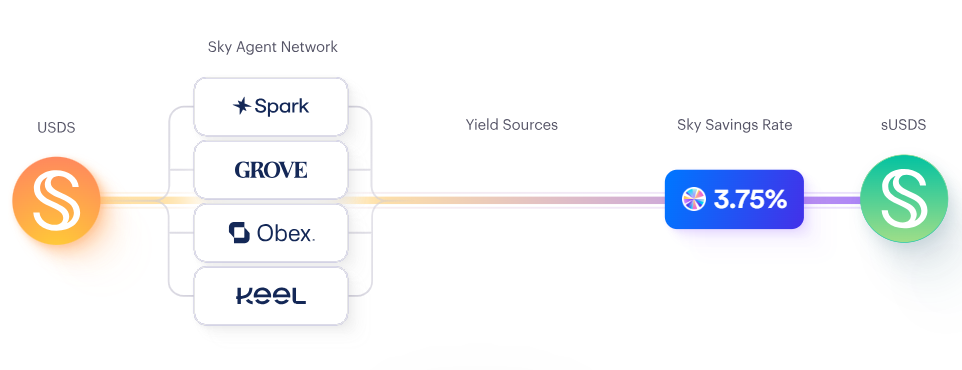
Sky’s fee generation has improved in a meaningful way. Annualized fees have moved from the low hundreds of thousands in prior periods to consistently above $1 million, with clear acceleration through late 2024 and into 2026. That tells you the system is earning more from real usage, not just relying on market optimism.
The protocol’s TVL remains above $6.35 billion, which keeps it among the more relevant names in on-chain credit. That base matters because revenue needs scale to stay credible.
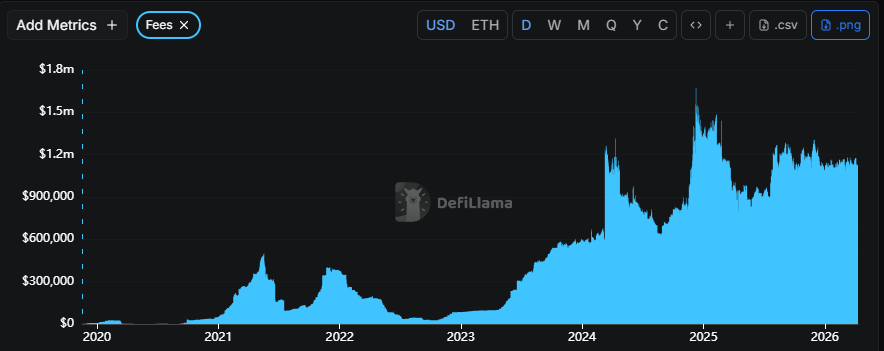
Another key support is the Sky Savings Rate. At 3.75%, with roughly $15.83 billion in AUM and 11.55 billion in stablecoin supply, Sky still controls one of the largest yield-linked dollar systems in DeFi. This gives the protocol room to attract sticky capital even when market sentiment cools.
The tokenomics shift has also changed the supply picture. In March, governance slowed staking emissions, removing roughly 161.8 million SKY from expected issuance over 180 days. Around the same time, Sky’s USDS-funded buyback engine had already used about $114.5 million to repurchase tokens from the open market. The pace has been steady rather than flashy, with roughly 3.6 million SKY being removed daily. Add to that the fact that nearly 67% of supply is staked, and you have a market where tradable float is tighter than many people assume.
That matters because when fresh demand enters a thin liquid market, price can move faster than expected, and often in ways that look delayed until suddenly they are not. Sky is also trying to improve its institutional standing. S&P assigning a B- credit rating was not perfect, but it still marked a first for DeFi. More importantly, the team is already working on better debt packaging and stronger first-loss protections to improve that rating. If this works, Sky could look more credible to treasury desks that have never touched on-chain credit before.
The launch of the Sky Agent Network is another important shift. Instead of depending on one narrow lending route, Sky is now distributing capital through allocators like Maple Finance, Securitize, and Centrifuge. That creates a wider revenue base and gives Sky more ways to support long-term demand. For users planning to interact directly with Sky’s apps, having a secure wallet matters. A proper Trust Wallet setup is useful before moving into staking or savings products.
Bearish Pressures
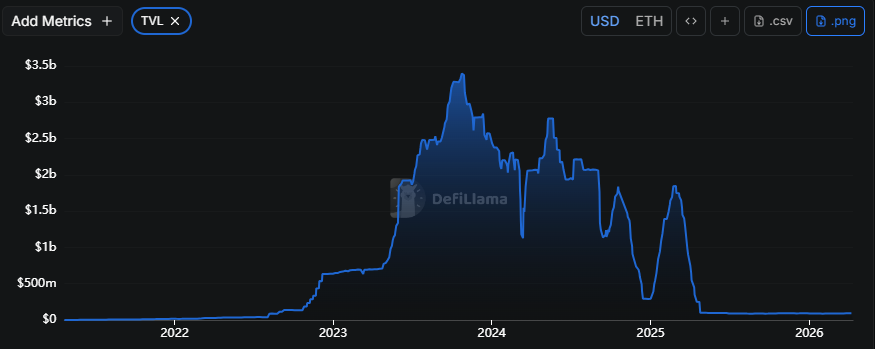
There are still weak spots, and they matter. The clearest one is RWA exposure. Sky’s RWA TVL has dropped sharply from above $3 billion to around $90 million. That is not a small change. It shows that part of the protocol’s institutional growth story is still in transition.
You should also pay attention to execution risk. Sky is trying to do several things at once: expand USDS, protect solvency, improve ratings, and make rewards more sustainable. Each of those moves makes sense on paper. But if rollout slows or results take longer than expected, markets can reprice the token quickly.
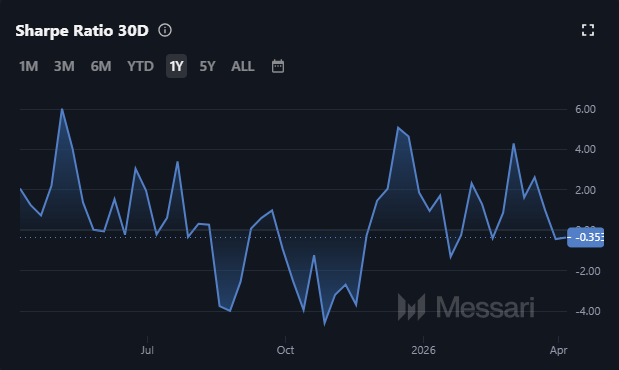
Another point worth watching is recent risk-adjusted performance. Sky’s 30-day Sharpe ratio has slipped to around -0.35, which means recent returns have not been strong enough relative to volatility. That matters more here because Sky is trying to attract the kind of capital that pays close attention to data before making decisions. Institutional allocators usually do not just look at yield or headlines. They look at consistency, drawdowns, and how stable returns feel over time. A weaker Sharpe reading does not break the long-term case, but it does show that confidence still needs to be rebuilt.
There is also a broader DeFi issue. Stablecoin yield markets are more crowded now. Sky still has size, but it no longer operates in a space with limited competition.
Technical Analysis: SKY’s Current Market Setup
Sky’s setup is mixed right now. Supply-side conditions look better than they did last year, but short-term market behavior is still cautious.
Current Price and Market Position
Sky’s position in 2026 reflects a token that has better internal support than before, but still needs confidence from traders.
Volume has improved sharply in recent weeks. Daily activity has moved from quieter levels into the $150 million to $200 million range during recent spikes, before settling closer to $93 million. That is usually a sign that market participants are paying attention again.
Higher participation after buybacks and emissions cuts makes sense. When the market sees supply being reduced while demand holds, price becomes more sensitive to fresh inflows.
Still, this is not a clean momentum breakout yet. You are looking at a token trying to rebuild conviction rather than one already in full trend expansion.

Technical Setup
On the risk-adjusted side, the setup is less comfortable. The 30-day Sharpe ratio has dropped to roughly -0.35. For you as an investor, that matters because it means recent returns have not been compensating well for volatility. In plain terms, Sky has been moving, but not in a way that has rewarded risk cleanly over the last month.
That does not automatically mean downside is next. It simply tells you this is still a market where timing matters. Recent structure suggests accumulation is improving, but traders are still cautious around broader macro signals and Bitcoin’s direction.
Sentiment and Participation Trends
Sentiment has improved because the story around Sky feels clearer now. The old MakerDAO framing was often too technical for many investors. Today, the pitch is simpler. Sky issues a stable dollar, earns from capital deployment, and uses part of that surplus to support token value. That is easier for users to understand, and easier for larger allocators to evaluate.
The Binance move from DAI to USDS also matters. That migration reduced brand fragmentation and made USDS the main product on one of the largest exchanges in crypto. Cleaner product identity helps adoption.
At the same time, this remains a market where confidence can change quickly. If protocol revenue softens or buybacks slow, sentiment may cool faster than many expect.
Price Outlook Based on Current Conditions
Sky’s setup is stronger than it was a year ago, but price still depends on execution.
Short-Term Outlook for 2026
- Bear case:
If buyback momentum slows, stablecoin growth stalls, or broader DeFi risk appetite weakens, SKY could revisit lower support areas. A retrace toward previous consolidation zones would not be surprising in that case.
- Base case:
The most realistic path is steady repricing as revenue stays healthy and USDS demand improves. In this case, SKY likely trades with gradual upside rather than sudden spikes.
- Bull case:
If institutional credit channels scale well, USDS expands faster, and buybacks stay active, SKY can move into a sharper revaluation phase. That would likely come with stronger volume and renewed long-term positioning.
Future Outlook and SKY Price Predictions
Sky’s long-term valuation now depends more on cash flow quality than on narrative alone. That makes this more measurable than many token calls.
| Year | Bear Case | Base Case | Bull Case |
|---|---|---|---|
| 2026 | $0.05 | $0.08 | $0.12 |
| 2027 | $0.06 | $0.11 | $0.16 |
| 2028 | $0.07 | $0.14 | $0.20 |
| 2029 | $0.08 | $0.17 | $0.24 |
| 2030 | $0.10 | $0.20 | $0.30 |
This SKY token forecast assumes that protocol revenue remains linked to token support and that USDS adoption keeps expanding.
A stronger SKY crypto price outlook also depends on whether institutional allocators treat Sky as infrastructure, not just another yield protocol.
Bottom Line
Sky’s position has improved compared with last year, mainly because protocol revenue is stronger, token emissions are lower, and buybacks have tightened supply. At the same time, the long-term outlook still depends on whether USDS adoption expands, capital protection measures work as intended, and revenue stays durable. The setup is more constructive than before, but execution risk and competition in DeFi remain important variables. If you want to buy SKY, it is worth paying closer attention to protocol revenue, USDS growth, and capital protection than to short-term price moves alone.
FAQs
1. What is Sky Protocol and how does it work?
Sky Protocol (SKY) is the governance token of Sky Protocol, formerly MakerDAO. The protocol issues USDS, a decentralized stablecoin, and earns revenue through lending, capital deployment, and on-chain financial products.
2. What factors are driving SKY price in 2026?
The main drivers include token buybacks, lower emissions, USDS adoption, protocol fee growth, and broader DeFi market conditions. Institutional developments like credit rating improvements also matter.
3. How do buybacks affect SKY price?
Buybacks reduce the circulating supply available in the market. When demand stays steady or rises, lower supply can support price more effectively over time.
4. Is SKY a good long-term investment?
SKY’s long-term outlook depends on protocol execution, stablecoin growth, revenue consistency, and how well Sky manages risk. It remains sensitive to broader crypto market cycles.
5. Why is USDS important for SKY?
USDS is central to Sky’s business model. More USDS usage can increase protocol revenue, improve capital efficiency, and support the ecosystem’s long-term sustainability.
6. What is the Sky Agent Network?
The Sky Agent Network is Sky’s framework for allocating capital through independent partners. It helps the protocol diversify revenue sources across lending, tokenized assets, and structured credit.