


- •Prediction market crypto lets you trade real-world events as probabilities, where prices reflect live market sentiment instead of fixed odds.
- •These markets run on wallets, smart contracts, and oracles, removing centralized control and enabling transparent, real-time execution.
- •They act as real-time signals for global events, but regulation, ethics, and market fairness are still evolving.
During major events like elections or economic shifts, you’ll notice that people are no longer just reacting to news, they are actively trading on what they think will happen next. Platforms like Polymarket gained attention for reflecting outcomes in real time, sometimes even before traditional sources caught up, and that shift has pushed prediction market crypto into the spotlight as a new way to interpret events through capital-backed decisions.
What Are Prediction Markets
Prediction markets are structured platforms where users trade on the outcome of future events, but in the crypto context, this process runs on blockchain infrastructure, meaning trades are executed through wallets, settled by smart contracts, and verified using on-chain systems rather than centralized intermediaries. Instead of simply placing a bet and waiting, you are entering a market where every outcome has a live price that reflects what participants collectively believe will happen.
These systems have existed for centuries in different forms, often tied to political or economic outcomes, but crypto has changed how they operate by making them more accessible, more transparent, and in many cases, open to anyone with a wallet. You are not restricted by location in the same way, and you are not relying on a single platform to control execution or settlement.
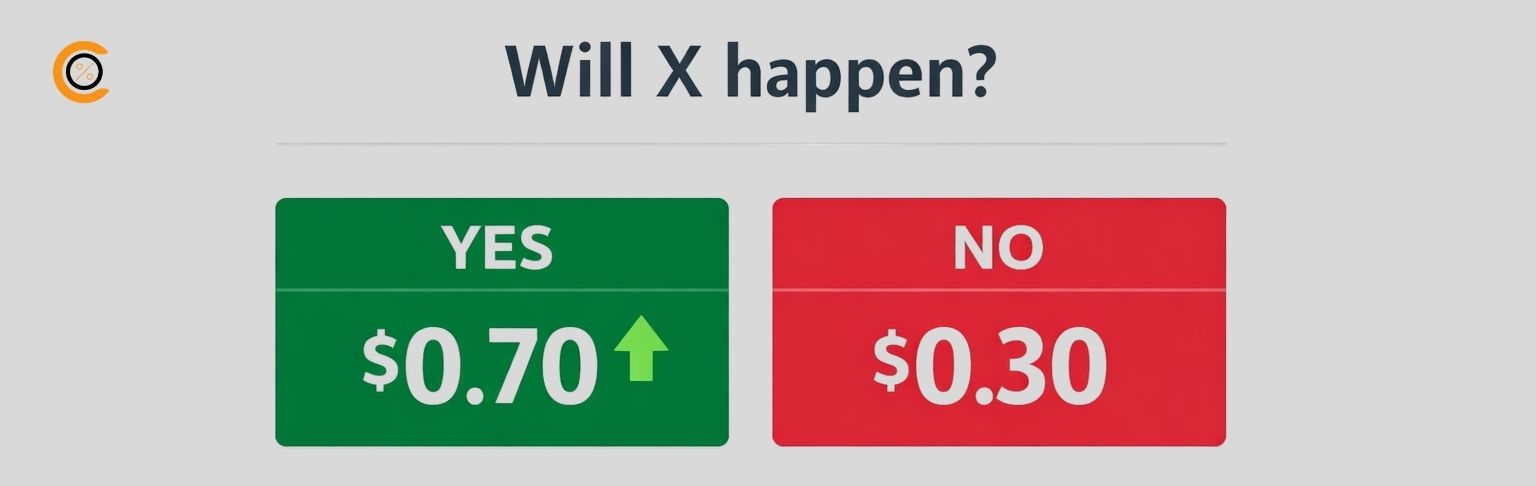
At a basic level, you are choosing an outcome and backing it financially. That outcome could relate to an election result, inflation data, a company decision, or even something broader like a global event. Some markets are binary, meaning yes or no, while others include multiple possible results, but the underlying idea remains consistent across all formats.
What makes this structure more relevant in crypto is that it turns opinions into measurable signals in a decentralized environment, where price updates happen continuously and reflect real-time sentiment, while also allowing you to participate directly using tools like MetaMask or Trust Wallet depending on how you want to access these markets.
How Prediction Markets Work
Once you step into a prediction market, the process starts to feel closer to trading than betting, because what you are really interacting with is a live market that is constantly adjusting as new information enters. You begin by selecting an outcome and buying shares, and each share is priced between $0 and $1, which directly reflects how likely that outcome is believed to happen at that moment.
If a share is priced at $0.60, the market is effectively assigning a 60 percent probability to that outcome, and that number is not fixed, it changes as traders react to news, data, and sentiment shifts. For example, if new information increases confidence in a specific outcome, demand rises, and the price moves up, while the opposite happens if confidence drops.
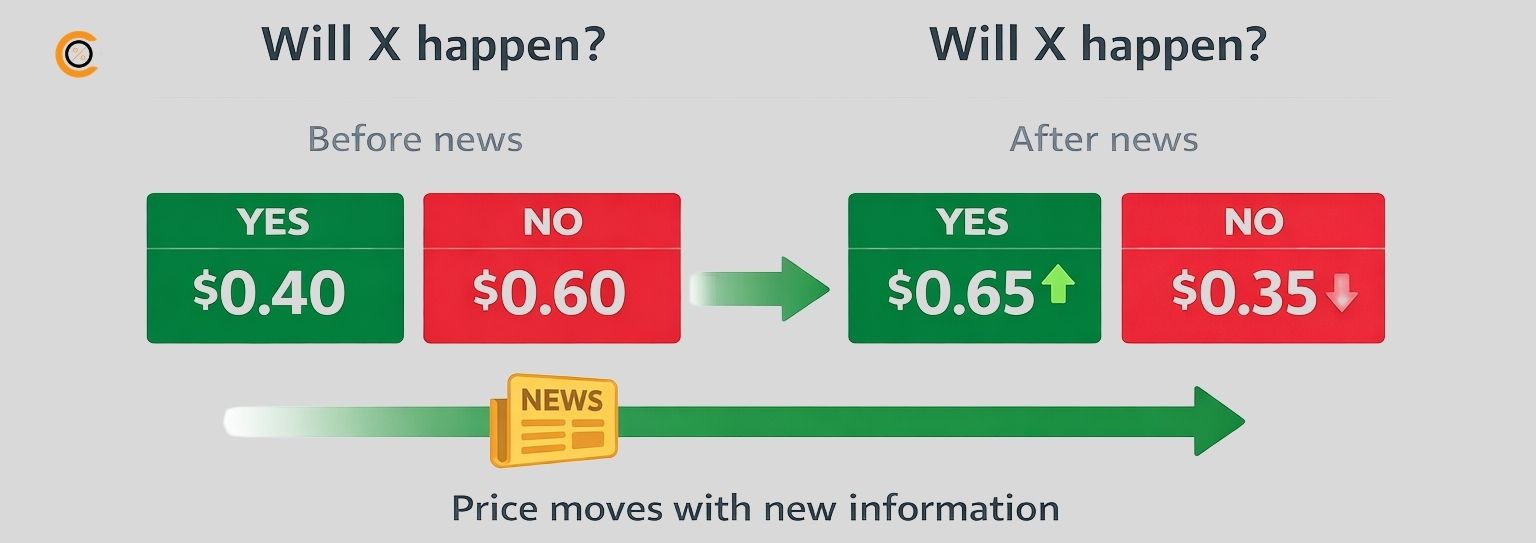
You are not required to wait until the event concludes. If you enter early and the price moves in your favor, you can sell your position at any time and secure profit, which adds a layer of strategy that goes beyond simply being right or wrong at the end. This flexibility is one of the reasons why many users approach these platforms more like financial markets rather than static betting systems.
When the event is resolved, the outcome is finalized using verified data, often through oracle systems, and winning shares settle at $1, while losing positions drop to zero. Over time, this continuous interaction between participants helps align prices with what the market collectively believes is the most accurate probability.
Why Prediction Markets Are Gaining Attention
Prediction markets are gaining attention because they offer something traditional systems struggle to provide, which is a real-time, continuously updating view of probability that reflects how people are reacting to events as they unfold. Instead of relying only on expert opinions or delayed reports, you can observe how expectations shift instantly as new information becomes available.
During major events, especially elections, platforms like Polymarket became widely followed because they reflected collective sentiment faster than traditional channels, and in some cases, those signals aligned more closely with final outcomes than early reporting. This is not because the platform predicts anything on its own, but because it aggregates the views of participants who are actively adjusting their positions based on what they believe is happening.
You are also seeing expansion beyond politics into areas like economic indicators, global risk scenarios, technology developments, and public health trends, which shows that these markets are gradually evolving into a broader information layer where price becomes a summary of belief and movement in price reflects how strongly that belief is changing over time.
Popular Prediction Markets in 2026
Prediction markets now exist across both centralized and blockchain-based systems, and the difference between them often comes down to access, regulation, and how trades are executed.
Polymarket
Polymarket operates on blockchain infrastructure and allows users to trade using stablecoins, with markets covering politics, economic trends, and global events. It gained strong attention during election cycles, where its pricing was widely referenced as a signal of real-time sentiment, and its structure allows users to interact directly through wallets rather than relying on traditional account systems.
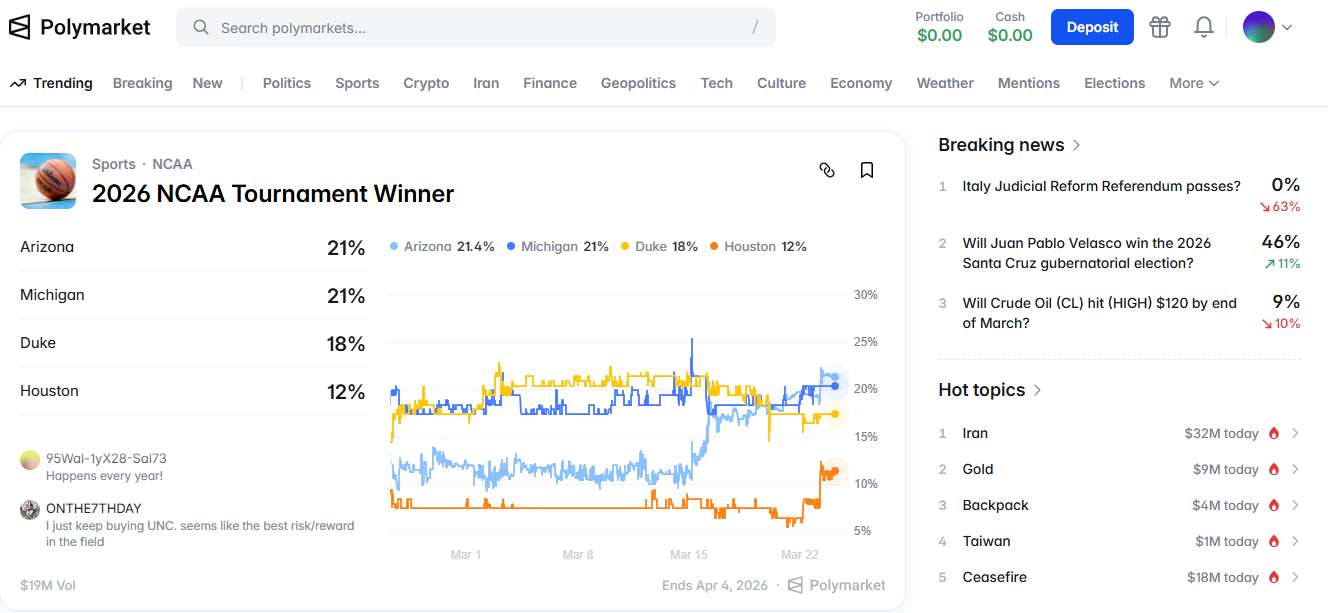
If you are planning to use the platform, access usually happens through wallet integrations, and many users spend time comparing setups like best polymarket wallets to decide which option works best for managing trades, signing transactions, and keeping funds secure while interacting with these markets.
Kalshi
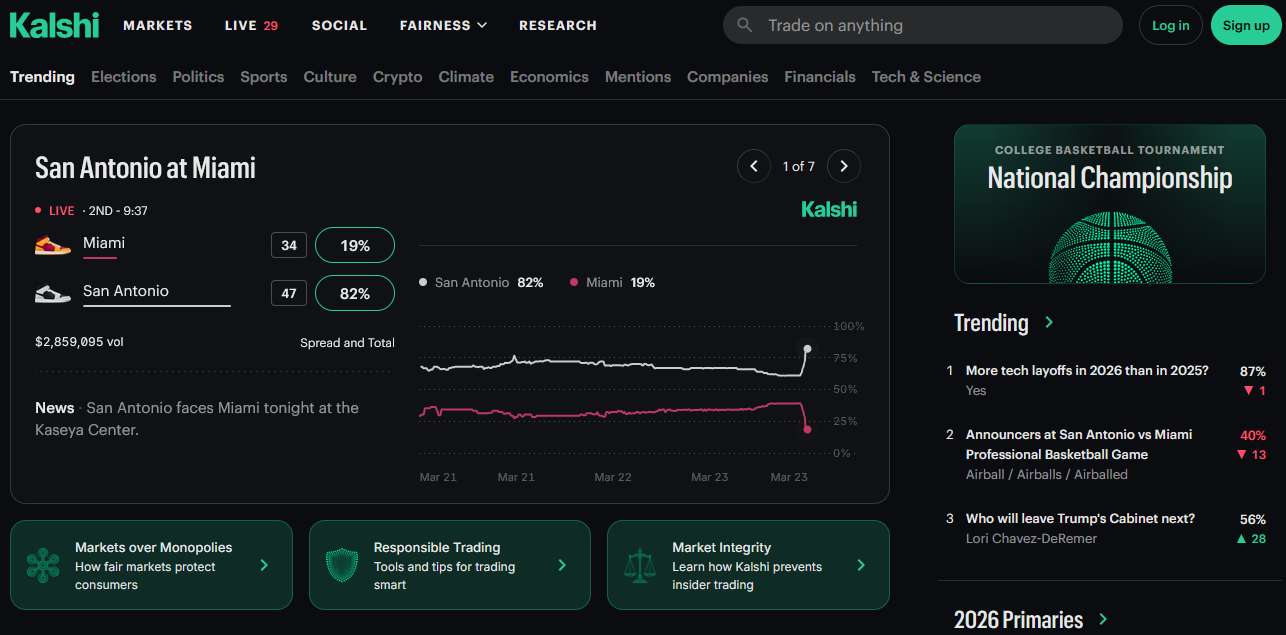
Kalshi follows a more regulated approach and operates within the United States under compliance frameworks. Markets are structured in a way that feels closer to traditional financial products, which may appeal to users who prefer a controlled and regulated environment rather than a decentralized one.
Myriad and Emerging Platforms
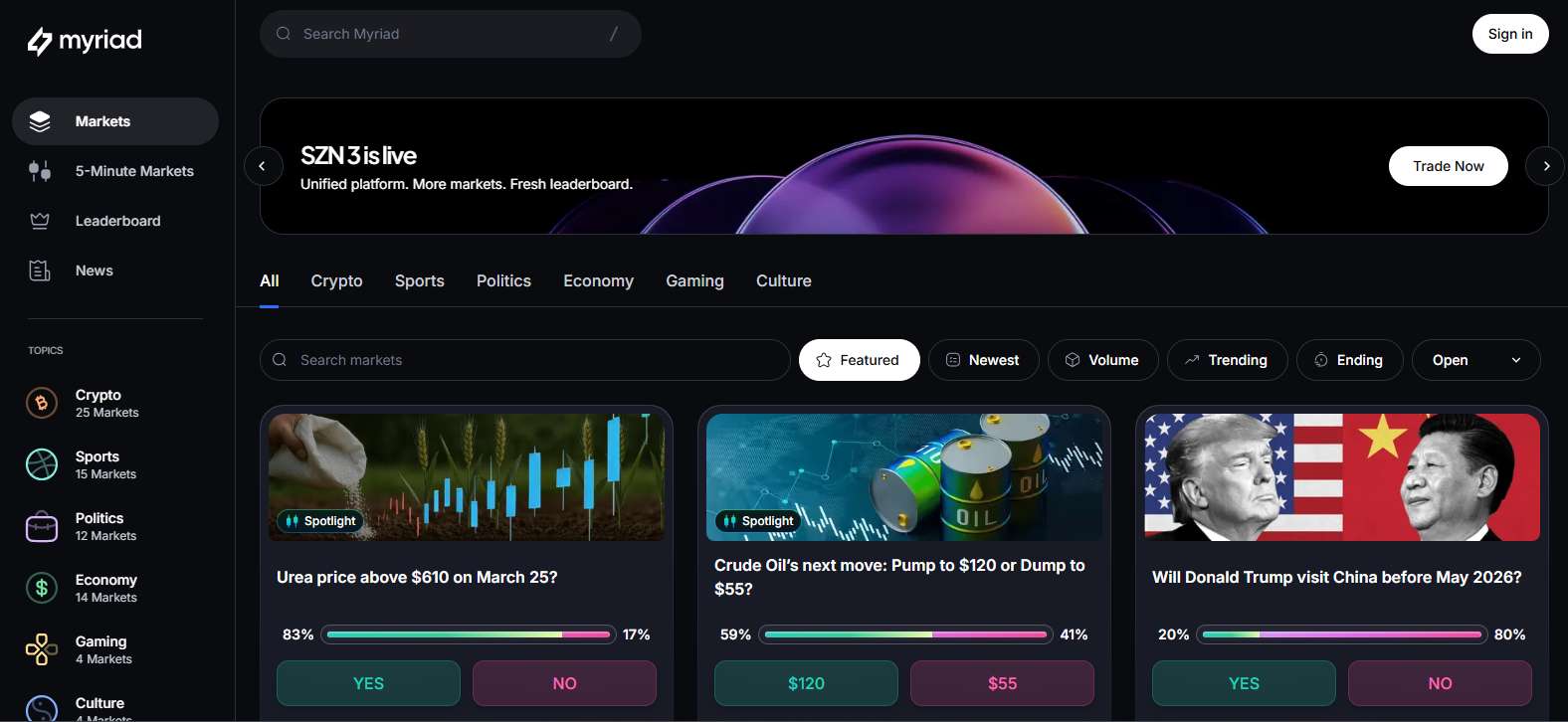
Newer platforms like Myriad are exploring how prediction markets can be integrated into media and content ecosystems, where users are not just trading outcomes but also interacting with information in a more participatory way, which suggests that the role of these markets could expand beyond trading alone.
How Web3 Is Changing Prediction Markets
The integration of Web3 infrastructure is where prediction markets start to take a very different shape, because access, execution, and settlement are no longer controlled by a single entity but instead handled through decentralized systems. Instead of signing up with personal information, you connect a wallet, and that wallet becomes your identity within the platform.
This is where Metamask prediction markets and Trust wallet prediction markets come into focus, because your interaction happens directly through these tools, allowing you to trade, hold positions, and manage funds without relying on centralized custody. Transactions are typically carried out using stablecoins, which keeps pricing consistent and avoids unnecessary volatility during trades.
Smart contracts handle execution automatically, meaning once conditions are met, outcomes are resolved without manual intervention, and oracles bring real-world data onto the blockchain so that results can be verified and finalized accurately. This combination creates a system that is open, transparent, and accessible globally, while also introducing a level of responsibility for users to understand how wallets and transactions function.
Risks, Limitations, and Ongoing Debate
Even with growing adoption, prediction markets still operate in an environment where regulation is not fully defined, and this creates uncertainty around how they will be treated in different regions. Authorities are still deciding whether these platforms should fall under financial regulation, gambling frameworks, or a separate category entirely.
There are also ethical concerns, especially when markets are tied to sensitive topics such as conflicts or disasters, which raises questions about whether financial incentives should be linked to such events. At the same time, supporters argue that these markets reflect existing realities rather than influencing them.
From a market perspective, there are also risks related to liquidity and information imbalance, where large participants can influence pricing or where access to better information can create advantages, which means that while the system is open, it is not necessarily equal for all participants.
Bottom Line
Prediction market crypto is changing how you interact with information by turning collective belief into real-time probability that you can act on directly, rather than just observe. You are not simply following news, you are engaging with a system that reflects how people interpret events as they happen, and that shift has made prediction markets more relevant in a world where speed and accuracy of information matter. At the same time, risks around regulation, ethics, and market behavior remain, so understanding how prediction markets work is just as important as participating in them.