


- •Leverage in crypto increases exposure, but liquidation risk rises just as quickly.
- •Funding rates, fees, and margin mechanics directly affect leveraged trading outcomes.
- •Exchange liquidity and risk tools matter as much as leverage offered.
Crypto leverage allows traders to control larger positions with less capital, which is one reason it has become widely used in derivatives markets. The appeal is straightforward. Higher exposure can increase opportunity, while also making it possible to trade both rising and falling markets.
At the same time, leverage introduces additional risks, costs, and mechanics that many newer traders overlook. In this guide, we break down how crypto leverage works, how funding and liquidation affect trades, and what to understand before using high leverage crypto products, including the risks, strategies, and tools traders often use to manage positions.
What is Leverage in Crypto trading?
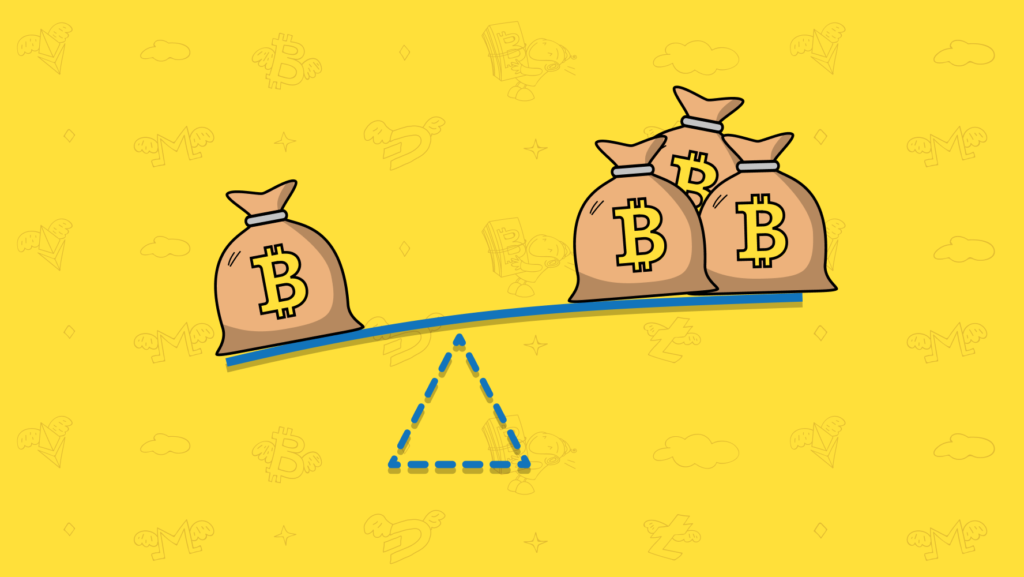
Crypto leverage allows traders to control a larger position using a smaller amount of capital as collateral. In simple terms, you borrow exposure from the trading platform, increasing your buying or selling power beyond your own balance.
Leverage is expressed as a ratio such as 1:10 (10x) or 1:20 (20x), showing how much your capital is multiplied. At 10x leverage, for example, $1,000 can control a $10,000 position. The amount you put up is called margin or collateral.
This is why crypto leverage attracts active traders. It can increase market exposure with less upfront capital, though it also increases risk. That is especially true on high leverage crypto products where liquidation thresholds can be much tighter.
How Does Leverage Trading Work?
For example, if a trader wants to open a $5,000 Bitcoin position using 10x leverage, only $500 may be needed as margin. If the same trade is opened at 20x leverage, the required collateral drops to $250, since the margin requirement becomes 1/20 of the total position size.
This is how crypto leverage increases market exposure while using less upfront capital. A smaller margin controls a much larger position, though liquidation thresholds also move closer as leverage increases.
Most leverage trading takes place in the futures and derivatives market. Unlike spot margin trading, where borrowing and repayment may need to be managed manually, perpetual and futures contracts automate this process. A trader selects the leverage level, opens a long if expecting prices to rise, or opens a short if expecting prices to fall.
What Are Funding Rates in Crypto Leverage Trading?
One cost many traders overlook in crypto leverage is funding. While trading fees get most of the attention, funding rates can also affect profitability, especially when positions stay open over time.
Funding rates are generally calculated as:
Interest rates are usually fixed by the exchange, while the premium index is often the main driver:
Most exchanges use TWAP pricing in these calculations, though each venue may adjust formulas, smoothing methods, or settlement mechanics differently. That is why funding rates can vary across crypto leverage trading exchanges.
Funding is commonly paid every 8 hours, and depending on market conditions, longs may pay shorts or shorts may pay longs. Higher liquidity can also help keep funding more stable because perpetual prices often stay closer to spot.
For traders who monitor funding, liquidations, and open interest, Coinglass can help track broader derivatives conditions across exchanges.
Risks of Crypto Leverage Trading
Leverage can amplify returns, but losses can scale just as fast. That is why crypto leverage is often viewed as a double-edged sword.
The higher the leverage, the smaller the price move needed to trigger liquidation. That is one reason high leverage crypto products can carry significantly more risk than many newer traders initially assume.
Advantages of Crypto Leverage
One major advantage of crypto leverage is capital efficiency. It allows traders to control larger positions with less upfront capital and potentially benefit from smaller market moves.
Leverage also makes both long and short strategies possible, which can be useful in both bullish and bearish conditions. For traders using technical analysis, this flexibility is one reason leveraged markets remain popular.
Another benefit is access to short-term opportunities. Many active traders use leverage for intraday setups, while some platforms even offer demo trading so users can practice before risking capital.
Disadvantages of Crypto Leverage
The tradeoff is risk. A relatively small move against a leveraged position can lead to outsized losses or liquidation. This is especially true on high leverage trading platforms, where liquidation thresholds may sit much closer to entry prices.
Costs can also build faster than many expect. Trading fees, spreads, and funding can all reduce returns over time, which is one reason some traders pay attention to zero-fees trading structures when comparing platforms.
Leverage can also magnify emotional mistakes. Poor position sizing and overtrading often become much more costly when borrowed exposure is involved.
Where can I trade cryptos with leverage?
The most common place to access crypto leverage is through centralized futures exchanges, where traders can use leverage, hedge positions, and trade perpetual contracts across crypto and other markets. Many of the leading platforms in this guide, including MEXC, Binance, Bitget, Bybit, Bitunix, WEEX, and BloFin, offer different strengths depending on what you prioritize, whether that is low fees, deep liquidity, advanced order tools, or higher leverage limits.
If fees matter most, MEXC stands out for zero-fees trading on select futures pairs and remains one of the stronger options among leverage trading platforms. Binance tends to lead on liquidity and collateral flexibility, while Bybit and Bitget are often chosen for more advanced derivatives tools and trading workflows. Some platforms such as BloFin, WEEX, and Bitunix also offer demo trading, which can be useful if you want to practice leveraged setups before using real capital.
When comparing exchanges, leverage alone should not be the deciding factor. Fees apply to the full position size, funding costs can affect longer-held trades, and spreads or execution quality can matter as much as headline leverage.
Another route is decentralized perpetual exchanges. Protocols such as Aster and other perp DEXs give traders access to crypto leverage while keeping positions self-custodied. That model can appeal to some traders, though execution, liquidity, and tooling can differ from centralized venues.
For many traders, the choice often comes down to whether they value deeper liquidity and advanced tools on centralized exchanges, or prefer the self-custody model offered by decentralized derivatives platforms.
Leverage Trading Pros & Cons
| 👍 Leverage Trading Pros | 👎 Leverage Trading Cons |
|---|---|
| ✅ Easy order execution on the futures market | ❌ Not accessible in all countries |
| ✅ Accelerate your profits with leverage | ❌ Risk of losing your capital in case of a liquidation |
| ✅ Simple to hedge the market by opening long and short positions simultaneously | ❌ Higher leverage means higher fees relative to your margin |
| ✅ You can long and short, which means you can make money when prices go up but also when prices go down | ❌ A higher barrier of entry as it is more complicated and riskier compared to spot trading |
Where Can I Trade Cryptos With Leverage?
The most common place to access crypto leverage is through centralized futures exchanges such as MEXC, Binance, or Bybit.
When comparing high leverage trading platforms, leverage alone should not be the deciding factor. Fees, liquidity, funding conditions, and execution quality often matter just as much.
Another route is decentralized perpetual exchanges. Protocols such as Aster, GMX, or dYdX give traders access to crypto leverage while keeping positions self-custodied. That model appeals to traders who prefer onchain execution and no-KYC access, though the experience can differ from centralized venues in areas like interface design, order flow, and how liquidity is sourced.
If you are learning the mechanics first, exchanges offering demo trading can also be useful before moving into live leveraged positions.
MEXC Long Leverage 1:20 (20x)
Tips and Tricks for leverage trading crypto
Risk management often matters more than leverage itself.
Position sizing, stop losses, and structured risk limits are common ways traders manage downside. A widely used approach is the 1% rule, where only a small percentage of capital is risked per trade.
Many leveraged strategies also rely on sound technical analysis rather than simply increasing leverage to chase larger returns.
For this, you can use our free position size calculator tool to plan exposure before entering trades. If you want to simulate your trading strategy, you can also use our free win-rate and profit calculator to model breakeven levels, fees, and risk-to-reward setups before committing capital.
That restores your original intent instead of replacing it with my abstraction. Better catch.
Bottom Line
Crypto leverage can increase market exposure and amplify returns, but it also increases risk at the same time. That is why leverage alone is rarely what defines long-term trading outcomes. In practice, profitability often depends more on market understanding, execution, and strategy than on using extreme leverage. This is also why exchange selection matters. Among crypto leverage trading platforms, factors like liquidity, fees, risk tools, and platform stability can shape how effectively different leveraged trading strategies can be executed.
FAQs
1. How risky is 10x leverage
10x leverage increases exposure significantly, and even small adverse moves can affect a position. Risk depends heavily on position sizing.
2. What is 20x leverage on $10?
With 20x leverage, $10 in margin controls a $200 position.
3. Is crypto leverage risky?
Yes. Crypto leverage increases both profit potential and downside risk.
4. What is the 1% rule in crypto?
It is a risk management principle where a trader risks no more than 1% of portfolio capital per trade.
5. Which leverage is good for beginners in crypto?
Many beginners start by understanding lower leverage and risk management before exploring higher leverage products.
6. What is a liquidation?
A liquidation happens when a leveraged position is automatically closed because losses approach the margin posted. It is designed to help prevent further losses.
7. What are the risks of leverage trading in cryptocurrency?
Main risks include liquidation, amplified losses, funding costs, and losses from poor risk management during volatility.
8. Is crypto leverage trading available in the USA?
Access is more limited in the USA due to regulations, and leverage products can vary by platform and jurisdiction.
9. Can beginners use leverage trading?
Yes, though many start by learning with demo trading and understanding liquidation mechanics first.
10. What is the best leverage strategy in crypto?
Many traders prioritize disciplined entries, risk management, and technical analysis over using maximum leverage.