


- •You can bridge assets from Ethereum to Ripple using verified cross-chain bridge protocols.
- •Ripple launched its XRPL EVM Sidechain, making XRPL EVM-compatible.
- •Ensure you have enough ETH to cover gas fees during transfers.
Recently, XRPL has been strategically linking with other networks and moving away from being the solo, isolated network it once was. These changes, combined with the launch of the XRPL EVM Sidechain, make XRPL a key destination for DeFi liquidity and a major blockchain for many crypto enthusiasts. Still, many users struggle to migrate from chains like Ethereum to access XRPL’s RLUSD stablecoin and low-cost trading. In this article, we explain how to bridge from Ethereum to XRPL to start enjoying its promising, innovative features.
Can I Bridge From Ethereum to XRPL?
Yes, you can send tokens from Ethereum to XRPL using cross-chain bridges or leveraging the new XRPL EVM Sidechain. XRPL, also known as Ripple, is originally a non-EVM chain. However, the launch of the Sidechain is bridging the gap between Ethereum and XRPL, unlocking more opportunities for users of both networks.
It enables Ethereum-based smart contracts and dApps to operate seamlessly within Ripple’s low-cost, secure payment network. On the other hand, you can move ETH to XRPL by locking your tokens on Ethereum in cross-chain protocols to receive a bridged version on the XRP Ledger.
To get started, you need an Ethereum wallet like Metamask and a Ripple wallet like Xaman to store the bridged XRPL tokens. Also, you will pay Ethereum gas fees to initiate the transfer, plus a small bridge fee set by the platform you select for transferring assets from Ethereum to XRPL. Always keep a few extra ETH and XRP tokens in your destination wallet to cover future transaction costs.
How to Bridge From Ethereum to XRPL
To convert Ethereum assets to XRP, you must select a tool that offers services that suit your needs and fit your budget. Also, to protect your funds, ensure you only use a verified protocol to bridge assets between chains. Below are three verified methods to transfer assets from Ethereum to Ripple:
Method 1: Using the Official Ripple XRPL Bridge (XLS-38d) via Squid Router
The XRPL EVM Bridge is the primary gateway to Ripple’s new Ethereum-compatible Sidechain. Because this Sidechain is EVM-compatible, you can interact with it using MetaMask. XLS-38d launched in June, 2025; however, you can access it only through Squid Router, the official cross-chain interface powered by Axelar. This bridge connects Ethereum to the XRPL EVM environment, and here’s how to use it:
Step 1: Visit the Squid Router website.
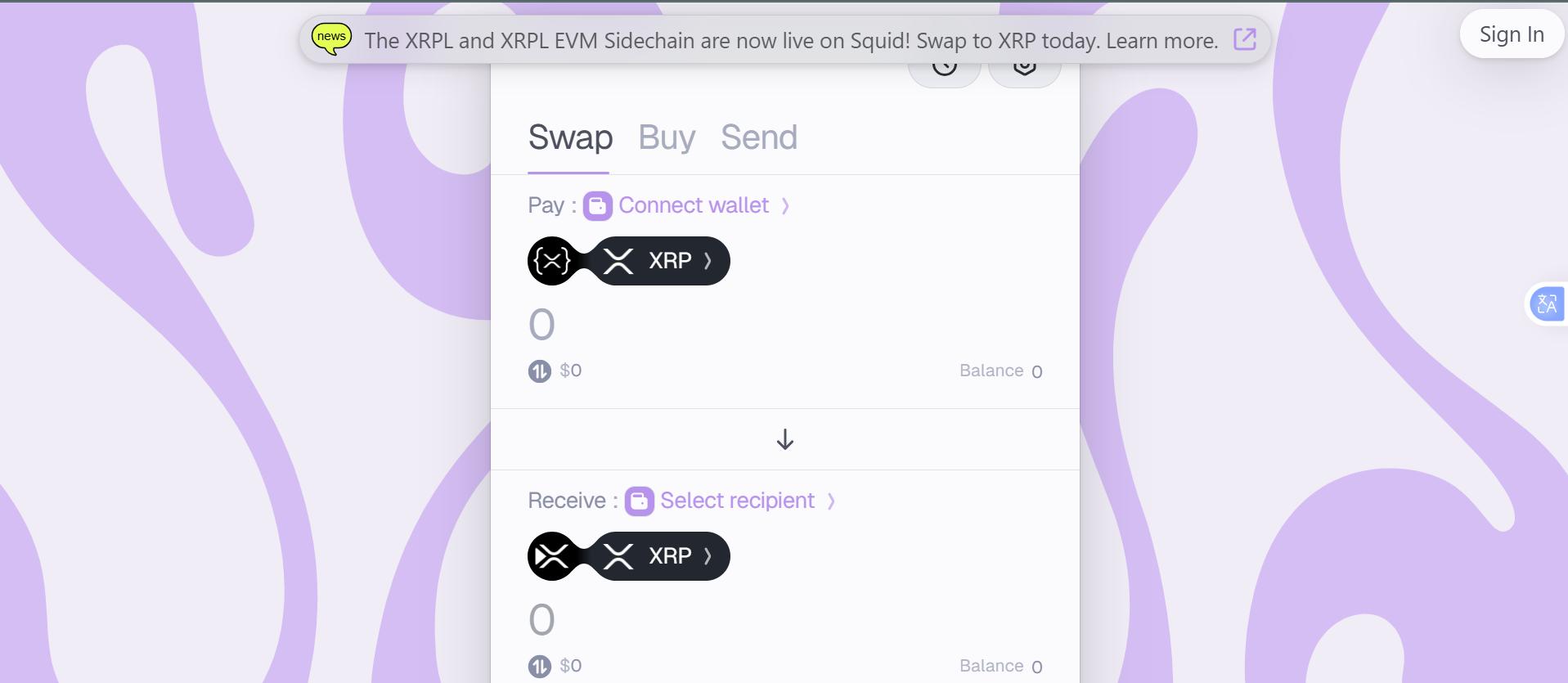
Step 2: Connect your Metamask wallet, then select Ethereum and the token you want to send in the Pay section.
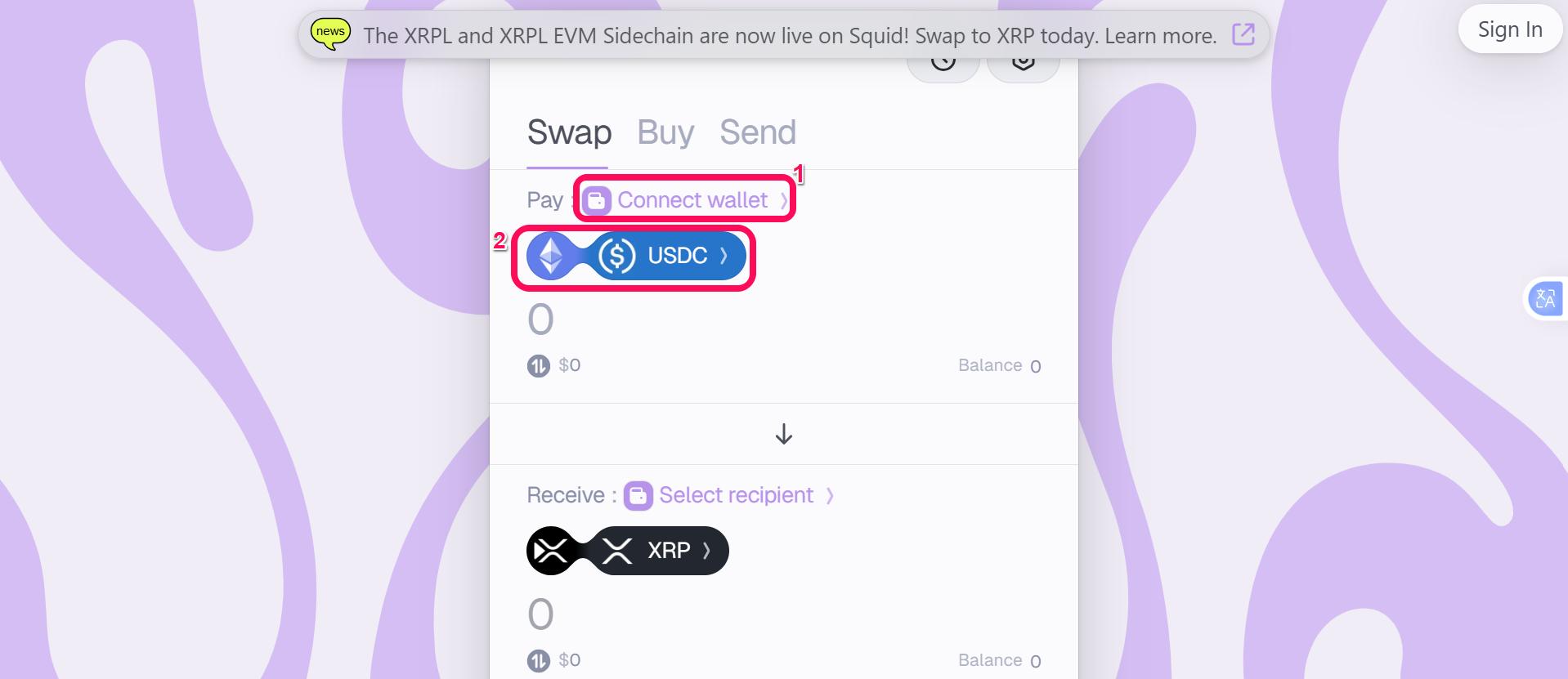
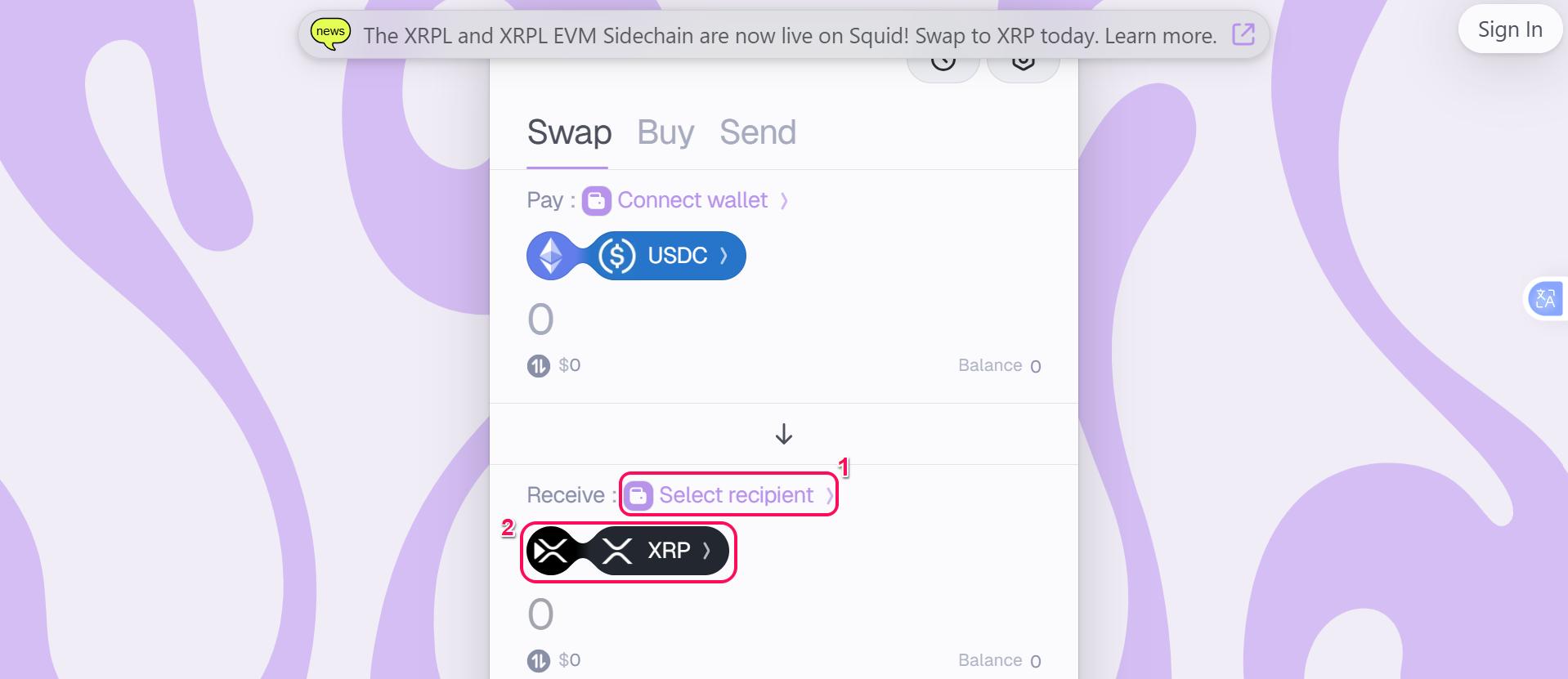
Step 3: Connect your XRPL wallet (e.g., Xaman), select XRPL chain, and the token you want to receive (e.g., XRP) in the Receive section.
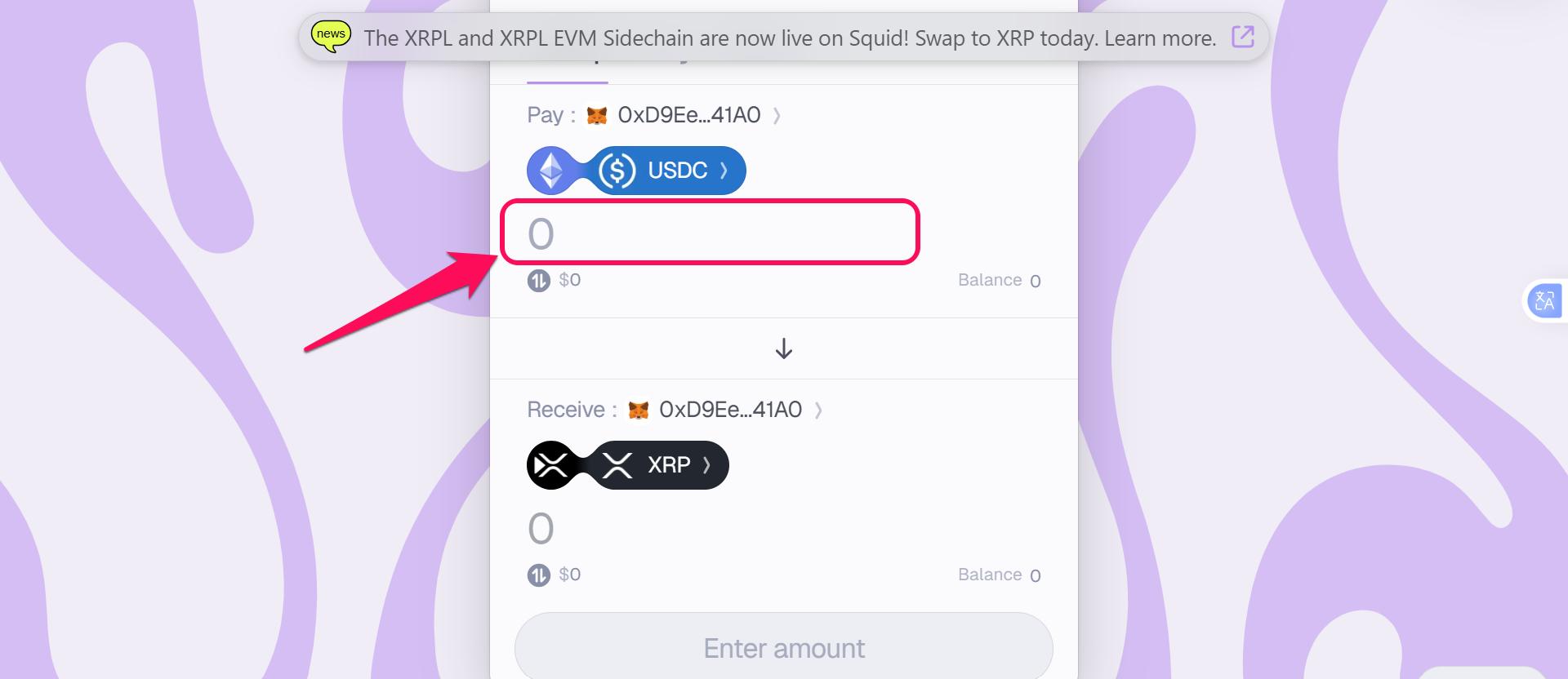
Step 4: Enter the amount of tokens you want to bridge.
Step 5: Review the fees and estimated arrival time, then click Swap and confirm the transaction in your wallet.
Method 2: Using Wormhole Bridge
Wormhole (formerly PortalBridge) is an interoperability protocol that enables asset transfers between 30+ blockchains, including Ethereum and XRPL. Unlike many bridges, Wormhole does not rely on liquidity pools for its token bridge; instead, it locks and mints representations instead. This makes it ideal for bridging to XRPL’s high-throughput network at efficient costs thanks to its “Gas Drop-off” feature. Follow the steps below to bridge from Ethereum to XRPL using Wormhole:
Step 1: Head to the Wormhole Bridge website.
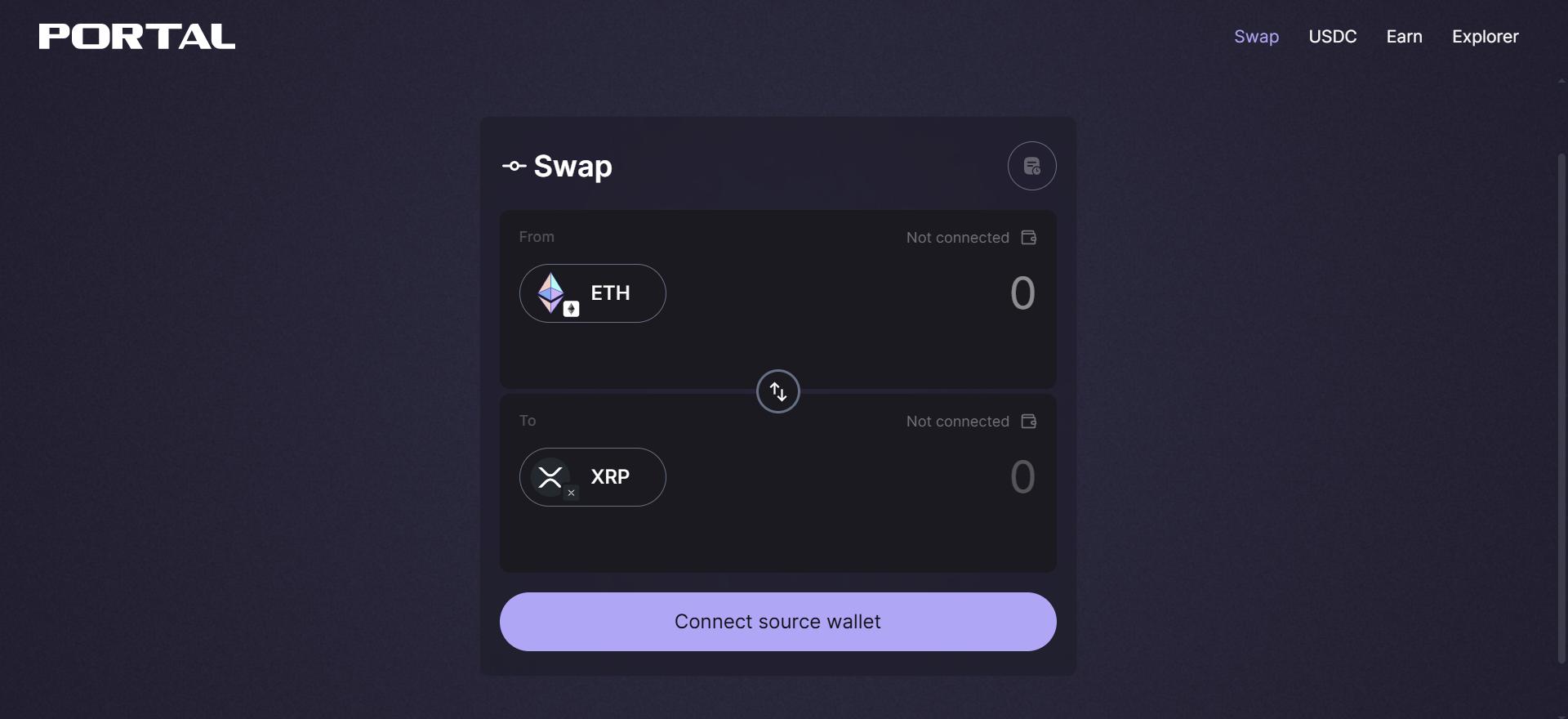
Step 2: Set the From network to Ethereum and the token to ETH (or your preferred ERC-20) token. Select the XRPL EVM network and the XRP token in the To field.
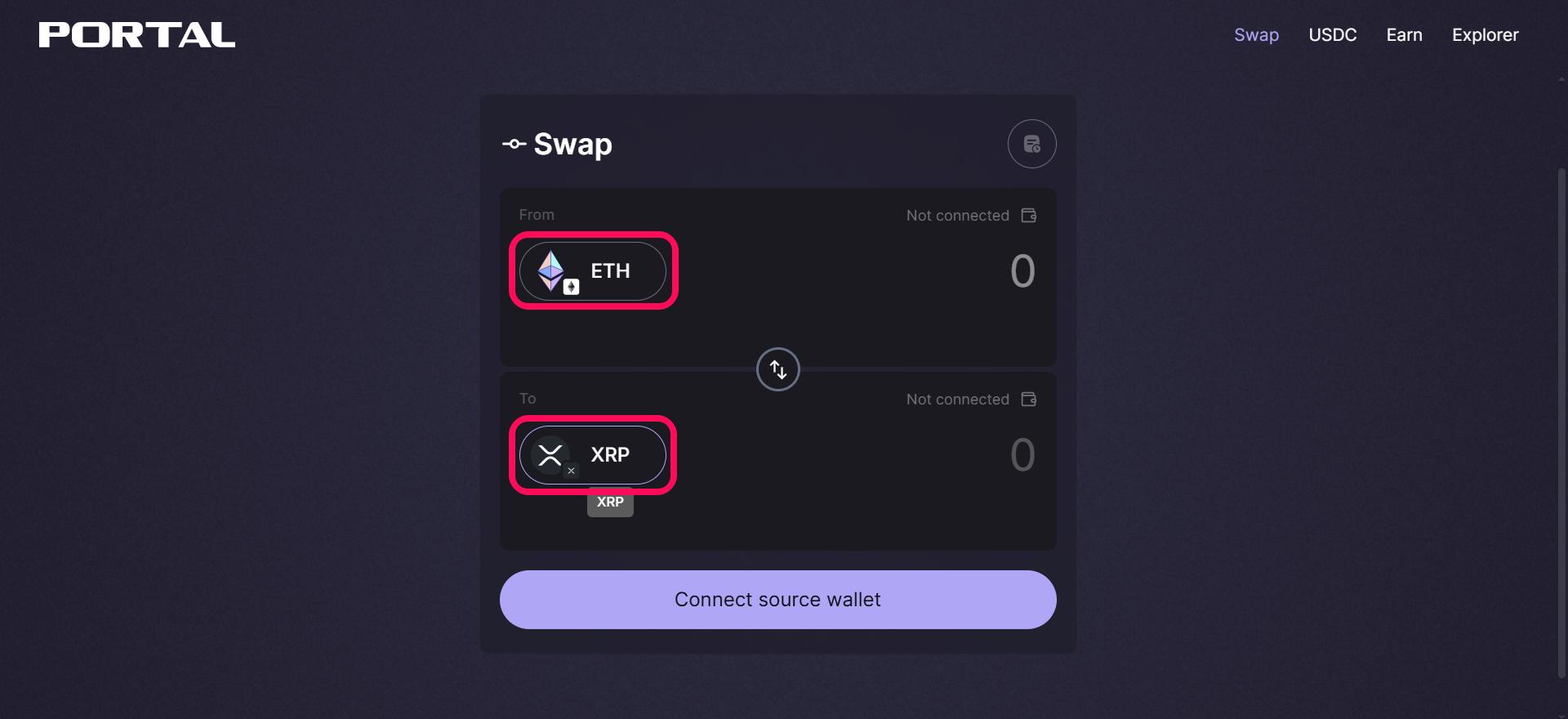
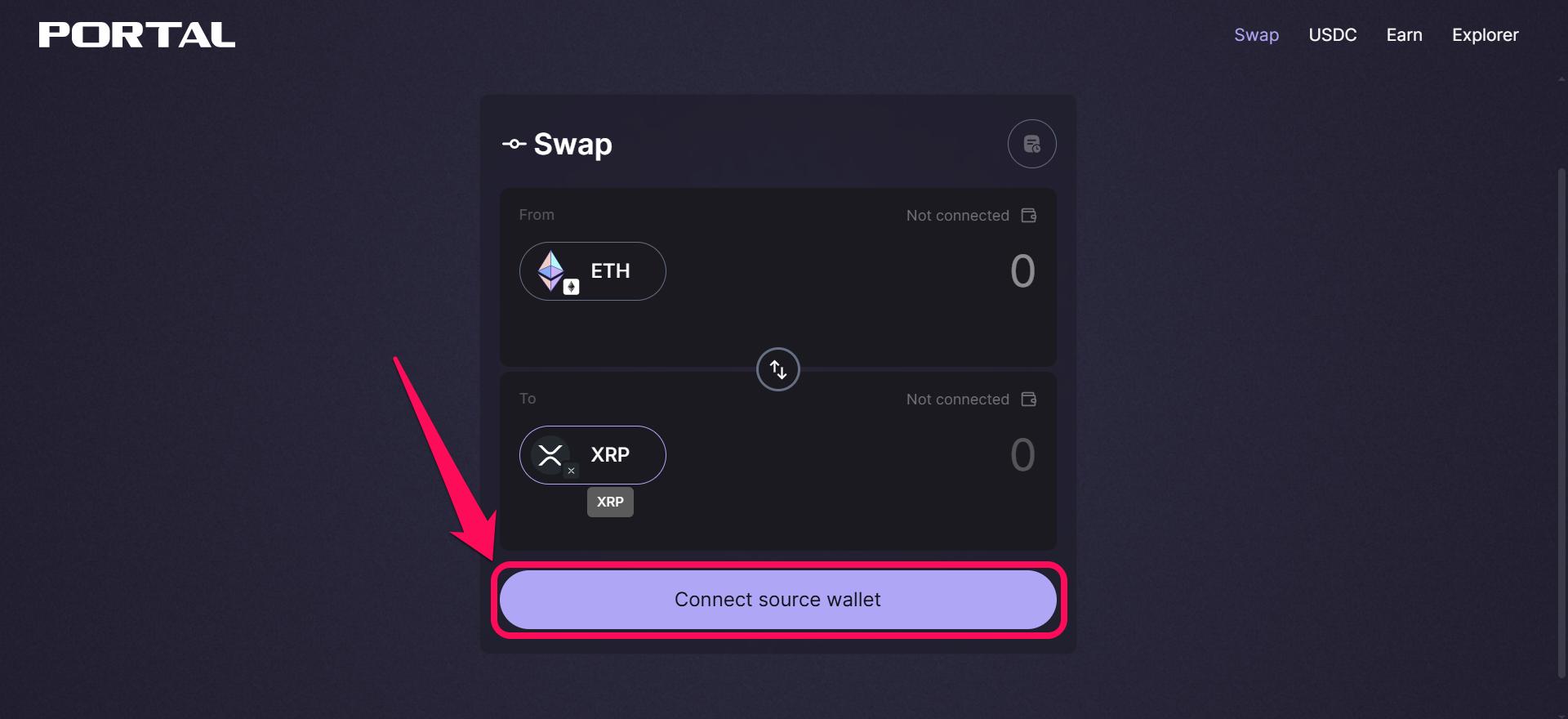
Step 3: Click Connect Source Wallet to link your Ethereum wallet (e.g., Metamask) to the bridge.
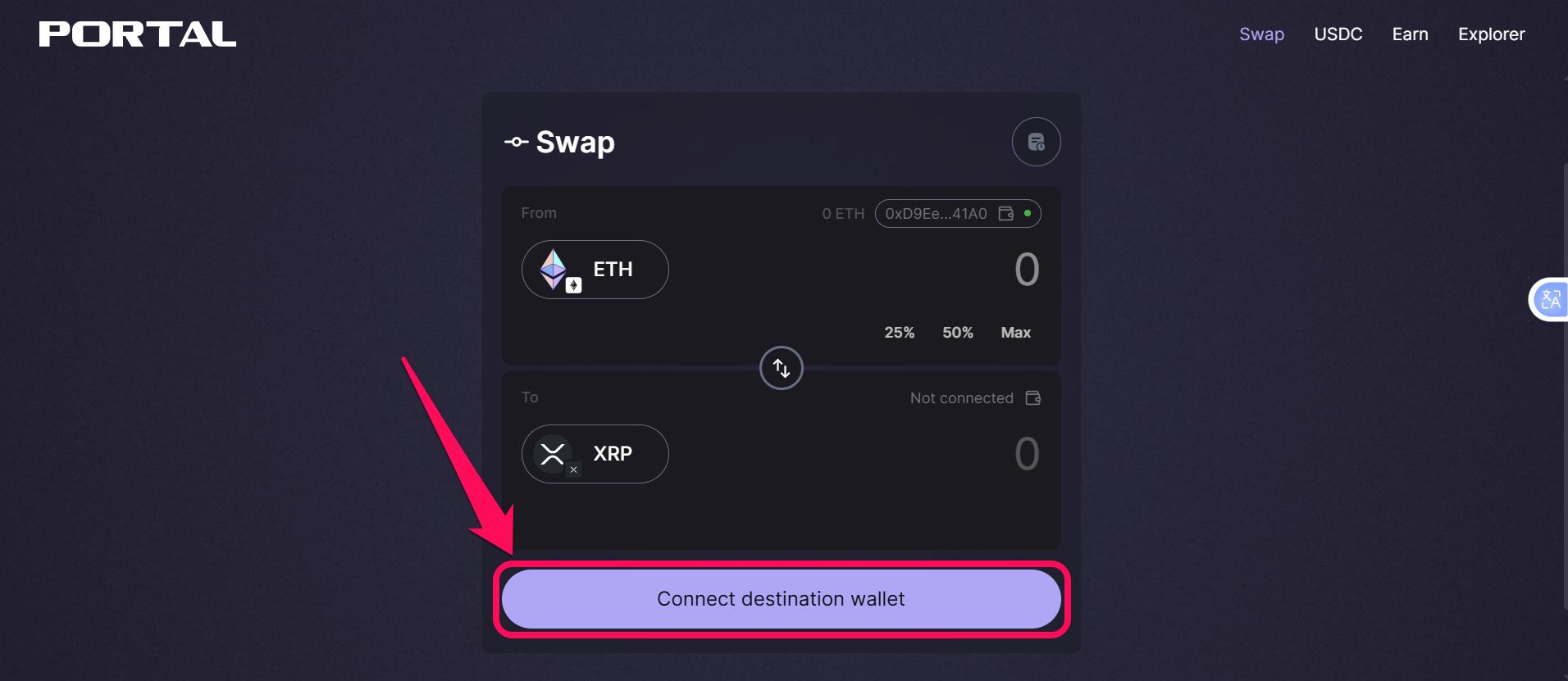
Step 4: Connect destination wallet, i.e., the XRPL wallet you intend to store the bridged tokens in.
Step 5: Enter the amount of Ethereum tokens you want to bridge to Ripple.
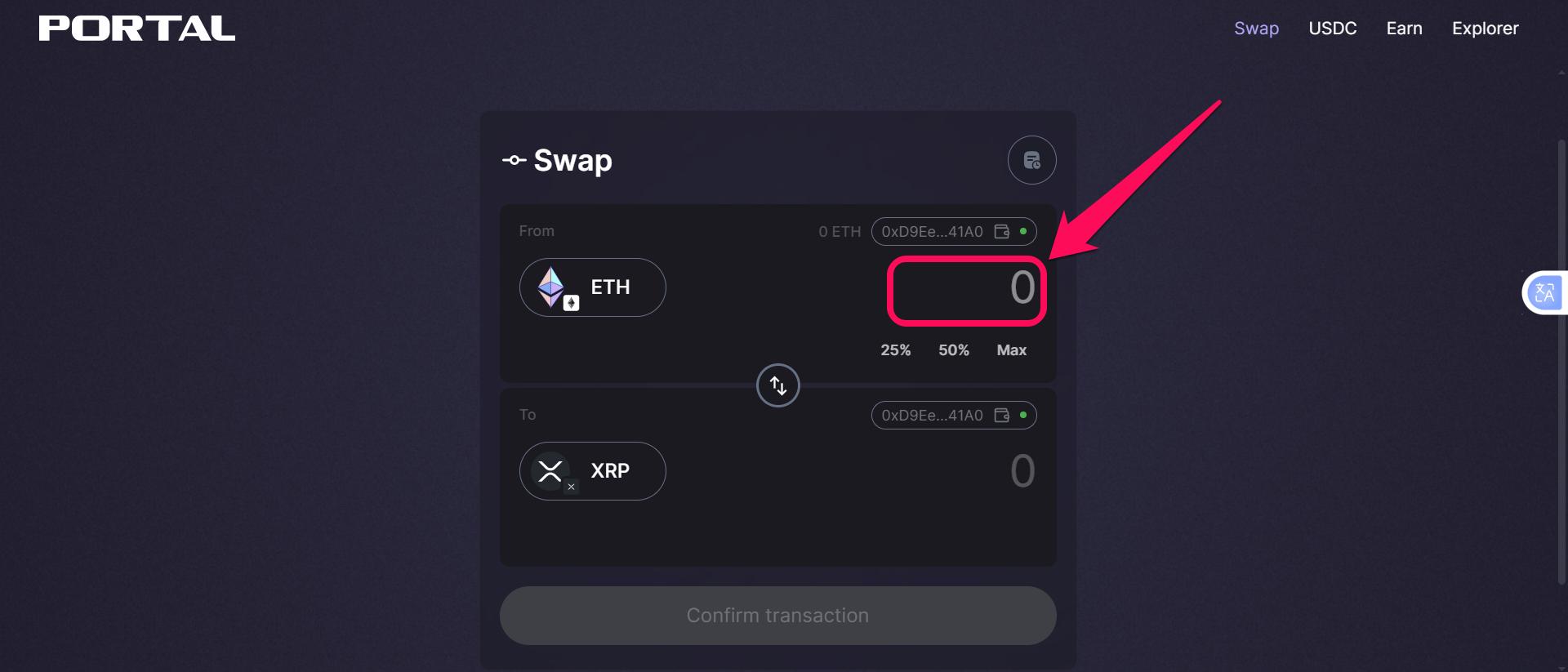
Step 6: Tap Confirm transaction to initiate the bridge transaction.
Method 3: Using a Bridge Aggregator (RocketX Exchange)
RocketX Exchange is a commonly used aggregator protocol that supports token bridging across 170+ blockchains. The app finds the fastest, cheapest routes for cross-chain transfers across the multiple Layer 1 and Layer 2 networks it supports. As of early 2026, RocketX Exchange supports 20,000+ tokens and processes transactions with a transparent fee structure typically ranging from 0.2% to 0.4%. Here’s how it works for ETH to XRP bridging:
Step 1: Open the RocketX Exchange portal.
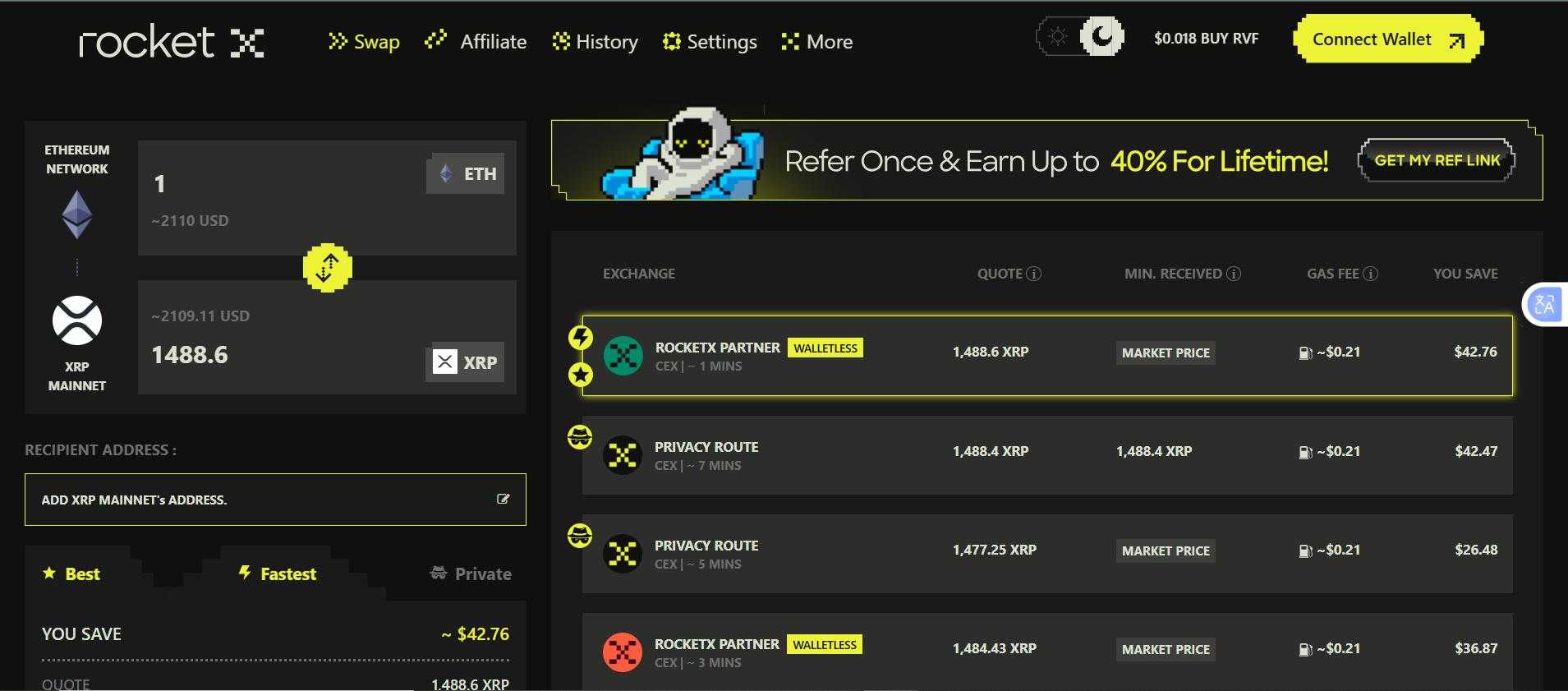
Step 2: Link your Ethereum wallet to the source chain and your XRPL wallet to the destination.
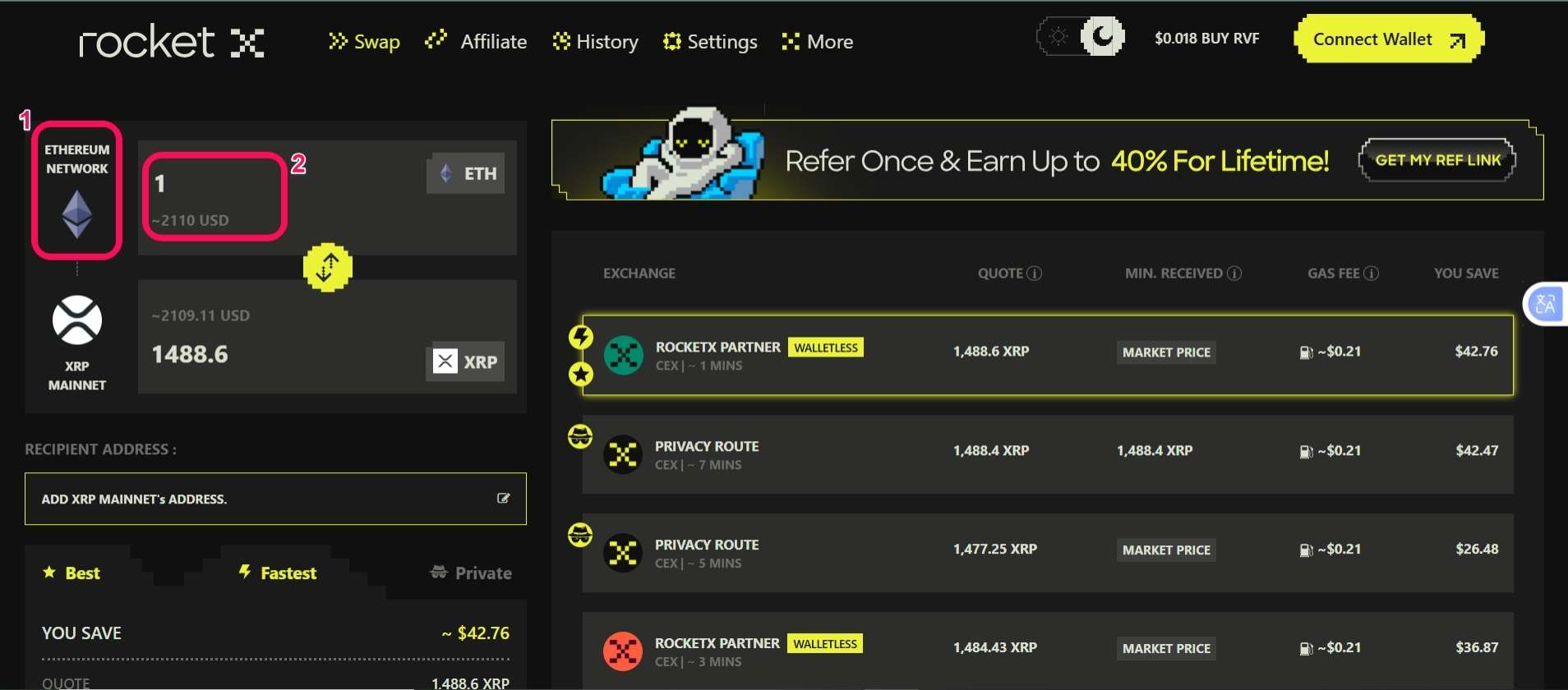
Step 3: Select the Ethereum network and enter the amount of tokens you want to bridge to XRP.
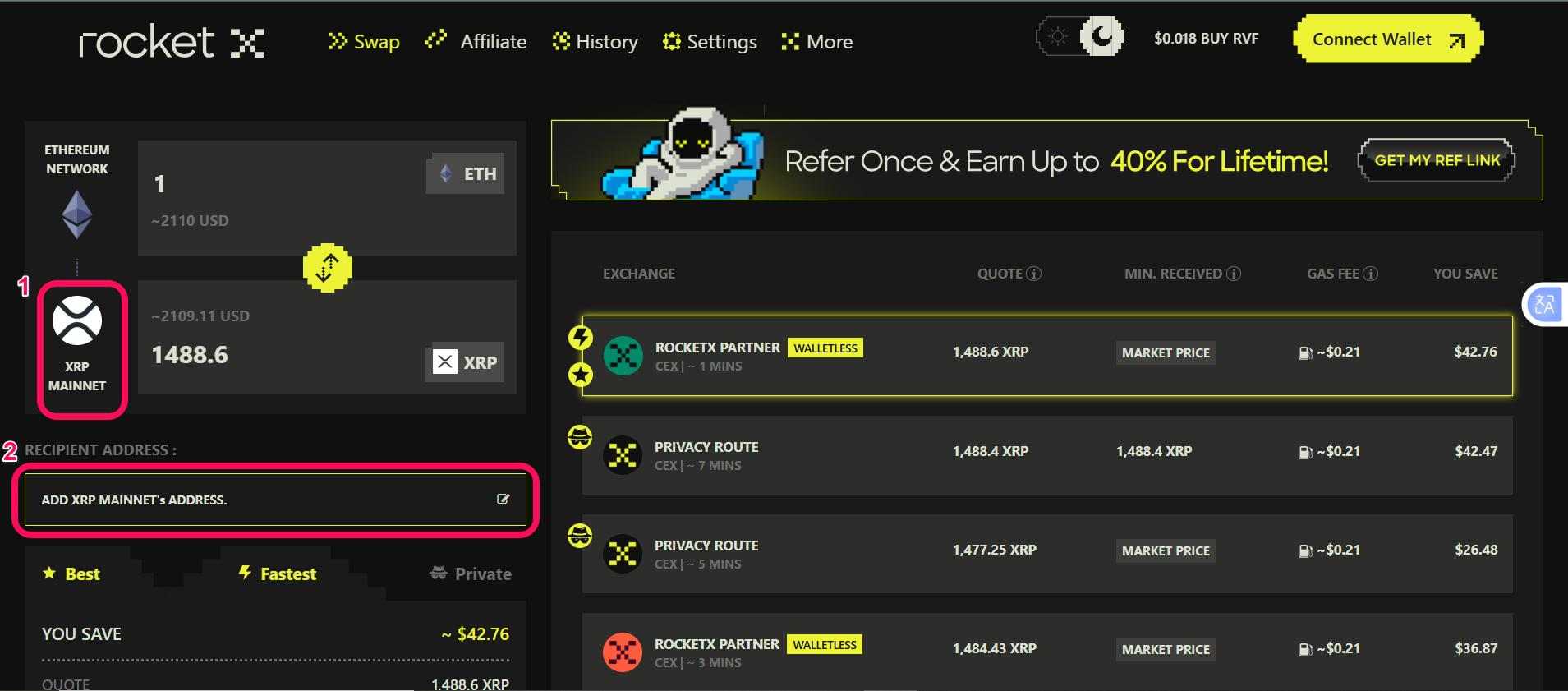
Step 4: Select Ripple as the destination chain, then choose the XRPL token you want to receive. You can also add the recipient XRPL wallet address.
Step 5: RocketX will present the best routes to initiate the transaction. Choose the one with a preferable price and execution time.
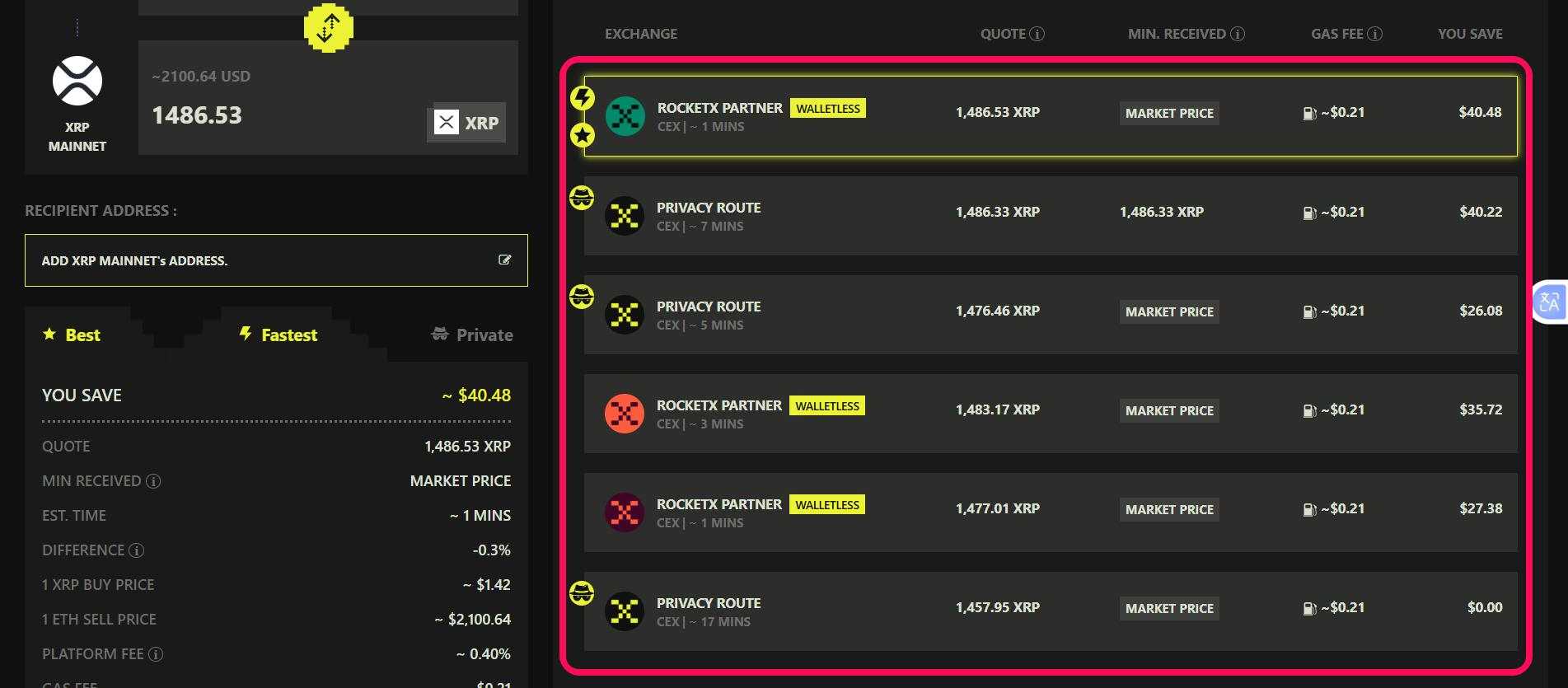
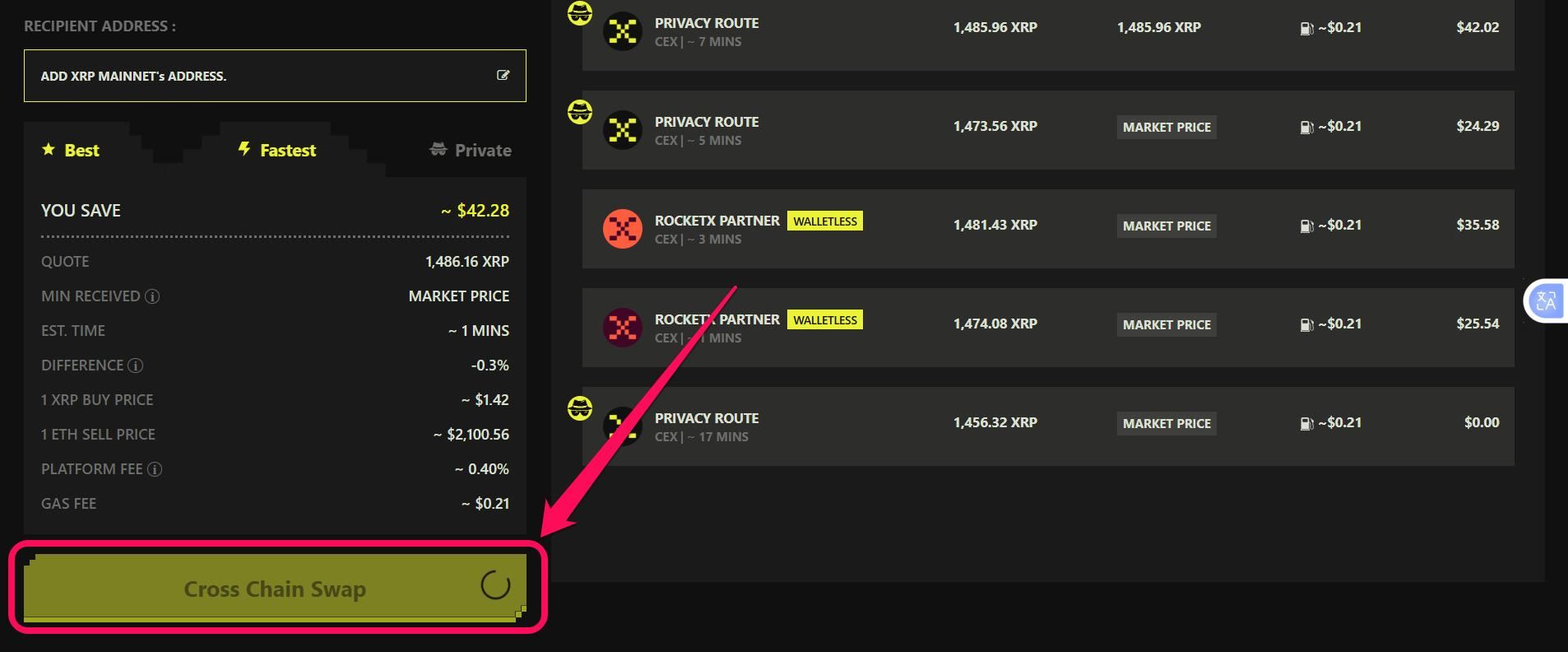
Step 6: Click Cross-chain swap to proceed.
Bridge Options Compared
Before choosing the best bridge from Ethereum to XRP Ledger, it’s important to understand how each platform differs. While all three methods highlighted above can seamlessly bridge assets, they operate on different infrastructure models. We’ll be comparing them based on their scope, token flexibility, and cost exposure so you can make informed decisions before bridging:
| Bridge Option | Network Scope | Token Support |
|---|---|---|
| Official Ripple XRPL EVM Bridge (XLS-38d) | 90+ | 2,500+ |
| Wormhole (PortalBridge) | 35+ | 15,500+ |
| RocketX Exchange | 200+ | 20,000+ |
Bottom Line
Ripple is one of the fastest-growing crypto networks, with features like the XRPL EVM Sidechain attracting new users to its ecosystem. To also enjoy these benefits, you can easily bridge your Ethereum assets to Ripple (XRPL) using any of the highlighted methods. As Ripple continues to improve interoperability, knowing how to bridge from Ethereum to XRPL is increasingly valuable.
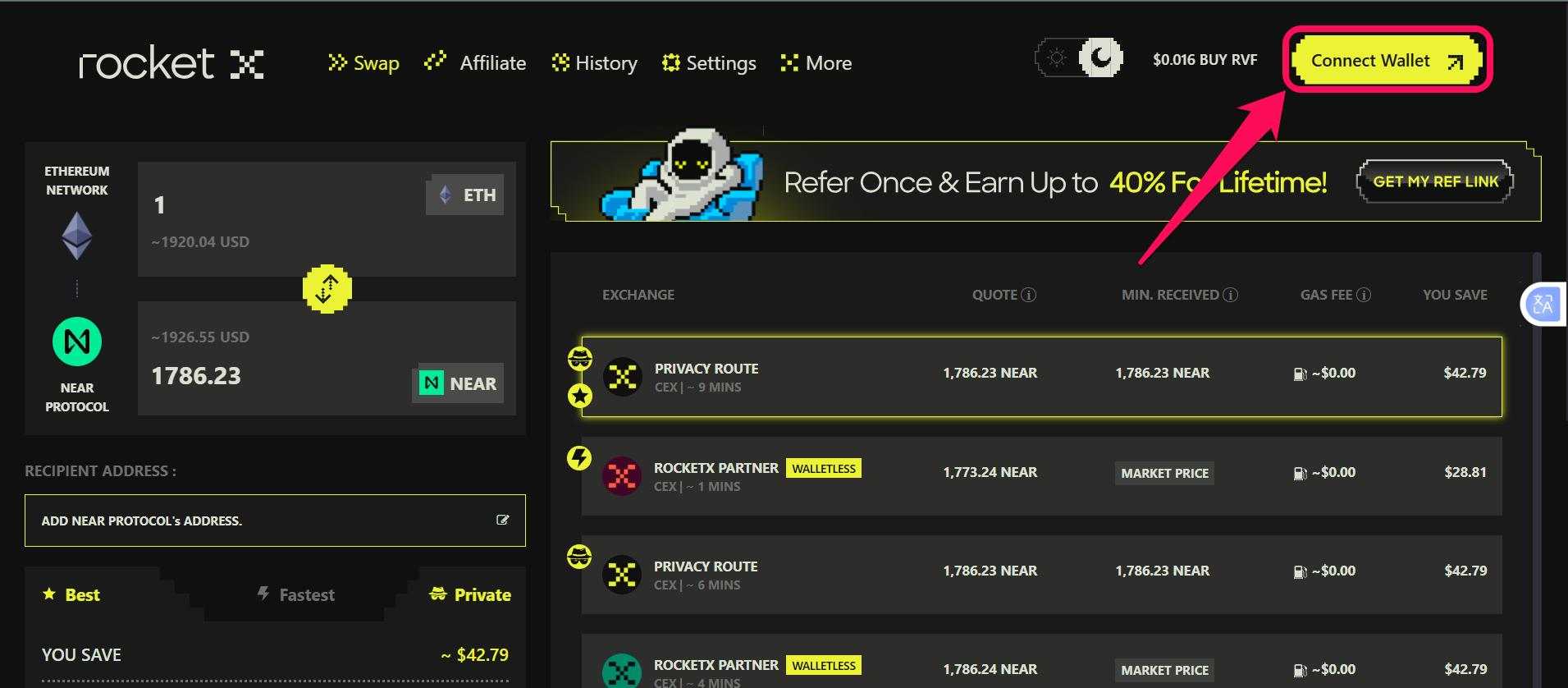
Of course, interoperability doesn’t end with XRPL. As you diversify, consider that bridging assets from Ethereum to NEAR Protocol is just as important, given NEAR’s focus on ‘Chain Abstraction’ and AI, making it another strong option.
FAQs
1. Can I send ETH directly to an XRPL wallet?
No, ETH tokens must be bridged and converted into a wrapped representation compatible with XRPL before they can appear in a Ripple wallet.
2. Is it expensive to bridge to XRPL from Ethereum?
The highest cost in an ETH to XRPL bridge transaction is usually the Ethereum gas fee required to initiate the bridge. Once the assets are in your XRPL wallet, transaction fees are usually low.
3. Do I need a destination tag for my own wallet?
No, you typically only need a destination tag when sending to a centralized exchange. If you’re sending to a private wallet like Xaman, you can leave the destination tag field blank.