


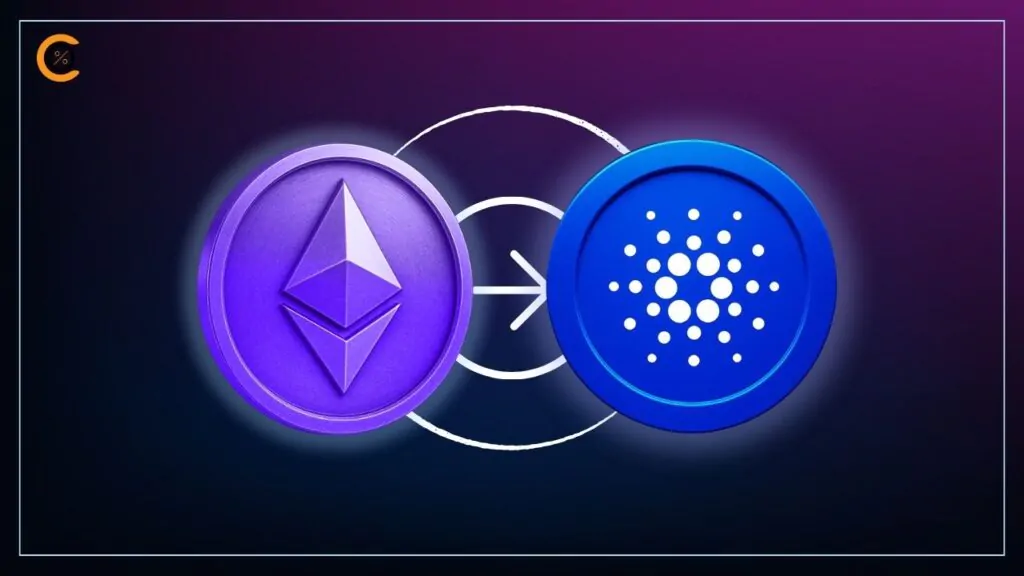
- •You can move assets from Ethereum to Cardano using specific bridges or aggregators.
- •You need a Cardano wallet, such as Eternl or AdaLite, to receive and store the bridged tokens.
- •Ensure you have enough ETH tokens to cover gas and processing fees.
Cardano has expanded its DeFi features, providing seamless access to staking and trading opportunities in an efficient, low-cost ecosystem. These developments have made shifting to Cardano a popular option, especially for ETH users looking to minimize trading costs. However, bridging to Cardano (ADA) can be confusing, especially given the limited ETH to ADA bridge options available online. If you’re trying to avoid costly errors while moving from Ethereum to Cardano, you’re in the right place. This guide explains how to bridge assets from Ethereum to Cardano step by step, using the best and most secure bridges.
Can I Bridge From Ethereum to Cardano?
Yes, you can bridge your assets from Ethereum to Cardano using cross-chain bridge protocols. Although bridging from Ethereum to Cardano was practically impossible a few years back because Cardano is not an EVM blockchain. However, due to continued demand for access to Cardano, several platforms have provided safe routes for transferring assets from Ethereum to Cardano.
The process typically involves locking assets on Ethereum and minting an equivalent representation on Cardano. Not all Ethereum-based tokens can be swapped directly into Cardano. To maximize capital efficiency, most bridges prioritize high-liquidity assets such as USDC, USDT, and ETH. Also, since Cardano is not EVM-compatible, bridges or aggregators often use intermediary protocols or wrapped assets to complete the transfer.
Once the wrapped assets arrive in your Cardano wallet, you can swap them for ADA and use them for trading, staking, and interacting with Cardano-based dApps. For a seamless and effective cross-chain transfer, you must properly prepare your environment. Check below for an overview of everything you need before bridging from Ethereum to Cardano.
Key Things to Keep in Mind
Here are key tips for a successful and seamless ETH to ADA bridge process.
Wallet:
To access the bridge and swap assets conveniently, set up two separate wallets with a reputable crypto wallet provider. The first is for the Ethereum blockchain (for example, MetaMask) to hold the tokens you want to bridge. Then, create a Cardano wallet, such as Eternl, AdaLite, or Lace, to store and manage the bridged tokens.
Gas Fee:
Bridging is not free; you must pay a gas fee in ETH when you begin on Ethereum. In addition, Cardano wallets require a minimum UTXO value (usually around 2 ADA) for transactions involving both native and non-ADA tokens, including those bridged from Ethereum. Keep extra ETH and ADA tokens to complete the transaction.
How to Bridge Assets From Ethereum to Cardano
After you have prepared and funded your crypto wallets with enough tokens for gas, visit a reputable bridge to begin the swap. Note that Cardano does not have an official bridge and instead relies on strategic partners such as Wanchain to provide bidirectional bridging solutions for the network. The following are fast, efficient methods for bridging your Ethereum assets to Cardano (ADA) using cross-chain bridge protocols:
Method 1: Using Wanchain Bridge
Wanchain is the closest to an “official” bridge for Cardano, as the founders of the network (Input Output Global) worked directly with the Wanchain Foundation to add native cross-chain compatibility with Cardano. The bridge offers bidirectional transfers for major assets like ADA and ETH, as well as stablecoins such as USDC and USDT. Wanchain also supports 50+ blockchains, using Secure Multiparty Computation (sMPC) and a Threshold Signature Scheme (TSS) to secure assets without a central custodian. Follow these steps to bridge Ethereum assets to Cardano:
Step 1: Visit the Wanchain official bridge.
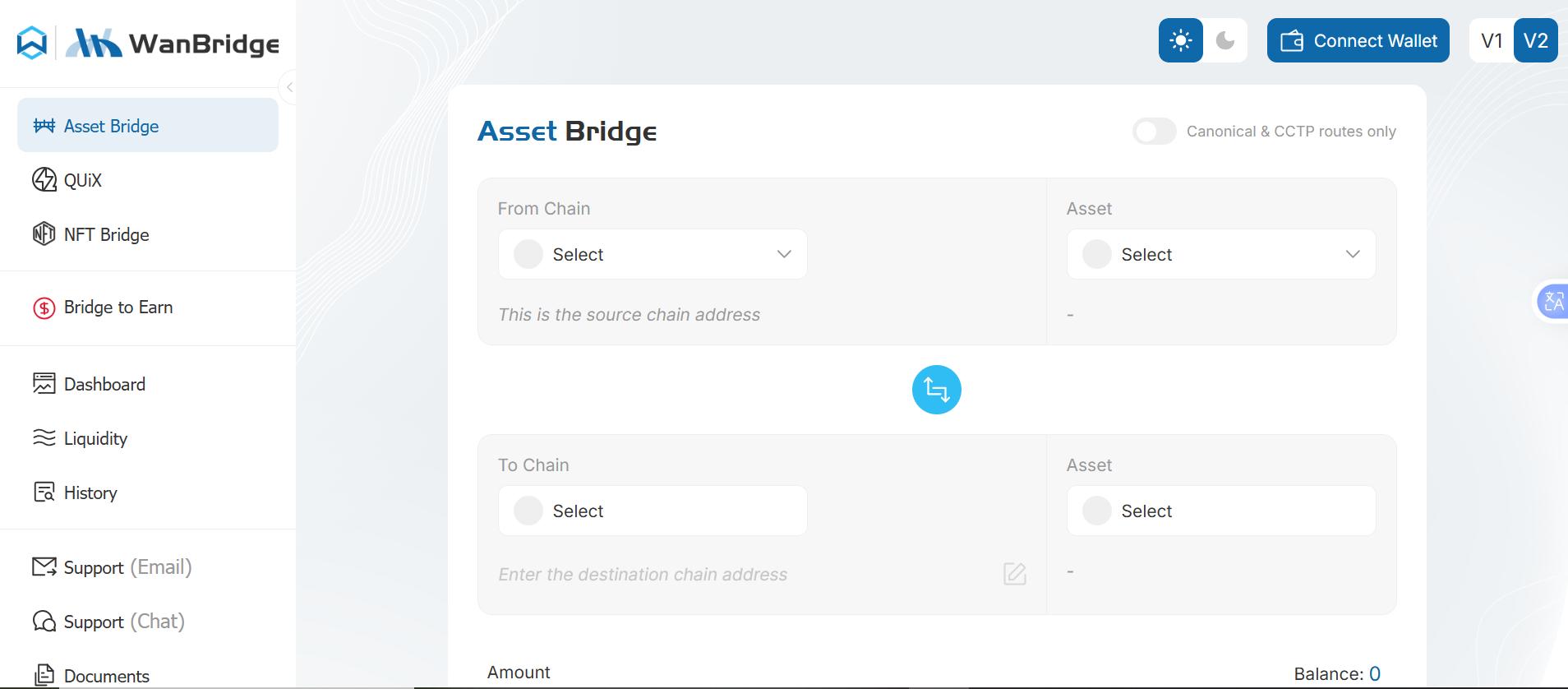
Step 2: Click Connect wallet to link both your source (Ethereum) and destination (Cardano) wallets to the bridge.
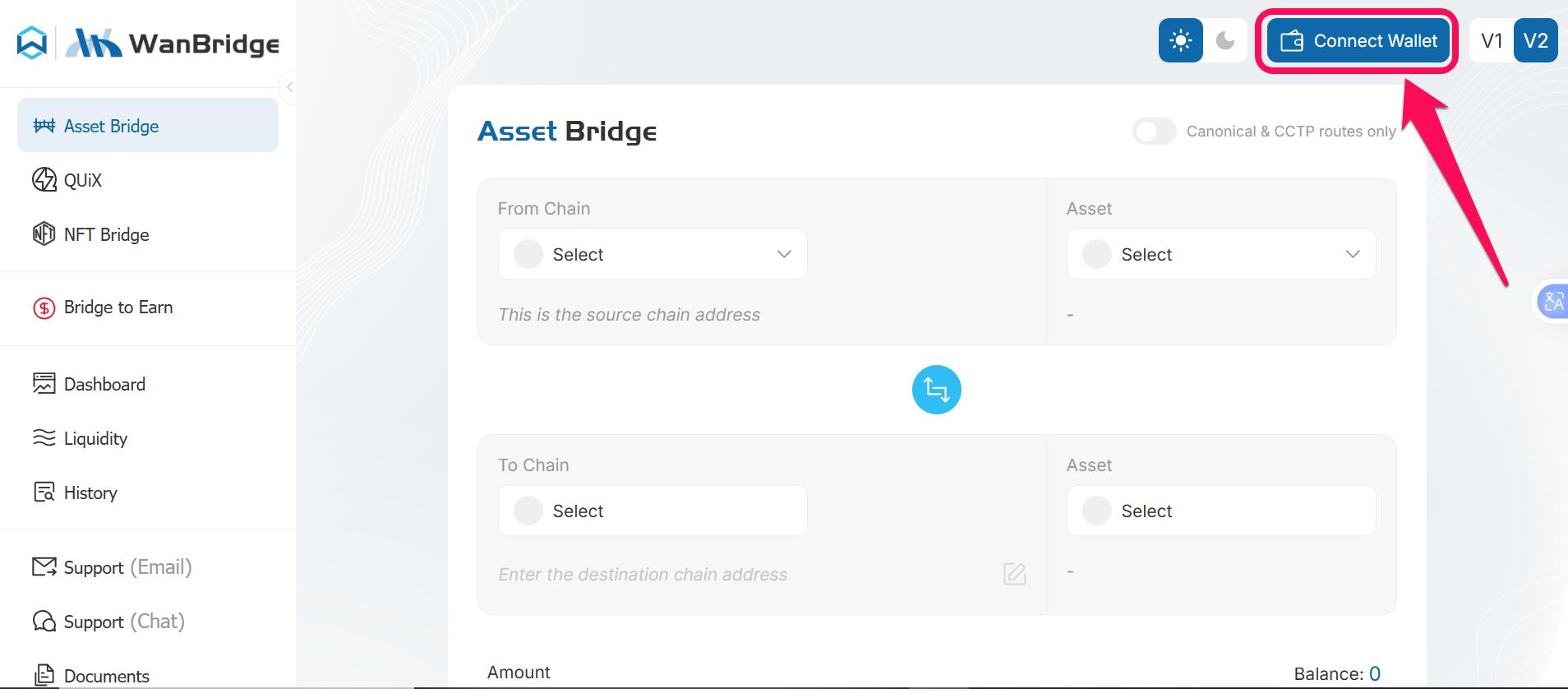
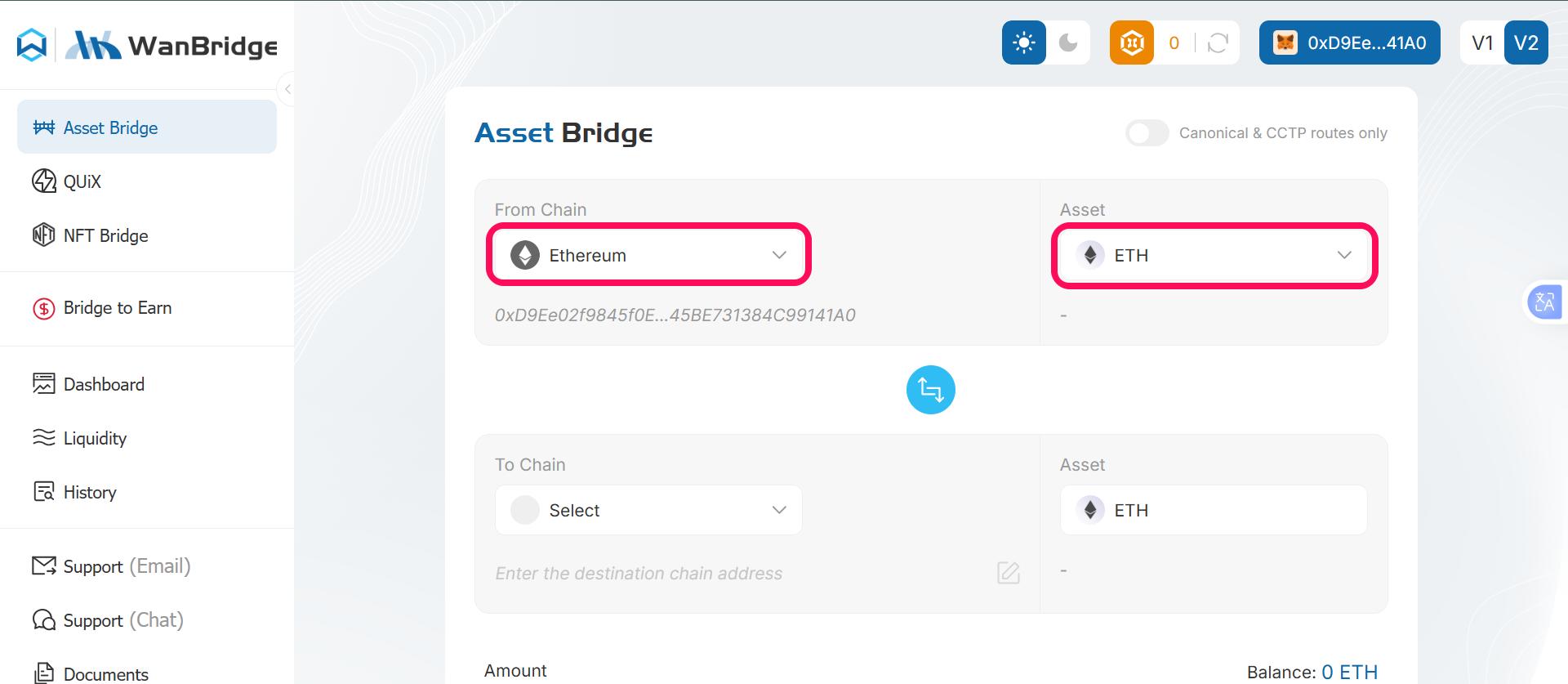
Step 3: In the From Chain field, choose Ethereum and specify the asset you want to bridge.
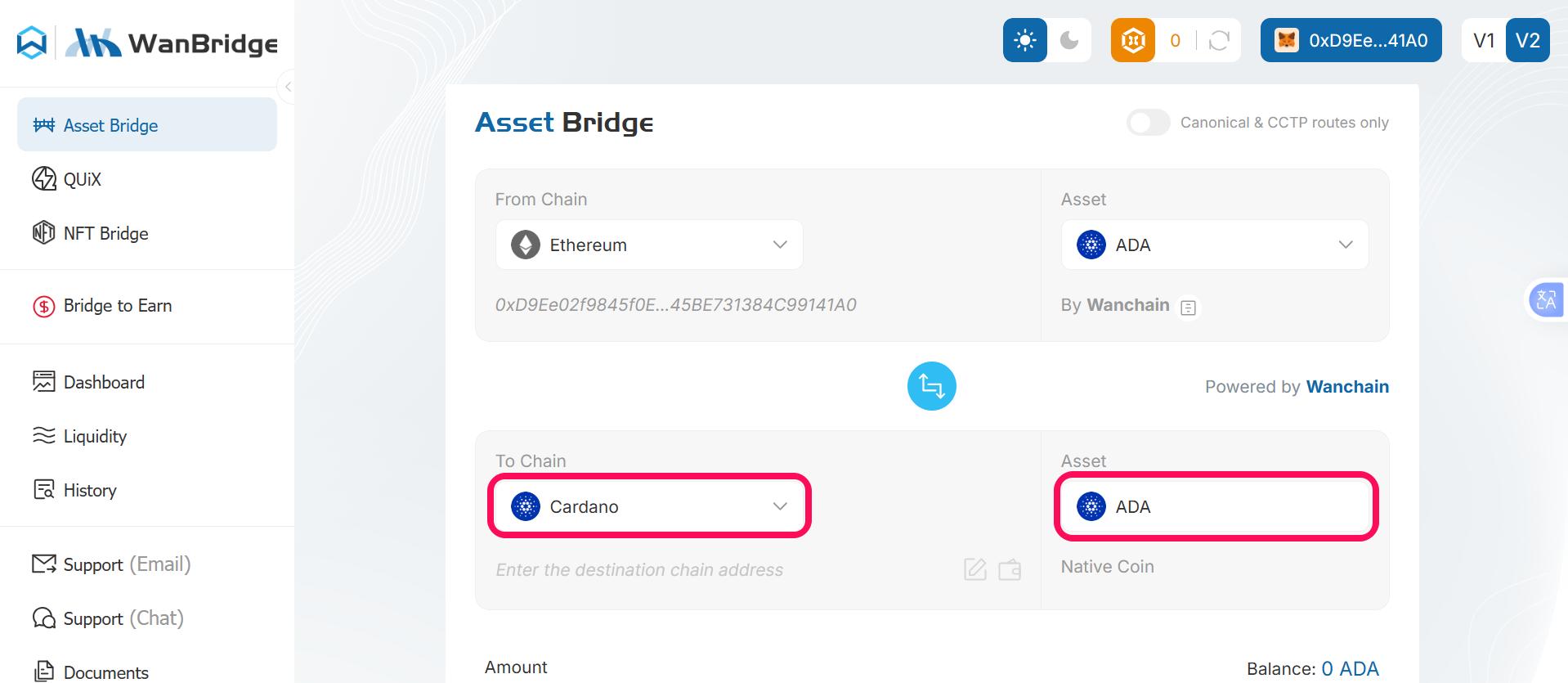
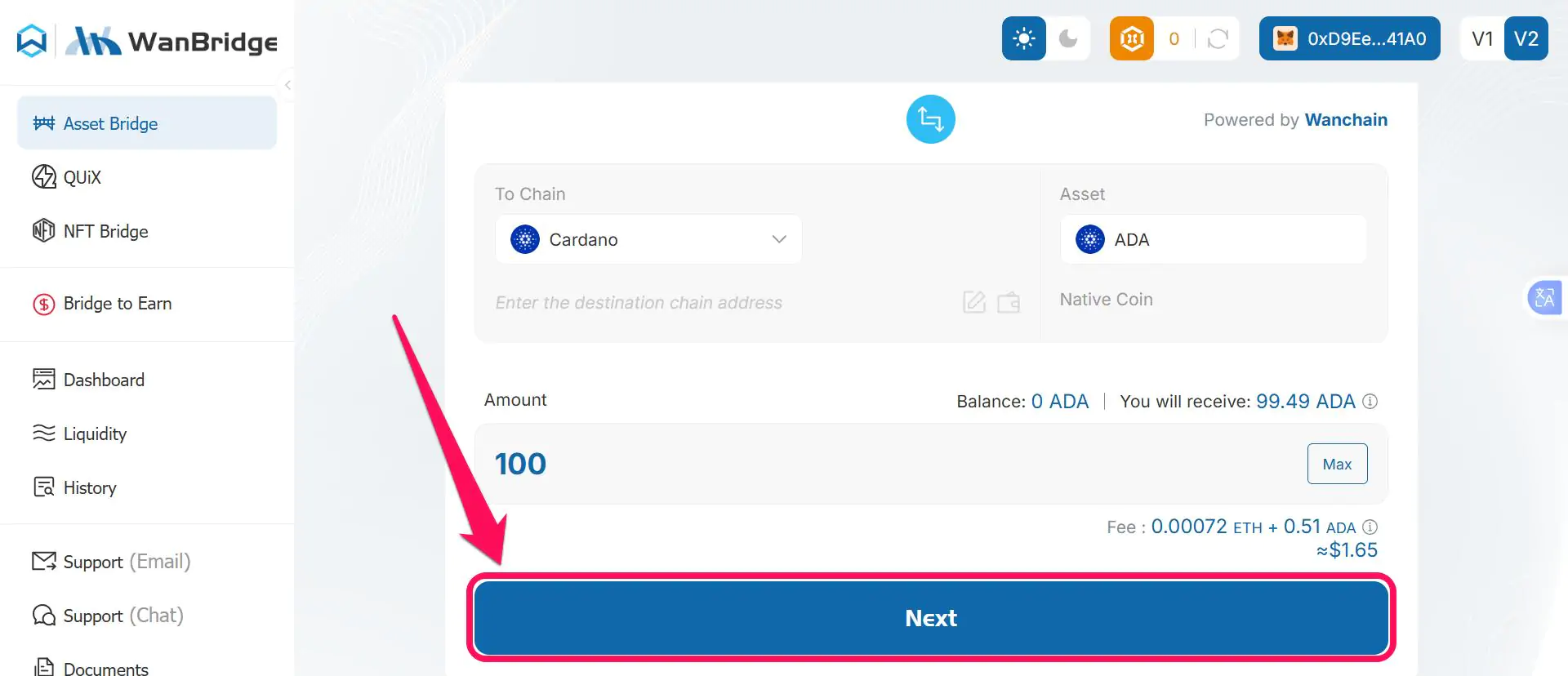
Step 4: Click the To Chain drop-down, then select Cardano. Next, choose the asset you want to receive in your wallet (e.g., ADA).
Step 5: Enter the amount of tokens you want to bridge.
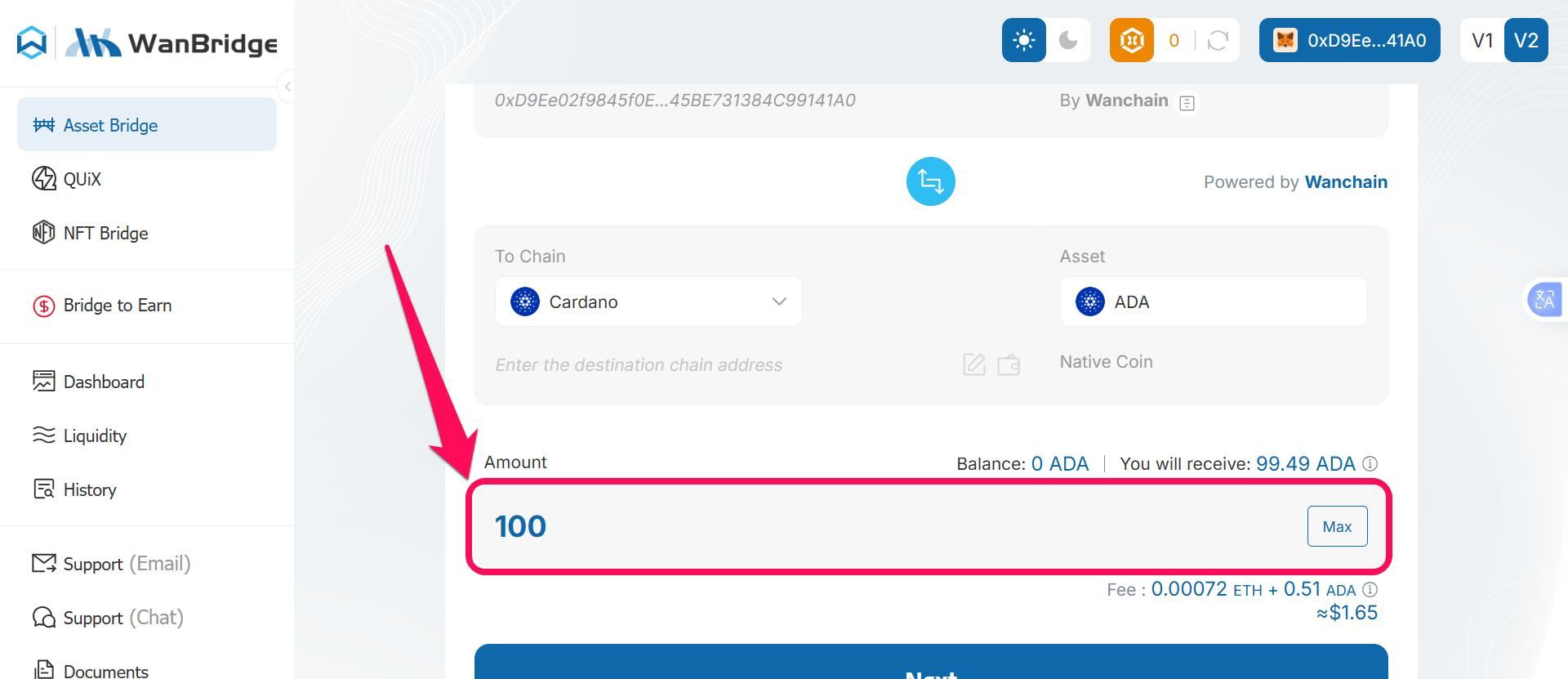
Step 6: Review all transaction details, including fees and estimated deposit amount. Click Next to complete the transaction.
Method 2: Using ChainPort
ChainPort is a custodial bridge that uses a lock-and-mint strategy to transfer assets between networks. The bridge supports token transfers between 25+ networks, including Ethereum, Cardano, and BNB Chain. For Ethereum-to-Cardano transfers, ChainPort uses MPC cryptography and Gnosis Safe for security, allowing users to approve tokens, pay gas, and complete transfers securely. Additionally, ChainPort supports permissionless porting, allowing projects to list ERC-20 tokens for bridging without deep technical integration. Here are the steps needed to bridge from Ethereum to Cardano with the ChainPort bridge:
Step 1: On your favorite browser, search for the ChainPort bridge.
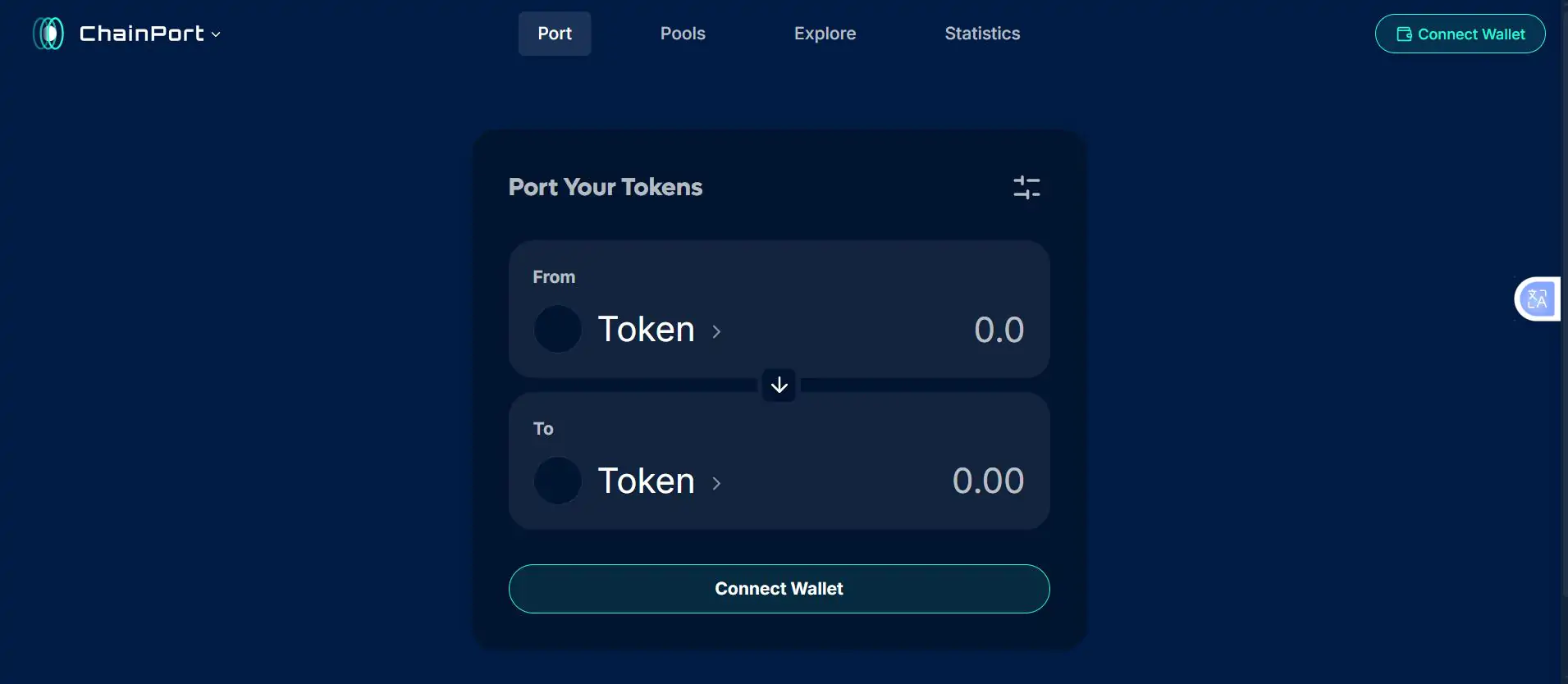
Step 2: Tap Connect wallet to link both your Ethereum and Cardano wallets to the bridge.
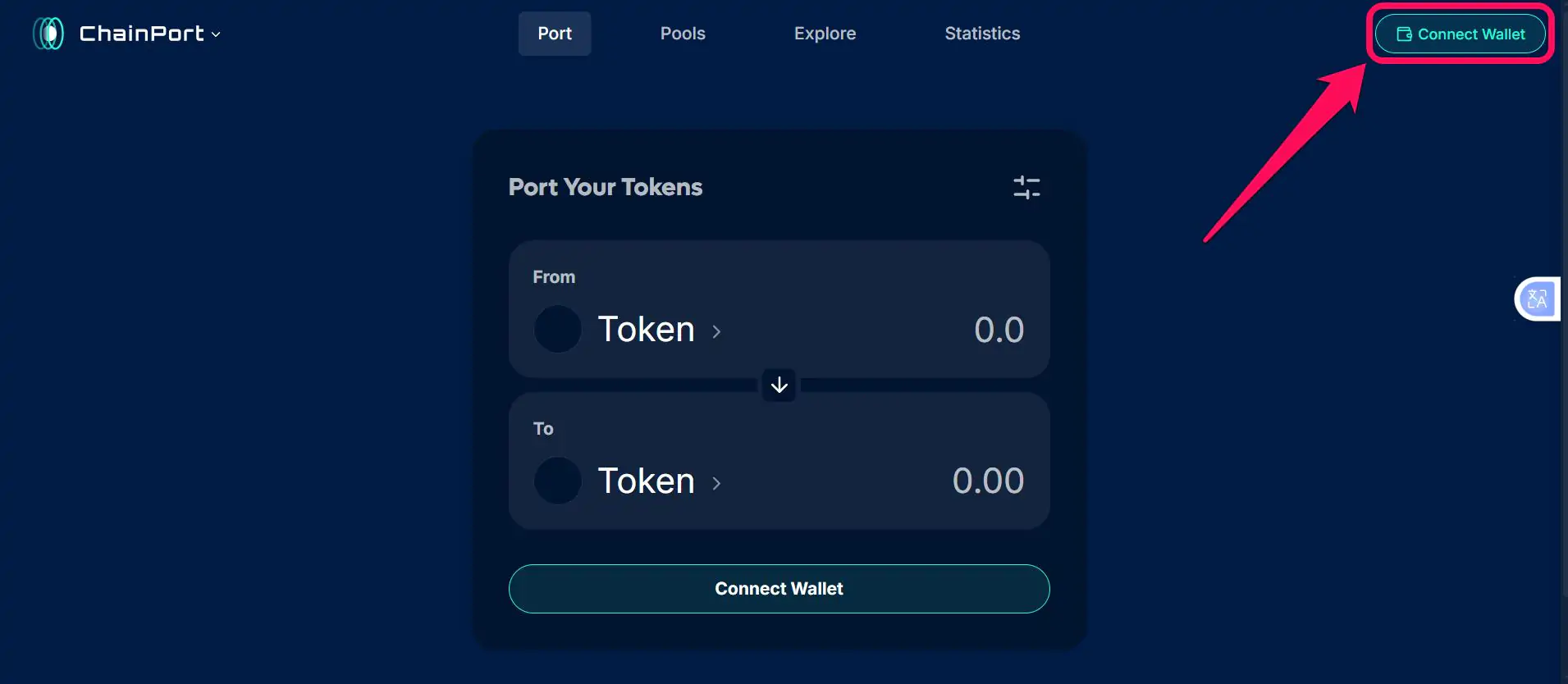
Step 3: Select Ethereum in the From field and Cardano in the To section alongside the respective tokens.
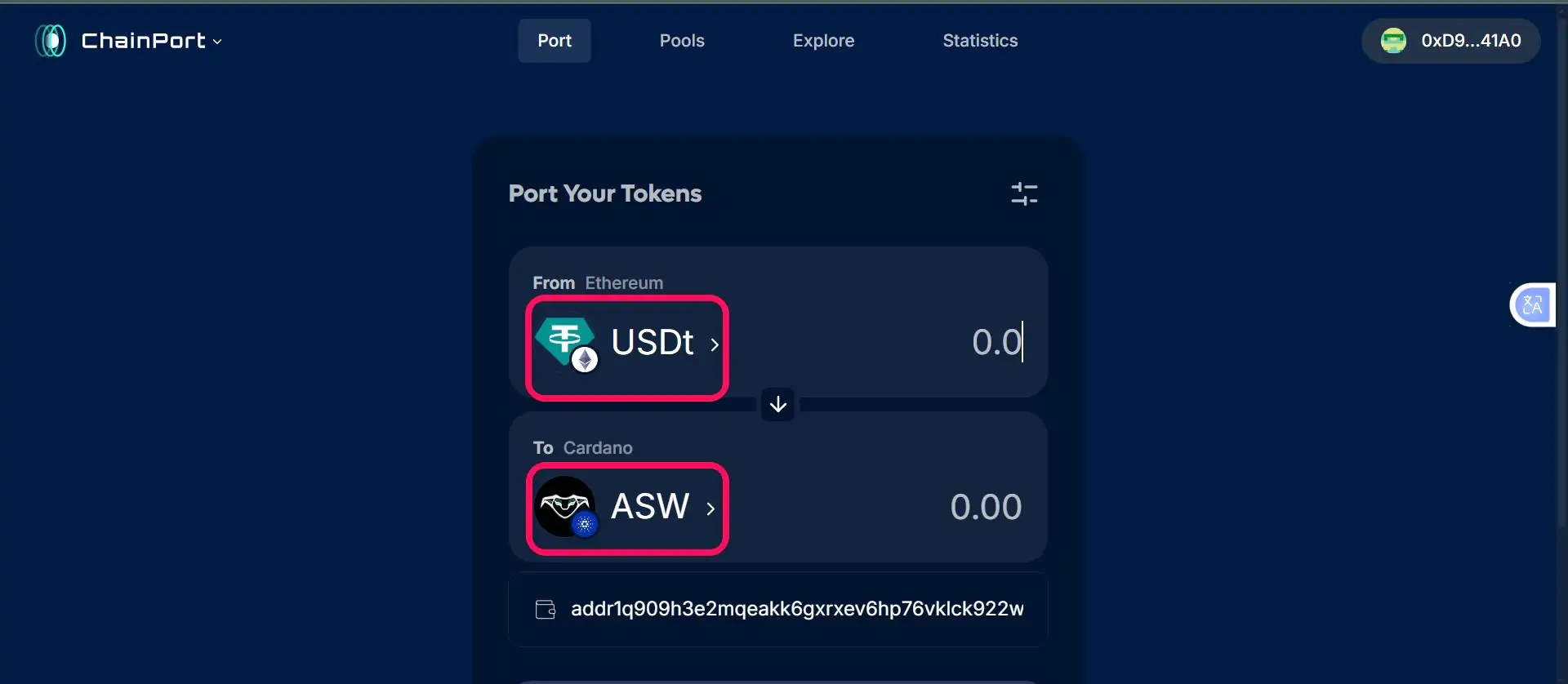
Step 4: Enter the amount of tokens you want to bridge. You can also add your Cardano wallet address (recipient address).
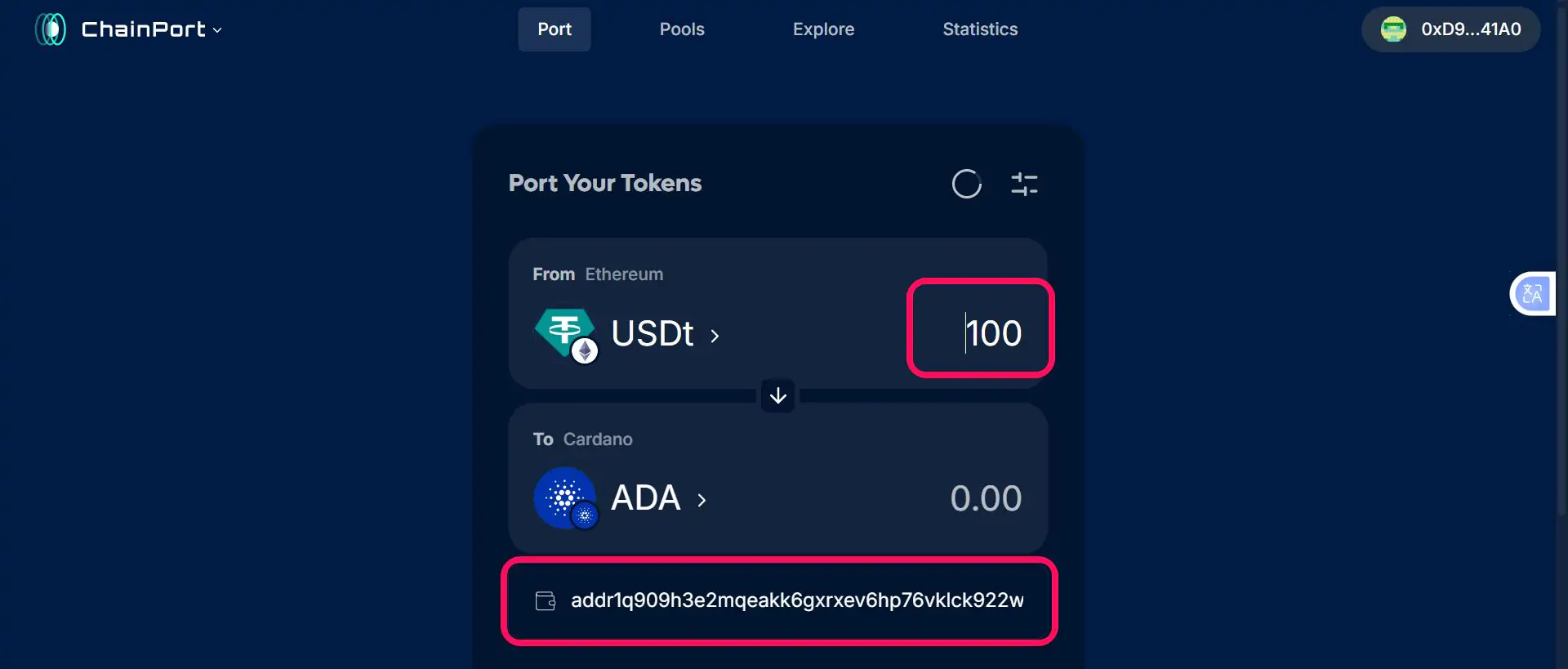
Step 5: Double-check the details, then sign the transaction in your wallet to complete the transfer.
Method 3: Using a Bridge Aggregator (RocketX Exchange)
Bridge aggregators register your transaction, then locate the best routes to complete the swap. RocketX Exchange does this efficiently and provides you with a list of route options to swap your Ethereum tokens over to the Cardano blockchain. Additionally, RocketX Exchange supports over 170 blockchains, pulling liquidity from 250+ centralized and decentralized exchanges to ensure you receive the best rates for every transfer. Follow these steps to swap Ethereum tokens into the Cardano network with the RocketX Exchange bridge aggregator:
Step 1: Head to the RocketX Exchange bridge website.
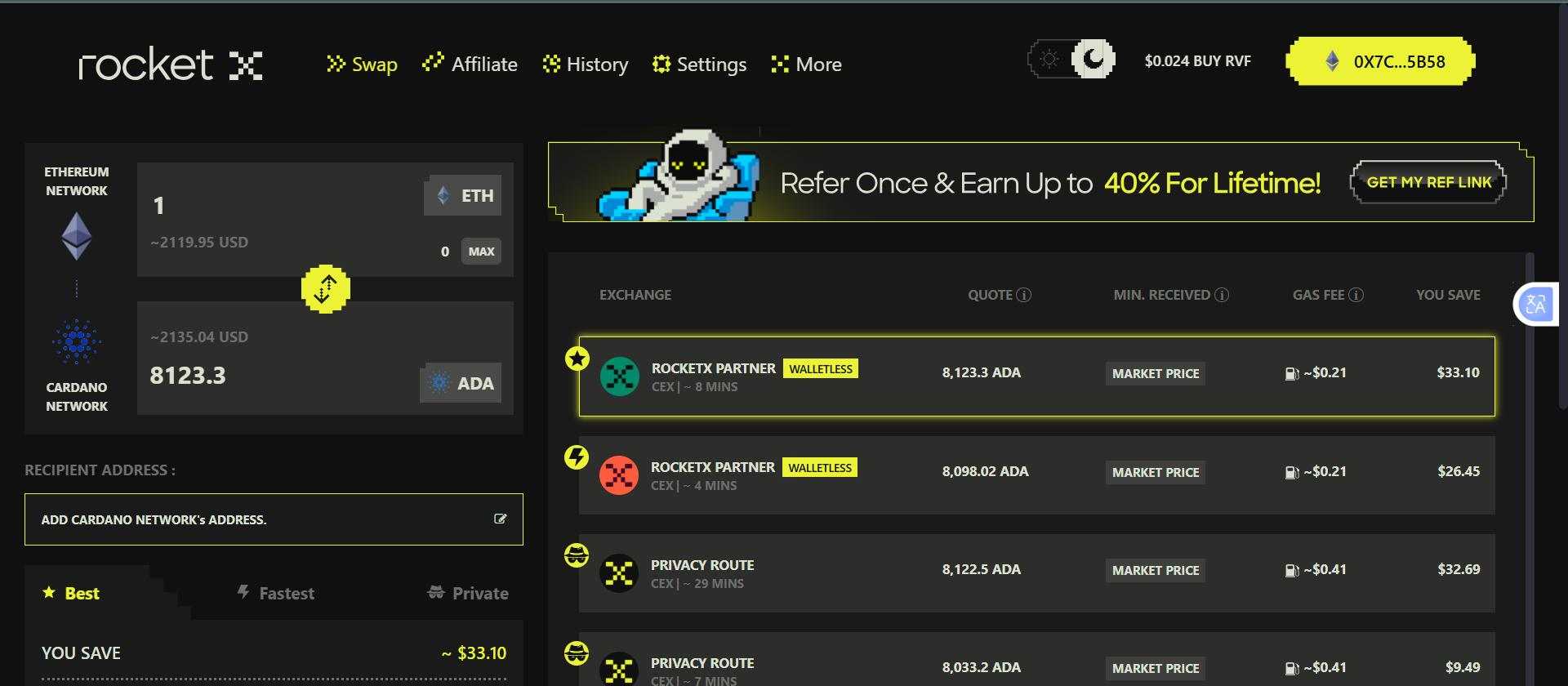
Step 2: Tap Connect wallet to link your Ethereum wallet (e.g., Metamask) to the bridge.
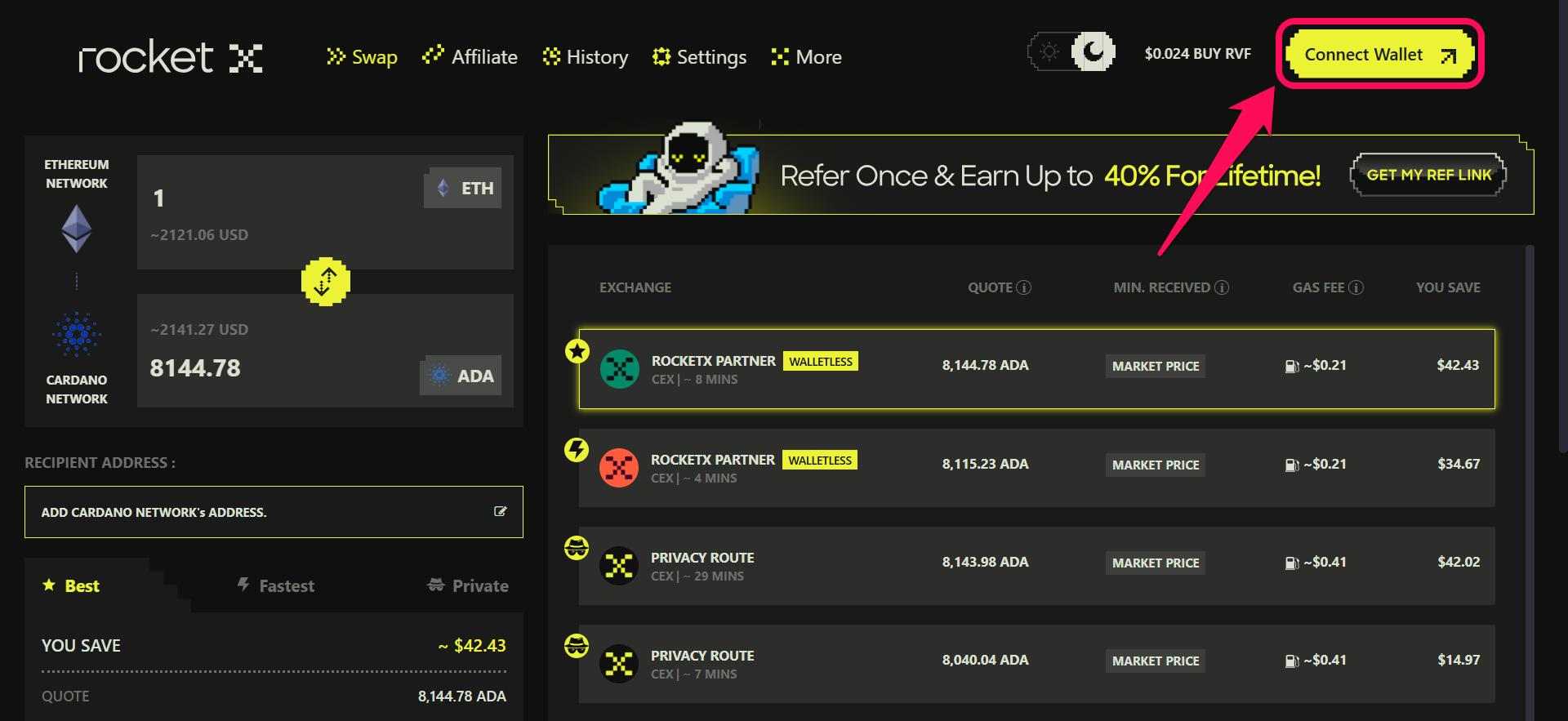
Step 3: Select Ethereum as the source chain and Cardano as the destination.
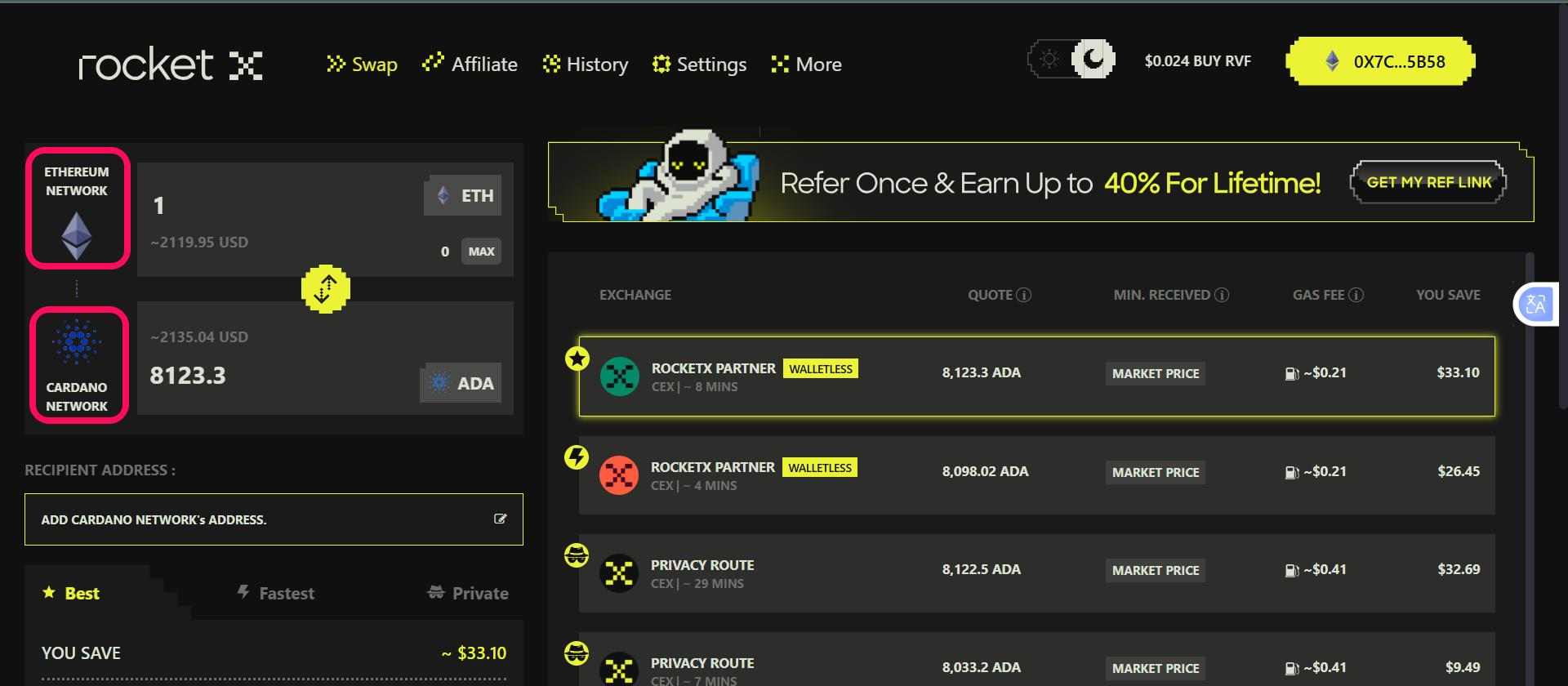
Step 4: Enter the amount of Ethereum tokens you want to bridge to Cardano.
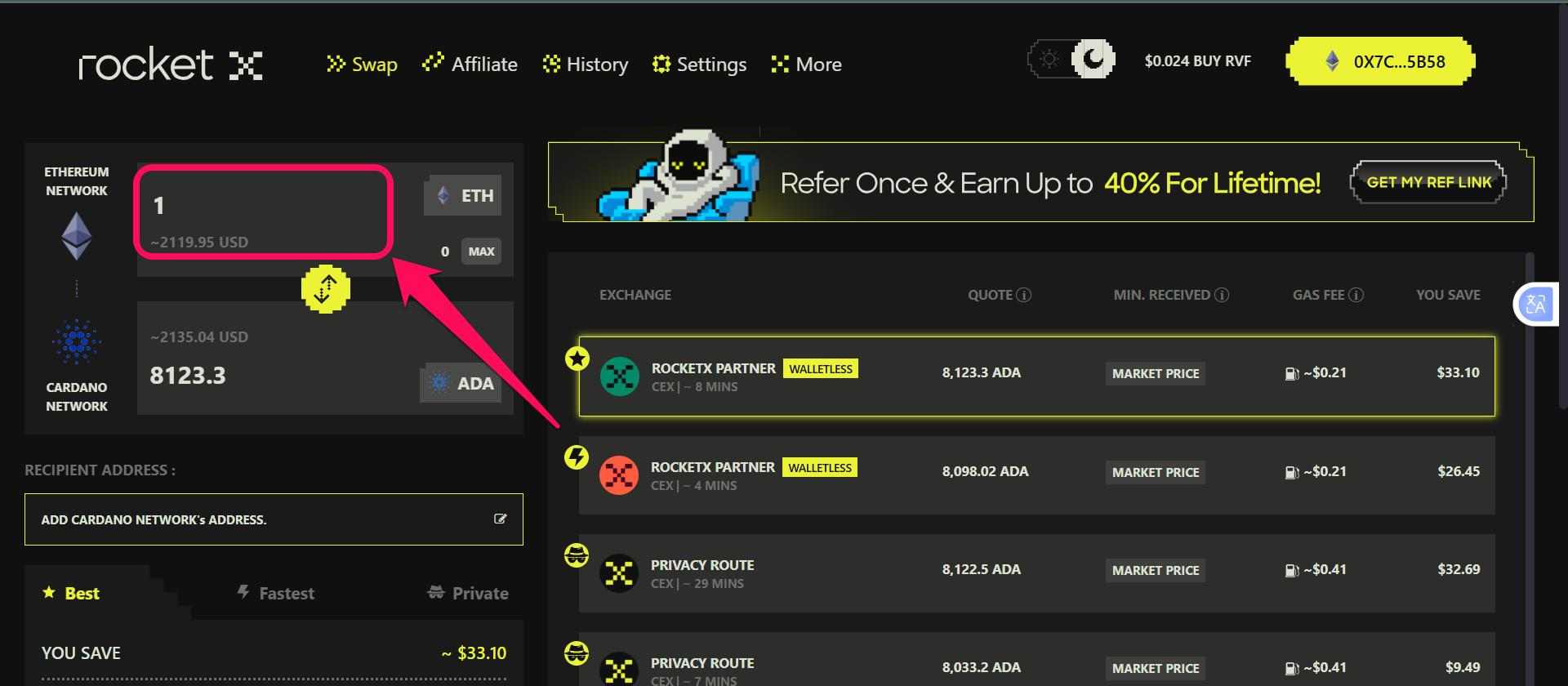
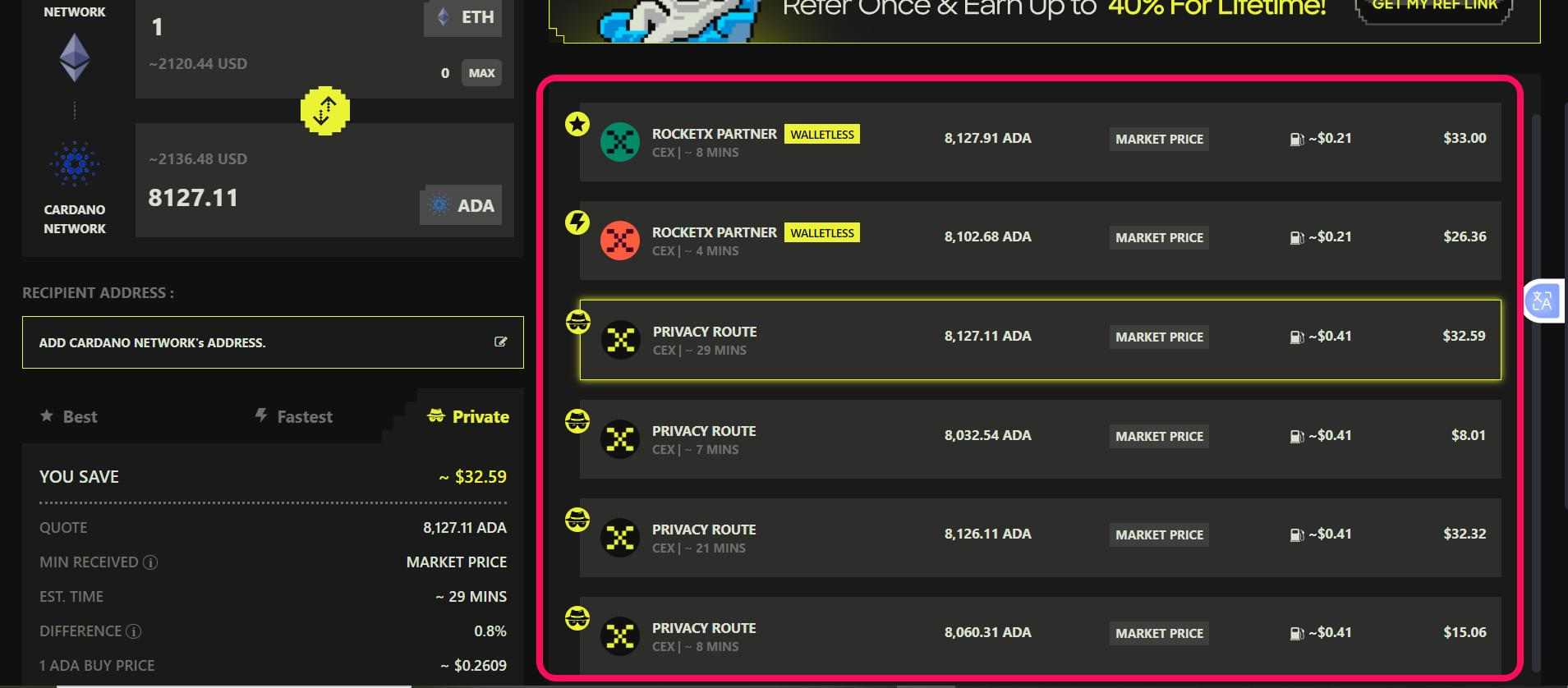
Step 5: The aggregator will show a list of routes to complete the transfer. Select the one with a reasonable price and fast speed for the best results.
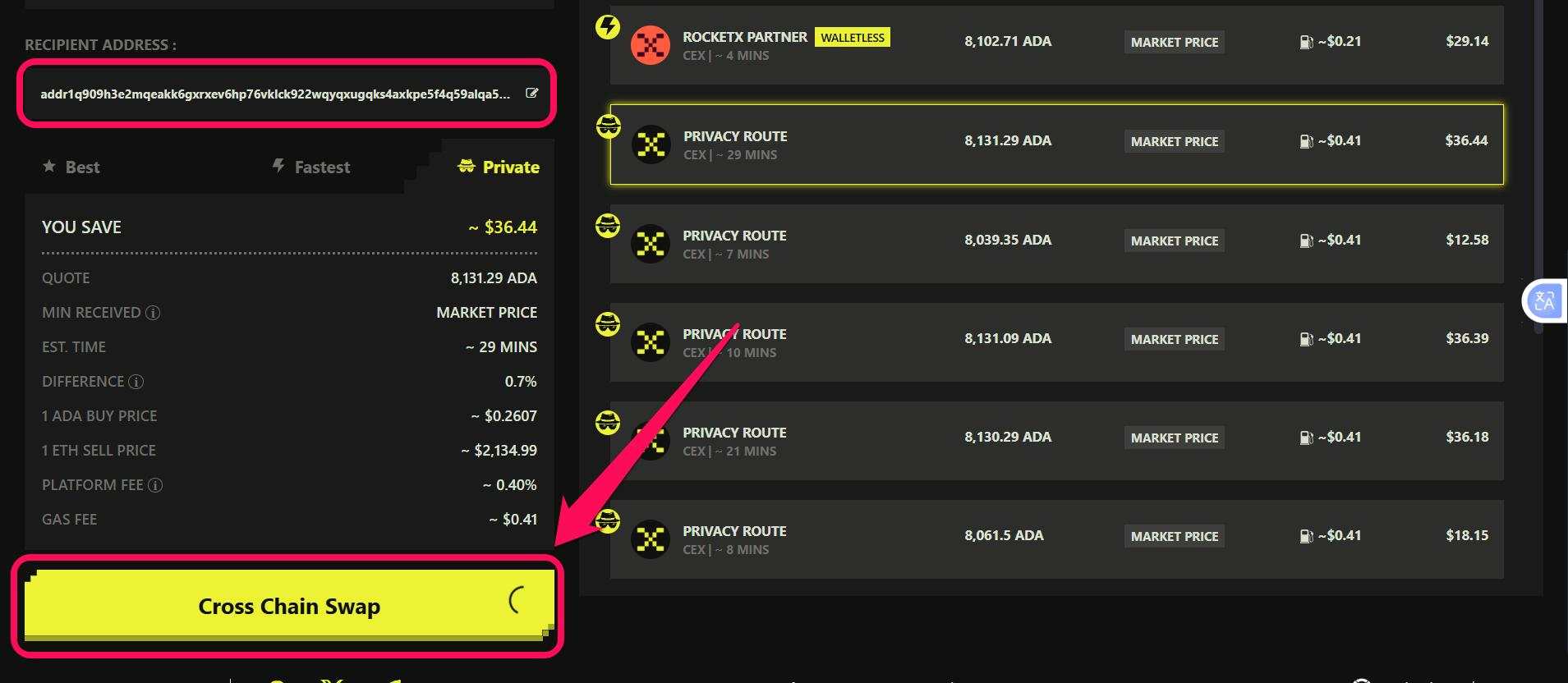
Step 6: Add your Cardano mainnet address to the bridge, then click Cross-chain swap to complete the transfer.
Ethereum to Cardano Bridging Fees
Bridging fees, particularly gas fees, are determined by the source network, Ethereum. Depending on network congestion at the time of bridging, gas fee on Ethereum can range from $3 – $25+. Additionally, bridge protocols such as ChainPort may charge a small processing fee (about 0.3% of the transaction value). However, transactions on the Cardano blockchain have relatively lower costs than on Ethereum, reaching as low as 0.1% per transaction.
Bottom Line
Cardano is an ideal choice if you’re looking to escape the high fees and limited scalability in Ethereum’s EVM ecosystem. Thanks to reputable cross-chain protocols, you can now bridge assets from Ethereum to Cardano, but your choice of method affects cost, speed, and efficiency. Use the steps in this post to safely migrate your Ethereum tokens to the Cardano blockchain.
Once your ADA tokens are received and stored, the next step is to find out how to set up your wallet to access staking and other rewarding opportunities on Cardano. Find out how to get started with the Lace Wallet to simplify your Cardano experience and earn rewards along the way.
FAQs
1. Can I send ETH directly to a Cardano wallet?
No, you can not transfer an Ethereum token to a Cardano wallet. Cardano wallets support the Cardano network only, which means you can only receive native Cardano tokens, and ETH is an Ethereum native token.
2. How long does the bridging take?
Typically, 2-10 minutes, depending on confirmations, the bridge you select, and network speed.
3. Is bridging from Ethereum to Cardano safe?
Yes, bridging from Ethereum to Cardano is safe. However, safety during bridging is ensured only when you use reputable protocols to initiate the transfer. Always double-check wallet addresses before confirming transfers to avoid irreparable errors.