



- •Binance SAFU is an emergency fund created to protect users after serious security incidents.
- •SAFU started from the “funds are safe” meme but later became an official protection fund.
- •SAFU is different from Proof of Reserves, which verifies 1:1 asset backing.
Binance SAFU started from a simple “funds are safe” message by CZ, turned into one of crypto’s most repeated memes, and later became the name of Binance’s user protection fund. But the fund itself has a serious purpose. It exists for the situation every exchange user worries about: what happens to user funds if a major hack, exploit, or security failure ever takes place? In this article, we will explain what Binance SAFU, or Binance Secure Asset Fund for Users, is, how it is funded, its current value, and why it matters.
What Is Binance SAFU?
SAFU stands for Secure Asset Fund for Users. It is Binance’s emergency security fund, created to protect user assets if the exchange ever faces a serious incident.
This can include cases like hacks, technical bugs, exploits, or other failures where users could be affected. So, SAFU is not a daily security feature like 2FA, withdrawal whitelist, or anti-phishing codes. It is a reserve fund kept for worst-case situations.
Binance created SAFU in July 2018 and initially allocated a percentage of trading fees to grow the fund. The purpose was to build a separate protection layer for users, so Binance had funds available if it ever needed to respond to a major security event.
The Origin of SAFU
The word SAFU did not start as a formal fund name. In 2018, Binance went through unscheduled maintenance. During that time, Changpeng Zhao, tweeted that “funds are safe” to reassure users that their assets were protected.
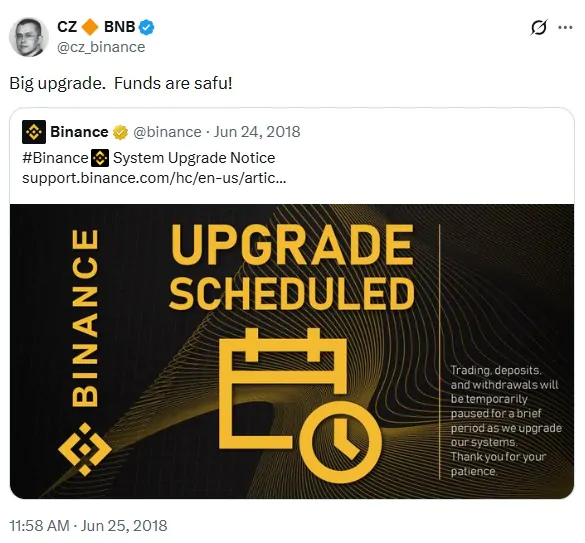
The phrase kept being used in the Binance community. Later, a YouTuber named Bizonacci uploaded a video titled “Funds Are Safu”, The video turned the phrase into a meme, and “funds are SAFU” became one of the most known lines in crypto culture.
Binance later used SAFU as the name of its user protection fund, giving it the official meaning: Secure Asset Fund for Users.
Why SAFU Matters
Crypto exchanges hold user assets, but they do not work like banks. With banks, customer deposits are often protected through regulated insurance systems, depending on the country. Crypto exchanges are different. User protection depends on the exchange’s own security setup, regulatory position, asset management, and how it responds when something goes wrong.
That is why security funds matter. Binance handles a huge amount of user activity, with over 320 million users and billions in trading volume. With that size, there is also more responsibility. The exchange has to prevent attacks, but it also needs a response plan for the case where prevention is not enough.
SAFU is that response layer. It does not stop a hack by itself. It does not prove that Binance has all user assets backed. It exists so Binance has a dedicated reserve that can be used if users need compensation after a serious issue.
How Binance SAFU Works
When Binance created SAFU, it allocated a portion of trading fees to grow the fund. Over time, Binance built the fund into a reserve that it says is meant to protect users during extreme cases.
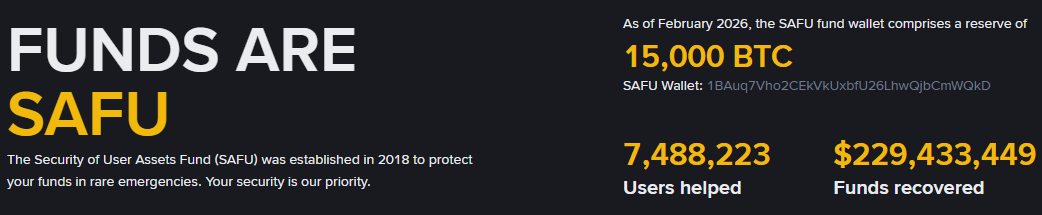
As of February 2026, Binance states that the SAFU fund wallet contains crypto assets valued at around $1 billion. Binance also says the token composition of the SAFU wallet may be adjusted from time to time at its own discretion.
This part is important because SAFU is not a fixed cash balance. Its value can change depending on the assets held inside the wallet, market prices, deposits, withdrawals, or any future use of the fund.
Current SAFU Wallet
Since the Binance SAFU fund is held onchain, users can check its balance through blockchain transaction data instead of relying only on Binance’s stated figure. This means the wallet balance, total BTC received, total BTC sent, and latest transactions can be viewed publicly through a Bitcoin block explorer.
The SAFU wallet address is:
SAFU Wallet: 1BAuq7Vho2CEkVkUxbfU26LhwQjbCmWQkD
The wallet currently holds:
- Current balance: 15,000 BTC
- Current value: Around $954,722,343
- Total received: 31,278 BTC
- Total sent: 16,278 BTC
These numbers should not be treated as permanent. The BTC balance can change if Binance adds funds, adjusts the fund structure, or uses part of the fund to protect users. The USD value can also change even if the BTC amount stays the same, because Bitcoin’s market price moves.
So, when looking at SAFU, it is better to check the wallet directly instead of relying on one fixed number.
Binance SAFU and ADGM
Binance’s SAFU setup has also changed from the older version many users remember.
According to Binance, a portion of these funds are now used as capital reserves as part of Binance’s regulatory obligations in the Abu Dhabi Global Market, or ADGM.
The SAFU fund is held and managed by Nest Clearing and Custody Limited, a Recognized Clearing House with custody permissions regulated by the ADGM Financial Services Regulatory Authority.
This makes the 2026 version of SAFU different from the older explanation. It is still a user protection fund, but part of it is also connected to Binance’s regulatory reserve obligations.
SAFU vs Proof of Reserves
SAFU and Proof of Reserves are often discussed together, but they are not the same thing.
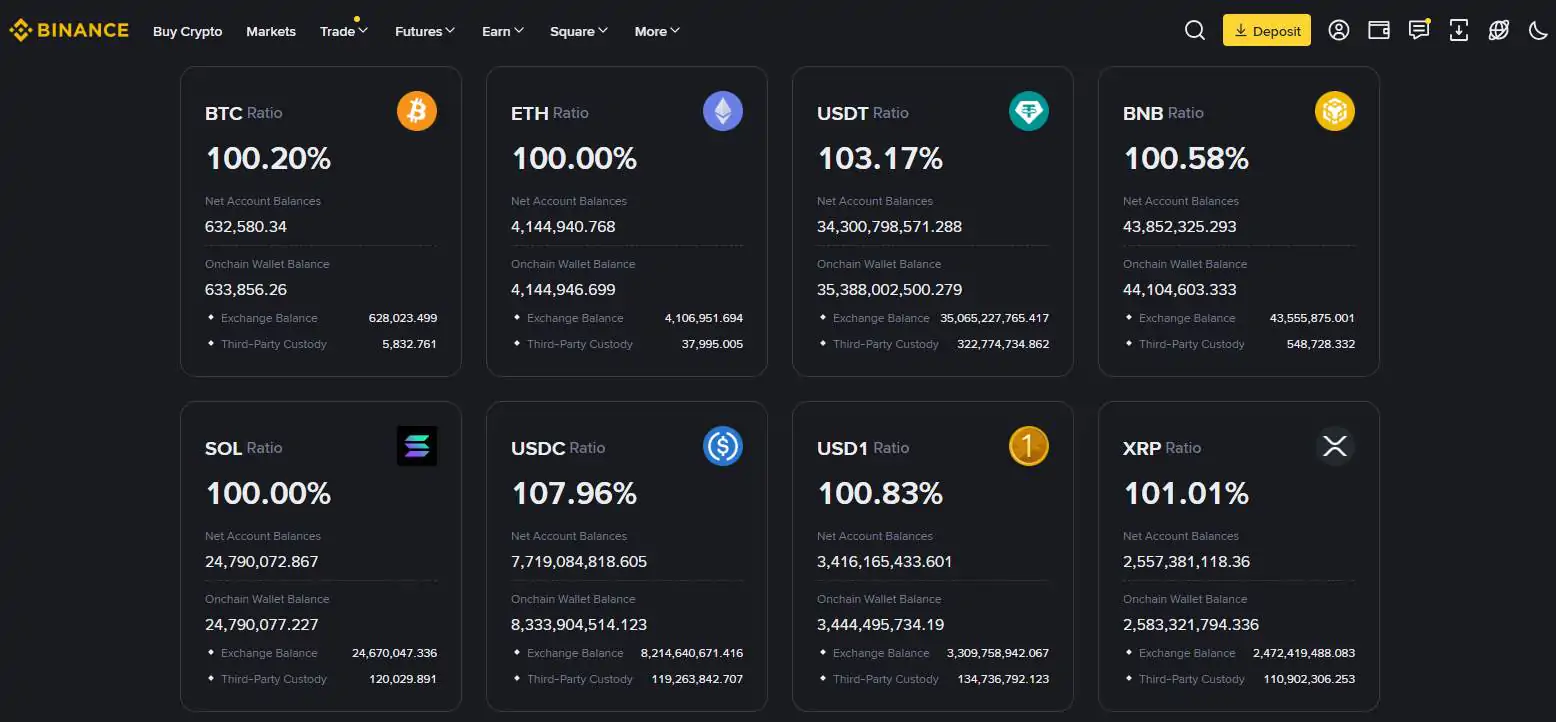
Proof of Reserves shows whether Binance holds user assets 1:1. It is about backing customer balances and giving users a way to verify that their assets are included in Binance’s liabilities report.
SAFU is different. It is an emergency protection fund. It is not there to prove that Binance has user assets backed. It is there for cases where something goes wrong and Binance needs funds to protect affected users.
A simple way to understand it:
Proof of Reserves answers: Are user assets backed?
SAFU answers: What happens if users need protection after a serious incident?
Binance manages Proof of Reserves separately. Its PoR system uses Merkle Tree verification and zk-SNARKs. Binance also lists reserves for 51 assets, with reserve ratios above 100%.
The current Proof of Reserves page also lists:
- Verification mechanism: zk-SNARKs
- Merkle Root Hash: 250e0c4ab441780d7276bd63a7e2bfb098213dd6bd9de89265923d8e3c11c2d1
Users can verify their own balances by logging in to Binance, going to Wallet, then Verification, where they can find their Merkle Leaf and Record ID. This lets users check whether their account balance was included in the liabilities report for that verification date.
Users Helped and Funds Recovered
Binance’s SAFU page also highlights user protection data, including:
- Users helped: 7,488,223
- Funds recovered: $229,433,449
This should not be read as the same thing as the SAFU wallet balance. The wallet balance is the reserve fund. The users helped and funds recovered figures show Binance’s wider protection and recovery efforts.
So SAFU is one part of the security picture, but Binance also points to recovery support as part of its user protection system.
Does SAFU Make Binance Safe?
SAFU adds another layer of protection, but it does not remove exchange risk.
Binance also has Proof of Reserves, account security tools, wallet monitoring, risk controls, and other security systems. But even with all of that, users should understand that keeping funds on any exchange is still different from holding assets in a personal wallet.
SAFU is useful because it gives Binance a dedicated fund for extreme cases. But it should not be treated as a reason to keep every long-term holding on an exchange. For active trading, exchanges are useful. For long-term storage, self-custody is still something users should understand.
Final Thoughts
Binance SAFU started as a meme, but the fund itself has a serious purpose. It gives Binance a reserve that can be used if users need protection after a major security-related issue.
It also shows why crypto exchange security is not only about preventing attacks. Prevention is the first part, but response matters too. Proof of Reserves shows whether user assets are backed 1:1, while SAFU answers a different question: what happens if something still goes wrong?
For Binance users, SAFU adds another protection layer, but it is not a full replacement for personal risk management. To understand the exchange beyond its security fund, you can also read our full Binance review, where we cover its trading features, fees, supported assets, security setup, and overall user experience.
FAQs
1. What does Binance SAFU mean?
Binance SAFU stands for Secure Asset Fund for Users. It is Binance’s emergency fund created to protect users in serious security-related cases.
2. When was Binance SAFU created?
Binance created SAFU in July 2018. The fund was built by allocating a percentage of trading fees to user protection.
3. What is the purpose of Binance SAFU?
The purpose of Binance SAFU is to protect users if a major hack, exploit, bug, or security failure affects user funds.