


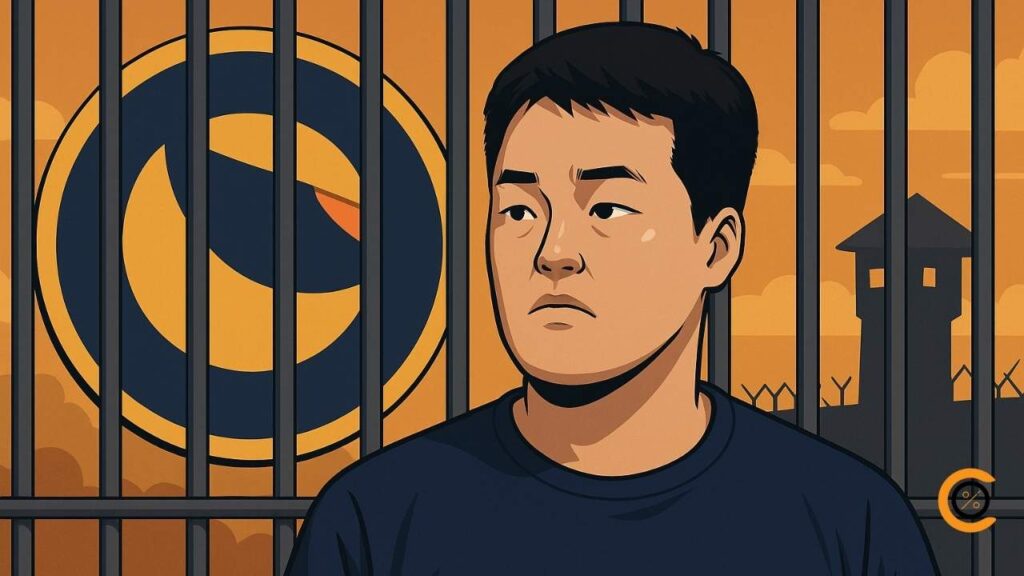
- •US prosecutors filed a Do Kwon sentencing request seeking a 12-year prison term tied to the TerraUSD and LUNA collapse.
- •The filing states that losses linked to Terraform exceeded those in major crypto fraud cases involving Bankman-Fried, Mashinsky, and Greenwood.
- •Kwon’s defense is seeking a sentence capped at five years, while the judge will determine the final outcome at next week’s hearing.
The Do Kwon sentencing request has moved into its final phase as US prosecutors asked a federal judge to impose a 12-year prison term for the Terraform Labs co-founder. The request came in a detailed court filing ahead of Kwon’s sentencing next week.
Prosecutors argued that his actions contributed to one of the largest losses recorded in the crypto sector and said that years of misstatements concealed the risks tied to TerraUSD and LUNA. The court will review both the prosecution’s and defense’s recommendations before determining the final sentence. Kwon has already pleaded guilty, though the length of his punishment will depend on the judge’s decision.
Prosecutors Seek 12-Year Sentence Citing Scale of Losses
In the filing submitted to the Southern District of New York, prosecutors asked the judge to sentence Kwon to 12 years in prison and finalize the forfeiture of criminal proceeds. They wrote that the market fallout tied to Terraform exceeded losses linked to other high-profile crypto fraud cases, stating that the collapse caused more harm than the combined impact of cases involving Sam Bankman-Fried, Alex Mashinsky and Karl Sebastian Greenwood. The filing also noted that the TerraUSD depeg triggered a broader downturn across digital asset markets.
The government’s position is based on documented findings that Kwon misled investors about the stability of TerraUSD, the governance structure of the Luna Foundation Guard and the level of activity on related projects. The sentencing letter, dated December 4, 2025, said that the Terra ecosystem grew on claims prosecutors describe as knowingly inaccurate. They added that Kwon’s conduct after the 2022 collapse, including his time evading authorities before his arrest in Montenegro, supported the need for a substantial sentence.
Kwon pleaded guilty earlier this year to wire-fraud-related charges. His legal team has asked the court to impose a sentence of no more than five years, arguing that he could face additional prison time in South Korea, where prosecutors are also pursuing a case. Prosecutors responded that any future outcome abroad remains uncertain and should not influence the sentence issued in the United States.
Also read: Crypto Scams You Must Know in 2025
What Comes Next in the Sentencing Process
The Do Kwon sentencing request will be reviewed during the upcoming hearing, where the judge will weigh arguments from both sides and consider the full record. Prosecutors said the 12-year recommendation reflects the scale of losses, the number of impacted investors and the nature of the misconduct outlined in court documents. They also acknowledged factors that may work in Kwon’s favor, such as his guilty plea and the period he spent detained in Montenegro before extradition.
The decision may influence how future crypto-related fraud cases are assessed, particularly where claims of technological stability and decentralization played a role in attracting investor capital. While LUNA briefly saw a price increase after the sentencing recommendation became public, market movements do not affect the legal proceedings. The court retains full discretion and may issue a sentence shorter or longer than the recommendations.
Also read: Bybit Mantle Aave Partnership Expands Onchain Liquidity
A Turning Point as the Court Prepares Its Final Decision
The Do Kwon sentencing request marks a significant moment in a case that has shaped global discussions around crypto oversight. Prosecutors have set out a clear argument for a multi-year prison term, and the defense has positioned its request for a shorter outcome. With the hearing scheduled for next week, the focus now shifts to how the judge interprets the evidence, the extent of losses and Kwon’s admitted conduct. The court’s ruling will bring the case to its next stage and provide a final answer to a process that began shortly after the Terra collapse.