


- •Pro-focused Optimism-based perpetual DEX with options and RFQ.
- •Offers 14+ spot markets and 12+ perpetual contracts with up to 15x leverage.
- •Supports 9+ options underlyings including BTC, ETH, SOL, and HYPE.
- •Dynamic fee tiers based on 28 day volume or DRV staking.
- •RFQ system enables private quotes for large or multi-leg trades.
- •Modular CEX-like interface with customizable layout and subaccounts.
- •Off-chain matching with on-chain settlement on Optimism rollup.
- •Vaults and DRV staking provide additional yield opportunities.
As competition continues to increase among perpetual DEXs, with new platforms entering the market and older exchanges rebranding or upgrading to offer derivatives, Lyra has also evolved into Derive, a perpetual DEX with a noticeably different approach.
While most platforms primarily focus on offering standard derivatives and, in some cases, leveraged trading of real world assets on chain, Derive has taken a direction that is more aligned with professional traders. Its core emphasis lies in options trading and the inclusion of an RFQ feature, which is not commonly available across most perpetual DEXs. In this Derive review, we tested the platform to evaluate its features, fee structure, funding options, and overall trading experience, so you can better understand how it serves its target audience and whether it fits your trading needs.
| Stats | Derive |
|---|---|
| 🚀 Founded | 2024 |
| 🌐 Headquarters | Australia |
| 🔎 Founder | Nick Forster, Michael Spain, Jake Fitzgerald, and Dominic Romanowski. |
| 👤 Active Users | 22K+ |
| 🪙 Supported Cryptos | 14+ |
| 🪙 Futures Contracts | 12+ |
| 🪙 Supported Options | 9+ |
| 🔁 Network Supported | 5+ |
| 🔁 Spot Fees (maker/taker) | 0.15% / 0.15% |
| 🔁 Futures Fees (maker/taker) | 0.01% / 0.03% |
| 🔁 Options Fees (maker/taker) | 0.01% / 0.03% |
| 📈 Max Leverage | 20x |
| 🕵️ KYC Verification | Not Required |
| 📱 Mobile App | No |
| ⭐ Rating | N/A |
Derive Exchange Overview
Derive, originally known as Lyra, was co-founded in 2021 by Nick Forster, Michael Spain, Jake Fitzgerald, and Dominic Romanowski. It started as a decentralized options Derive built on the Optimism blockchain, with a clear objective: bring structured, sophisticated options trading, commonly seen in traditional finance, into DeFi where such instruments were still limited.
As the market matured, user expectations also shifted. Traders were no longer satisfied with standalone options products. They wanted a more complete derivatives environment that could support multiple strategies within one platform. This shift in demand directly led to Lyra’s transition into Derive. The rebrand was not cosmetic. It reflected a broader product expansion designed to support crypto options, perpetual derivatives, and spot trading under a unified infrastructure. That shift is central to this Derive.xyz review, because it explains why the platform now leans more toward structured derivatives strategies than broad asset coverage.
While the platform remains primarily aligned with professional traders through its options and RFQ functionality, it also offers access to 14+ spot assets, mostly major crypto pairs. These spot markets carry competitive fees, with both maker orders and takers at 0.15%.
On the derivatives side, users can trade 12+ perpetual contracts, with leverage of up to 15x. Fees remain relatively low here as well, set at 0.01% for makers and 0.03% for takers. In terms of activity, Derive records an average daily perp trading volume of around $36.75M+. For those focused on options, Derive currently supports 9+ underlying assets, including BTC, ETH, SOL, and HYPE, with cumulative options notional volume exceeding $12.59B.
The addition of the RFQ feature further strengthens this positioning, allowing larger traders to request custom quotes and execute sizeable orders with minimal slippage, without relying on public order books. On Derive, users also have access to earning options, including Derive Vaults and staking the native DRV token, providing additional yield opportunities beyond active trading.
When you look at the overall trading structure, including fees, leverage, and product range, the platform clearly positions itself toward professional traders and institutions. It is built for strategies such as volatility trading, structured hedging, and non-liquidatable leverage structures. The focus is less on speculative altcoin exposure and more on capital efficient strategies around major assets.
Derive Exchange Pros and Cons
| 👍 Derive Exchange Pros | 👎 Derive Exchange Cons |
|---|---|
| ✅ Strong options trading with RFQ support | ❌ Limited to major crypto assets only |
| ✅ Clean modular CEX-like trading interface | ❌ Advanced orders like OCO unavailable |
| ✅ Subaccounts for strategy and risk separation | ❌ Maximum leverage capped at 20x |
| ✅ Low spot fees at 0.15% maker and taker | ❌ No tokenized stocks or commodities |
| ✅ Futures and options fees at 0.01% maker / 0.03% taker | ❌ Not fully gasless |
| ✅ DRV token supports staking and trading fee discounts | |
| ✅ Vaults and staking for extra yield |
Derive Exchange KYC and Sign-up
Derive is a perpetual DEX, and one of its key features is that it allows users to trade directly through their Web3 wallet, without requiring KYC verification or any lengthy setup process. Here’s how you can create an account on Derive to get started.
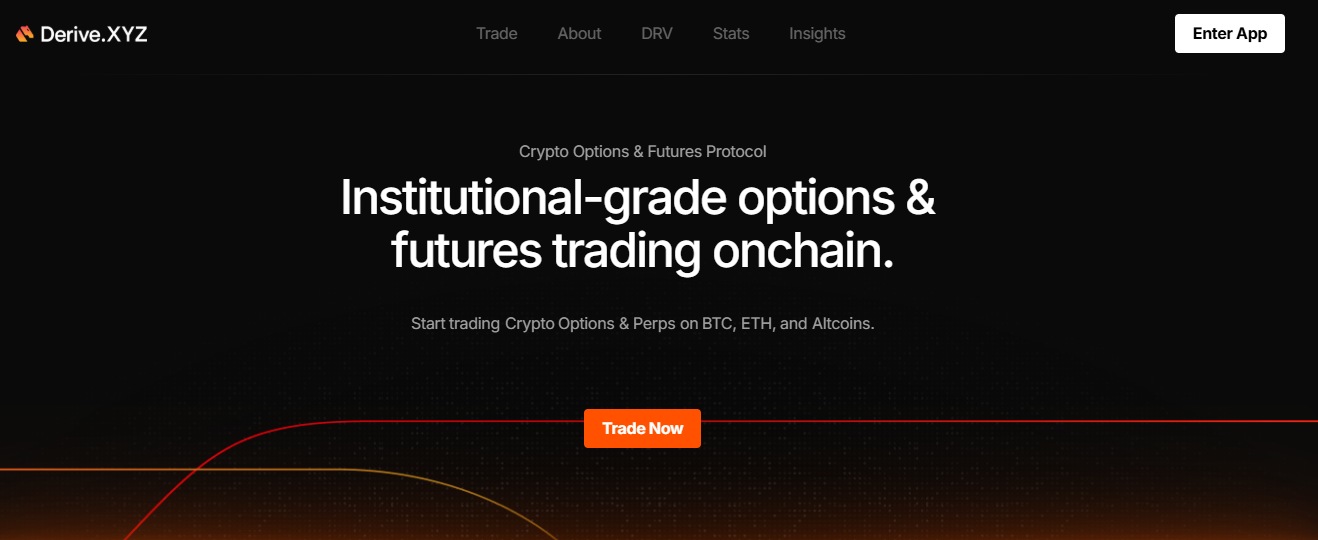
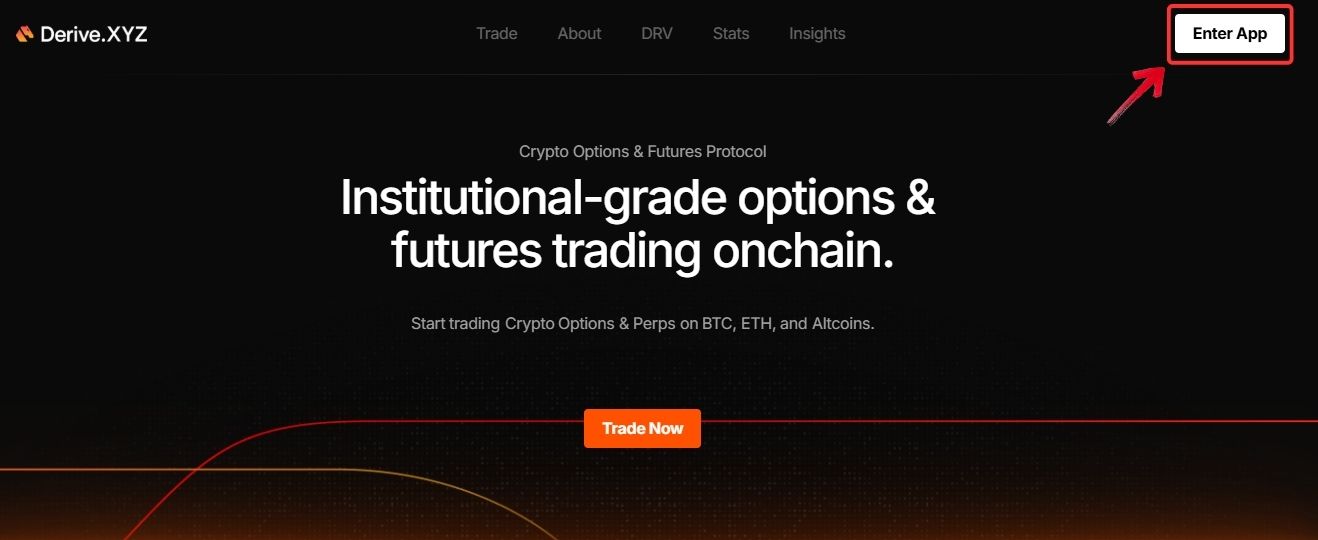
Step 1: Start by visiting the official Derive website in your browser. On the homepage, click the “Enter App” button to open the trading dashboard.
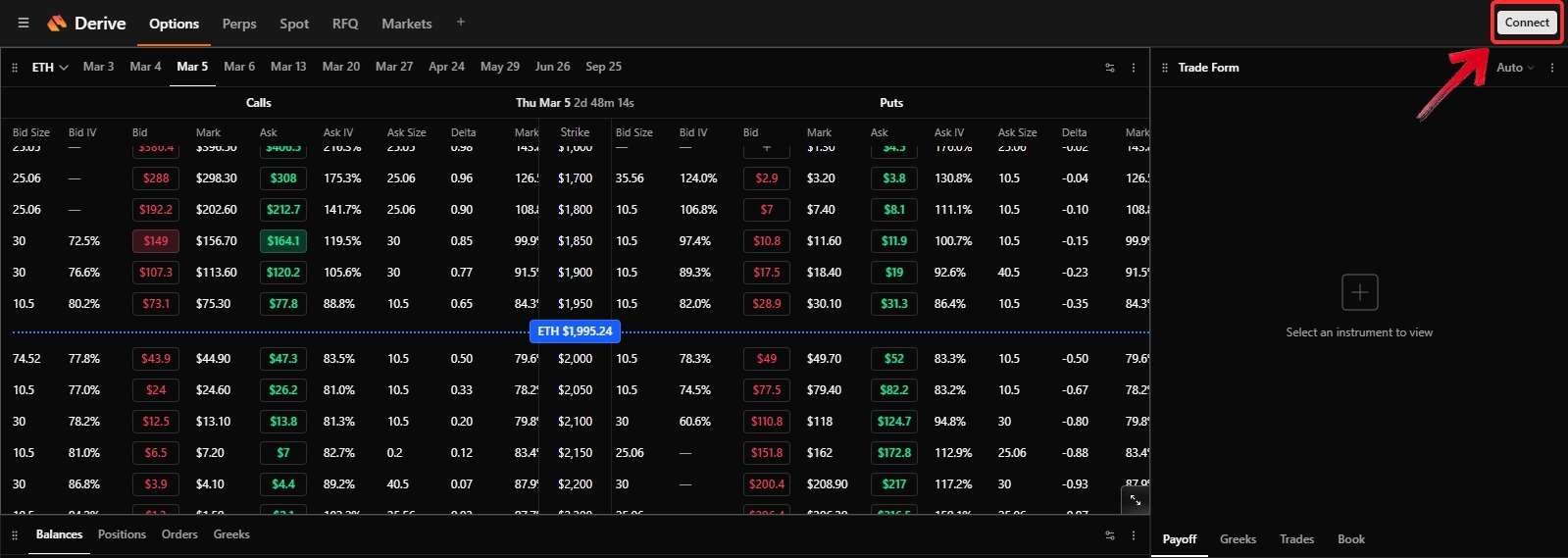
Step 2: After the platform loads, locate the “Connect” option on the screen and select it to begin linking your wallet.
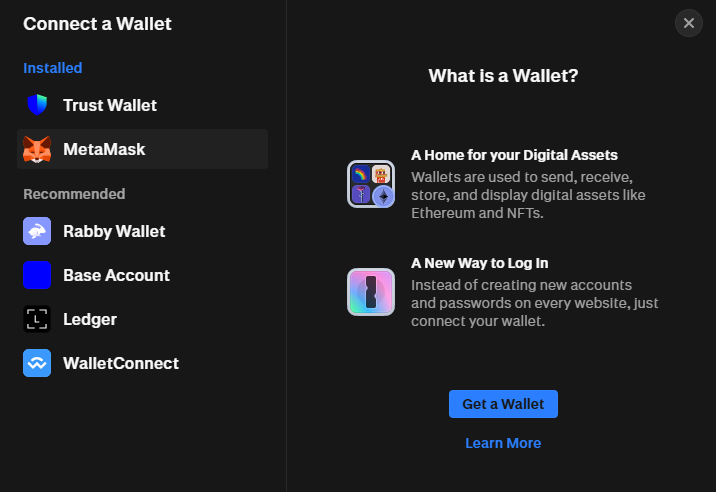
Step 3: Choose the Web3 wallet you want to use with Derive. Since the platform operates on Ethereum and other EVM networks, you can connect any EVM-compatible wallet that you currently use.
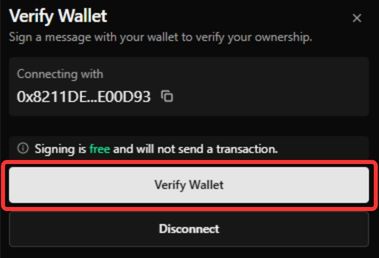
Step 4: Once selected, a wallet connection prompt will appear. Click on “Verify Wallet”, then confirm the signature request directly inside your wallet to authorize access.
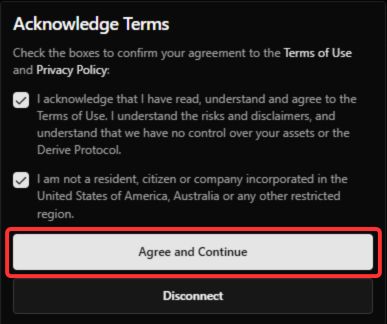
Step 5: After verification is completed, review the platform terms and click “Agree and Continue” to finish the setup process.
Once you have your Web3 wallet connected to Derive, you can use any of the supported networks to deposit funds and start using the platform’s trading features.
Before proceeding, take a moment to confirm whether access is restricted in your region. You can use our Derive exchange restricted countries checker to verify eligibility before funding your account.
Supported Networks
Derive currently supports five networks: Ethereum, Arbitrum, HyperEVM, Base, and OP. This means you can connect your wallet holding funds on any of these networks and use them to fund your Derive account.
Derive Exchange Trading
Trading on Derive is designed for active traders, offering a CEX-like interface that is both modular and customizable. You can choose between Basic Mode, which provides a clean layout with TradingView charts, order book, trade feed, and order panel, or build a Custom Layout using draggable Trading Blocks.
Execution is fast, with sub-millisecond off-chain matching powered by a Rust engine and on-chain settlement on its Optimism-based rollup, keeping gas costs low.
Derive also supports subaccounts, allowing you to separate strategies and manage risk independently. Spot supports only Market and Limit orders, while derivatives add Stop and Take Profit types, though advanced orders like Iceberg and OCO are not available.
Spot Trading
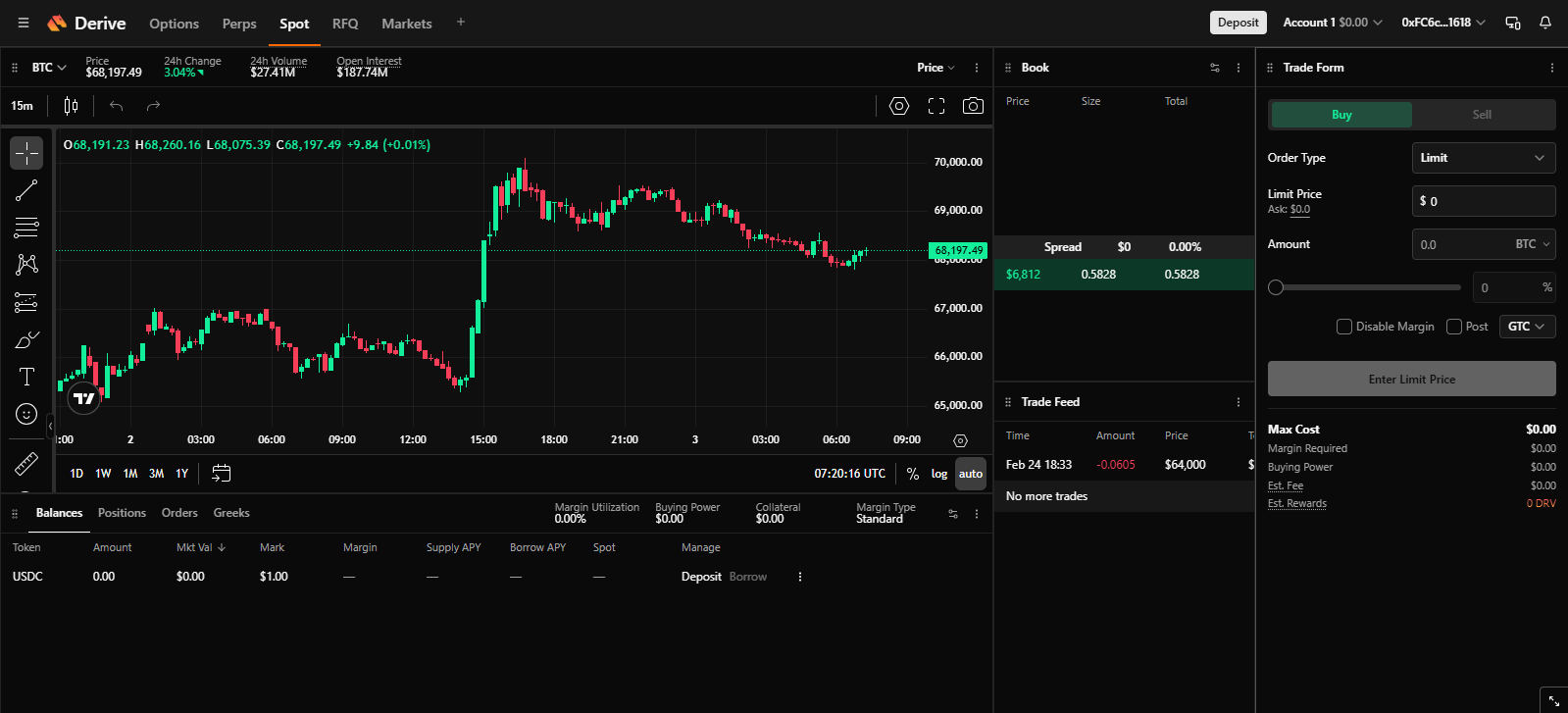
Derive’s spot market currently offers 14+ assets, mainly major cryptocurrencies. There is no margin trading available, so all trades are fully funded without leverage. The spot offering remains minimal and focused, covering only the core functionality required for straightforward execution.
Futures Trading
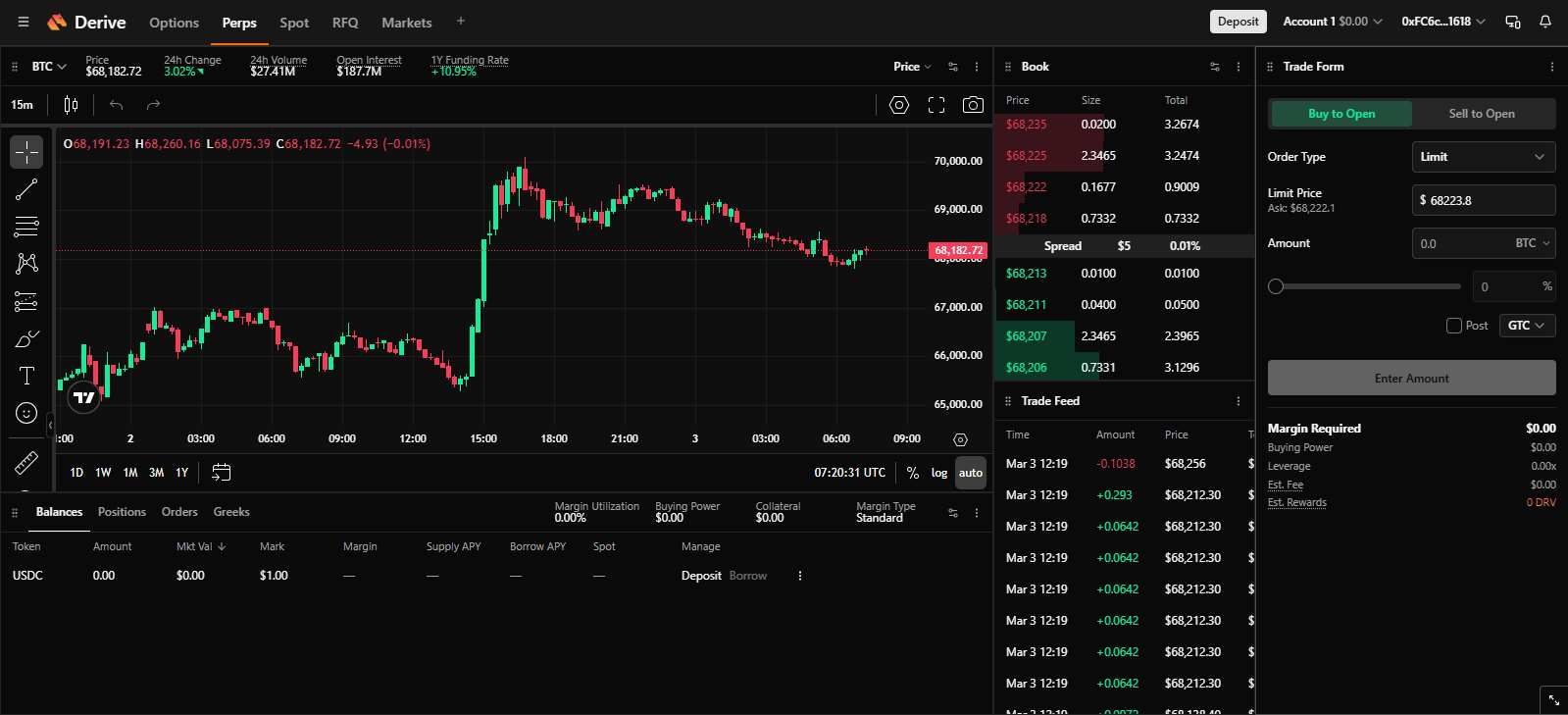
Derive’s perpetual futures market offers 12+ contracts, primarily centered around major cryptocurrencies, with leverage of up to 15x available to traders. The product range remains focused strictly on crypto, with no exposure to tokenized equities, commodities, or other real world assets. This means cross asset hedging opportunities are limited, particularly for professional traders who may prefer broader market instruments during periods of elevated volatility.
Options Trading
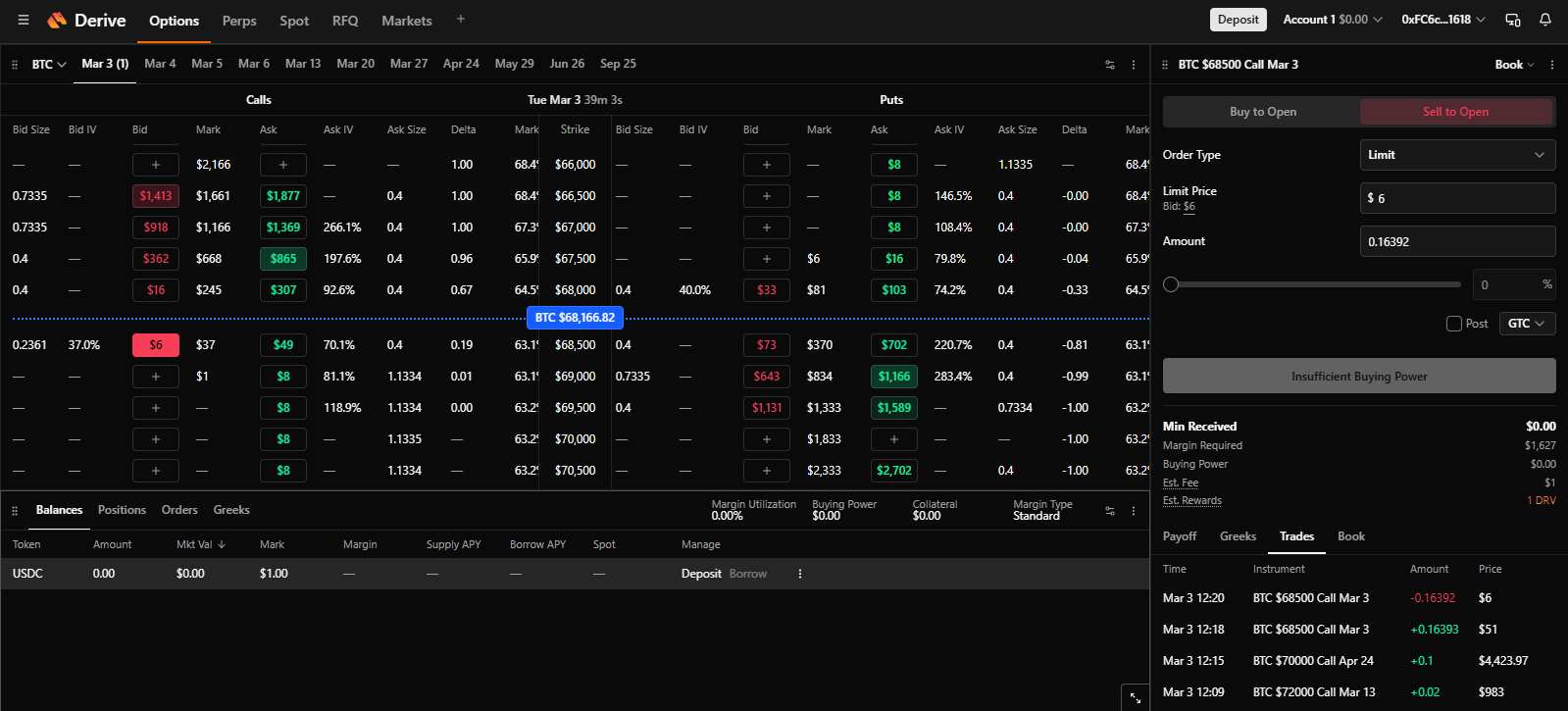
Derive’s options market supports 9+ underlying assets, including BTC, ETH, SOL, and HYPE. The interface displays a complete options chain, with calls and puts organized by strike price and expiry date. Each contract shows bid and ask prices, implied volatility, delta, and mark values, allowing traders to assess pricing and risk at a glance. Different maturities are listed across the top for quick switching. The right side contains the order panel, along with payoff details, Greeks data, and recent trade activity, maintaining a structured, professional layout.
Derive Exchange Deposit and Withdrawal Methods
Derive currently supports deposits and withdrawals only through crypto networks. Users cannot fund their accounts directly via centralized exchanges, bank transfers, or debit and credit cards.
The platform supports 5+ networks, primarily EVM-based. Traders can connect a compatible Web3 wallet and deposit supported assets such as ETH, HYPE, USDC, BTC, AAVE, DRV, and others. Once deposited, these assets are held in the account and used as collateral to open and manage positions across spot, perpetual, or options markets.
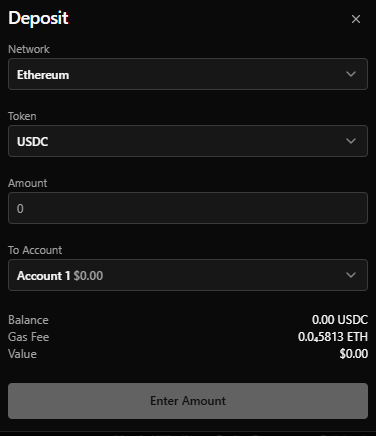
Withdrawals follow the same structure, allowing users to transfer funds directly from Derive back to their connected Web3 wallet through the supported networks.
Derive Exchange Fees
Here’s a quick look at the fees you will face on Derive, including trading fees, deposit and withdrawal costs, and additional charges such as liquidation and options related fees.
Trading Fees
Derive follows a dynamic fee structure rather than fixed rates. Trading fees are reduced based on a user’s 28 day trading volume, 28 day volume share, or the amount of DRV staked on the platform.
For spot trading, fees start at 0.15% for both maker and taker orders. In derivatives and options, fees begin at 0.01% for makers and 0.03% for takers. At the highest tier, users can receive up to 100% maker fee discounts across all markets, along with up to 75% discounts on taker fees.

Spot Fees
0.15% Maker
0.15% Taker
Futures Fees
0.01% Maker
0.03% Taker
Options Fees
0.01% Maker
0.03% Taker
Deposits and Withdrawals Fees
Derive does not charge protocol level fees on deposits or withdrawals. Users only pay network gas fees, which vary depending on the blockchain used. Ethereum transactions can be relatively expensive, while Layer 2 networks such as OP, Arbitrum, and Base offer lower costs. HyperEVM fees remain comparatively low.
Derive Exchange Products and Services
Now let’s take a look at the additional products and features offered by Derive, beyond its core spot, perpetual, and options trading markets.
Trading Interface
Derive’s trading interface is designed to feel structured and professional from the moment you enter. Users can trade 14+ spot assets, 12+ perpetual contracts with up to 15x leverage, and 9+ options underlyings. The layout can be kept simple through Basic Mode or customized using draggable Trading Blocks, depending on preference.
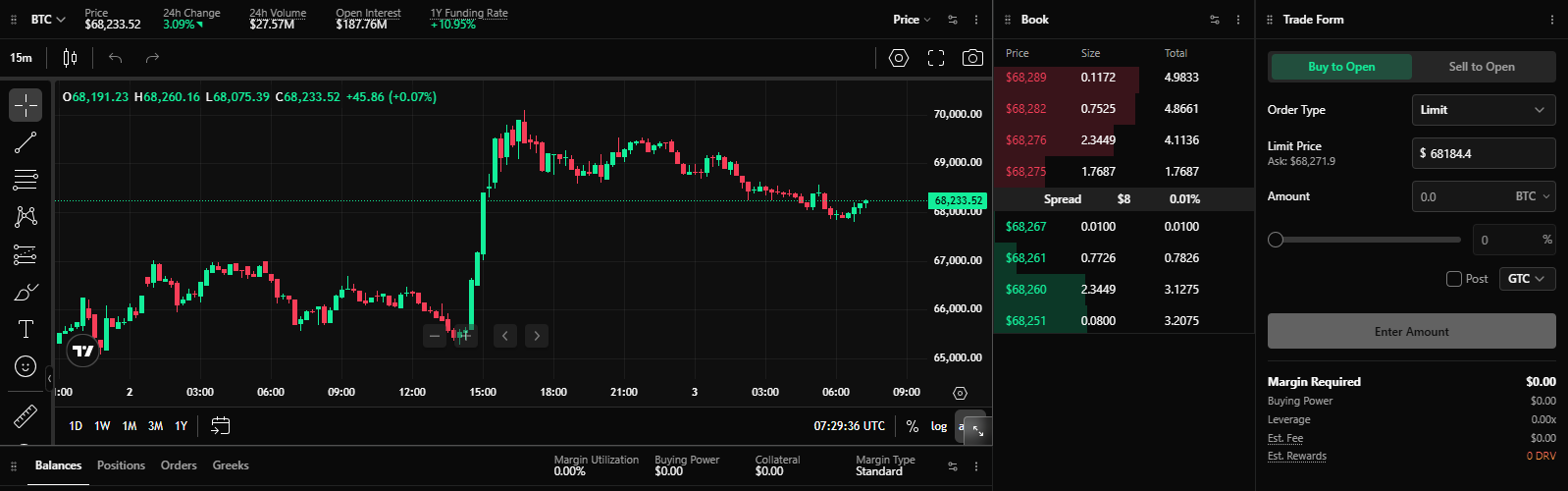
Charts are powered by TradingView, making technical analysis seamless within the same screen. Real time order books and trade feeds sit alongside the order panel, so execution and market depth are always visible. Orders are matched off-chain with on-chain settlement, resulting in fast execution and consistently low gas costs.
DRV Token
DRV is the native utility and governance token of Derive, with a fixed supply of 1.5 billion and no future minting. If you actively trade on the platform, holding DRV can reduce your fees across spot, perps, and options. A portion of protocol revenue is allocated to monthly DRV buybacks, which may support long term value. By staking DRV, you also gain governance rights and influence over protocol decisions.
Loading...
Rank #Token Symbol
-
All-Time High
-
Current Price
-
Market Cap
-
Total Supply
-
Staking
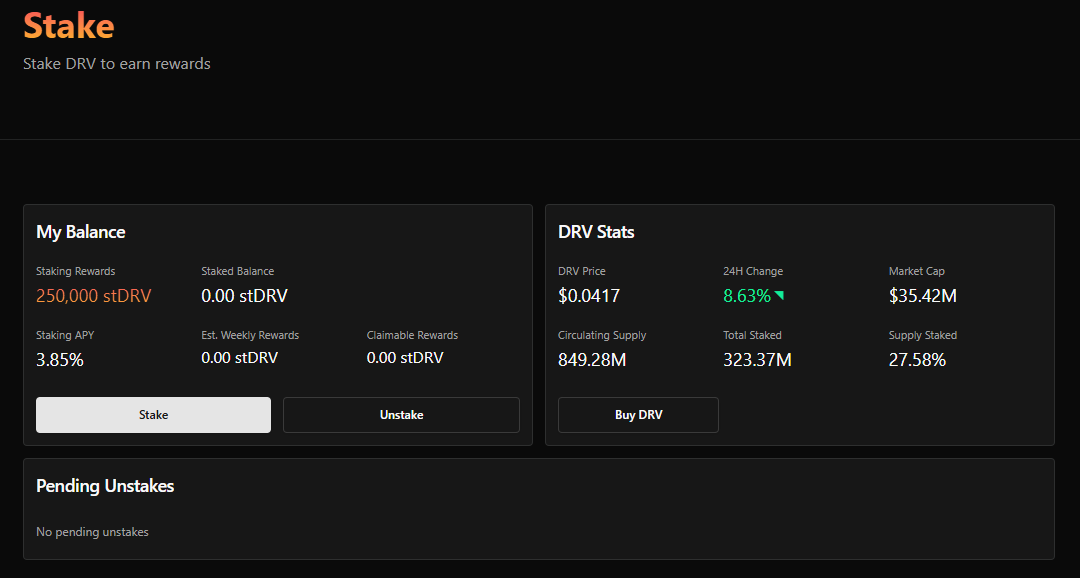
If you hold DRV, you can stake it to earn up to 3.85% APY, with rewards distributed in stDRV. Staking gives you fee discounts and governance voting power. Keep in mind that unstaking requires a minimum 28 day period, so your capital remains locked during that time. Before staking, you should consider your liquidity needs and active trading plans, especially if you rely on flexible collateral.
Stats
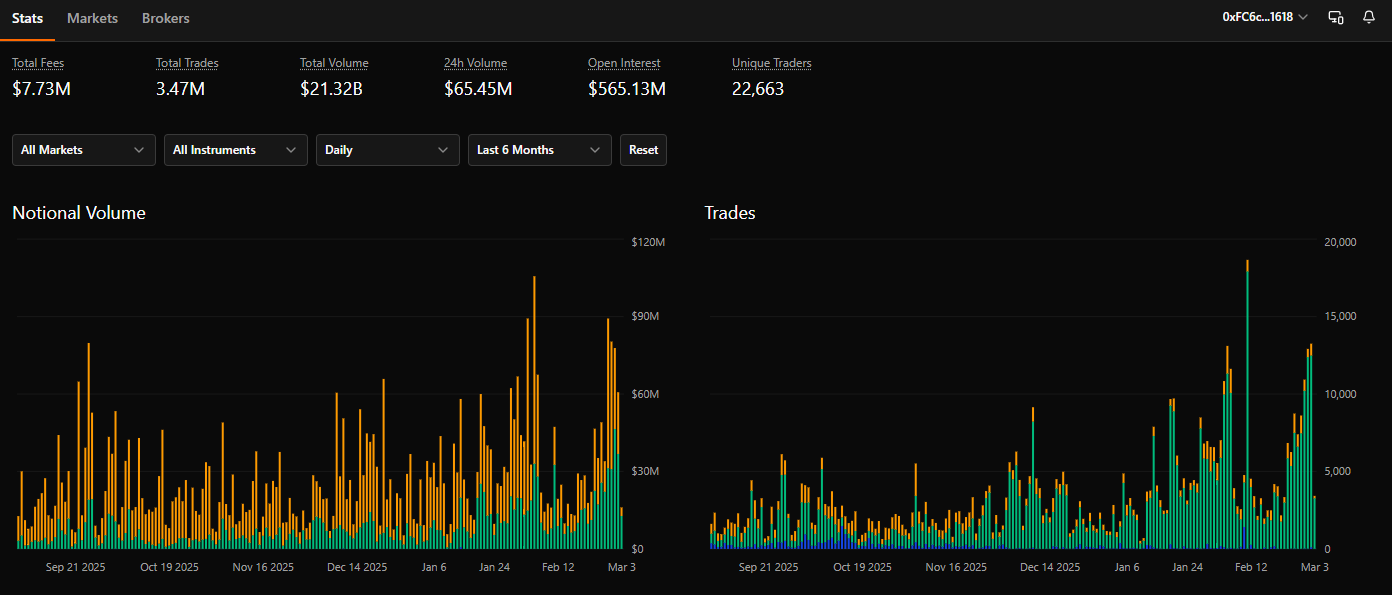
Derive provides a dedicated stats dashboard where you can monitor instrument level and total market activity. You can track notional volumes, open interest, trades, liquidations, revenue, and staking data. This helps you assess liquidity conditions, protocol health, and overall activity before committing capital or executing larger trades.
RFQ
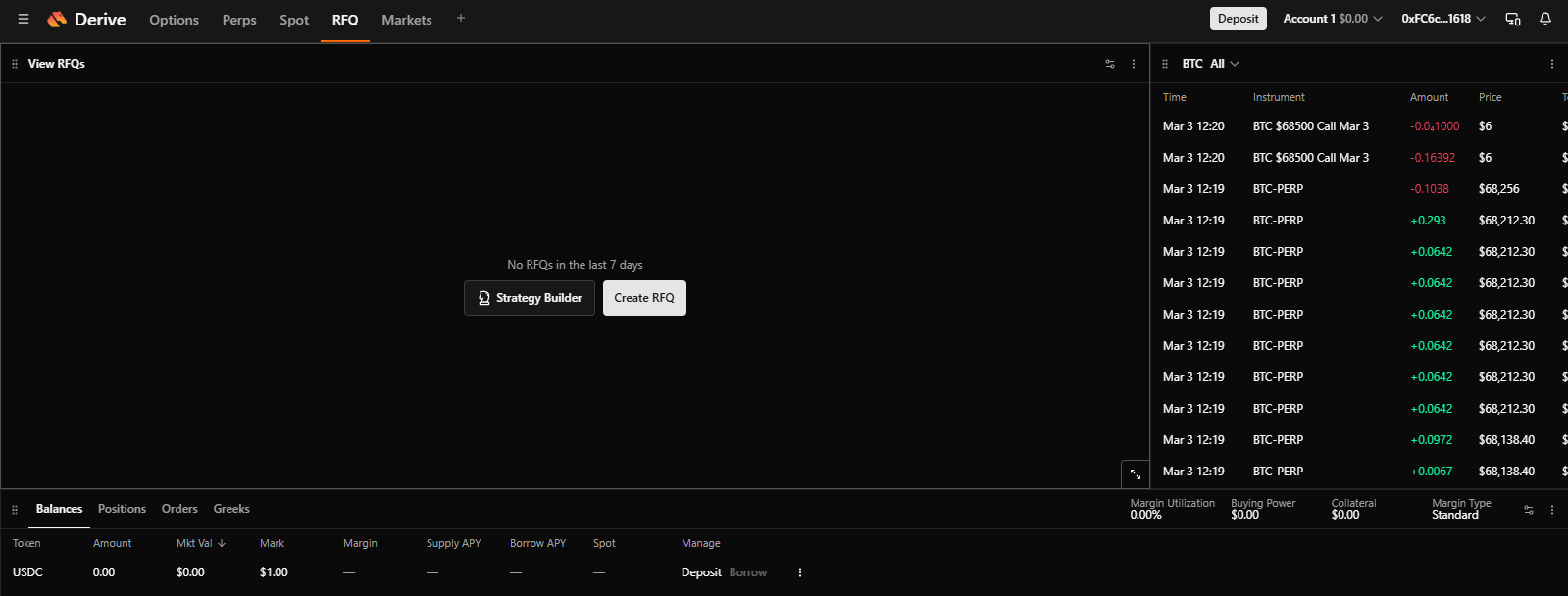
The RFQ feature allows you to request custom quotes instead of relying solely on the public order book. You can build structured trades using the Strategy Builder and submit them privately. Market makers respond with competitive pricing, helping you reduce slippage on large positions. If you trade size or run multi leg options strategies, RFQ can improve execution quality and pricing control.
Vaults
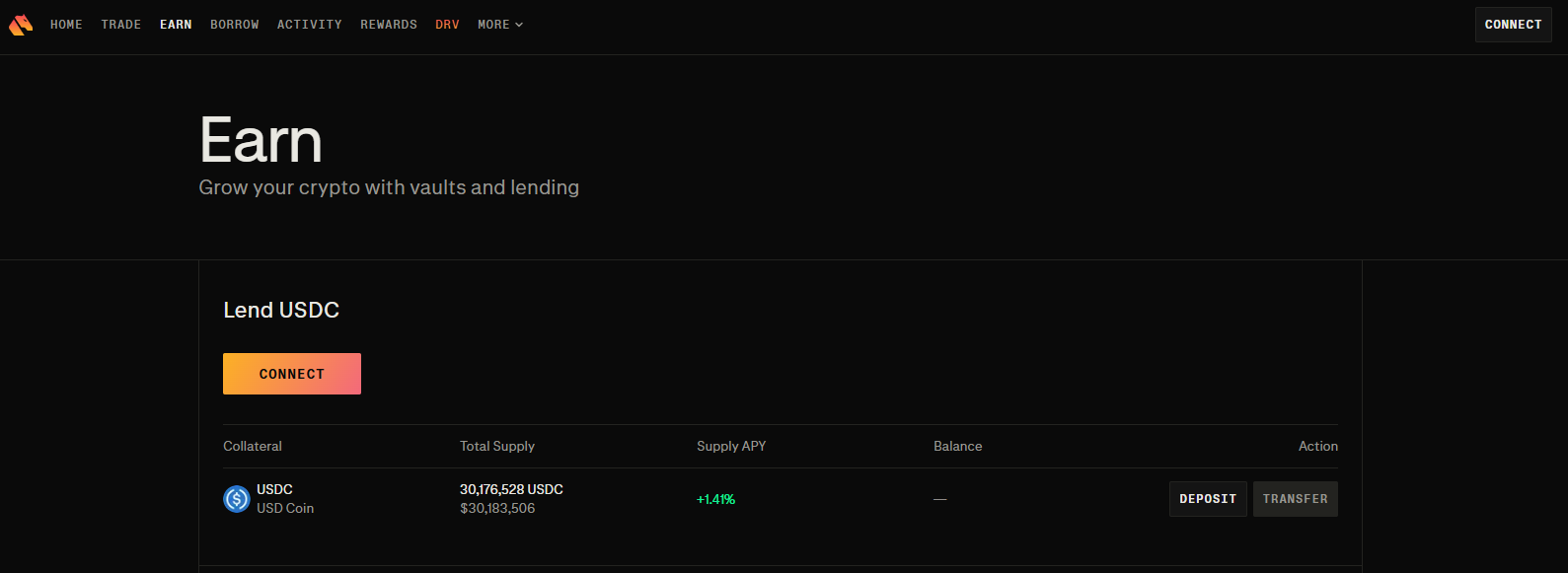
Vaults allow you to deploy idle capital rather than leaving it unused. You can lend USDC to earn yield or borrow USDC by depositing from 20+ supported assets as collateral. This gives you flexibility to manage liquidity while maintaining exposure. Depending on your risk appetite, vaults can complement active trading by generating additional yield within the same ecosystem.
Derive Exchange Security
Access to Derive is through a Web3 wallet, which means you remain in control of your private keys. As a non custodial platform, your account security depends on how securely you manage your wallet, seed phrase, and transaction approvals. There is no central entity holding your funds on your behalf.
From a protocol standpoint, Derive has undergone a public smart contract security review by Sigma Prime, with the audit report available on GitHub. The review examined core components such as managers, liquidation logic, cash handling, and the v2 matching engine.
Beyond audits, the architecture itself includes several protective mechanisms. There is an escape hatch that allows self custodial withdrawals, a security module designed to absorb bad debt in stressed conditions, and on chain settlement anchored to Ethereum for base layer security.
If your margin falls below maintenance requirements, your position is moved to an open auction. These auctions are accessible to anyone, including bots, which encourages fast liquidation and helps protect overall protocol solvency.
Derive has also published a MiCA compliant white paper outlining its risk controls, margin enforcement framework, liquidation processes, and reserve mechanisms, aligning its disclosures with EU regulatory standards.
Derive Exchange Customer Support
Unlike most perpetual DEX platforms that rely only on documentation, Derive offers live online chat support, giving you direct assistance if you face issues with trading or account setup. This adds a practical support layer beyond purely on chain interaction. In addition, the platform maintains an active Discord community where you can engage with other users and stay updated. If you prefer self service, the Help Center includes structured tutorials and guides covering onboarding steps, trading features, and common troubleshooting topics.
Derive Exchange Alternatives
Derive is a strong perpetual DEX in many areas, especially with features that are better suited for professional traders. However, if you are looking for broader exposure or a different fee structure, here are some notable alternatives to Derive:
1. Hyperliquid: With one of the highest trading volumes and consistently ranked at the top, Hyperliquid operates as a Layer 1 perpetual DEX. It offers derivatives beyond cryptocurrencies, including tokenized stocks and commodities, giving you access to wider market exposure.
2. Lighter: Low trading costs are always appealing, and Lighter’s zero fee trading model makes it an attractive alternative if reducing execution costs is your priority.
| Feature | Derive | Hyperliquid | Lighter |
|---|---|---|---|
| Established | 2024 | 2024 | 2024 |
| Spot Fees (Maker/Taker) | 0.15% / 0.15% | 0.04% / 0.07% | 0.00% / 0.00% |
| Futures Fees (Maker/Taker) | 0.01% / 0.03% | 0.015% / 0.045% | 0.00% / 0.00% |
| Max Leverage | 15x | 50x | 50x |
| KYC Required | No | No | No |
| Supported Cryptos (Spot) | 14+ | 238+ | 1 (ETH/USDC) |
| Futures Contracts | 12+ | 173+ | 117+ |
| No KYC Withdrawal Limit | Unlimited | Unlimited | Unlimited |
| 24h Futures Volume | $36.75M+ | $8.71B+ | $2.33B+ |
| Key Features | • Options + perpetuals • RFQ for large trades • DRV staking & vaults |
• Custom L1 chain • Zero gas fees • Vaults + HYPE staking |
• Ethereum L2 (zk-rollup) • Provable execution • Zero-fee retail trading |
| Sign Up | Sign Up | Sign Up | Sign Up |
Bottom Line
Derive is built to deliver a trading environment that aligns closely with what professional traders and institutions look for. While it expanded from being purely options focused into offering perpetuals and spot markets, it has intentionally kept its asset list limited to major cryptocurrencies. This Derive.xyz exchange review makes that trade-off clear: Derive prioritises deep liquidity, tighter spreads, and structured markets over a wider token variety.
If you value execution quality and capital efficiency around core assets, Derive fits that profile well. However, if you prefer wider altcoin exposure similar to many centralized exchanges, exploring other perpetual DEX platforms may help you find one that better matches your trading approach.
FAQs
1. What is the maximum leverage on Derive?
Derive allows up to 15x leverage on perpetual futures contracts.
2. Can I stake DRV on Derive?
Yes. You can stake DRV to earn rewards in stDRV and receive trading fee discounts, with a minimum 28 day unstaking period.
3. Does Derive offer vaults or yield products?
Yes. Derive provides automated vaults that run structured strategies such as covered calls, delta neutral setups, and perpetual basis trades. You can deposit supported collateral into these vaults to earn yield generated from trading strategies and protocol activity.
4. What collateral is supported on Derive?
Derive supports USDC, WETH, WBTC, selected staked assets such as stETH and sUSDe, along with other stablecoins and approved tokens. The platform uses portfolio margining, allowing you to use cross asset collateral efficiently to back multiple positions under a unified margin framework.
5. How are orders executed and settled on Derive?
Derive uses a hybrid model. Orders are matched off chain through a high speed engine for sub millisecond execution, while settlement occurs on chain on its rollup for security. The system remains self custodial, meaning your funds stay within your wallet and designated subaccount rather than with a centralized intermediary.