


- •BTCC, Kraken, and Bitstamp were founded in 2011 and remain among the oldest crypto exchanges still active today.
- •Older exchanges are not automatically safer, but they give users a longer security record to review.
- •Kraken and BTCC have no major reported exchange hacks, while Bitstamp and Bitfinex have past incidents.
- •Fees, leverage, asset support, and product range vary heavily across these long-running exchanges.
- •The best old exchange depends on whether you value security, fees, regulation, leverage, or ease of use.
When crypto was officially brought into the financial markets, it opened the doors for exchanges to be born and thrive, helping traders and investors quickly understand the need to be engaged in trading, staking, mining, and security of assets. The continuous prosperity of cryptocurrencies has also come with growing uncertainty about the security of these assets. For this reason, exchanges have always looked to assure users of the continual security of their assets both while stored on the platform, and also while trades are being taken.
The World’s Longest-Running Crypto Exchanges Reviewed
There are certain crypto exchanges, however, who have continued to excel in keeping the promise of protecting user funds as well as providing fair services on their platform. In this guide, we have compiled five of the oldest crypto exchanges that are still standing today. We will review their features, fee prices, and most of all their security records to help you see the most secure exchanges still standing today, as well as those who have not met the security standard.
Here are the five oldest crypto exchanges in the world that are still around today:
- BTCC (2011) - Old Futures Exchange With a Clean Security Record
- Kraken (2011) - Long-Running Exchange Known for Security
- Bitstamp (2011) - Early Spot Exchange With Strong Regulation
- Coinbase (2012) - Beginner-Friendly Exchange With Heavy Regulation
- Bitfinex (2012) - Advanced Exchange With a Mixed Past
1. BTCC – Old Futures Exchange With a Clean Security Record
Operating Since: 2011
Registered Users: 11M+
Spot Assets: 413+
Max Leverage:500x
Security Record: No major reported exchange hack
BTCC is a cryptocurrency exchange that was founded in June 2011 and is based in London, UK.
BTCC is one of the oldest and most reliable crypto exchanges in the world. It has been operating safely for over 15 years, which is a testament to its excellence.
When you talk about a secure and trustworthy exchange, you’re talking about BTCC. It continues to impress traders and users from around the world with its exceptional service.
The exchange operates in more than 100 countries and currently has 11 million registered users, along with around $18.8 billion in 24-hour futures trading volume. BTCC is mainly known for its futures trading market, where traders can access high-leverage contracts, with up to 500x leverage available on selected trading pairs. However, under its current restricted-country policy, BTCC is no longer available for users in the United States, which is an important point for US-based traders to keep in mind.
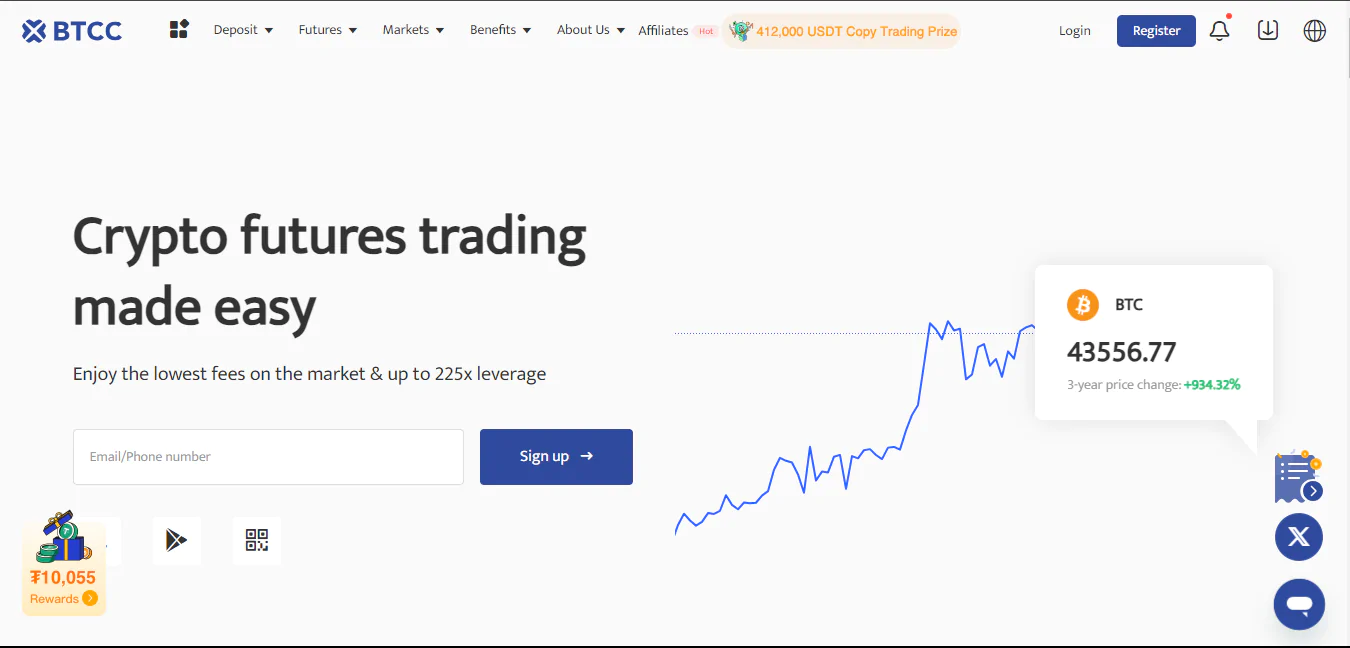
The platform has a user-friendly interface, with a separate trading setup for beginners and another for more experienced traders. Its futures trading options remain one of its main selling points, while the interface makes it easier for traders at different levels to use the platform.
BTCC no longer operates as a futures-only exchange, as it now has a spot trading platform with volume reaching over $5.88 billion. The exchange supports 413 spot assets, including major cryptocurrencies, altcoins, and a few tokenized stocks. In fact, BTCC was among the earlier crypto exchanges to give users access to tokenized stock products, adding another layer to its trading market beyond standard crypto pairs.
That said, BTCC is still more trading-focused than product-heavy. While its spot and futures markets have expanded, users looking for deeper passive earning products may still find the platform more limited compared to larger multi-product exchanges.
BTCC has one of the best copy trading platforms in the exchange market, with a community of traders not just copying, but also learning and interacting, for beginners to learn from the techniques of advanced traders and apply them.
Fees on BTCC are taken at 0.03% taker and 0.06% maker, which is in line with market standards.
BTCC has been a leader by example in security, providing a safe trading environment these past 12 years. The exchange has yet to record a major breach in security and employs industry-leading technology to safeguard funds. It also provides 24/7 customer support, sadly there have been several complaints about the quality of their support.
Pros and Cons
| 👍 BTCC Pros | 👎 BTCC Cons |
|---|---|
| ✅ 500x leverage | ❌ Not available in the US |
| ✅ 413+ spot assets | ❌ Limited passive earning products |
| ✅ Automated copy trading | ❌ Customer support complaints reported |
| ✅ Low fees and deep liquidity | |
| ✅ No major reported hack |
2. Kraken – Long-Running Exchange Known for Security
Operating Since: 2011
Registered Users: 15M+
Spot Assets: 753+
Max Leverage: 50x
Security Record: No major reported exchange hack
Kraken, a US-based crypto exchange, was founded in 2011 and has grown to be one of the top choices for buying and selling assets.
With over 13 million registered users in approximately 200 countries, Kraken is one of the biggest and most renowned digital currency marketplaces in the world.
Kraken was one of the earliest crypto exchanges to offer spot trading, and it has since expanded into a much larger trading platform. The exchange currently supports 1,771 markets, with more than 753 spot assets and 293 perpetual contracts, where experienced traders can access up to 50x leverage through Kraken Pro.
Apart from crypto, Kraken has also expanded into traditional market products, giving users access to more than 12,000 stocks, ETFs, and other instruments on the platform.
Additionally, Kraken offers staking on selected assets, allowing eligible users to earn up to 21% annually depending on the asset and available terms.
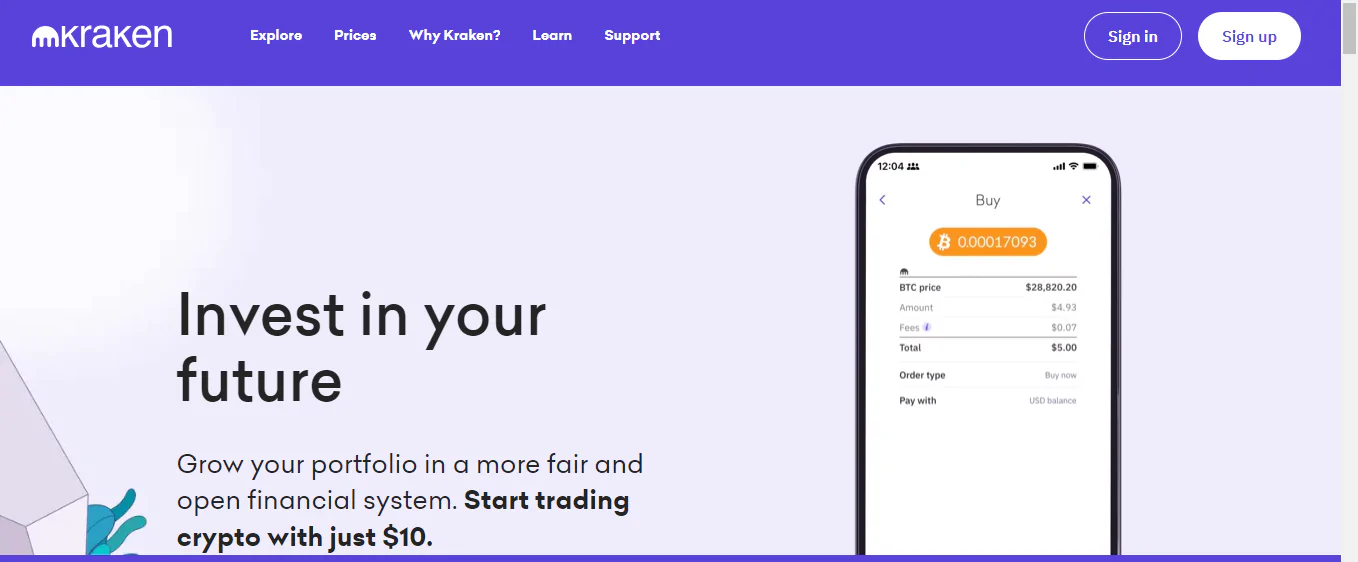
Kraken’s trading fees are on the higher side for low-volume spot traders. On Kraken Pro, spot trading fees start at 0.25% maker and 0.40% taker, which is higher than many major crypto exchanges. However, the platform does use a volume-based fee model, so active traders can pay lower fees as their 30-day trading volume increases.
For futures trading, Kraken’s fees are more in line with the market, starting at 0.02% maker and 0.05% taker. This makes Kraken more expensive for casual spot traders, but still reasonable for users who trade futures or qualify for lower fee tiers.
Through the platform’s rapid buy/sell services, users can purchase assets. Traders can also create price alerts and keep an eye on price movement across many platforms with Kraken’s crypto watch trading terminal.
Furthermore, Kraken offers its customers an almost unparalleled security system along with first-rate customer service. Because it is one of the only exchanges that has not experienced a significant cyberattack since its founding, investors can feel secure storing their money on the exchange. It also offers 24/7 top-notch customer support and fully caters to the needs of customers.
Pros and Cons
| 👍 Kraken Pros | 👎 Kraken Cons |
|---|---|
| ✅ No major reported hack | ❌ High spot fees |
| ✅ 753+ spot assets | ❌ Kraken Pro may feel complex |
| ✅ Good for beginners and experts | |
| ✅ Stocks and ETFs available | |
| ✅ Staking is available |
3. Bitstamp by Robinhood – Early Spot Exchange With Strong Regulation
Operating Since: 2011
Registered Users: 5M+
Spot Assets: 116+
Max Leverage:7x
Security Record: 2015 breach
Founded in 2011, Bitstamp by RobinHood is one of the longest-running crypto exchanges still operating today. The exchange has built its reputation around spot trading, regulatory compliance, and long-term trust among both retail and institutional users.
Bitstamp is now part of Robinhood, after Robinhood completed its acquisition of the exchange in June 2025. This gives Bitstamp a stronger parent company behind it, while also helping Robinhood expand its crypto business outside the United States. The exchange continues to serve customers across regions such as the EU, UK, US, and Asia, and holds more than 50 active licenses and registrations globally.
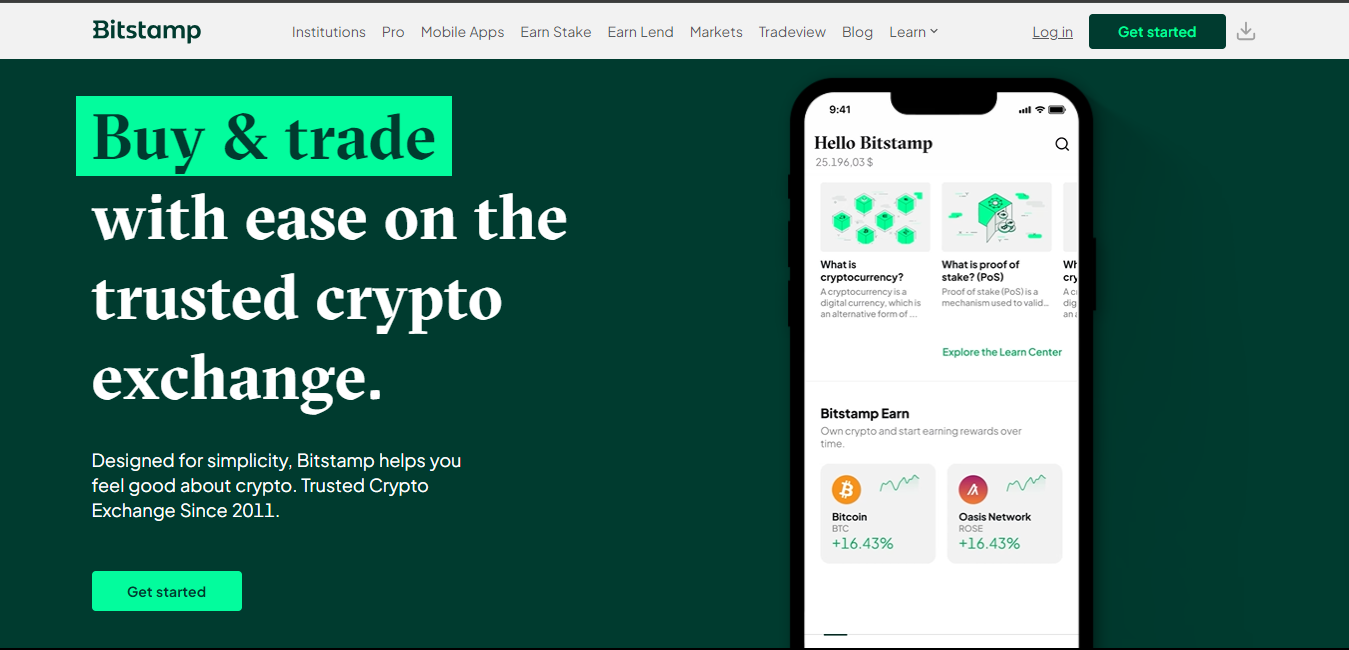
Bitstamp demonstrates leadership in the crypto market, providing an easy user interface and industry-leading security since its inception. The exchange takes the security of user funds to a different level, providing 95% of its funds in an offline wallet.
Today, at the time of writing, Bitstamp has a daily spot trading volume of $285M+. There are currently 81 coins and 178 markets available for users to choose from, which is very low.
Unfortunately, Bitstamp only offers a traditional spot market for users to trade, making it unfit for futures traders. The exchange also has a limited amount of passive earning opportunities for users. The only passive income for users to engage in is its staking and lending platform.
Additionally, Bitstamp offers a good trading interface for both beginners and experts. The exchange provides a traditional interface for beginners to learn to trade, and also a Pro trading platform where experts have access to advanced order tools, indicators such as Bollinger bands, and oscillators.
For every trade carried out on Bitstamp, the fees charged are 0.3% maker and 0.4% taker, which are extremely high compared to the industry standard. For withdrawals, the fees charged depend on the network of the crypto asset. On Bitstamp, users can also make deposits and withdrawals via wire transfer, and instant crypto purchases with a debit card.
Furthermore, the exchange prides itself on its protection of user funds and industry-leading technology. Although there are reports of a security breach in 2015, it was never actually proven to be true, and the exchange has not mentioned anything about it since. They also provide 24/7 customer support, with email and direct call support for users to reach out and report issues.
Pros and Cons
| 👍 Bitstamp Pros | 👎 Bitstamp Cons |
|---|---|
| ✅ Beginner-friendly interface | ❌ Limited crypto selection |
| ✅ Strong regulatory profile | ❌ High spot trading fees |
| ✅ Backed by Robinhood | ❌ 2015 security breach reported |
| ✅ Instant buy available | ❌ No futures trading available |
4. Coinbase – Beginner-Friendly Exchange With Heavy Regulation
Operating Since: 2012
Registered Users: 110M+
Spot Assets: 398+
Max Leverage: 10x
Security Record: 2025 customer data breach reported
Coinbase ranks among the oldest exchanges in the world, being established in 2012.
Coinbase is a cryptocurrency exchange that allows users to buy, sell, and exchange cryptocurrency. It has over 108 million verified users in more than 100 countries.
The US-based crypto exchange currently trades a spot daily volume of $2 billion and provides 398+ cryptocurrencies with 521 markets for users to explore and trade. These crypto assets include popular cryptocurrencies such as Bitcoin, Ethereum, Dogecoin, and Ripple. The platform also features a native NFT marketplace where anyone with an account can create, trade, or simply collect digital collectibles.
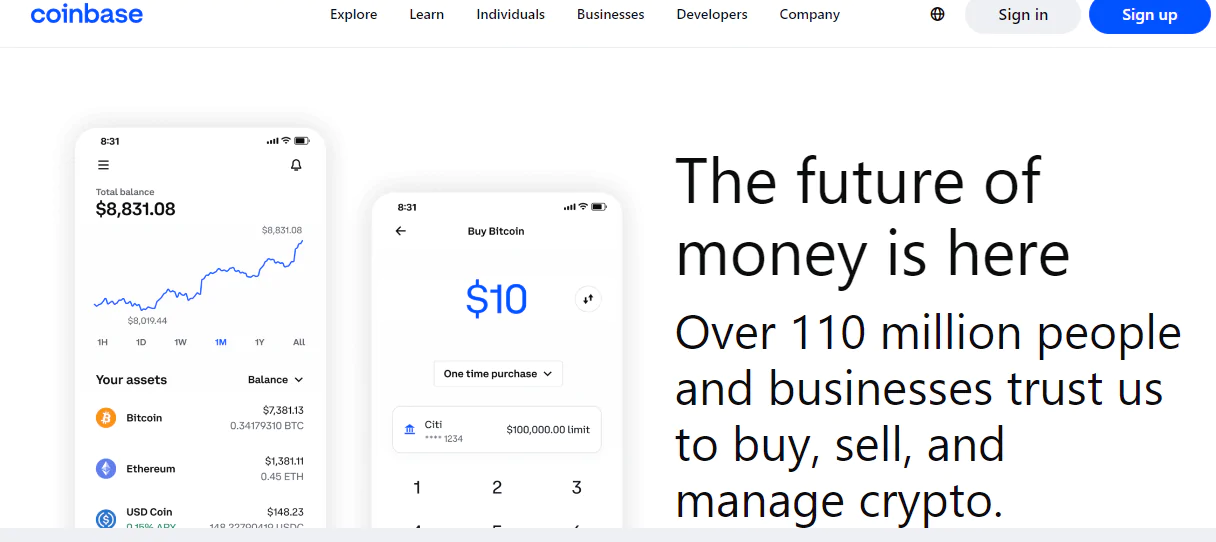
The exchange is one of the best for newbie traders to learn as it provides a custom trading interval that meets their level of expertise. There is also an advanced platform, Coinbase Pro, where experts have access to advanced tools and an advanced trading interface.
Coinbase offers passive earning opportunities on over 100 assets by earning annual interest on any eligible cryptocurrency or gathering crypto as rewards by engaging with content in the “Learn” section.
However, Coinbase’s trading fees are higher than the industry average, especially for spot traders. The exchange charges 0.4% maker and 0.6% taker fees on spot trades, while futures trading fees are 0.05% for both makers and takers. Users have also frequently lamented due to the exchange’s lack of urgency in resolving customer complaints, even with critical issues. Coinbase holds your private keys, meaning it has full access to your crypto without your permission.
Furthermore, the exchange has maintained industry-standard security to ensure that funds are safely stored.
Pros and Cons
| 👍 Coinbase Pros | 👎 Coinbase Cons |
|---|---|
| ✅ Beginner-friendly interface | ❌ High spot trading fees |
| ✅ Strong regulatory profile | ❌ 2025 customer data breach reported |
| ✅ Passive earning options | ❌ Limited futures leverage |
| ✅ Simple and advanced platforms |
5. Bitfinex – Advanced Exchange With a Mixed Past
Operating Since: 2012
Registered Users:5M+
Spot Assets:79+
Max Leverage: 100x
Security Record: 2016 major exchange hack
Bitfinex is a cryptocurrency exchange platform that was founded in 2012. It offers advanced features such as margin trading, derivatives, and advanced order types. Bitfinex has a user-friendly interface with customizable features and offers more than 79 cryptocurrencies to trade. The exchange has a 24-hour spot trading volume of $147 million.
For trading fees, Bitfinex lists 0% maker and taker fees on both spot and futures trading. This makes its direct trading fees lower than many older crypto exchanges, especially for users who trade actively.
However, this does not mean trading on Bitfinex is completely free. Users should still consider spreads, withdrawal fees, funding costs, and any product-specific charges before using the platform.
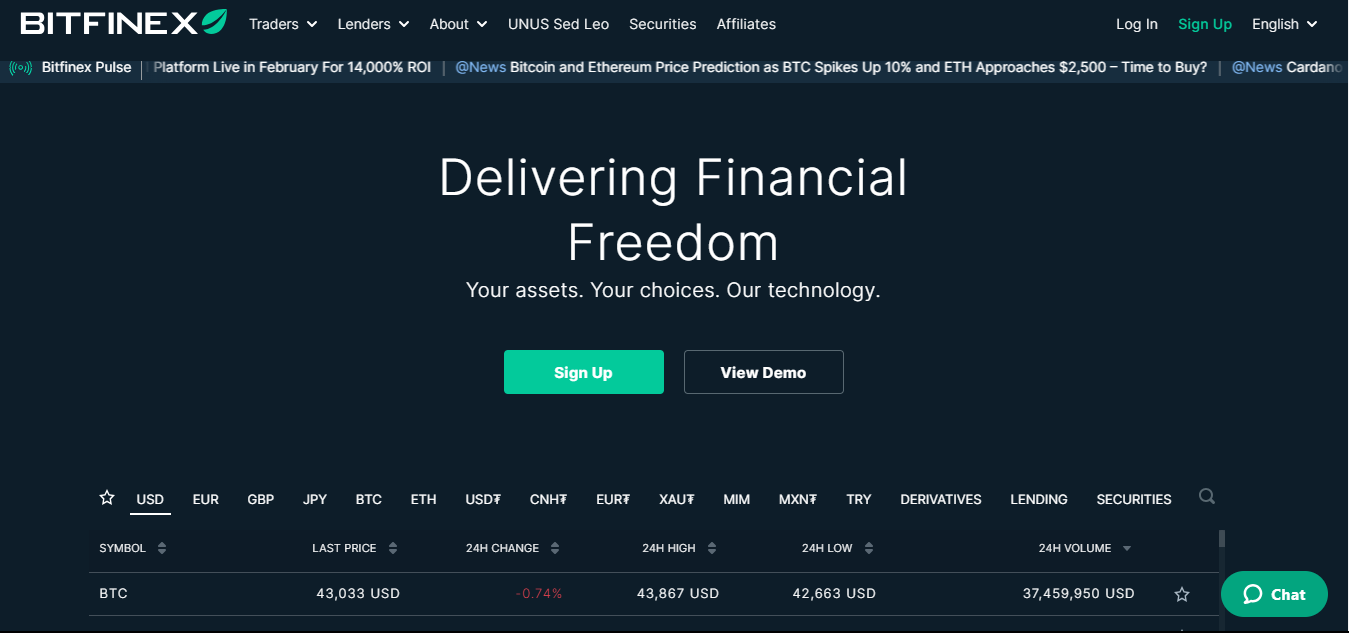
Bitfinex maintains a good security system with two-factor authentication, cold wallet storage, IP whitelist, withdrawal address whitelist, and anti-phishing code.
Bitfinex has had a few security breaches in the past. In 2016, Bitfinex suffered a security breach that led to the theft of 120,000 Bitcoin. The exchange halted all trading and digital token deposits and withdrawals. In 2022, the US Department of Justice seized $3.6 billion in Bitcoin that was stolen from Bitfinex in 2016. The proceeds were siphoned from users’ accounts into a single crypto wallet. Despite these security breaches, Bitfinex has taken measures to improve its security system.
Bitfinex is a well-established exchange that is easy to use and highly regulated. However, it has been associated with controversy in the past, and its user-friendliness can be a bit complex for beginners. It has a user-friendly interface with customizable features and relatively low trading fees. However, it has been associated with controversy in the past and may not be the best choice for beginners.
Furthermore, Bitfinex offers a 24/7 live chat for users to get info on whatever they need to know. They can also reach out to customer support via email to report complaints or issues.
Pros and Cons
| 👍 Bitfinex Pros | 👎 Bitfinex Cons |
|---|---|
| ✅ Advanced trading tools | ❌ Limited spot asset selection |
| ✅ 0% spot and futures trading fees | ❌ 2016 major exchange hack |
| ✅ User-friendly interface | ❌ Extra non-trading costs apply |
| ✅ Upto 100x leverage | |
| ✅ Highly regulated |
Why Old Crypto Exchanges Still Matter
Old crypto exchanges still matter because surviving for more than a decade in crypto is not common. Many early exchanges failed due to weak security, poor management, fraud issues, or the lack of proper user protection. So, when an exchange has stayed active through market crashes, regulatory pressure, hacks, and major industry changes, its history becomes an important part of the review.
This does not mean older exchanges are automatically safer. It only means they have a longer record for users to examine. Readers can look at how these platforms handled security incidents, customer funds, regulation, trading products, and market changes over time.
Some of the earliest exchanges, including BitcoinMarket.com and Mt. Gox, show how difficult the early exchange market was. BitcoinMarket.com struggled with payment-related fraud issues, while Mt. Gox collapsed after a major loss of customer funds. Compared to those early failures, exchanges that are still operating today have managed to last through a much harder test of time.
That is why this list focuses on old crypto exchanges that are still active today, while also reviewing their fees, trading products, security records, and overall reliability.
Final Thoughts on the Oldest Crypto Exchanges
Old crypto exchanges can be a good choice because they have survived market crashes, regulatory changes, security pressure, and years of user activity. That history gives readers more to judge compared to newer platforms.
Still, a long history only shows resilience. It does not automatically make an exchange ideal. Some long-running exchanges have higher fees, limited products, past breaches, or weaker customer support. So, age is useful, but safety matters more. For many users, the better question is not only which exchange is oldest, but which platforms rank among the safest crypto exchanges today.
FAQs
1. What was the first ever crypto exchange?
BitcoinMarket.com was the first ever crypto exchange. It began operating on March 17, 2010, and is no longer active today. The platform was important because it gave Bitcoin one of its earliest public markets, long before larger exchanges like Mt. Gox, Bitstamp, Kraken, and Coinbase became known.
2. Are older crypto exchanges safer than new ones?
Older crypto exchanges are not automatically safer, but they do give users a longer track record to review. If an exchange has been active for more than 10 years, users can check how it handled hacks, market crashes, regulations, customer complaints, and fund protection over time.
That said, age alone is not enough. A newer exchange with strong security, proof of reserves, licensing, and clean operations may be safer than an older exchange with a weak security history.
3. Which exchange is the absolute oldest still running?
BTCC is one of the oldest crypto exchanges still running today, as it was founded in 2011. Bitstamp and Kraken were also founded in 2011, which is why all three are often included among the oldest active crypto exchanges in the world.
Among these, BTCC is usually treated as the earliest by founding date, while Bitstamp and Kraken are better known among long-running global spot exchanges.