




- •Crypto portfolio trackers combine exchanges, wallets, blockchains and DeFi positions within one dashboard.
- •Read-only APIs allow transaction syncing without providing trading or withdrawal access.
- •Your assets, integrations, privacy requirements, tax obligations and budget should determine which tracker you choose.
Few financial markets are as scattered as crypto. Major coins are available on tier-one exchanges, smaller gems often trade elsewhere, and many tokens must be purchased through DEXs. Before long, one investor can have assets spread across several exchanges, wallets, blockchains, staking protocols, and liquidity pools. A crypto portfolio tracker brings these holdings, transactions, and performance data into one dashboard, which explains why such tools remain in demand. In this article, we reviewed the best crypto portfolio trackers, including options with DeFi monitoring, profit-and-loss analysis, and tax reporting.
What Is a Crypto Portfolio Tracker?
A crypto portfolio tracker is a dashboard that gathers data from the exchanges, wallets, and blockchain addresses where you hold crypto. You can connect these accounts through read-only APIs, public wallet addresses, CSV files, or manual entries. The tracker then calculates the combined value of your holdings, saving you from checking each account separately.
It can show how much you invested, your current balance, asset allocation, income, and realized or unrealized gains and losses. Most trackers also convert these figures into your preferred fiat currency, such as USD, EUR, or GBP, even when an exchange does not. With this clearer picture, you can judge when rebalancing, taking profits, or continuing to hold makes sense.
Types of Crypto Portfolio Trackers
Crypto portfolio trackers can be grouped by their primary function, although some platforms fit into more than one category.
- General portfolio trackers: Combine exchanges, wallets, balances, allocation, and P&L. CoinStats and Delta fit here.
- DeFi trackers: Monitor staking, lending, liquidity pools, rewards, and debts. Zerion and Nansen fit here.
- Tax-focused trackers: Calculate cost basis and organize transactions for tax reporting. Coinpanda, CoinTracking, and Blockpit fit here.
- Privacy-focused trackers: Store data locally or limit account access. Crypto Pro and Rotki fit here.
- Multi-asset trackers: Show crypto alongside stocks, property, cash, and other investments. Kubera fits here.
Best Crypto Portfolio Trackers Compared
A useful tracker must do more than display live token prices. It should recognize where assets are held, import transactions without treating transfers as trades, calculate performance correctly, and keep up with exchanges, wallets, and DeFi protocols. For this comparison, we assessed connection support, data accuracy, P&L tools, tax features, privacy, pricing, and the amount of manual correction each platform may require.
Every crypto portfolio tracker was also considered in relation to its intended user, from first-time investors to active DeFi participants. Based on these requirements, the following platforms made our final list of 9 best crypto portfolio trackers:
- CoinStats – Best for Multi-Chain Portfolio Tracking
- Delta by eToro – Best Crypto Portfolio Tracker for Beginners
- Coinpanda – Best Free Crypto Portfolio and Tax Tracker
- Crypto Pro – Best Privacy-Focused Crypto Portfolio Tracker
- Nansen – Best Crypto Portfolio Tracker for On-Chain Analysis
- CoinTracking – Best Crypto Portfolio Tracker for Tax Reporting
- Blockpit – Best Crypto Portfolio Tracker for European Taxes
- Rotki – Best Open-Source Crypto Portfolio Tracker
- Kubera – Best Crypto Portfolio Tracker for Multiple Assets
1. CoinStats – Best for Multi-Chain Portfolio Tracking
CoinStats is a crypto portfolio tracker built for investors whose holdings are spread across centralized exchanges, self-custody wallets, and DeFi protocols. Founded in 2017 by Narek Gevorgyan, it is now used by more than one million people and connects with 300+ exchanges and wallets, 120+ blockchains, and 10,000+ DeFi protocols. This connectivity provides what readers usually need from the best crypto portfolio tracker: one dashboard that follows assets across the different places where they are traded, stored, staked, or lent.
The blockchain figure means CoinStats can read holdings and transaction history from public wallet addresses on supported networks. Users can therefore add an Ethereum, Bitcoin, Solana, or other supported address and view those assets beside their exchange balances. CoinStats also works as a crypto portfolio tracker for DeFi, identifying staked assets, lending positions, liquidity-pool deposits, rewards, and NFTs across multiple networks.
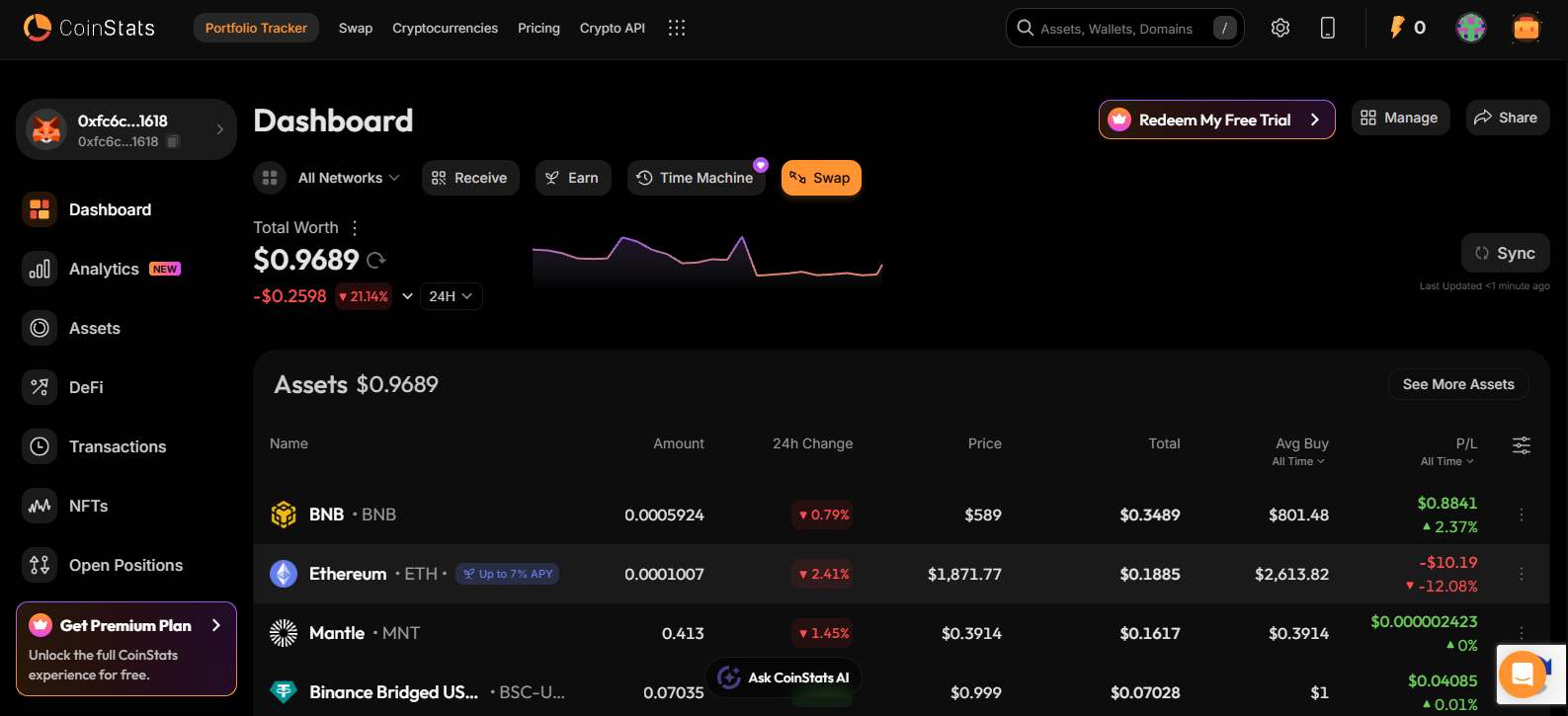
Once everything is connected, the mobile and web apps display portfolio value, asset allocation, fees, and profit and loss. Users can also set custom alerts and follow market news. The multimodal AI Agent adds another analytical layer by reviewing portfolio data, conducting on-chain research, and answering questions about individual holdings. CoinStats also operates its own non-custodial wallet across more than seven blockchains, allowing users to store, swap, and stake assets from the same platform.
A free plan is available for up to 10 portfolios and 20,000 transactions, although the experience includes advertisements. Paid plans remove the ads and increase portfolio limits while adding AI Deep Research, extra AI usage, and strategy backtesting.
The main concern is CoinStats’ 2024 security breach, in which approximately $2.2 million was stolen from 1,590 native CoinStats Wallets. However, external wallets and exchange accounts connected for tracking were unaffected. These connections used public addresses or read-only APIs that could not authorize trades or withdrawals.
Pros & Cons
| 👍 Coinstats Pros | 👎 Coinstats Cons |
|---|---|
| ✅ Tracks 300+ wallets and exchanges | ❌ Free plan includes advertisements |
| ✅ Supports addresses across 120+ blockchains | ❌ Native wallet breached in 2024 |
| ✅ Monitors staking, lending, and liquidity pools | |
| ✅ User-friendly interface | |
| ✅ Displays live P&L and allocation | |
| ✅ Available on mobile and web | |
| ✅ Exports transaction history for taxes |
2. Delta by eToro – Best Crypto Portfolio Tracker for Beginners
Delta started as a crypto portfolio tracker, but it now makes the most sense for investors whose money is spread across crypto and traditional markets. Founded in 2017 by Nicolas Van Hoorde, the app was acquired by eToro in November 2019 for approximately $5 million. Van Hoorde remains its CEO, while Delta has grown to more than 5 million registered users tracking over $20 billion in assets.
Alongside cryptocurrencies, Delta can track stocks, ETFs, funds, forex, commodities, and indices. Instead of maintaining separate apps for each market, users can see their holdings and overall portfolio performance from one place. Live prices, market data, asset allocation, gains, losses, and historical performance are presented through a clean interface that should be easy for a beginner to understand.
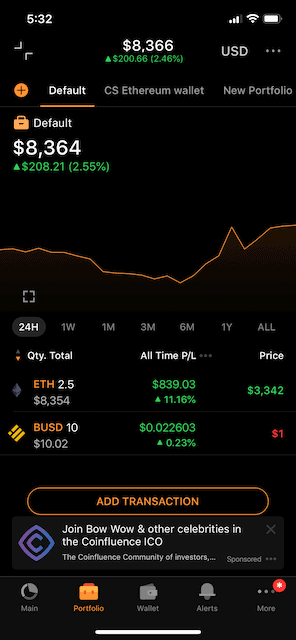
Delta is available on iOS and Android, while Windows, macOS, and web versions are also offered. Cold-wallet addresses can be added without sharing private keys, allowing users to monitor offline holdings without giving Delta control over their assets.
There is a catch, however. Delta’s free plan only allows users to track up to 10 assets. Delta AI, advanced analytics, additional portfolio insights, automatic data refreshing, and higher asset limits are reserved for paid subscribers.
However, Delta has regional restrictions because access requires an eToro account. Users cannot create a separate account directly with Delta, so anyone living in a country where eToro is unavailable may also be unable to use the portfolio tracker.
Pros & Cons
| 👍 Delta Pros | 👎 Delta Cons |
|---|---|
| ✅ Clean, beginner-friendly portfolio interface | ❌ Free plan limited to 10 assets |
| ✅ Tracks crypto and traditional assets | ❌ Regional restrictions |
| ✅ Syncs exchanges, wallets, and brokers | ❌ Advanced analytics require a paid subscription |
| ✅ Available across mobile and desktop | |
| ✅ Tracks wallets without accessing private keys | |
| ✅ Detailed portfolio analytics and live pricing |
3. Coinpanda – Best Free Crypto Portfolio and Tax Tracker
Coinpanda combines crypto portfolio tracking with automated tax reporting, making it particularly useful for investors whose transactions are spread across exchanges, wallets, blockchains and DeFi protocols. Founded by Eivind Semb and William Carlsen, the platform combines real-time portfolio monitoring with automated tax calculations for investors whose activity is spread across exchanges, wallets and DeFi protocols.
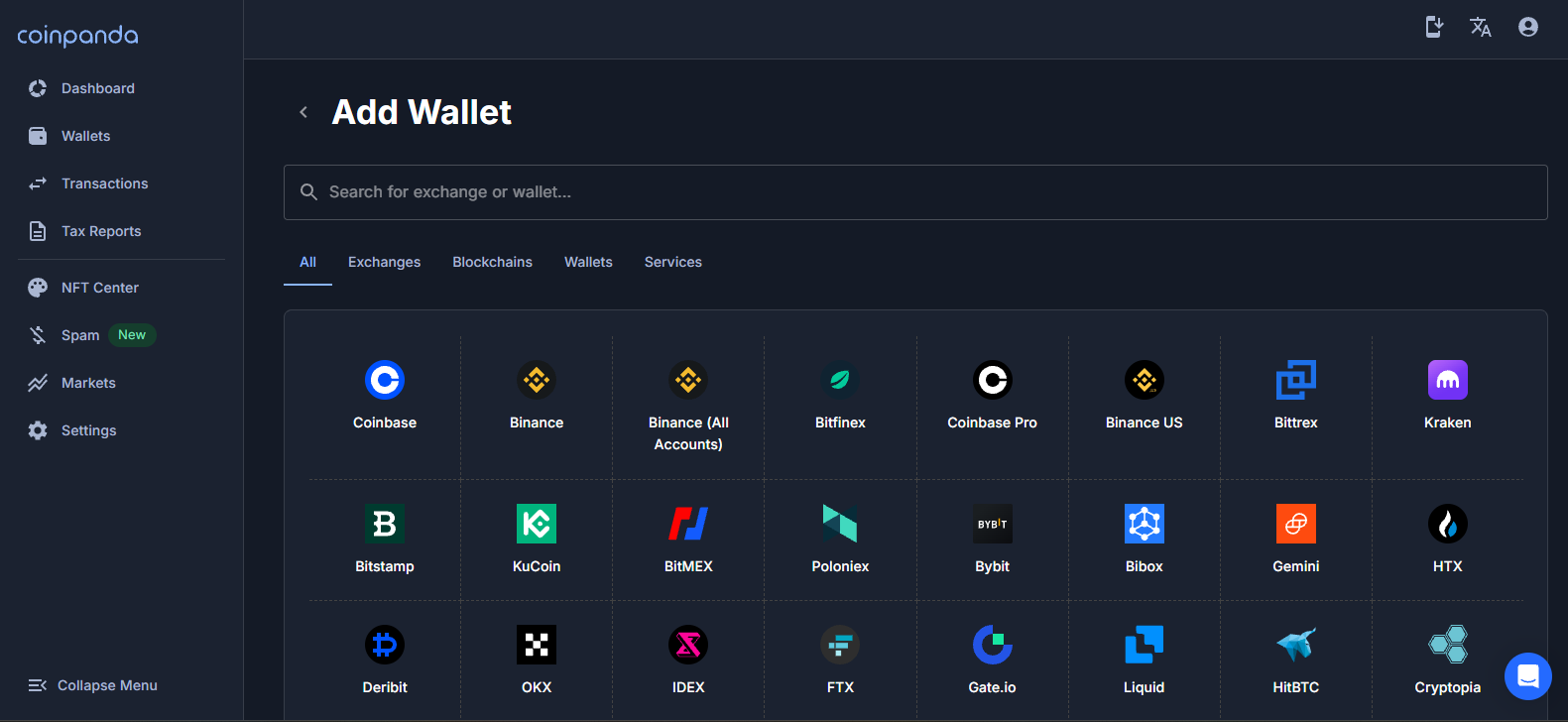
Users can import transactions from more than 500 exchanges, wallets and blockchains through APIs, CSV files or public wallet addresses. Coinpanda then organizes trades, transfers, staking rewards, airdrops, margin positions, NFT activity and cross-chain transactions into one ledger. It can also calculate cost basis and portfolio performance using methods such as FIFO, LIFO and HIFO.
For anyone researching crypto taxes in UK, Coinpanda can prepare reports according to local tax requirements. Its tax engine supports more than 65 countries, making it useful for investors who need jurisdiction-specific reports rather than a generic transaction export.
The free tier is useful for investors with fewer transactions, while Ledger, Trezor and Keystone wallets can be linked through read-only connections. When comparing the best crypto portfolio tracker for taxes, Coinpanda brings tracking and jurisdiction-specific calculations together.
Pros & Cons
| 👍 Coinpanda Pros | 👎 Coinpanda Cons |
|---|---|
| ✅ Tracks portfolios and calculates crypto taxes | ❌ Free tier limits larger transaction histories |
| ✅ Supports 500+ exchanges, wallets and blockchains | ❌ Tax focus may feel excessive for holders |
| ✅ Handles DeFi, staking, NFTs and airdrops | |
| ✅ Connects hardware wallets through read-only access |
4. Crypto Pro – Best Privacy-Focused Crypto Portfolio Tracker
Crypto Pro was built around one simple concern: a portfolio tracker should not need to know how much crypto you own. Launched in 2015 as a Bitcoin ticker, it has since become an app-based crypto portfolio tracker available only across Apple devices.
Portfolio information is encrypted and stored locally rather than uploaded to Crypto Pro’s servers. Exchange API keys are kept in Apple Keychain, while optional iCloud syncing carries the portfolio between an iPhone, iPad, Mac and Apple Watch without giving the company access to it.
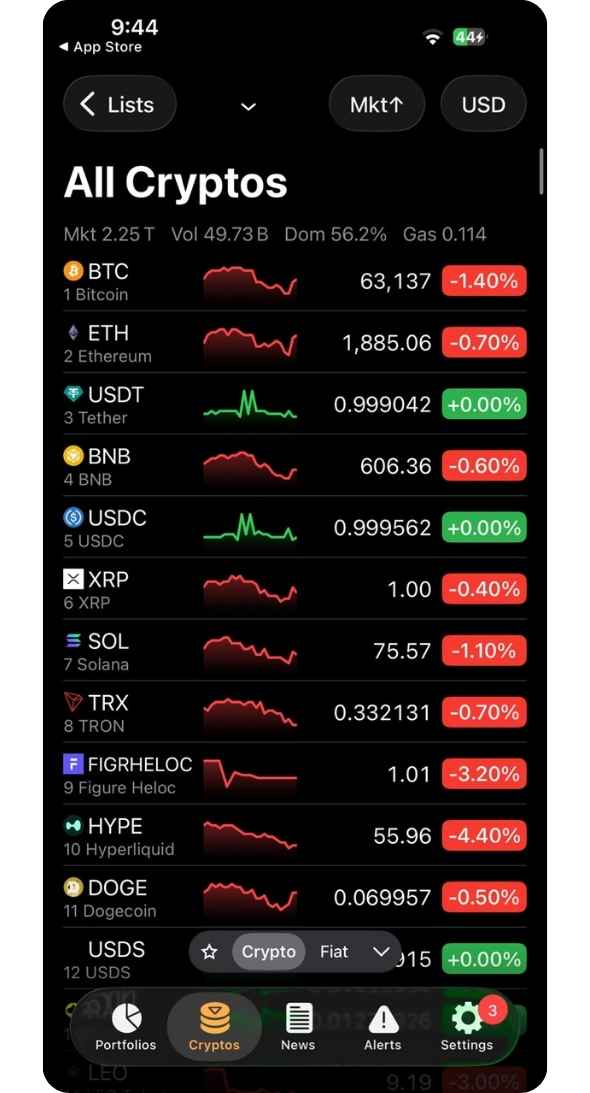
Assets can be entered manually or imported from exchanges and public wallet addresses. The app then displays live prices, gains and losses, allocation, charts, alerts, watchlists and market news. Ledger and Trezor holdings can also be monitored through public keys, leaving private keys offline.
For Apple users comparing the best crypto portfolio tracker for privacy, Crypto Pro is a focused option. However, Apple-only availability excludes Android and browser users; tax exports remain basic.
Pros & Cons
| 👍 Crypto Pro Pros | 👎 Crypto Pro Cons |
|---|---|
| ✅ Stores portfolio data locally | ❌ Available only across Apple devices |
| ✅ Supports iPhone, iPad, Mac and Apple Watch | ❌ Tax reporting tools remain limited |
| ✅ Imports exchanges and public wallet addresses | |
| ✅ Includes alerts, charts, news and watchlists |
5. Nansen – Best Crypto Portfolio Tracker for On-Chain Analysis
Nansen is not a conventional crypto portfolio tracker. It is an on-chain intelligence platform for traders, funds and researchers who want to know who controls a wallet, where capital is moving and how major holders are positioned.
Founded in 2020, Nansen has labeled more than 500 million wallet addresses. These labels identify exchanges, funds, whales and profitable traders behind otherwise anonymous activity. Wallet Profiler, Token God Mode and Smart Money alerts then show wallet P&L, token flows, holder behavior, DeFi positions and exchange movements.
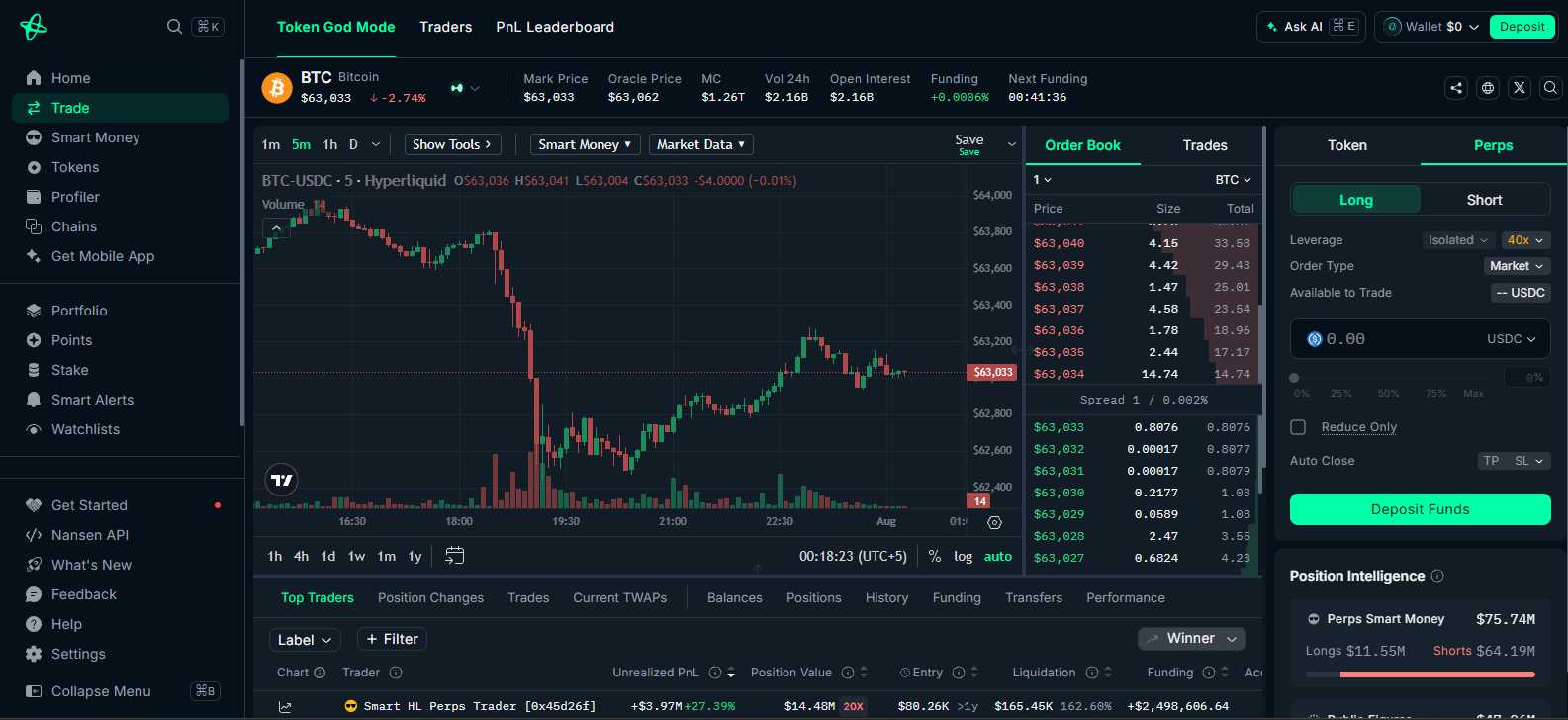
Public wallet addresses can also be added to monitor cold-storage balances, staking positions, liquidity pools and NFTs without sharing private keys. Nansen Agent provides conversational analysis and cross-chain trade execution.
Nansen is best suited to advanced traders who need on-chain analysis alongside portfolio tracking, while casual holders may find the amount of data excessive. A third-party vendor breach in 2023 exposed some user information, but no wallet funds were affected.
Pros & Cons
| 👍 Nansen Pros | 👎 Nansen Cons |
|---|---|
| ✅ Tracks 500 million labeled wallet addresses | ❌ Too complex for casual portfolio holders |
| ✅ Identifies Smart Money and whale activity | ❌ Third-party breach exposed user data |
| ✅ Monitors DeFi positions and cold wallets | |
| ✅ Provides AI-assisted on-chain analysis |
6. CoinTracking – Best Crypto Portfolio Tracker for Tax Reporting
CoinTracking has been recording crypto portfolios since 2012, making it the longest-running platform in this list. Created by Dariusz Kachel to replace his own spreadsheets, it now serves over 2.25 million users and tracks $41.5 billion in assets.
The platform supports more than 800 exchanges, wallets and blockchains through APIs, CSV files and public addresses. It can classify spot trades, futures, margin positions, staking income, DeFi activity, NFTs and airdrops, while portfolio reports cover cost basis, realized and unrealized gains, performance and allocation.
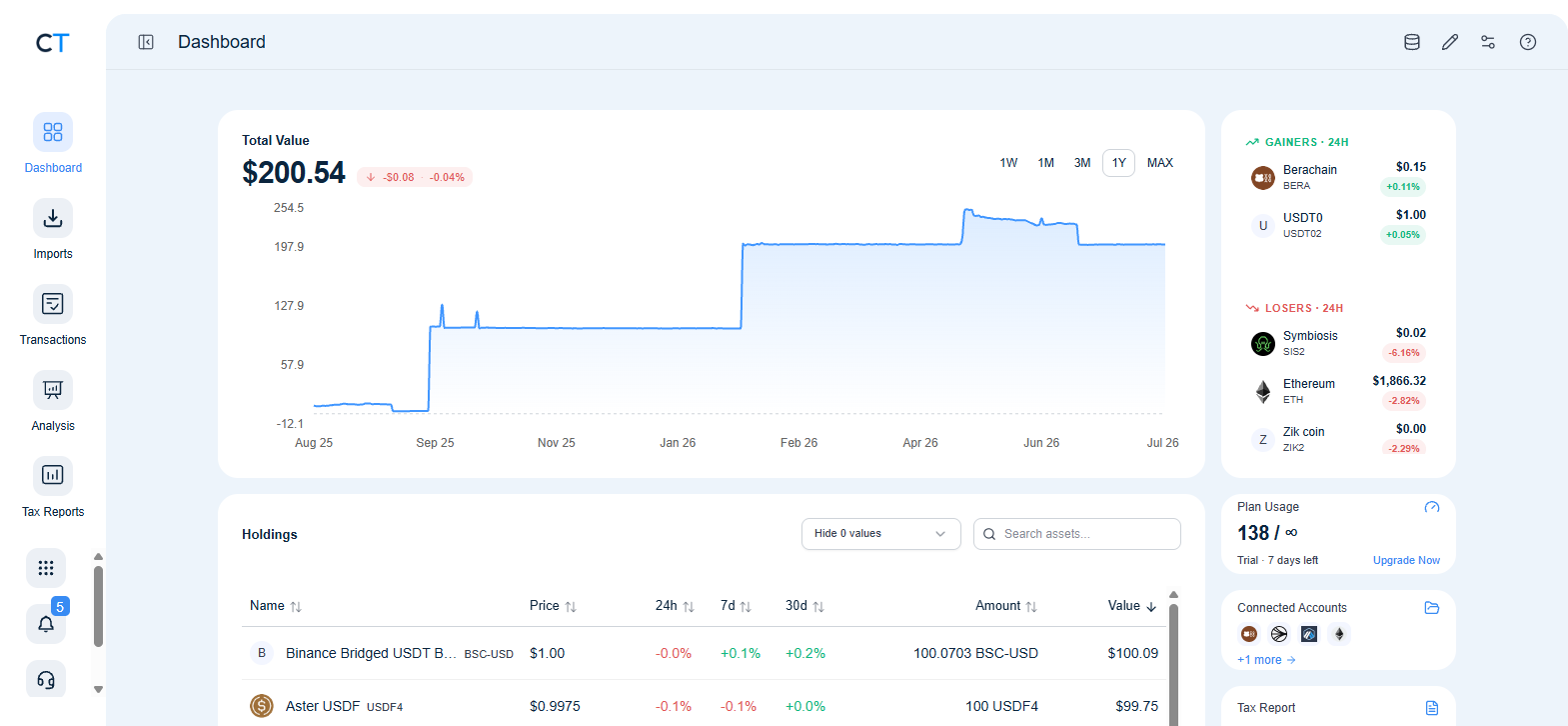
Tax reporting is where CoinTracking becomes particularly useful. It supports more than 100 countries, 13 accounting methods and exports for accountants.
CoinTracking offers a capable free tier with portfolio tracking, performance reports, DeFi positions and NFT support. Users who only want to monitor their holdings may not need to pay, while tax reporting requires an upgrade. Paid plans include a lifetime option, which may suit users who prefer a one-time purchase from a platform that has operated and continued updating since 2012.
Pros & Cons
| 👍 CoinTracking Pros | 👎 CoinTracking Cons |
|---|---|
| ✅ Supports 800+ exchanges, wallets and blockchains | ❌ Interface may overwhelm first-time users |
| ✅ Free tracking covers DeFi and NFTs | |
| ✅ Provides detailed international crypto tax reports | |
| ✅ Offers a one-time lifetime subscription |
7. Blockpit – Best Crypto Portfolio Tracker for European Taxes
Blockpit is aimed at European investors who need their portfolio records to match local tax rules rather than a generic capital-gains calculation. Founded in Austria in 2017, it now serves over 350,000 users and has expanded through the acquisitions of CryptoTax and Accointing.
More than 300 exchanges, wallets and blockchains can be connected through APIs or CSV files. Blockpit then categorizes trades, staking income, airdrops, NFTs, DeFi activity and margin positions while displaying P&L, cost basis and historical portfolio performance.
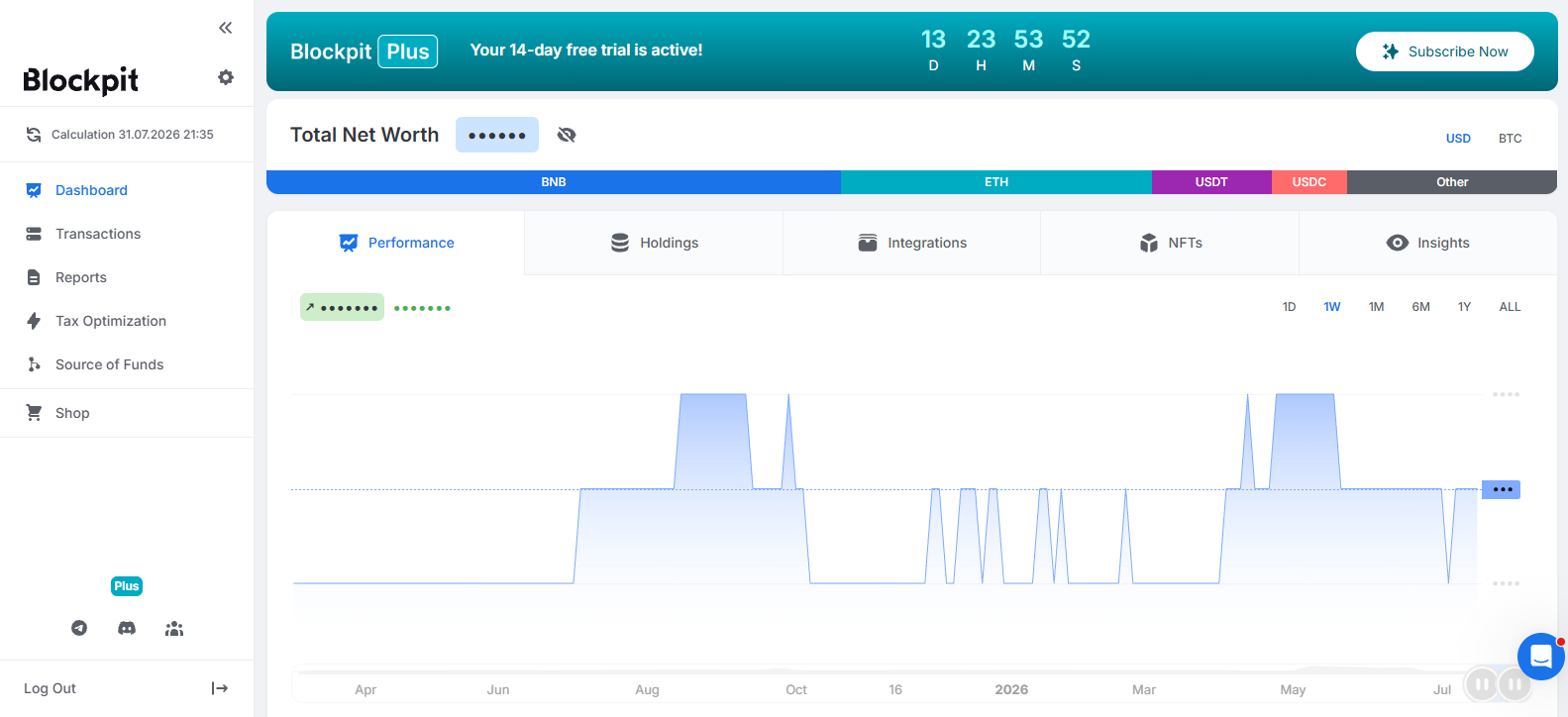
Its free tier is generous enough for users who only need portfolio tracking. Tax reports require payment, but they can be purchased separately without committing to a full subscription. This makes Blockpit practical in European countries with jurisdiction-specific reporting requirements.
Pros & Cons
| 👍 Blockpit Pros | 👎 Blockpit Cons |
|---|---|
| ✅ Creates jurisdiction-specific European tax reports | ❌ Mainly designed around European regulations |
| ✅ Supports 300+ exchanges, wallets and blockchains | |
| ✅ Handles DeFi, staking, NFTs and margin | |
| ✅ Offers free portfolio tracking |
8. Rotki – Best Open-Source Crypto Portfolio Tracker
Rotki keeps the entire portfolio database on your computer, which addresses one of the biggest privacy concerns with cloud-based crypto trackers. Founded in 2019 by Ethereum developer Lefteris Karapetsas, it is an open-source desktop application whose code can be reviewed and modified by its community.
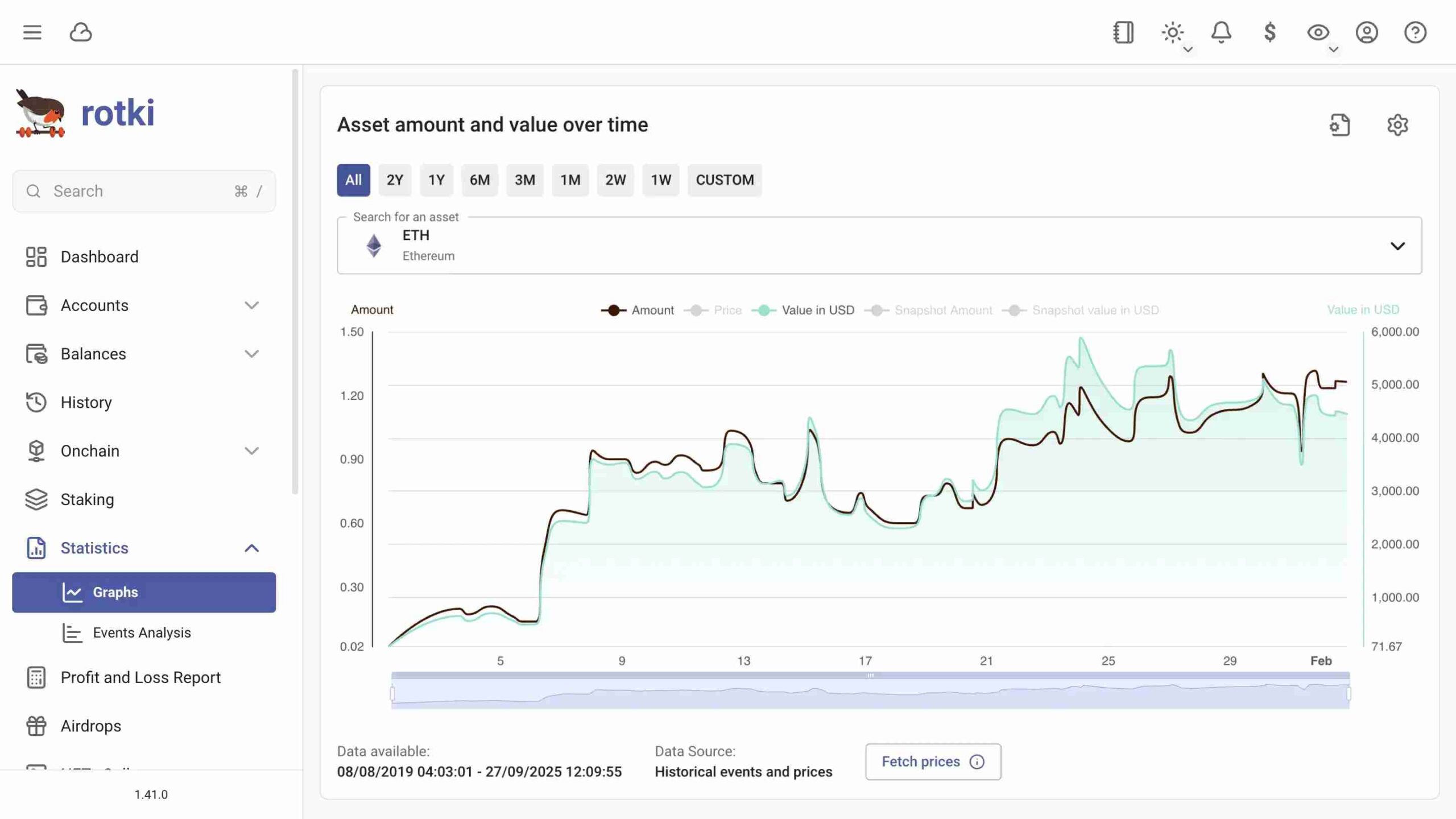
Users can connect exchanges, public wallet addresses and extended public keys to track tokens, DeFi positions, staking, NFTs, cost basis and P&L. Ledger, Trezor and BitBox balances can also be monitored without uploading financial records or private keys to Rotki servers. Users may even connect their own blockchain nodes.
There is no mobile or browser version, and the free tier is limited. Rotki therefore suits privacy-conscious users comfortable managing portfolios from a desktop.
Pros & Cons
| 👍 Rotki Pros | 👎 Rotki Cons |
|---|---|
| ✅ Stores all portfolio data locally | ❌ Available only as a desktop application |
| ✅ Fully open-source and community-auditable | ❌ Free tier has significant limitations |
| ✅ Tracks DeFi, staking and NFTs | |
| ✅ Supports personal blockchain node connections |
9. Kubera – Best Crypto Portfolio Tracker for Multiple Assets
Kubera treats crypto as one part of your net worth rather than a separate portfolio. Founded in 2020 by Girish Redekar, it combines bank accounts, stocks, property, vehicles, precious metals, collectibles, currencies and digital assets in one dashboard.
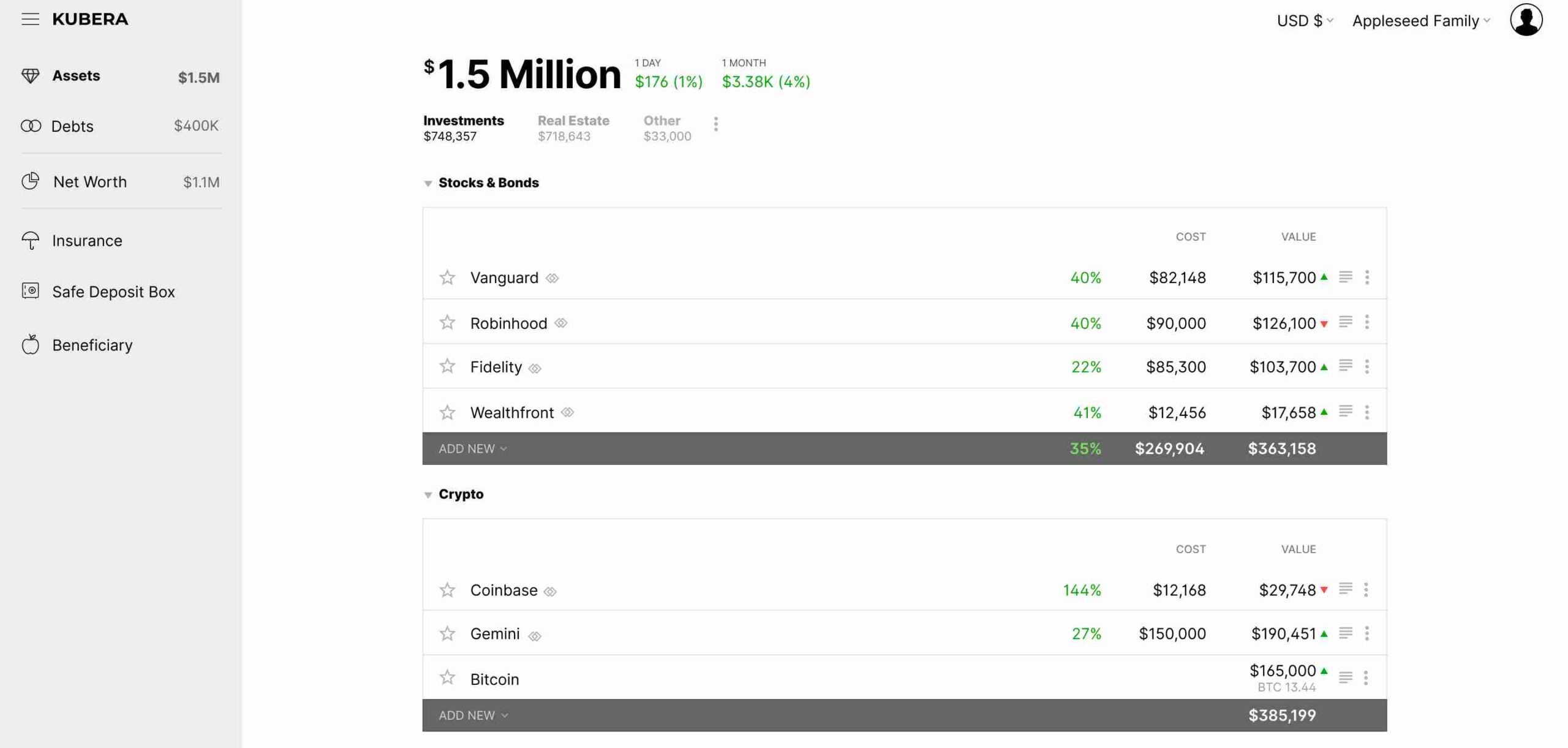
Exchanges and public wallet addresses can be connected for automatic tracking, including cold-storage and DeFi positions across supported networks. Illiquid assets can be added manually, while charts show net-worth growth and allocation.
Kubera has no free plan and is aimed mainly at high-net-worth individuals, families and wealth managers. The paid-only model may deter investors, but the company does not sell user data.
Pros & Cons
| 👍 Kubera Pros | 👎 Kubera Cons |
|---|---|
| ✅ Tracks crypto and traditional assets together | ❌ No free plan available |
| ✅ Supports automatic and manual asset entry | ❌ Expensive for crypto-only portfolio tracking |
| ✅ Tracks property, vehicles and collectibles | |
| ✅ Does not sell user data |
How Crypto Portfolio Trackers Work
A crypto portfolio tracker collects information from the platforms where your assets are held and turns it into one consolidated portfolio. The process generally works as follows:
- Importing account data: Exchange accounts can be connected through read-only API keys. These keys allow the tracker to retrieve balances, trades, deposits, withdrawals and open positions without giving it permission to trade or withdraw funds.
- Tracking self-custody wallets: You can add a public wallet address or extended public key to track assets held in software or hardware wallets. The tracker reads publicly available blockchain activity without requiring your private key or seed phrase.
- Adding unsupported transactions: If an exchange or blockchain cannot be connected automatically, transactions can usually be uploaded through a CSV file or entered manually.
- Calculating portfolio value: The tracker combines your balances with current market prices to calculate total portfolio value in USD, EUR, GBP or another selected currency. Data may update in real time or at scheduled intervals.
- Measuring performance: Using your transaction history, the tracker calculates cost basis, realized gains and losses, unrealized P&L and overall portfolio performance. It may also show allocation by asset, blockchain or account.
- Tracking additional activity: More advanced platforms can monitor staking rewards, lending positions, liquidity pools, NFTs and DeFi debts. Tax-focused trackers may apply FIFO, LIFO or average-cost calculations and prepare country-specific reports.
Most crypto portfolio trackers are non-custodial, meaning they monitor assets without holding your funds or accessing private keys.
Why Crypto Investors Need a Portfolio Tracker
Once your portfolio moves beyond a few tokens, checking it stops being simple. Bitcoin may sit on one exchange, tokens may be spread across Ethereum, Solana and other blockchains, DeFi positions inside several protocols, and long-term holdings in a hardware wallet. Some platforms now also offer stocks, commodities, indices and funds alongside crypto, turning the same account into a multi-asset portfolio.
Tracking every balance separately makes it easy to miss falling positions, duplicate transactions or forget where an asset is held. A crypto portfolio tracker brings everything together and shows what your combined portfolio is actually worth. It also records allocation, gains, losses and income, so decisions are based on the complete portfolio rather than whichever account you checked last.
Bottom Line
A crypto portfolio tracker is no longer limited to tracking holdings. Many additional features are now available, particularly tax reporting, as crypto has formally become taxable in many jurisdictions. However, these additions can make finding a reliable tracker that meets your needs more confusing.
When deciding which crypto tracker suits you best, start by writing down your requirements. Do you only need to track exchange holdings, or are your assets also spread across DeFi protocols? Do you stake crypto? Portfolio trackers can now monitor staking positions, memecoins held through DEXs, NFTs and much more.
Once your requirements are clear, you can shortlist the trackers that support your assets and fit your budget. Active traders can also review the best crypto trading journals, while those still choosing a platform can read our exchange reviews.
FAQs
1. Can I track multiple wallets and exchanges together?
Most trackers can connect several exchanges, wallets and blockchain addresses, combining their balances and transactions into one portfolio.
2. Can portfolio trackers monitor staking and liquidity pools?
DeFi-focused trackers can monitor staked assets, rewards, liquidity pools, lending positions and debts. Protocol and blockchain support varies between platforms.
3. Do crypto portfolio trackers calculate taxes?
Tax-focused trackers calculate cost basis, gains, losses and taxable income. Some also generate country-specific reports, although these features often require payment.
4. Is connecting an exchange to a portfolio tracker safe?
Read-only API keys are generally safer because they cannot trade or withdraw funds. Never enable withdrawal permissions or share private keys and seed phrases.
5. What is the difference between a portfolio tracker and a trading journal?
A portfolio tracker monitors holdings, allocation and overall performance. A trading journal records individual trades, strategies, decisions, screenshots and recurring mistakes.