


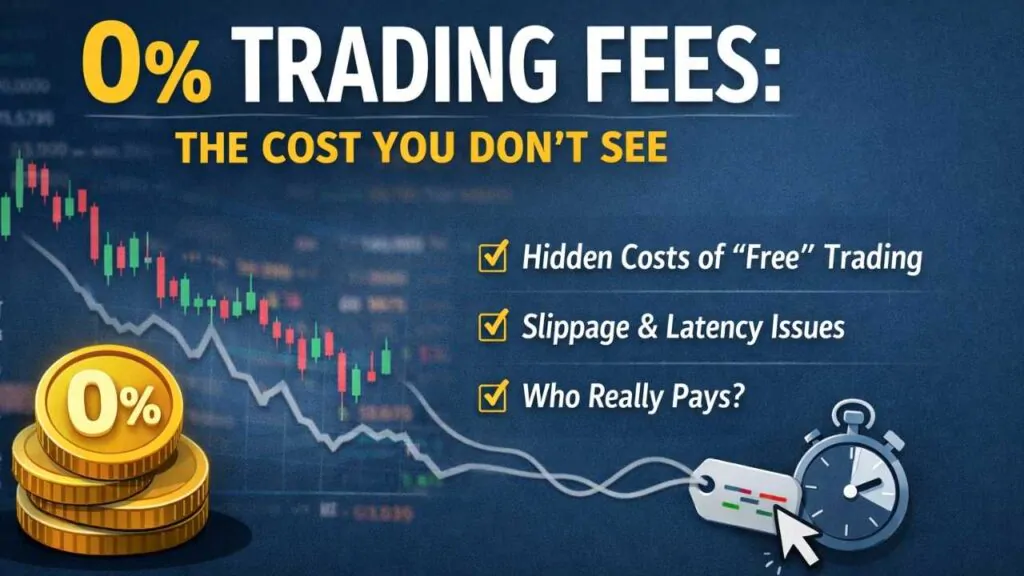
- •거래 수수료가 없다는 것은 비용을 완전히 없애는 것이 아니라, 거래 품질 향상에 투자하는 것을 의미합니다.
- •지연 시간과 주문 우선순위는 체결, 슬리피지, 그리고 실제 진입 또는 청산 가격에 영향을 미칩니다.
- •수많은 거래에서 숨겨진 실행 비용이 투명한 메이커 수수료와 테이커 수수료보다 더 클 수 있습니다.
0% 거래 수수료라는 아이디어는 암호화폐 거래에서 가장 효과적인 마케팅 전략 중 하나가 되었습니다. 2024년과 2025년에 탈중앙화 거래소(DEX) 간의 경쟁이 심화되면서 수수료 인하는 불가피해졌습니다. 거래소들은 소셜 미디어, 대시보드, 추천 페이지 등을 통해 빠르게 확산될 수 있는 간결한 메시지가 필요했습니다. 눈에 보이는 수수료를 없애는 것이 그 문제를 즉시 해결해 주었습니다. 하지만 눈에 보이는 수수료는 거래 비용의 전부가 아니었습니다. 단지 가장 쉽게 강조할 수 있는 부분이었을 뿐입니다.
수수료 무료 모델은 실제로 어떻게 작동할까요?
수수료 없는 거래는 결코 단독으로 존재하는 것이 아닙니다. 거래소는 여전히 주문 흐름을 통해 수익을 창출하고, 인프라 비용을 관리하며, 전문 투자자들을 유치해야 합니다. 수수료가 사라지면 가격 결정은 거래 실행 방식, 특히 지연 시간과 주문 처리 우선순위로 옮겨가게 됩니다.
실제로 이는 모든 사용자가 동일한 속도로 시장에 참여하는 것은 아니라는 것을 의미합니다. 서로 다른 계정에서 제출된 주문은 매칭 엔진에 도달하는 데 상당한 시간차가 발생합니다. 그 시간 동안 가격은 계속 변동하고 유동성은 조정되며, 더 빠른 참여자는 반응합니다. 결과적으로 주문이 느리게 체결될수록 명시적인 수수료가 부과되지 않더라도 약간 더 불리한 가격으로 체결될 가능성이 높아집니다.
이 구조는 미묘하기 때문에 효과적입니다. 비용은 차감되는 형태로 나타나지 않습니다. 슬리피지, 체결 실패 또는 미세하게 떨어지는 실행으로 나타나는데, 이는 단일 거래가 아닌 여러 거래를 통해 측정할 때만 명확해집니다.
지연 시간은 보이지 않는 거래 비용입니다.
지연 시간(Latency)은 기술적인 용어처럼 들리지만, 재정적인 영향은 명확합니다. 변동성이 큰 시장에서는 가격이 끊임없이 움직입니다. 변동성이 크지 않더라도 매초마다 작은 가격 변동이 발생하며, 거래 체결이 수백 밀리초 지연되면 거래자는 의도했던 시장 상황과는 다른 시장에서 거래를 하게 됩니다.
시장 미세구조 연구에 따르면 정보에 밝은 참여자들은 거래 흐름이 느린 곳에서 가치를 추출하는 경향이 있습니다. 빠른 거래자들이 가격 변동을 먼저 파악하면, 느린 거래자들의 주문이 도착하기 전에 포지션을 조정하거나 유동성을 제거합니다. 이는 역선택을 초래하여, 느린 거래자들이 상대방에게 유리한 시점에 거래할 가능성이 더 높아집니다.
아래 차트는 인기 있는 무기한 탈중앙화 거래소(DEX)에서 광고되는 수수료와 실제 거래 비용 간의 차이를 보여줍니다.
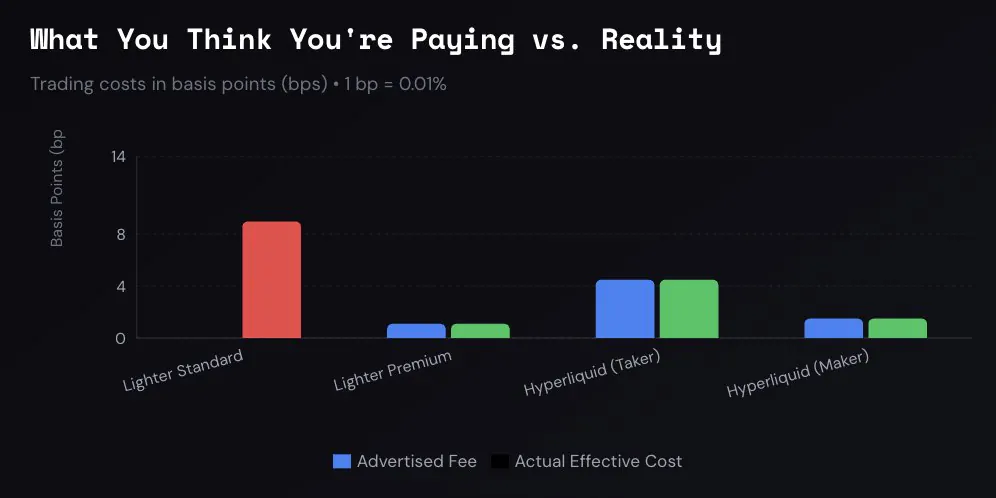
시간이 흐르면서 이러한 작은 차이들이 누적됩니다. 주문을 많이 하는 거래자는 투명한 수수료 체계를 통해 지불했을 금액보다 체결 지연으로 인해 더 많은 손실을 볼 수 있습니다. 수수료표에 명시되지 않더라도 그 비용은 실제로 존재합니다.
같은 플랫폼 거룻배 소매 거래 수수료를 없애고 단계별 체결 속도를 제공함으로써 이러한 상충 관계를 명확히 하고, 거래의 실제 비용을 수수료에서 주문 처리 우선순위로 전환합니다.
수수료 없는 거래는 누구에게 유리할까요?
수수료 없는 모델은 두 그룹에게 유리한 경향이 있습니다. 첫 번째는 거래소로, 수수료 대신 체결 품질을 통해 수익을 창출하면서 사용자 확보를 확대할 수 있습니다. 두 번째는 전문 트레이더 또는 지연 시간에 민감한 트레이더로, 더 빠른 주문 처리와 예측 가능한 체결을 위해 명시적인 수수료를 지불합니다.
개인 투자자들은 진입 장벽이 낮고 거래가 간편하다는 장점을 누리지만, 동시에 시장에서 시간적 민감도가 가장 낮은 계층이 됩니다. 이들의 활동은 가격 발견 과정에 영향을 미치고, 더 빠른 참여자들은 이를 바탕으로 최적의 거래를 성사시킵니다. 이러한 구조 자체가 본질적으로 불공평한 것은 아니지만, 그 원리가 명확하게 설명되는 경우는 드뭅니다.
거래 빈도가 낮은 투자자, 가끔씩 거래하는 사용자 또는 전략 테스트 사용자에게는 수수료 없는 접근 방식이 여전히 유리할 수 있습니다. 소규모 거래에서는 체결 품질 차이가 미미할 수 있습니다. 그러나 적극적인 투자자에게는 수수료 유무보다 체결 품질이 더 중요한 경우가 많습니다.
실행 비용은 여전히 중요합니다
핵심은 수수료 없는 플랫폼 자체가 나쁘다는 것이 아닙니다. 0% 거래 수수료는 거래 비용을 완전히 없애는 것이 아니라, 그 비용을 지불하는 방식을 바꾸는 것입니다. 거래자는 수수료 대신 체결 품질, 체결 시간, 주문 우선순위를 통해 비용을 지불하게 됩니다.
수수료표를 비교하는 것보다 이러한 장단점을 이해하는 것이 훨씬 중요합니다. 각 플랫폼은 서로 다른 거래 행태에 최적화되어 있으며, 모든 사람에게 적합한 단일 모델은 없습니다. 수수료가 없는 거래소를 고려하는 거래자는 마케팅 문구에만 현혹되지 말고 실제 시장 상황에서 주문이 어떻게 처리되는지 살펴봐야 합니다.
플랫폼별 실행 모델, 수수료 구조 및 유동성 프로필을 비교하는 독자를 위해, 더 넓은 관점에서 대안들을 나란히 검토합니다. 최고의 영구 DEX 가이드 단 하나의 주요 수치에만 집중하는 것보다 더 명확한 틀을 제공합니다.